Thrush in Horses: How to Spot It, Treat It and Stop It Coming Back
Thrush is the most common hoof problem most owners will ever deal with, and one of the easiest to fix when you catch it early. The hard part is catching it early. Your nose is usually the first thing to know.
When I was riding and competing in England, I also ran the stable yard. One of our stables was long, deep and dark. The sun never reached the back of it, and however hard we worked, it was hard to keep it perfectly clean and dry. In that stable lived a young warmblood we were all convinced was going to be a champion. His nickname on the yard was “the Olympic Horse”.
One day I picked up his foot and the smell hit me straight away. Thrush, and not the early kind. It had got a real hold before I noticed it. I was mortified. He came right with treatment, but the feeling that I’d let him down has stayed with me ever since. From that day on I’ve never forgotten that smell, and I treat it the moment I catch the first hint of it.
Free Hoof Health Toolkit
A weekly hoof check for all four feet, including the “no smell or discharge” check that catches thrush early, plus a red, amber, green “when to call” chart.
Download Free →What Thrush Actually Is
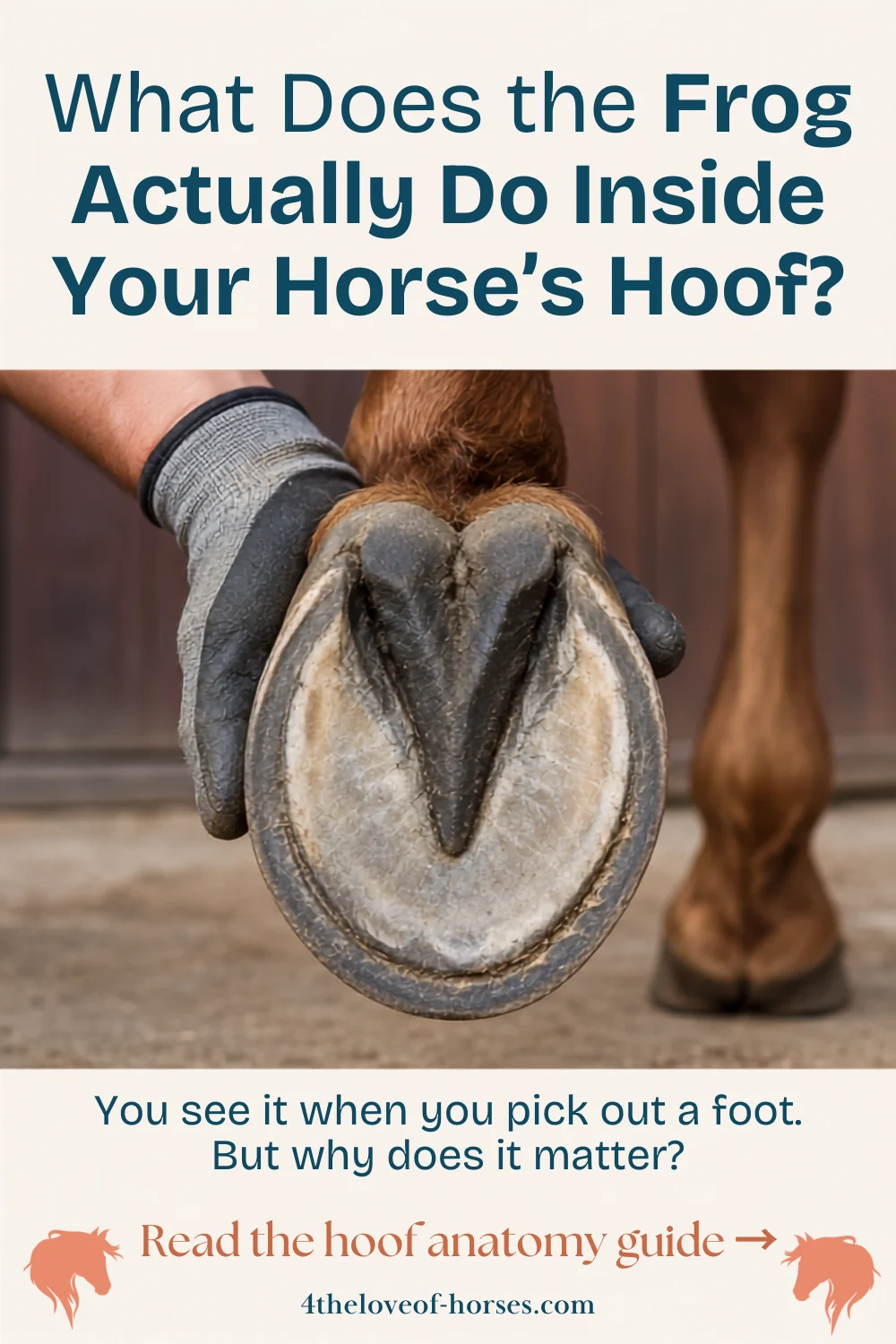
Thrush is a bacterial infection of the frog, usually starting in the grooves either side of it (the collateral grooves) and in the cleft down its middle (the central groove). If you want a refresher on where those are, our hoof anatomy guide has a labelled diagram.
The bacteria involved, Fusobacterium necrophorum is the one most often named, live happily in soil and manure. They’re anaerobic: they thrive where there’s no air. Pack a groove with wet muck, keep it there, and you’ve built them a perfect home. They feed on the frog tissue itself, breaking it down into that black, tarry, foul-smelling material you’ll recognise once you’ve smelt it.
Signs of Thrush, From Early to Serious
Thrush creeps up. The earlier you catch it, the quicker and easier it is to clear.
Early
A faint, unpleasant smell when you pick out the foot. A little dark, damp material in the grooves. The frog still looks mostly normal and the horse is completely sound.
Established
A strong, rotten smell. Black, sticky discharge that comes out on the hoof pick. The frog starts to look ragged, soft or shrunken, with loose flaps.
Deep
The grooves are deep and the frog is eaten away. The horse flinches when you clean the grooves, and the central groove may become a deep crack between the heel bulbs.
Serious
Bleeding when cleaned, lameness, or swelling at the heels. The infection has reached sensitive tissue. This needs your vet or farrier, not just home treatment.
Thrush in the central groove is the easiest to miss. From underneath it can look like a thin line, but if you can push a hoof pick deep into a crack between the heel bulbs, the infection may be running well up into the back of the foot. A sore back of the foot makes many horses land toe-first, which puts extra strain on the tendons and the navicular area.
Is it thrush or canker?
Canker is a much rarer, more serious infection that can look similar at first. The difference: thrush eats tissue away, while canker grows tissue. Canker looks like moist, grey or white, cauliflower-like growths, often with a sour, sickly smell, and it bleeds easily. It doesn’t clear up with thrush treatment and needs your vet.
Why Some Horses Get Thrush and Others Don’t
Wet weather gets the blame, but thrush is about more than mud. Horses in the same paddock often have very different feet. The usual causes:
- Standing in wet, dirty conditions. Deep bedding that’s damp underneath, muddy gateways, a churned-up area round the water trough. My Olympic Horse’s dark stable is a textbook example: no sun, no airflow, and bedding that never fully dried.
- Not enough movement. Every time a hoof lands and flexes, it pushes some of the packed muck out of the grooves. Horses that stand still a lot don’t clean their own feet.
- Feet that trap dirt. Contracted heels, long overgrown bars or a narrow, deep central groove all create pockets where air can’t get in.
- Long gaps between trims. Overgrown heels and frog flaps hide infection and create more places for it to start.
- Feet not picked out daily. Muck packed in for days at a time is exactly what the bacteria need.
If one horse keeps getting thrush while others in the same yard don’t, look at that horse’s stable and that horse’s feet, not just the weather. A horse with deep, narrow heels may need more frequent trims and closer daily attention than his neighbours.
How to Treat Thrush, Step by Step
Most early and established thrush can be cleared at home with daily attention. The key word is daily.
1. Clean gently
Pick out loose dirt and bedding, then gently clean the frog and its grooves with clean water and a soft brush. Don’t dig into deep cracks or scrub until you reach healthy tissue. If your horse flinches or the area bleeds, stop and contact your vet. Leave trimming loose or damaged frog tissue to a professional.
2. Dry the foot
Let the foot dry, or pat it dry with a towel, before applying anything. Treatment on a wet foot is diluted and won’t stay put.
3. Apply a thrush treatment
Use a commercial thrush product from your saddlery or vet and follow the label. Many contain copper or iodine compounds. Apply it right down into the grooves, not just on the surface of the frog. A cotton bud or a squeeze bottle with a nozzle helps.
4. Get help with deep grooves
A deep central groove needs professional assessment, especially if it is sore. Don’t probe it with a hoof pick or push treatment or packing into it. If your vet recommends packing, ask them to show you exactly how to do it, which materials to use and when to change it.
5. Keep the horse on clean, dry ground
Treatment won’t win if the horse goes straight back into mud or wet bedding. A dry stable with deep, clean bedding, or a dry standing area, makes a huge difference while the frog heals.
Old yard remedies like bleach, formalin or strong turpentine kill bacteria, but they also burn the healthy frog tissue you’re trying to save, and can make a sore foot much worse. Stick to products made for the job, and ask your vet if you’re unsure.
Catch it before it gets a hold
The Hoof Health Toolkit’s weekly check has a “no smell or discharge” line for every foot, every day. It’s the habit that would have caught my Olympic Horse’s thrush days earlier.
Get the Free Toolkit →When Thrush Needs Your Vet
Call for help if:
- The horse is lame, or flinches badly when you clean the frog
- The grooves bleed when cleaned, or the infection has eaten deep into the frog
- There’s a deep crack in the central groove between the heel bulbs
- There’s swelling at the heels or up the leg
- It’s not clearly better after a week of daily treatment
- You see growths rather than eaten-away tissue (possible canker)
Don’t wait a week if your horse is sore. Your farrier can help with hoof balance and routine trimming, but pain, bleeding, swelling or lameness need veterinary advice. Don’t cut away frog tissue yourself.
How to Stop Thrush Coming Back
Once you’ve had a bad case, prevention becomes a habit. These are the things that make the biggest difference:
| Habit | Why it works |
|---|---|
| Pick out feet every day, grooves included | Removes the packed muck the bacteria live in, and lets you smell trouble early |
| Keep stables clean and dry underneath | Wet bedding under a dry top layer is a thrush factory. Lift and check |
| Let light and air into stables | Dark, damp corners like my Olympic Horse’s stable stay wet for days |
| Fix muddy gateways and trough areas | Hardcore, rubber matting or moving the trough gives horses a dry place to stand |
| Keep trims on schedule | Healthy, well-shaped heels and frogs clean themselves far better |
| Maximise turnout and movement | Every step flexes the frog and pushes dirt out of the grooves |
| Extra care in the wet season | Pick twice a day, and consider a preventive treatment once or twice a week for horses prone to it |
Your nose is your best early warning system. Next time you pick out a healthy foot, notice what it smells like: clean, earthy, a bit like soil. Anything sharper, sour or rotten is worth a closer look straight away.
Questions Owners Ask
Is thrush contagious between horses?
Not in the way a cold is. The bacteria are already in the environment, so thrush tends to show up in horses kept in the same wet conditions rather than spreading from horse to horse. Fix the conditions and you fix the problem for the whole yard.
Can my horse be ridden with thrush?
If the horse is completely sound and it’s a mild case, light work is usually fine and the movement actually helps. If the horse is lame, sore when you clean the foot, or the grooves bleed, rest him and call your vet or farrier.
Can a horse get thrush on dry ground?
Yes, though it’s less common. A horse with deep, narrow heels or a deep central groove can trap enough muck and moisture to get thrush even in dry weather, especially if he’s stabled on bedding that stays damp underneath.
Does thrush do lasting damage?
Caught early, no: the frog grows back healthy. Left untreated for a long time, it can eat deep into the frog and the back of the foot, cause lameness, and take months to fully heal.
What about home remedies like apple cider vinegar?
Some owners swear by gentle options like diluted apple cider vinegar for mild cases, but the evidence is mostly anecdotal. For anything more than the very first hint of smell, a proper thrush product will clear it faster. Whatever you use, cleaning and drying the foot daily matters more than the product.
Keep Learning
Further reading: Thrush in Horses, MSD Veterinary Manual · Thrush and Canker in Horses, EquiManagement. This article is general information; always involve your vet and farrier for diagnosis and treatment.