How to Keep Your Horse’s Hooves Healthy: The Complete Guide
“No hoof, no horse.” It’s the oldest saying in the yard because it’s true. However athletic, well-bred or well-schooled a horse is, he’s only ever as sound as his feet. The good news is that most hoof problems can be prevented, and the ones that can’t are far easier to fix when you catch them early.
In 45 years with horses and more than 25 years breeding warmbloods, I’ve learned that good feet aren’t down to luck or an expensive supplement. They come from a handful of simple habits done every day: picking out properly, knowing what normal looks and smells like, keeping the ground underfoot sensible, and having a good farrier on a regular schedule. This guide pulls all of that together in one place, with links to more detailed guides on each topic.
Free Hoof Health Toolkit
A weekly hoof check sheet for all four feet, a red, amber, green “when to call” chart, common problems at a glance and a farrier & vet record. Print it and pin it up.
Download Free →1. Know What You’re Looking At
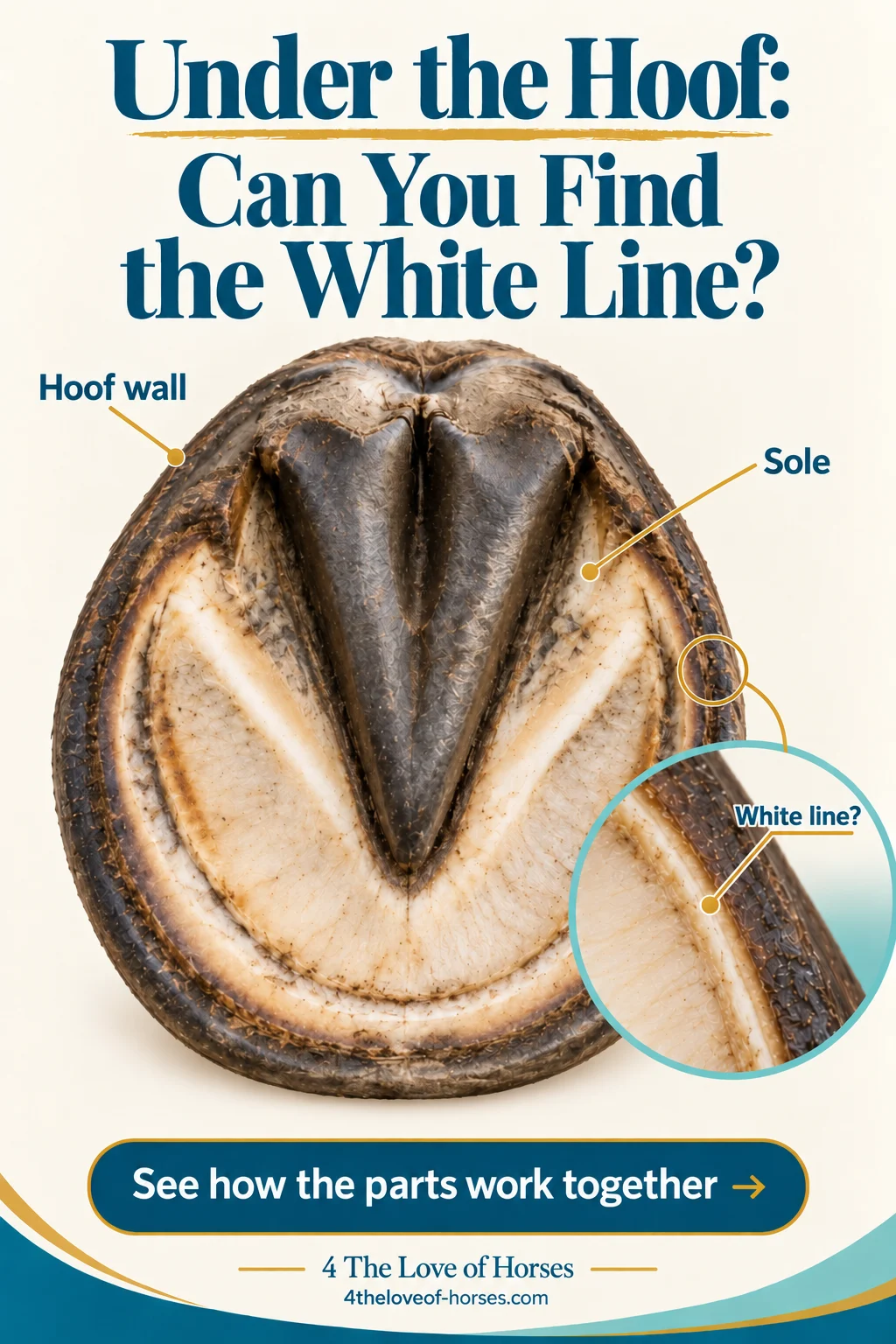
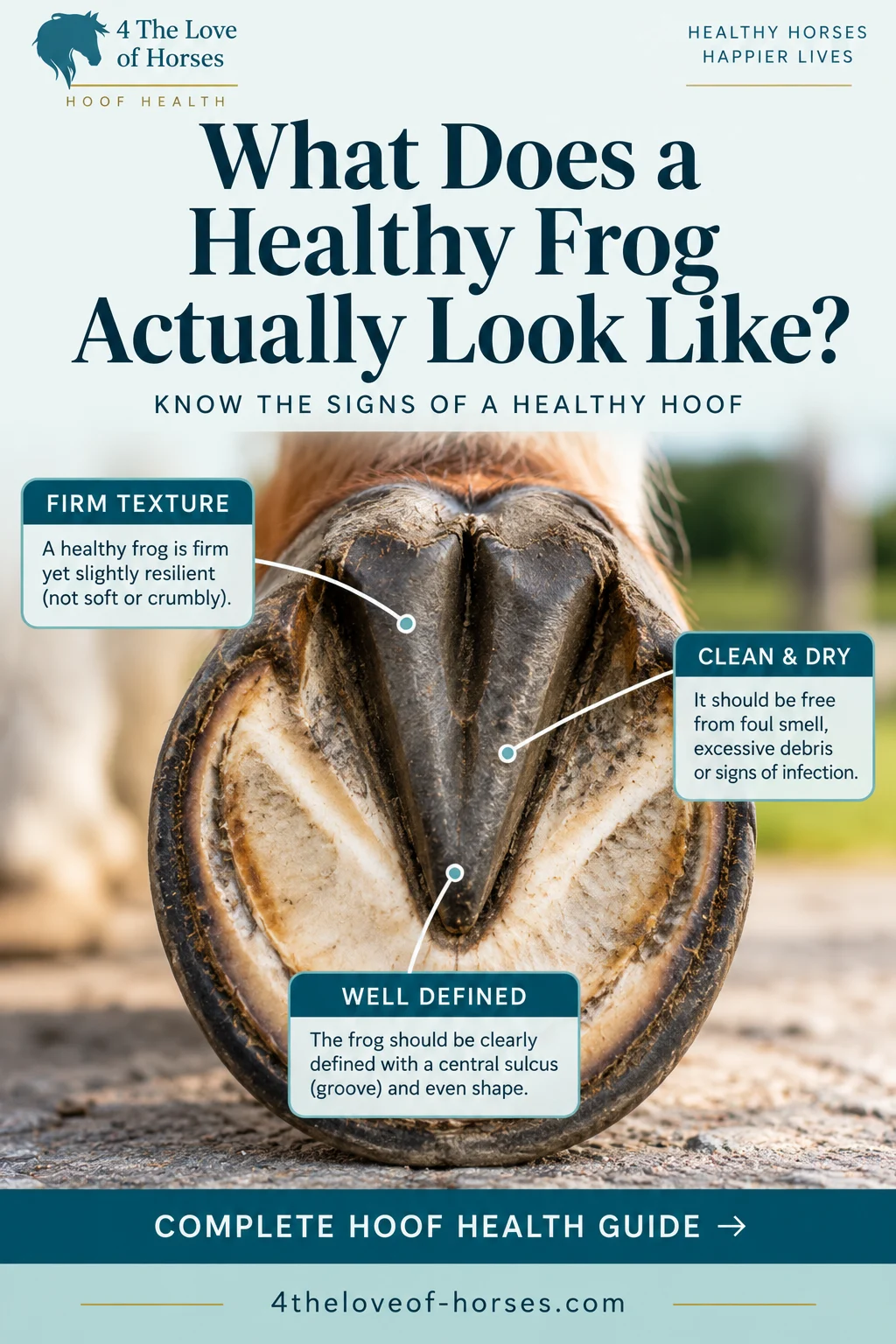
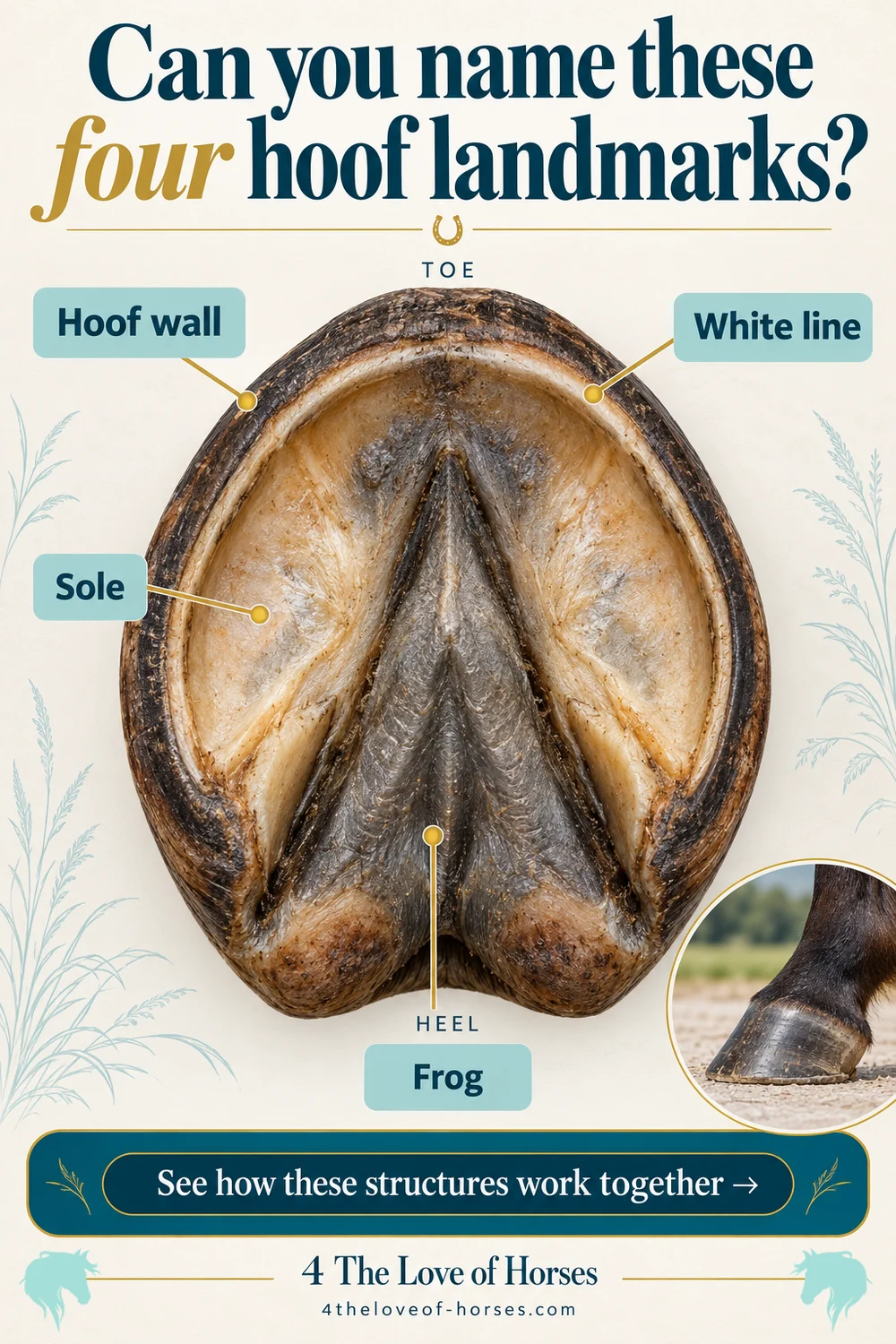
You don’t need to be a farrier, but knowing the basic parts of the foot makes everything else in this guide make sense. When you pick up a foot you’re looking at the wall (the hard outer horn), the sole (the slightly dished underside), the frog (the rubbery V in the middle) and the white line where wall meets sole. Inside, the coffin bone is suspended from the wall by hundreds of interlocking layers called laminae.
The wall grows down from the coronary band at roughly 6 to 10 mm a month, so it takes 9 to 12 months to grow a whole new toe. That’s why hoof care is a long game: the foot you see today was grown months ago.
Our hoof anatomy guide has a labelled diagram of the underside of the foot and explains what every part does, including why the coffin bone is “hanging”, not standing.

2. Your Daily Hoof Care Routine
If you only do one thing from this guide, make it this. Picking out feet every day isn’t just about removing stones. It’s a daily health check that takes two minutes a horse and catches almost every problem before it turns into lameness.
How to pick out a hoof properly
- Stand beside the shoulder or hip, facing the tail, never directly behind or in front.
- Run your hand down the leg, squeeze gently above the fetlock and give your usual cue. Let the horse shift his weight before he lifts.
- Work from the heel towards the toe, so the pick moves away from the sensitive frog and away from you.
- Clear both grooves beside the frog and the cleft down its middle. This is where thrush starts.
- Clear round the sole and the white line, and check the shoe is tight if he’s shod.
- Don’t dig at sole or frog that’s still attached. Old sole flakes away by itself.
Your two-minute check, every foot, every day
Feel
Back of your hand on each wall. All four feet should be the same temperature. One warm foot is worth watching.
Smell
A healthy foot smells clean and earthy. A sour, rotten smell is the first sign of thrush.
Look
Tight white line, firm frog, no new cracks or chips, shoes secure with clenches flat.
Pulse
Feel the digital pulse at the back of the fetlock. At rest it should be faint or hard to find.
Run your fingertips down the back of the fetlock to the two bumps on either side (the sesamoid bones). The artery runs over them. Press lightly and wait a few seconds. A strong, bounding pulse that you can feel straight away, especially in one foot or both fronts, means inflammation in the foot and is worth acting on the same day.
The most useful thing you can learn is what’s normal for your horse. Once you know that, any change jumps out. That’s exactly what the weekly check sheet in the Hoof Health Toolkit is for.
3. Healthy vs Unhealthy Hooves
| Part | Healthy | Worth a closer look |
|---|---|---|
| Wall | Smooth, no deep cracks, faint even growth rings | Deep or new cracks, flaring at the quarters, rings much wider at the heel than the toe |
| Sole | Slightly dished, firm, flaking naturally | Flat or dropped sole, soft spots, red or purple bruising |
| Frog | Firm and springy, like a pencil eraser; grooves shallow and clean | Soft, ragged or shrunken; black, smelly material in the grooves |
| White line | Tight, even, light-coloured | Widening, dark spots, crumbly or chalky material |
| Heels | Wide and open, bulbs even | Contracted (narrow) heels, one bulb higher than the other |
| The horse | Stands square, lands heel-first, moves freely on hard ground | Shifting weight, pointing a foot, short “pottery” steps, landing toe-first |
Front feet are rounder and wider than hinds, so always compare pairs: front with front, hind with hind. A foot that’s starting to look different from its partner is often the earliest sign that something is changing.

4. Common Hoof Problems
Most hoof problems start in one particular part of the foot. Here’s a quick guide to the ones you’re most likely to meet, with links to the full guides.
Thrush
Bacterial infection of the frog. Black, smelly discharge in the grooves. Very common, very treatable when caught early.
Hoof abscess
Pus trapped inside the hoof. Sound one day, barely weight-bearing the next. Needs your vet or farrier to find and drain it.
Laminitis
Inflammation of the laminae. Strong pulses, heat, a rocked-back stance. Always an emergency, and most cases are linked to insulin problems.
White line disease
Infection eating into a separation between wall and sole. Chalky, crumbly white line and a hollow sound when tapped. Farrier needs to open it up.
Hoof cracks
Surface cracks from the ground up are usually minor. Deep cracks, or any crack running down from the coronet, need your farrier.
Navicular syndrome
Pain in the back of the foot. Short, choppy steps, landing toe-first, often in both front feet.
Laminitis can come on fast, especially on spring grass or in good-doers, ponies and horses with EMS or PPID (Cushing’s). Strong digital pulses with heat in both front feet, reluctance to walk or turn, or a horse rocked back on his heels means call your vet now, and keep him on deep, soft bedding until they arrive.
5. Footing, Movement and the Seasons
Movement is medicine
Every time a hoof lands, the heels spread, the frog compresses and the foot flexes. That movement keeps blood moving through the foot, pushes dirt out of the grooves and builds a tougher, better-conditioned hoof. Horses that move a lot on varied ground almost always have better feet than horses that stand in a stable most of the day. Turnout, hacking out and even 20 minutes of hand-walking all count. (For more on setting up a horse-friendly yard, see creating the ideal environment for horses.)
Wet and dry
Hooves cope best with steady conditions. Problems come at the extremes:
- Wet season: softened soles, thrush, white line problems and shoes pulled off in mud. Give horses a dry place to stand at gates and water troughs, keep stables dry underneath the bedding, and pick out feet twice a day in the worst weeks.
- Dry season: hard ground, chipping walls and stone bruises. Keep trims regular so chips don’t spread, condition feet gradually to harder ground, and use hoof boots for stony outrides on horses with thinner soles.
- Spring grass flush: the highest laminitis risk of the year for susceptible horses. Limit grazing time, use a grazing muzzle and check pulses daily.
Bedding
Whatever you use, straw, shavings, pellets or rubber mats with a light layer on top, the key is that it’s dry underneath. A dry top layer over wet bedding keeps feet sitting in damp, airless muck all night, which is exactly what thrush needs.

6. Feeding for Strong Hooves
The hoof wall is mostly keratin, a protein, so what goes in at the front end shows up at the bottom of the legs, about 9 months later.
- Get the basics right first. Good forage plus a vitamin and mineral balancer covers the needs of most horses. Many “poor feet” improve simply because the diet is finally balanced.
- Key nutrients: good-quality protein (especially the amino acids methionine and lysine), zinc, copper and biotin.
- Biotin has the best evidence of any hoof supplement, but mainly for horses with genuinely poor, crumbly walls. Studies have used around 15 to 20 mg a day.
- Watch sugar and starch in horses prone to laminitis. Too much is one of the biggest risks to their feet.
- Water: most horses drink 25 to 50 litres a day, more in heat and hard work. Dehydration affects every tissue, hooves included.
- Be patient. Give any change 6 to 9 months before judging it. Be wary of anything promising better feet in weeks.
For the bigger picture on feeding, see our guide to horse nutrition, or work out how much to feed your horse in 15 seconds with our feed calculator.
7. Working With Your Farrier
A good farrier is one of the most important people in your horse’s life. Your daily checks and their regular work go hand in hand.
Getting the most from each visit
- Have the horse caught, clean and dry, with feet picked out, on a level, well-lit surface.
- Mention anything you’ve noticed: a warm foot, a change in how he moves, a smell, a lost shoe. The farrier & vet record in the toolkit makes this easy.
- Ask what they’re seeing and why. Most farriers are happy to explain, and you’ll learn a lot.
- Photograph each foot from the front, side and underneath after a trim, so you can compare over time.
Barefoot or shod?
Neither is “right” for every horse. Many horses do very well barefoot, especially with good feet, regular movement on varied ground and a sensible workload. Shoes help horses whose feet wear faster than they grow, horses working on hard or abrasive ground, those that need extra grip, and horses that need therapeutic support. A move from shod to barefoot takes time and conditioning, so plan it with your farrier rather than pulling shoes overnight.
8. When to Call the Vet
- Sudden severe lameness, or a horse that won’t put a foot down
- Strong digital pulses with heat, especially in both front feet
- Any nail, wire or sharp object in the sole (leave it in if you safely can, so the vet can X-ray it)
- Pus or blood from the sole, frog or coronet
- A wound at the heel bulbs or coronary band
- Swelling up the leg with lameness
For other problems, like thrush that isn’t improving after a week, a new deep crack, or a change in the white line, call your farrier or vet within a day or two. Our 10 signs your horse needs the vet right now covers emergencies beyond the feet, and the horse first aid kit checklist makes sure you have what you need while you wait.
Put it all into practice
The Hoof Health Toolkit turns this guide into something you’ll actually use: a tick-sheet for all four feet, a “when to call” chart for the tack room door, and a record for every farrier and vet visit.
Get the Free Toolkit →Questions Owners Ask
How often should a horse’s hooves be trimmed?
Most horses need a trim or shoe reset every 4 to 8 weeks. Shod horses are usually on the shorter end, as shoes stop the natural wear. Young horses, horses with problem feet and horses in summer (when feet grow faster) often need more frequent visits.
How often should I pick out my horse’s feet?
At least once a day, and before and after riding. In wet weather, or for a horse prone to thrush, twice a day is better.
Do hoof oils and dressings help?
Mostly they change how the outside of the wall looks rather than how strong it is. Healthy hooves are built from the inside by diet, movement and good trimming. A dressing won’t fix a poor hoof, and on a horse living in wet conditions, keeping feet drier usually helps more than adding anything.
Can poor hooves be improved?
Yes, but slowly. With a balanced diet, regular trimming, more movement and better ground, most horses grow noticeably better feet. You’ll see the new, better horn growing down from the coronet over 6 to 12 months.
Why does my horse have rings on his hooves?
Faint, even rings usually reflect changes in diet, season or stress. Rings that are much wider at the heel than at the toe can be a sign of a past laminitis episode, so it’s worth mentioning to your vet or farrier.
The Full Hoof Health Series
Further reading: American Association of Equine Practitioners (AAEP) · The Horse: hoof anatomy and care · Kentucky Equine Research (nutrition). This guide is general information; always involve your vet and farrier for diagnosis and treatment.