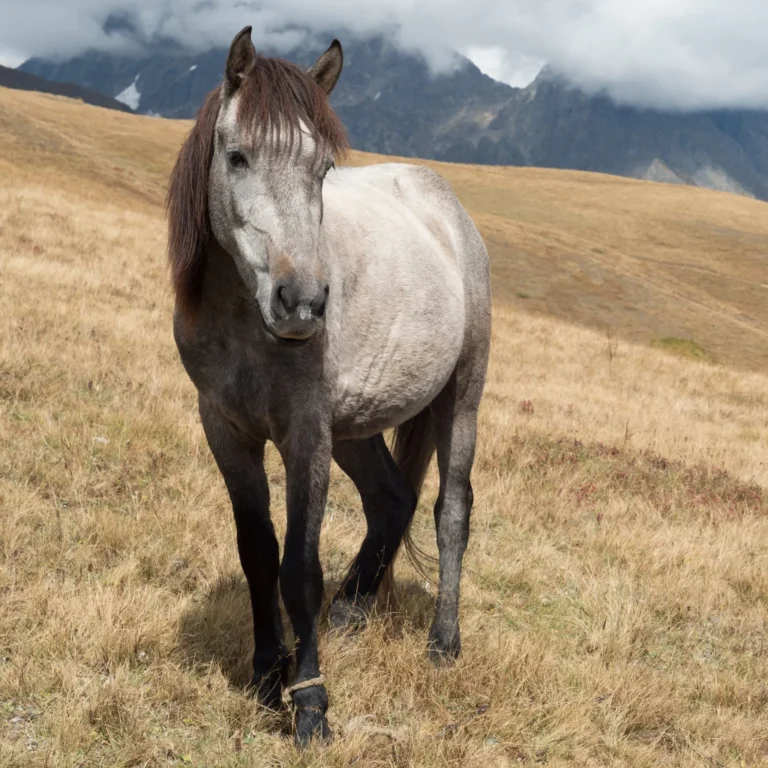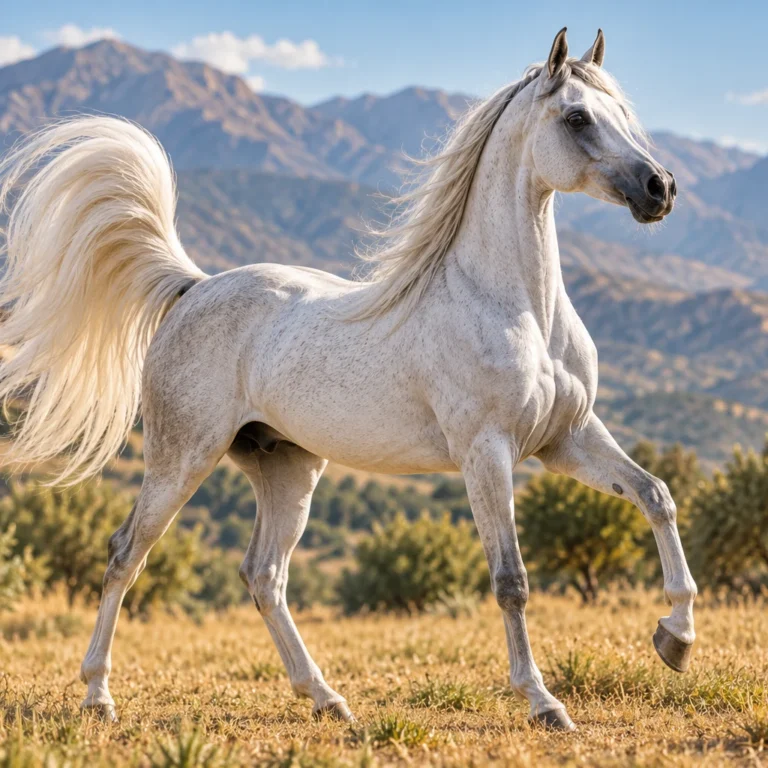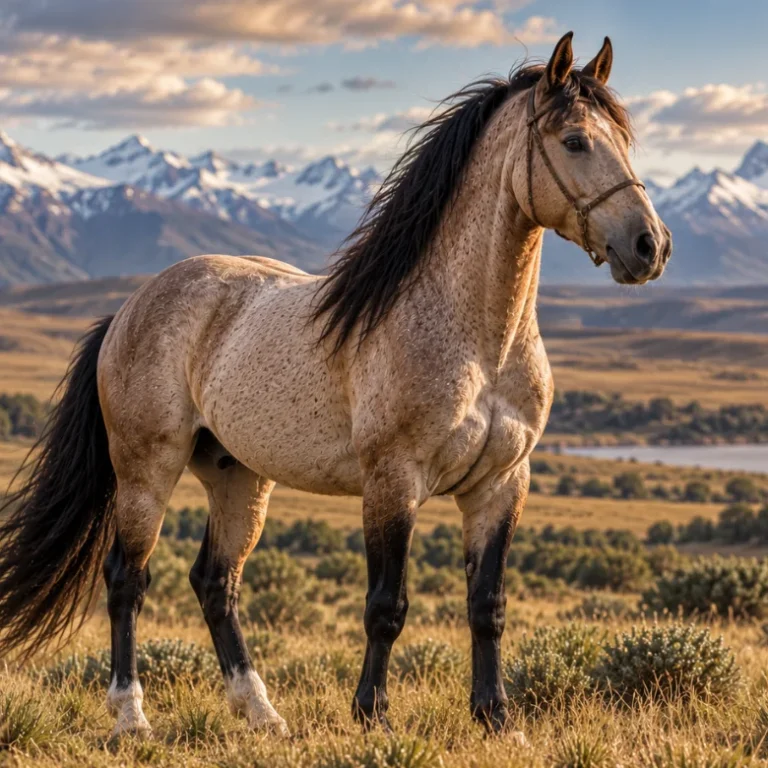
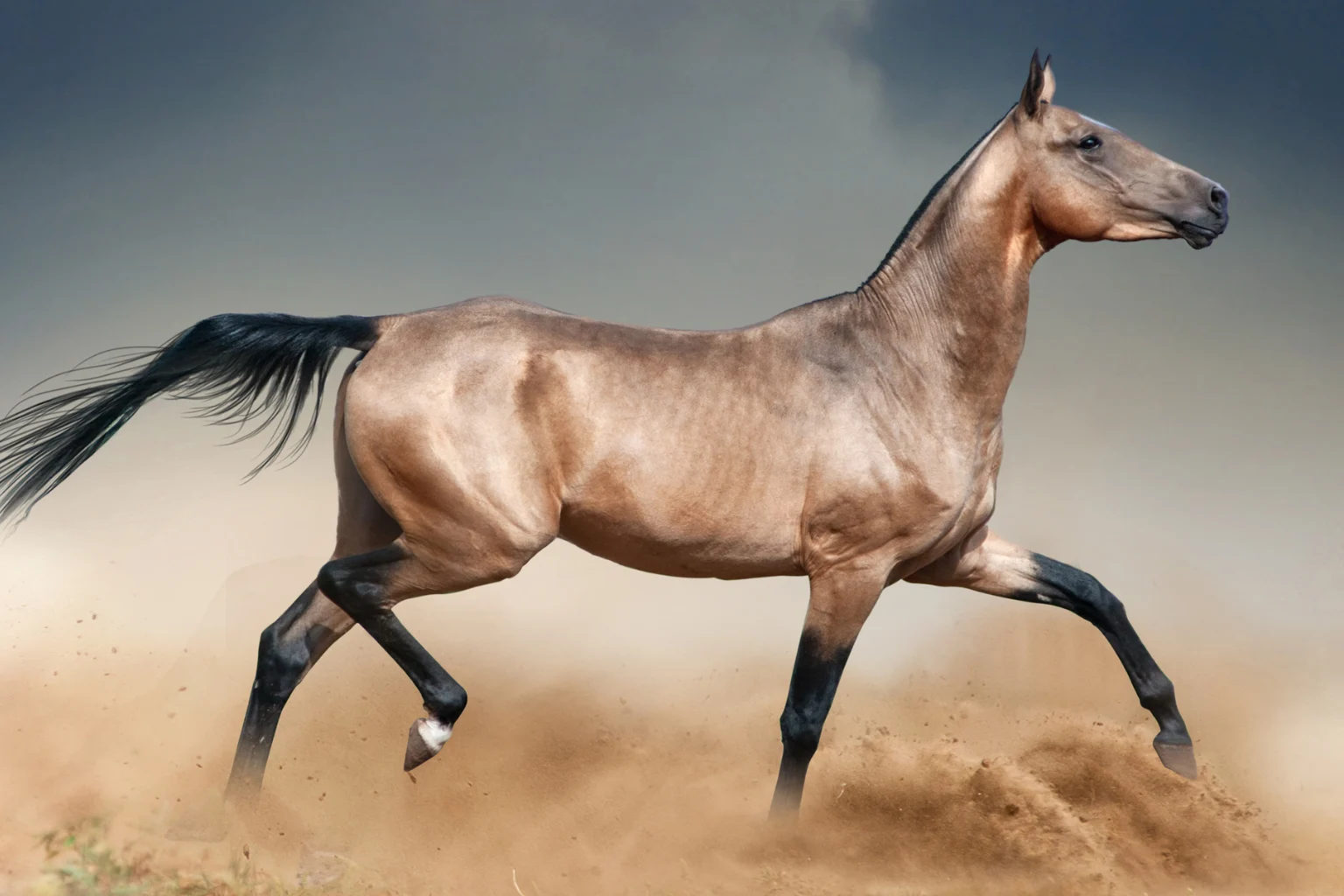
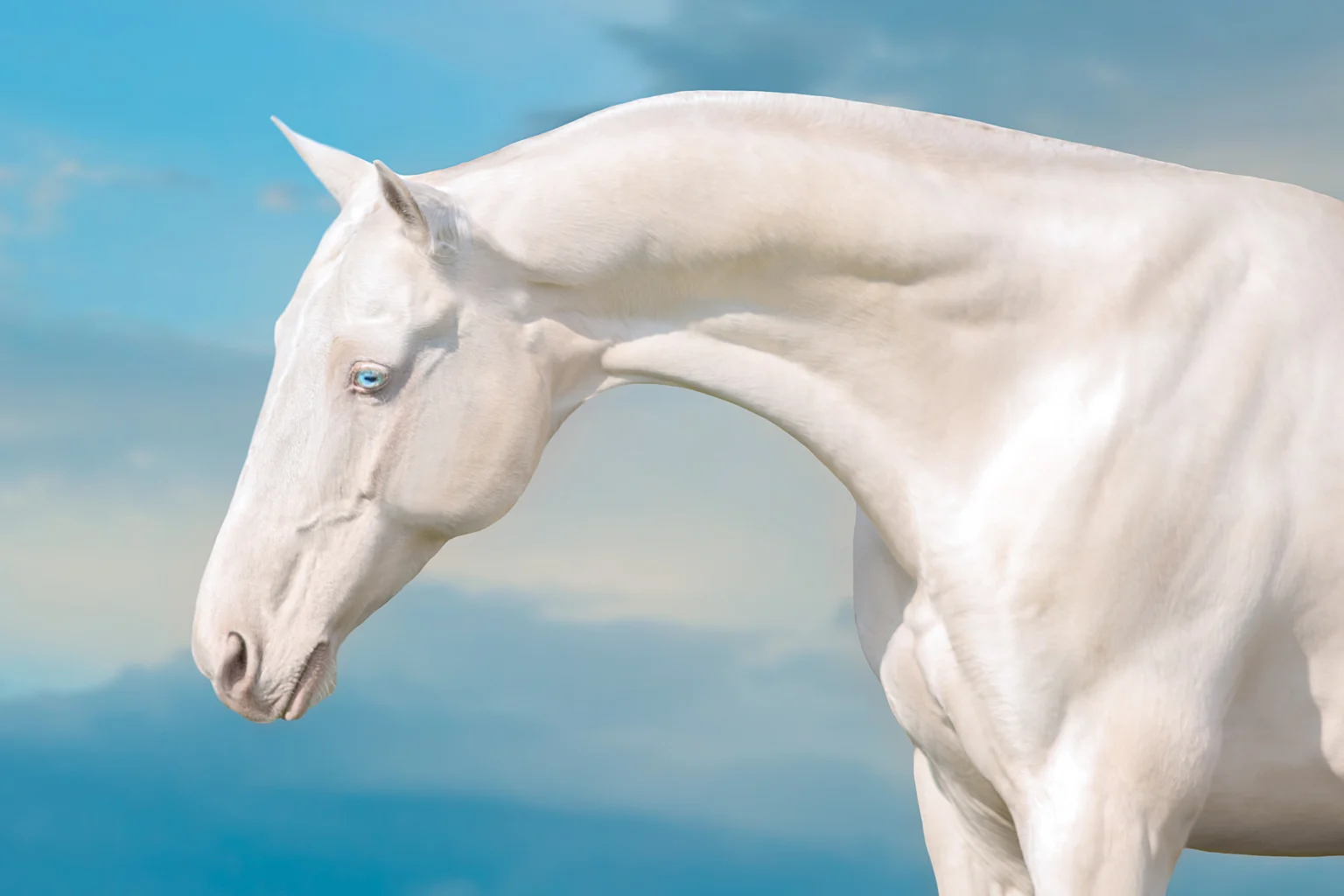
If you have only ever seen an Akhal-Teke in a photograph, you may have assumed the picture was edited. It wasn’t. The glow is real, and so is the stamina that goes with it — which a group of Turkmen horsemen set out to prove in the summer of 1935, by riding their horses all the way from Ashgabat to Moscow. We’ll get to that ride, because it is the reason the breed still exists in its pure form today.
🌍 A Guide to the World’s Horse Breeds
The Akhal-Teke is one chapter in a much bigger story. I’m putting together a full guide to the horses that shaped history and cultures around the world — join the waitlist and be the first to know when it’s ready.
→ Join the Waitlist No spam, just a heads-up when it launchesA Heritage Three Thousand Years Deep
The breed takes its name from two things: the Teke, the most powerful of the Turkmen tribes, and Akhal, the string of oases they lived in along the foot of the Kopet Dag mountains, where present-day Turkmenistan meets Iran. On one side were the mountains; on the other, the Karakum — one of the hottest sand deserts in the world. Horses of this type have been described in the region for roughly three thousand years, and the Akhal-Teke is generally thought to descend from the ancient Turkoman horse, the war mount prized across Central Asia long before most modern breeds existed.
What makes that heritage remarkable is how it was kept. The Teke had no written studbook. Pedigrees were memorised and handed down by word of mouth, generation to generation, and breeding decisions were made on one question only: could the horse carry a rider fast and far across country with almost no water? A horse that couldn’t did not get bred from. It is selection every bit as ruthless as nature’s — just with a horseman’s eye guiding it.
The Turkmen Horseman’s Other Half
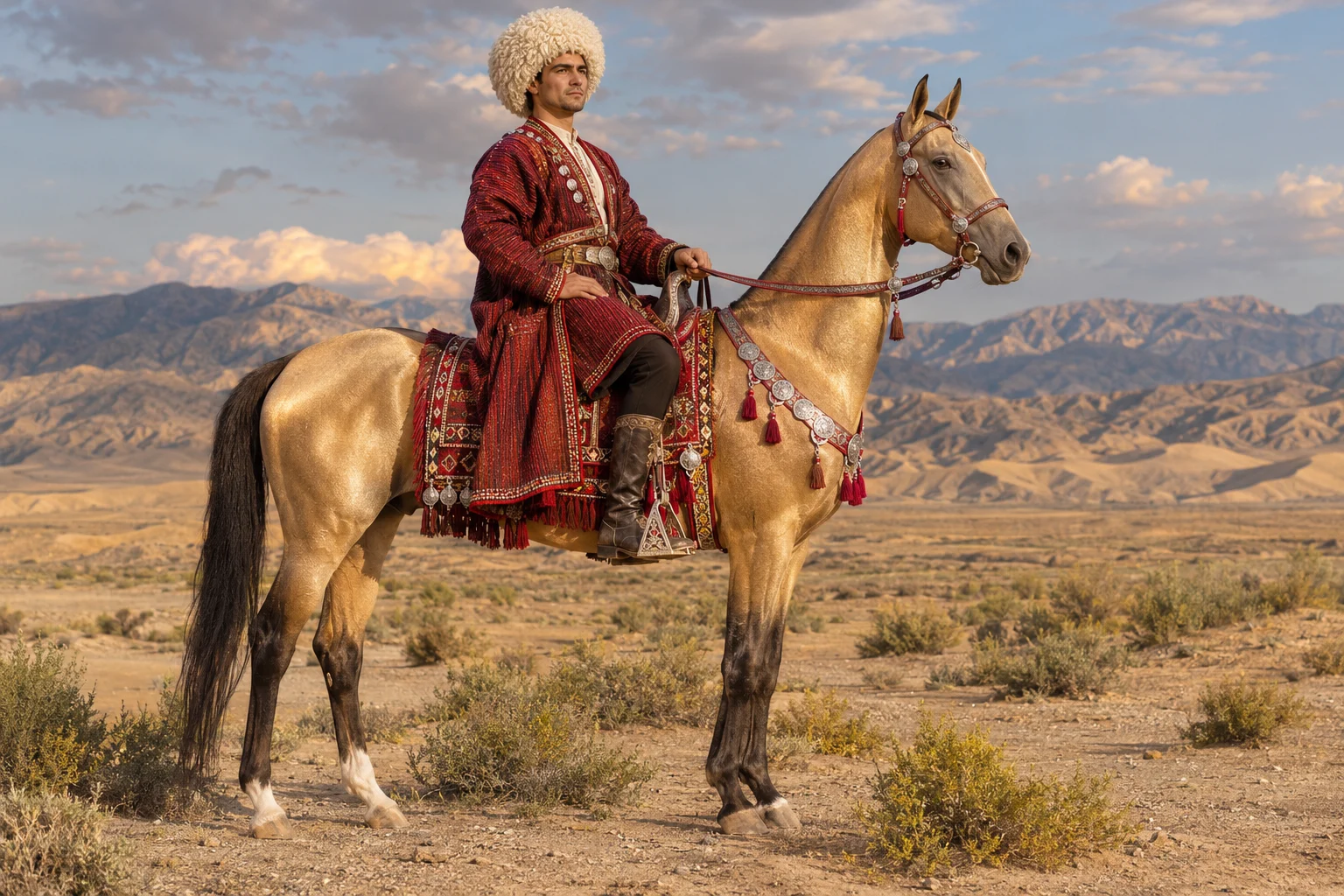
For the Teke, a good horse was not livestock — it was the family’s most valuable possession and often the difference between prosperity and ruin. The tribesmen were raiders, and a raid depended on a horse that could cover enormous distances at speed, then turn around and do it again. Horses were not run in large herds on open grazing as they were on the steppe. They were kept close to the tent, tethered, covered in layers of felt blankets, and fed by hand on a small, concentrated ration — barley, lucerne and, tradition has it, even a little mutton fat — because there simply wasn’t pasture to turn them out on.
That way of keeping horses explains a great deal about the Akhal-Teke we know today. A horse raised at its owner’s side, handled daily by one person and relied on in dangerous work, becomes a horse that bonds deeply with one human. Breeders still describe the Akhal-Teke as a “one-person horse”: intelligent, intensely aware of its rider, and far more responsive to tact than to force.
- Built like a distance athlete. A long, lean frame, deep but narrow chest, long neck set high, fine skin and a sparse mane and tail — the equine equivalent of a marathon runner rather than a weightlifter.
- Thrives on little. Generations on small, high-quality rations in fierce heat produced a horse that copes with hard conditions and limited water better than almost any other breed.
- Sensitive, not difficult. The Akhal-Teke gives a great deal to a quiet, consistent rider and very little to a rough one. It is usually recommended for intermediate to experienced riders for exactly that reason.
Built for the Desert: The Ride That Saved the Breed
By the early 1930s the purebred Akhal-Teke was in real danger. Turkmenistan was now part of the Soviet Union, private horse ownership had been swept away by collectivisation, and the official view was that the old desert horse could be “improved” by crossing it with the English Thoroughbred. To the Turkmen horsemen who had bred these lines for centuries, that meant the end of the breed.
So they made their argument the only way a horseman can. On 30 May 1935, around thirty riders left Ashgabat on Akhal-Teke and Yomud horses, bound for Moscow — some 4,300 kilometres away. The first stretch was the worst: hundreds of kilometres of the Karakum in early summer, crossed in about three days on very little water. After that came salt flats, the Kazakh steppe, and finally the forests of Russia. Eighty-four days after setting out, they rode into Moscow.
The ride did what it was meant to do. The studbook, already closed to outside blood, stayed closed; crossbred horses were no longer counted as purebred; and in 1941 the first printed studbook was published, recording just over 700 horses. A breed that had survived three thousand years on memory alone finally had its pedigrees on paper.
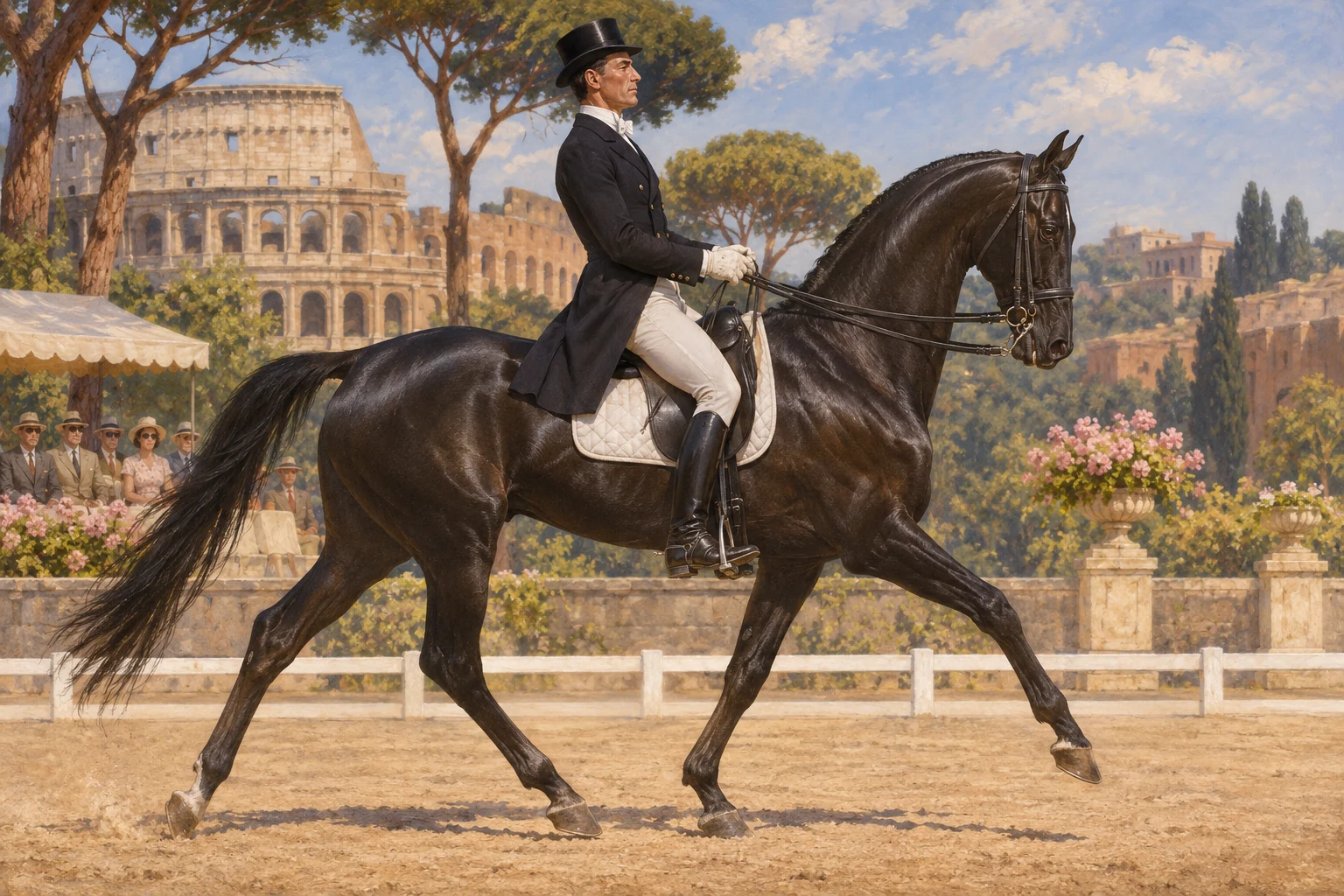
And for anyone who still thought of the Akhal-Teke as merely a tough desert horse, there was Absent. At the 1960 Rome Olympics a black Akhal-Teke stallion of that name, ridden by Sergei Filatov, won the individual gold medal in dressage — the first Olympic equestrian gold the Soviet Union had ever won — beating the established European stars of the day. He went on to compete at two more Olympic Games and won further medals. Not bad for a breed that isn’t supposed to be a dressage horse.
The Akhal-Teke Today
In Turkmenistan the Akhal-Teke is far more than a breed — it is a national symbol. A horse stands at the centre of the country’s state emblem, the finest horses are still given as diplomatic gifts, and in 2023 the art of Akhal-Teke horse breeding was added to UNESCO’s list of Intangible Cultural Heritage. Racing remains hugely popular there, and the horses running at the national racecourse in Ashgabat are Akhal-Tekes.
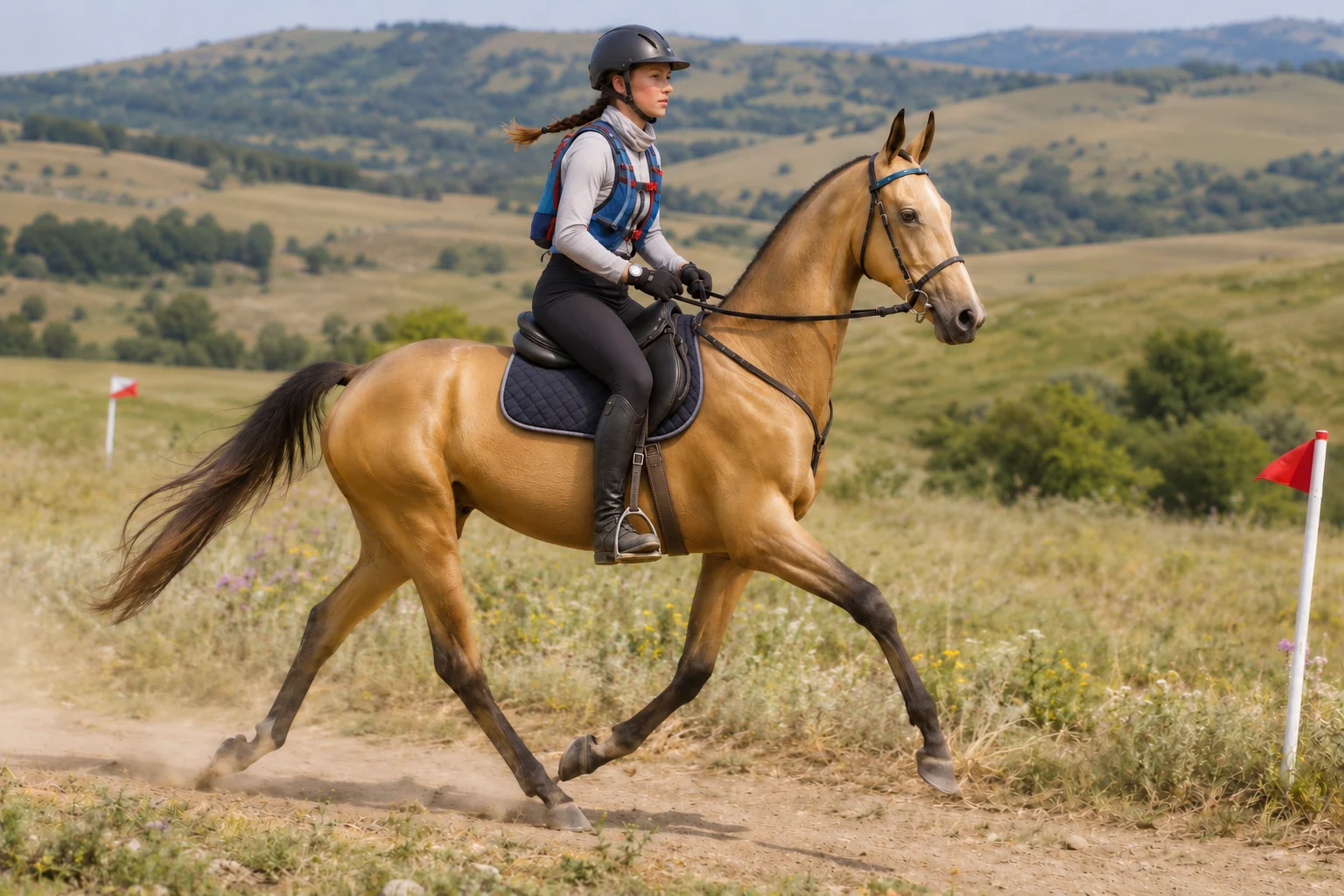
Elsewhere the breed is still rare — numbering only in the thousands worldwide, and listed as threatened by conservation bodies — with the largest populations outside Turkmenistan in Russia, Europe and North America. Where they are found, they tend to be doing what they have always done best: endurance riding, where that desert-bred stamina comes into its own. But they also appear in dressage, show jumping and eventing, and many owners will tell you the real reward is simpler than any rosette — a horse that chooses its person and stays chosen.
A Breed of Heritage, A Partner for Life
It would be easy to love the Akhal-Teke for the coat alone, and plenty of people do. But the shine is only the surface of a horse made by three thousand years of desert, raised at its rider’s side, and saved in the end by people who believed in it enough to ride it across a continent to prove their point. Look past the gold and what you find is exactly what the Teke horsemen were breeding for all along: a horse that will go further than you thought possible, for the one person it has decided to trust.
🌍 A Guide to the World’s Horse Breeds
Every breed has a story like this one. I’m building a complete guide to the horses that shaped history around the world — join the waitlist to get it the moment it’s ready.
→ Join the Waitlist No spam, just a heads-up when it launches