Feeding Your Horse in Winter: How Much More Hay, and Why
Your horse’s best heater is not in the feed room. It is in his hindgut, and the fuel for it is hay.
A horse in a thick winter coat can look round and well while he is quietly losing condition underneath. The fluff hides the ribs, the rug hides the rest, and by the time you notice, he has lost weight that takes until spring to put back. Most winter feeding problems start there: with a horse that looked fine.
The good news is that feeding through winter is not complicated. It comes down to three things: more of the right forage when it gets cold, plenty of water he will actually drink, and your hands on him every week to check what the coat is hiding.
How Much Should Your Horse Be Eating?
Put in his weight, workload and condition and our free feed calculator gives you a daily amount in 15 seconds. Use it as your starting point, then adjust for the cold.
Try the Free Calculator →Hay Is the Heater
When people worry about a horse in the cold, they reach for the feed scoop. It feels like the generous thing to do. But hard feed and hay do very different jobs in winter.
Hay and other fibre is broken down by microbes in the hindgut, and that fermentation gives off a lot of heat. Grain is digested much earlier, in the small intestine, and produces far less. The University of Nebraska and the University of Minnesota both make the same point: more forage means more fermentation, and more fermentation keeps the horse warm from the inside.
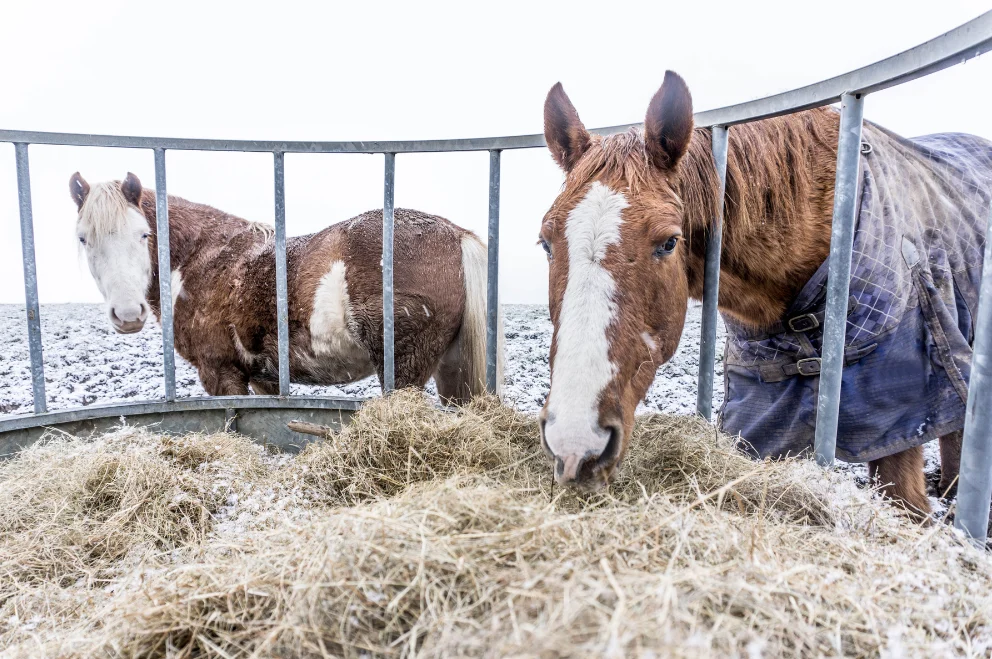
That is why the safest way to meet extra winter needs is simply more hay, fed little and often or ad lib, so the fermentation keeps going through the long, cold night.
When Does Your Horse Need More?
Every horse has a temperature below which he starts using extra energy just to stay warm. It is called the lower critical temperature, and it is not one number. It moves with his coat, his condition, the wind and, above all, whether he is wet.
| Horse’s coat | Starts needing extra feed below roughly |
|---|---|
| Heavy winter coat, dry | About −1°C (30°F). Horses acclimatised to hard winters can cope lower. |
| Moderate coat | About 10°C (50°F) |
| Wet coat, or clipped / short summer coat | About 16°C (60°F) |
Figures for horses in moderate body condition, from the Extension horse winter care guide. Use the “feels like” temperature, which includes the wind.
Look at the bottom row. A wet coat lies flat and stops insulating, so a horse standing in cold rain needs extra feed at temperatures that would not bother him at all on a dry, still day. Rain and wind together cost a horse far more than a dry frost.
How much more?
The rule of thumb the extension services use is that a horse needs about 1% more energy for every 1°F the “feels like” temperature drops below his critical temperature. In Celsius, that is roughly 2% more for every 1°C.
in hay a day for an adult horse
per 1°C below his critical temperature
about 10°C below his critical temperature
So for a 500 kg (1,100 lb) horse eating around 9 kg of hay a day, a cold, windy week that sits 10°C below his comfort zone means roughly 20% more energy, or close to 2 kg (4 lb) more hay a day. Treat that as a guide, not a prescription. The horse in front of you tells you whether it is enough.
Weigh It Once
A slice of hay can weigh anything from 1 to 3 kg depending on the bale. Weigh a few slices and a full net on a luggage scale once, and you will know what you are really feeding. The same goes for hard feed: weigh the scoop, do not guess it.
If you are not sure what his normal daily amount should be, start with how much hay your horse actually needs. And if you have had your hay analysed, my guide to reading hay analysis reports will tell you how much energy each kilo is giving him.
Check Under the Coat, Not the Coat
This is the single most useful winter habit. A long coat hides weight loss well, and a rug hides it completely. Once a week, take the rug off and use your hands.
- Ribs: run your flat hand along his side. You should be able to feel the ribs with light pressure, but not see them.
- Backbone: you should not be able to feel a ridge of spine along his back.
- Withers, shoulder and hindquarters: feel for the bones. Sharp edges where you once felt a smooth cover mean he is losing condition.
- Use a weight tape every two weeks in the same place and write the number down. A steady drop is easier to spot on paper than by eye.
The ideal is to go into winter in good condition, around a 5 or 6 on the 1–9 body condition scale. A little fat under the skin is the horse’s second layer of insulation after his coat, and a horse that starts winter thin has to burn feed just to stay warm.
Take the Rug Off
If your horse is rugged all the time, take the rug off at least once a day to check for rubs and sweating, and once a week to check his condition properly. Overheating under a heavy rug is also a real winter problem. My post on when to rug and when not to covers this.
Water: The Winter Colic Risk
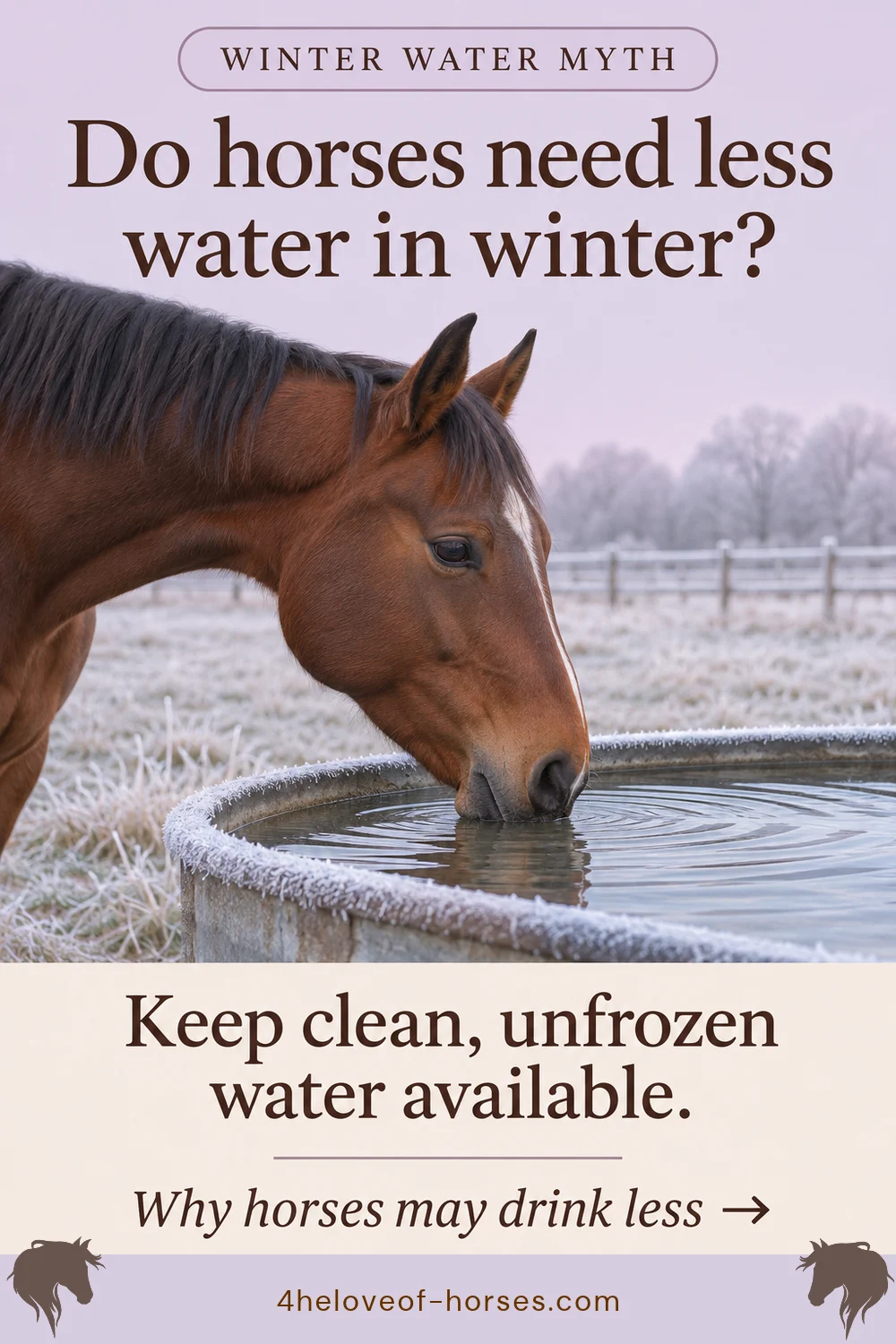
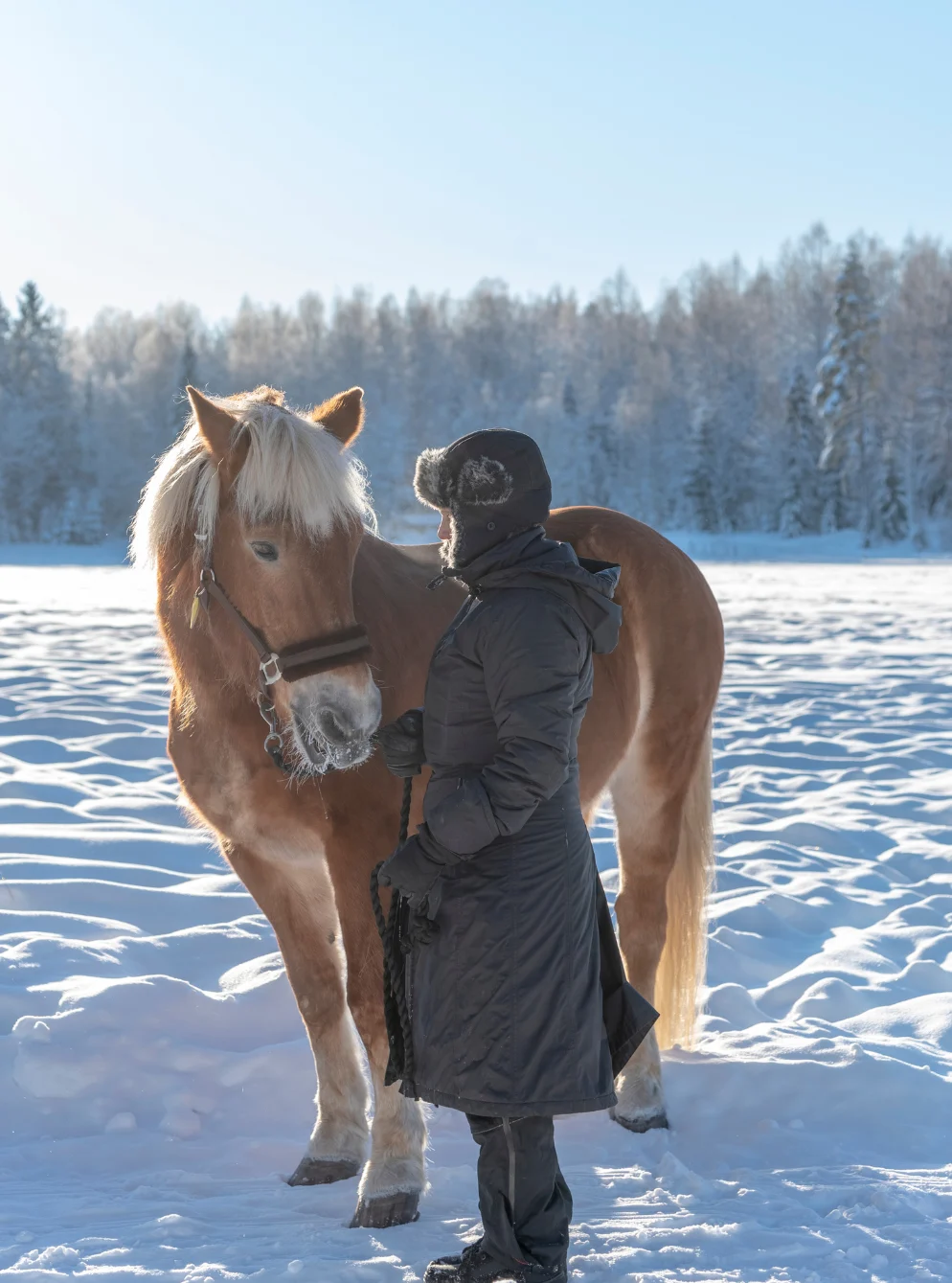
Summer grass is mostly water. Hay and hard feed are not. The University of Minnesota puts it at 60 to 80 percent moisture in lush pasture against under 15 percent in hay and grain. So as soon as your horse moves onto a winter diet, he needs to drink a great deal more, at exactly the time of year he least wants to.
Horses drink less when the water is icy, and less water with more dry forage is how impaction colic starts. To keep him drinking:
- Take the chill off. Horses drink best when water is between about 7°C and 18°C (45°F and 65°F).
- Check troughs and buckets twice a day and lift out the ice, rather than just breaking it.
- Do not count on snow. A horse cannot eat enough snow to replace drinking, and it costs him body heat to melt it.
- Keep salt available. An adult horse needs roughly 30 to 60 g (1 to 2 oz) a day, and salt is what drives thirst.
- Soak or dampen feeds for horses that are poor drinkers. A wet beet pulp or chaff feed sneaks extra water in.
Know what normal looks like for your horse: how much he drinks, how his droppings look, and how often he passes them. A change in any of those in winter deserves your attention. My guide to preventing colic goes through the daily habits that matter most.
Call the Vet
Small, dry droppings or none at all, a horse who stops eating, pawing, looking at his belly, or lying down more than usual. In winter, think impaction first, and do not wait to see if it passes. See 10 signs your horse needs the vet right now.
When Hay Alone Is Not Enough
Most healthy adult horses in good condition will come through winter on good hay, water, salt and a balancer for vitamins and minerals. Some will not. Old horses, hard keepers, horses in hard work, and anyone who started winter thin may need more calories than they can eat as hay.
Add calories without upsetting the gut
- Soaked sugar beet is highly digestible fibre, so it adds energy and still ferments in the hindgut.
- Oil or rice bran are dense calories. Fat makes little heat as it is digested, but it builds the fat layer that insulates him. The AAEP notes that a cup of vegetable oil carries about 2 Mcal of energy, a useful addition for a horse who needs condition.
- A conditioning or senior feed made for the job, fed by weight at the rate on the bag, split over two or three feeds.
Whatever you add, add it gradually over a week or two, and keep any single hard feed small. Big buckets of cereal are hard on the stomach and the hindgut, and they will not keep him any warmer.
Older horses
Many older horses cannot chew long hay well, and they quietly drop weight in winter because they cannot eat enough of it. If you see quids of half-chewed hay, long fibres in the droppings or weight going despite a full haynet, have his teeth checked (here are the signs to look for) and replace some or all of his hay with soaked hay cubes, pellets or chopped fibre. If he is losing weight despite eating, my post on weight loss in a horse that eats well covers what else to check.
Good doers and laminitis-prone horses
Winter is the season when a good doer is meant to lose a little of his summer padding. Do not rug him heavily and feed him up. Feed hay to his needs, in a small-holed net to make it last, and keep hard feed to a balancer. Be careful with frosty grazing on bright, cold days, which can be high in sugar and is a known laminitis trigger. My post on laminitis warning signs is worth a read if your horse has a history.
Seven Winter Feeding Mistakes
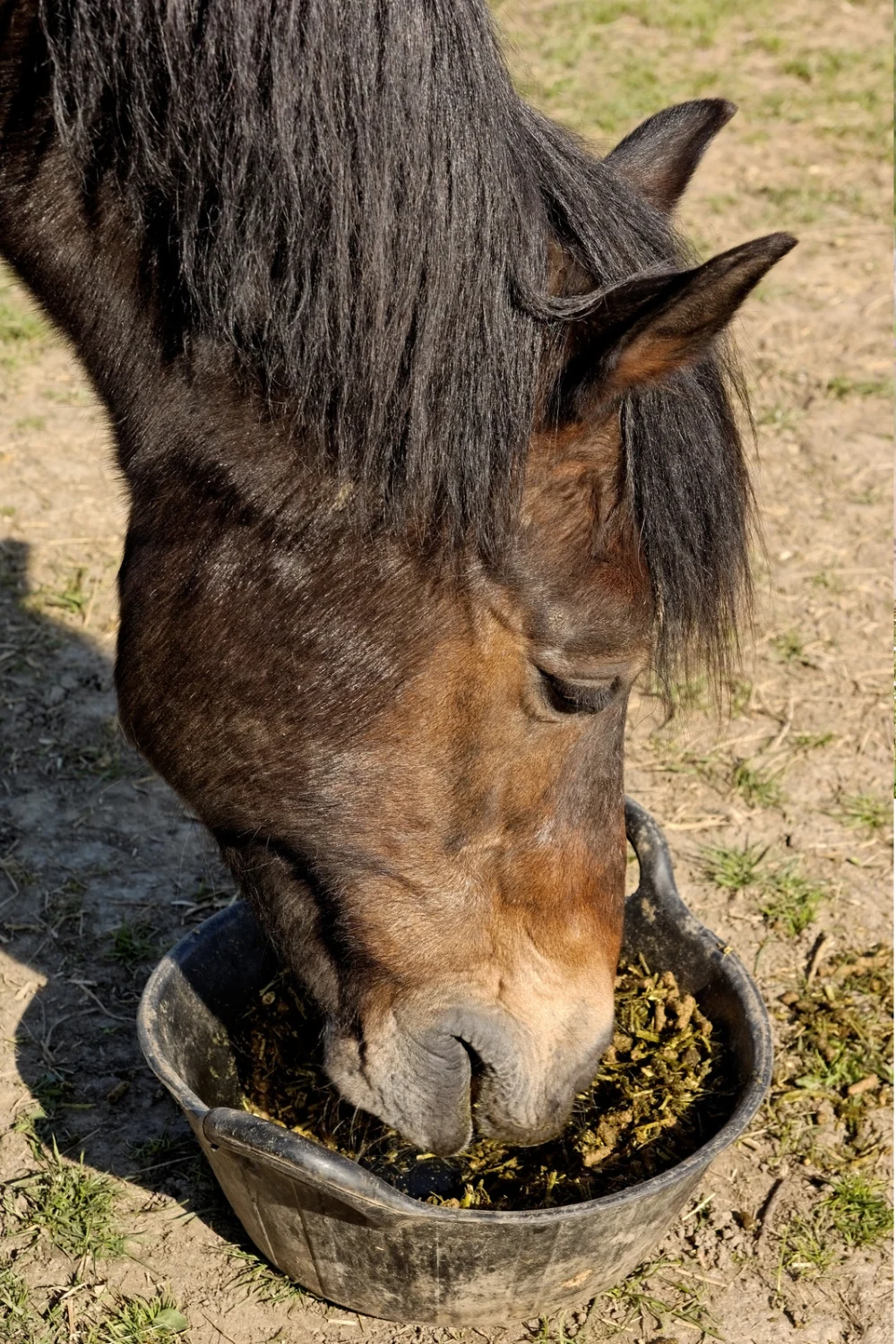
- Adding hard feed in a cold snap instead of hay.
- Judging condition by eye through a winter coat or a rug.
- Feeding by the scoop or the slice without ever weighing either.
- Breaking the ice and leaving it instead of lifting it out.
- Forgetting the wet days. A wet, windy 5°C day costs more than a dry frost.
- Long gaps without forage, such as a small haynet that is empty by midnight.
- Changing the diet overnight when the weather turns.
Get His Daily Amount in 15 Seconds
Our free feed calculator works out how much your horse needs from his weight, work and condition. Start there, then use this post to adjust for the cold.
Try the Free Calculator →Riding Through Winter Too?
The free Winter Riding Checklist & Week Planner covers the other half: when to ride, adapt or skip, the winter warm-up, and drying a sweaty horse properly.
Feed the hindgut, keep the water flowing, and trust your hands over the coat.
Keep Reading