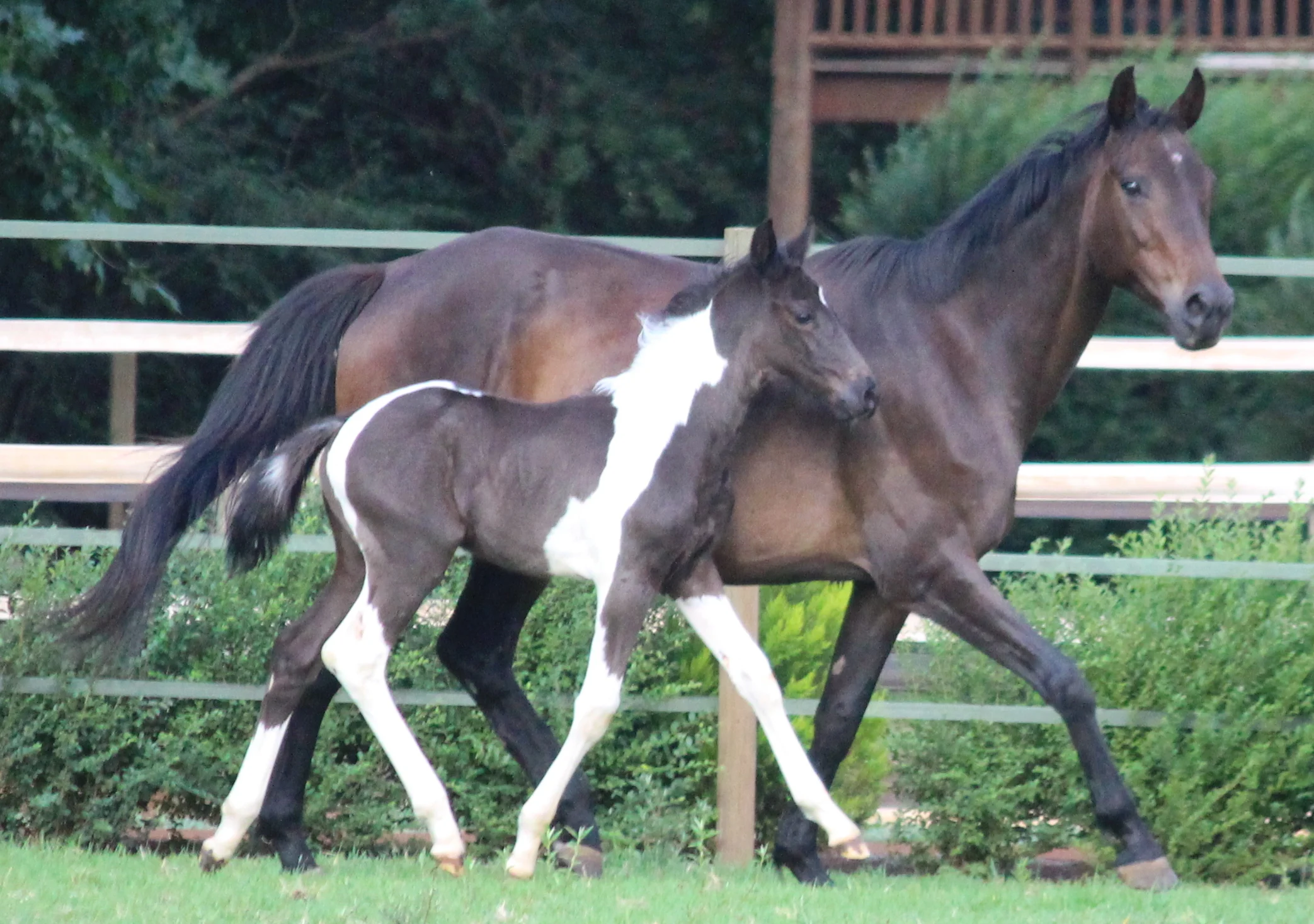
How to Get Your Mare in Foal: What 25 Years of Breeding Taught Me
You have chosen the mare, chosen the stallion and booked the semen. Now comes the part nobody warns you about: actually getting her in foal.
For every mare I bred, there was a spreadsheet. The day she showed her season went in first. Then the day she was covered, and from there the dates would count themselves forward: when she was due to be scanned, when she should be re-teased if she wasn’t in foal, and when she could be covered again. Once a scan came back positive, the same sheet would tell me exactly how many days and months along she was, right down to her foaling due date.
It sounds like a lot of admin. It isn’t. In over 25 years of breeding warmbloods, that spreadsheet saved me more missed cycles, wasted semen and vet call-outs than anything else I did. Because getting a mare in foal is not one event. It is a run of small windows, some only hours long, and if you miss one you are waiting another three weeks.
I learned that in my very first breeding season. I was using chilled semen, and I did not yet know exactly what to look for. So the vet came out every second day for a week (a very expensive week) to check the follicles growing and watch for the oedema starting to build in the uterus. All the while we hoped the breeder could get the chilled semen to us in time to catch her.
When one of those first doses arrived, it was tiny: just 5ml, and so diluted that my vet thought there was no way the mare could take. But take she did. We had timed her so perfectly that she was confirmed in foal 14 days later. We heard afterwards that other breeders nearby, sent semen from the same collection, had not got a single pregnancy.
That is what good timing can do, even when the odds are against you.
This guide walks you through the whole journey, from getting your mare cycling to that first scan. Each stage links to a deeper post where you need more detail.
Free Breeding Season Tracker
The record system I used for every mare: season dates, covering, scan and re-tease dates, a pregnancy countdown to her due date, and a foal register. It does the date maths for you.
Download Free →Before You Start: Is She Ready?
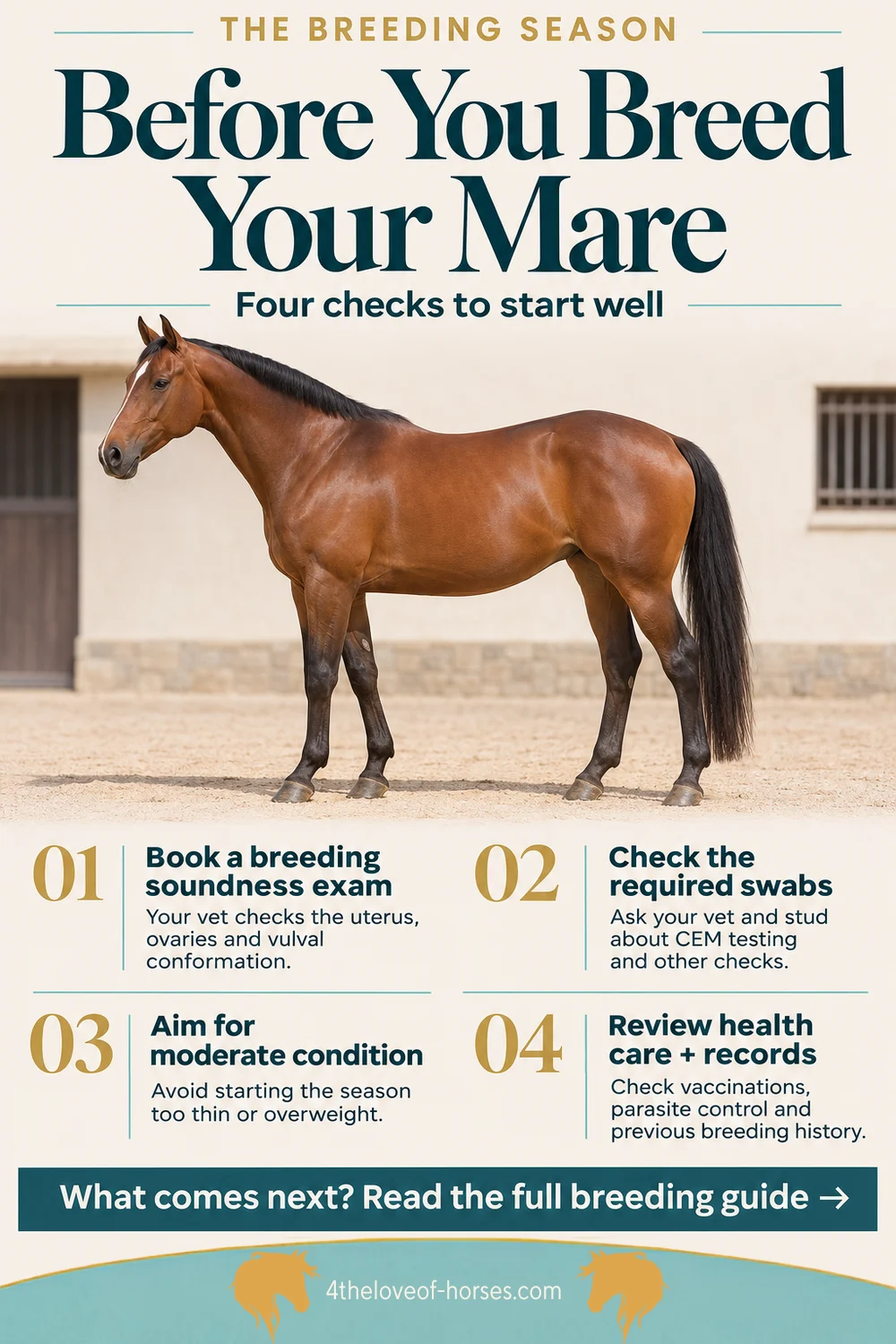
Most failed breeding seasons are decided before the mare ever sees the stallion. If you have not already, read Breeding Your Mare: The Importance of Preparation and Planning and How to Choose the Ideal Mare to Breed Your Dream Foal. In short, before the season starts your mare needs:
- A breeding soundness check by your vet: a scan of her uterus and ovaries, and a look at her vulval conformation.
- Swabs: most stud farms and semen suppliers ask for clitoral swabs to rule out Contagious Equine Metritis (CEM). Often an endometrial swab is taken as well.
- Up-to-date vaccinations and worming. See Essential Mare Vaccinations.
- The right body condition. A mare in moderate condition and on a rising plane of nutrition cycles and conceives better than a fat or poor one. Broodmare Nutrition Basics covers the timeline.
From my records
Start each mare’s record before the season, not when she first comes into heat. Write her swab results, her last foaling date and any problems from previous seasons at the top. When the vet asks about her history at 7am in the middle of a scan, you will have it in front of you.
Stage 1: Getting Her Cycling
Mares are seasonal breeders. They cycle as the days lengthen and usually shut down over winter. Coming out of winter, most mares go through a transitional period of long, erratic heats that often do not end in ovulation. Breeding her during that time is mostly wasted effort.
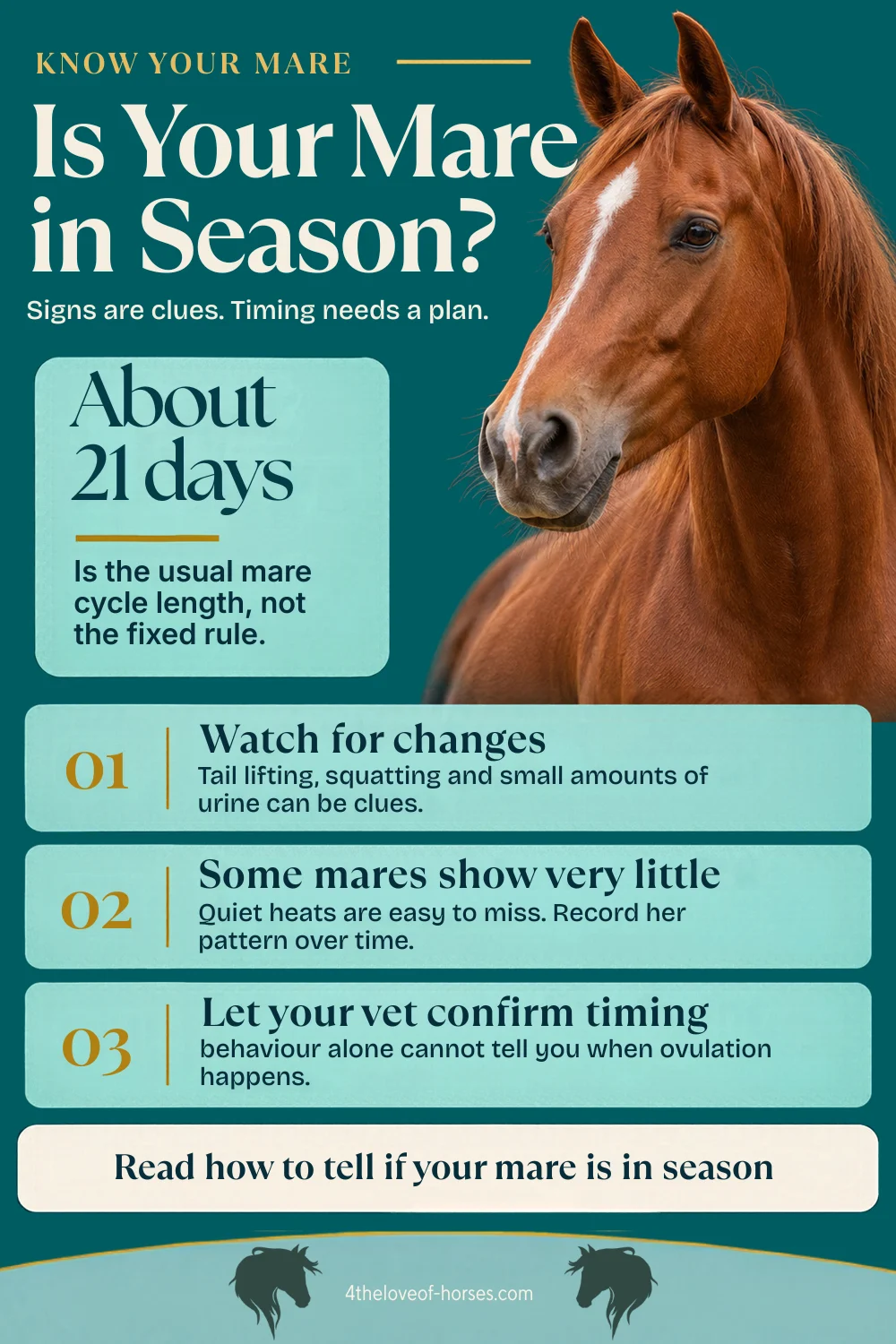
Once she is cycling properly, her cycle runs roughly 21 days: about 5 to 7 days in season (oestrus), followed by about two weeks out of season (dioestrus). She usually ovulates towards the end of her heat, about 24 to 48 hours before it finishes. For more detail, read Understanding Your Mare’s Reproductive Cycle.
Breeding early in the year?
If you want an early foal, talk to your vet about putting your mare under lights (artificially lengthening her day to around 16 hours) well before you want her cycling. It takes many weeks to work, so you cannot leave it until the season starts.
Stage 2: Knowing When She Is in Season
You cannot time anything until you know where she is in her cycle. Teasing her with a stallion or a teaser horse is still the most reliable way. A mare in season will usually:
- Lean towards the stallion, stand quietly and lift her tail
- “Wink” (the vulva opening and closing) and squat
- Pass small amounts of urine
A mare out of season will pin her ears, squeal, swing her quarters or kick. Some mares are “silent” and show almost nothing, particularly maidens and mares with a foal at foot. For these mares, scanning is the only reliable way to tell.
Some of my mares were very hard to read, and catching them in time was crucial. This is where my spreadsheet earned its place. Because I knew roughly when each mare was due back in season, I could start checking her a few days early. That meant I could see the change happen: from completely uninterested, to the first signs that she was starting to come in, to the day she was ready to stand for the stallion.
Following each mare this way over the years, I got to know her. I learned which mares would show clearly and which would barely show at all. So record every tease, including the “no” days. Within a season or two, each mare’s pattern will show up in your own records too.
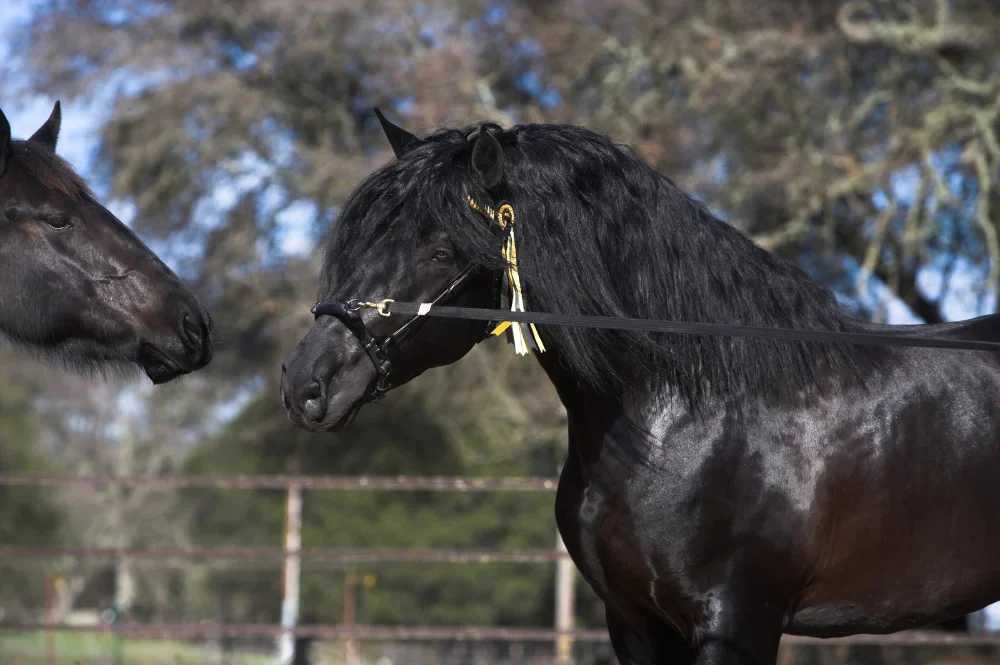
Stage 3: Choosing How She Will Be Bred
How she is bred decides how precise your timing has to be. Sperm survive for very different lengths of time depending on how the semen is handled. Colorado State University’s Equine Reproduction Laboratory gives these figures:
| Method | How long sperm stay viable | What it means for you |
|---|---|---|
| Live cover / fresh | At least 48 hours | The most forgiving. Covering every other day while she is in season usually works. |
| Chilled (cooled) | 24 to 48 hours | Inseminate within 24 to 48 hours before she ovulates. Semen has to be ordered and shipped in time. |
| Frozen | About 12 hours | A very tight window. It needs frequent scanning, usually an ovulation-inducing drug, and a vet on call. |
Frozen semen gives you access to stallions anywhere in the world, but expect more vet visits and a lower first-cycle success rate, especially with older mares. Before you book, ask the stallion owner how many straws make up a dose, how many doses you get, and what their return or rebreeding policy is. Breeding with chilled or frozen semen will be covered in its own post in this series.
Stage 4: Timing Ovulation
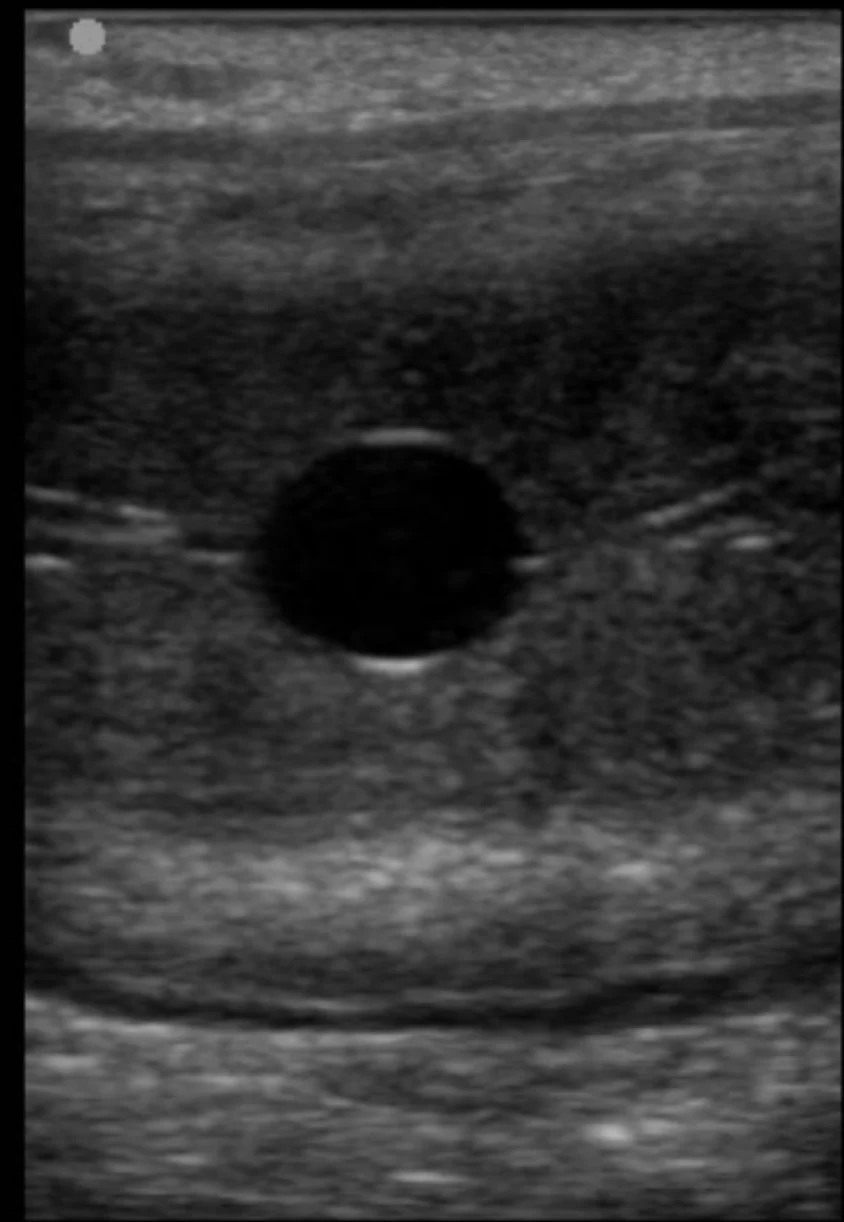
This is where most seasons are won or lost. Once she is in season, your vet scans her ovaries to track the dominant follicle (the fluid-filled structure holding the egg) as it grows. They also look at the pattern of oedema (swelling) in the uterus. Together these tell the vet how close she is to ovulating.
When the follicle reaches the right size and she is showing good oedema, the vet will often give an ovulation-inducing drug, such as hCG or deslorelin. Most mares then ovulate within about two days, which lets you time the insemination or covering instead of guessing.
Write down every scan
Record the date, the time, the follicle size and on which ovary, the oedema, and any drug given. If she does not take this cycle, those numbers tell you and your vet exactly what to change next time.
Mares do not always follow the textbook, though. A couple of years after that first season, I bred the same mare again, this time by live cover to my stallion Carrick. When we scanned her, she was in foal, but the embryo was 10 days smaller than it should have been for her covering date. She had conceived about 10 days after she was covered.
It is the exception, not something to plan around. But it is a good reason to always record the vet’s scan measurements, not just the covering date. Without those numbers, I would have had her due date wrong by 10 days.
Stage 5: After She Is Bred
Breeding causes some inflammation in every mare’s uterus. Most clear it within a day. Some, often older mares and mares with poor conformation, hold on to fluid, and that fluid can stop the embryo from surviving. Your vet may scan her the day after breeding and give oxytocin or flush her uterus if fluid is building up.
The vet will also confirm that she has actually ovulated. If she hasn’t, she may need to be bred again in the same heat.
Poor vulval conformation?
If her vulva tilts forward or doesn’t close properly, she can suck air and dirt into her vagina and keep reinfecting her uterus. A Caslick’s procedure, where the vet stitches the top of the vulva partly closed, is common for these mares. Remember to note it in her record: it has to be opened again before she foals.
Stage 6: The First Scan, and What Happens Next
Your first pregnancy scan is usually at 14 to 16 days after ovulation. This scan matters for two reasons:
- Confirming she is in foal, while catching her before her next heat if she isn’t.
- Checking for twins. At this stage the vet can usually deal with a second embryo. Leave it much later and your options shrink fast. Read The Miracle and Reality of Horse Twins to understand why this matters so much.
A heartbeat can usually be seen at around 25 to 30 days. Most vets recheck again at around 45 to 60 days, because early pregnancy loss is most common in the first weeks.
If she is not in foal: start teasing her again straight away, because she should come back into season soon. Your vet may also give her a prostaglandin injection to bring her back into heat sooner, so you don’t lose more of the season. This is where your spreadsheet earns its keep: as soon as you enter her covering date, it should already show her scan date and her re-tease date.
Call your vet if
She has discharge from her vulva, comes back into season after a positive scan, or a follow-up scan shows the pregnancy has been lost. Early action can save the rest of your season.
Once She Is in Foal
An average gestation is around 340 days, but it can vary by several weeks either side, so treat the due date as a guide, not a deadline. From the positive scan onwards, my spreadsheet would count her days and months in foal, so I always knew when her vaccinations were due, when to change her feeding, and when to start watching her for foaling. When the foal arrived, its birth date went in, her cycle would start counting again from there, and the foal got its own sheet: date of birth, age, vaccinations, and whether it had been birth notified with the breed society.
For the next stage of the journey, read The Ultimate Mare Care Manual, Late Pregnancy Nutrition and Placentitis in Mares.
Coming Up in This Series
- Live cover vs AI: fresh, chilled and frozen semen explained
- Timing ovulation: follicle tracking for breeders
- Reading heat signs and teasing your mare
- The 14-day scan, twins and early pregnancy loss
- Why won’t my mare take? Problem mares and what to do
- Foal heat breeding: should you?
Get the Breeding Season Tracker
Enter a covering date and it shows her scan date, re-tease date and due date for you. It includes a foal register with age, vaccinations and birth notification. Free.
Download Free →From Decision to Foal – Coming 1 January 2027
My complete breeding guide: every stage from deciding to breed to your foal’s first weeks, with the stories and the mistakes I learned from. Join the waitlist to hear first.
Join the Waitlist →A mare does not read the textbook. Your records are how you learn the one standing in front of you.