How to Keep Your Horse Cool in Extreme Heat — What Actually Works

When temperatures soar, horses feel it — they can really battle in extreme heat. Here’s what will help keep your horse safe, comfortable, and drinking through a heatwave.
If you’ve ever watched your horse standing motionless in full sun, sweating through a coat that should have dried hours ago, you already know how quickly extreme heat becomes a welfare issue. Horses generate an enormous amount of body heat — even just digesting their forage produces significant warmth — and on a 35°C day with high humidity, their ability to cool down is genuinely compromised.
The good news? Most of what you need to do is practical and low-cost. The less good news: you need to be doing it consistently, not just when a horse looks distressed. By the time visible signs appear, you’re already behind.
Let’s go through it properly.
Why Horses Struggle in the Heat
Horses cool themselves almost entirely through sweating — and they sweat a lot. A hard-working horse in hot conditions can lose anywhere from 10 to 15 litres of fluid per hour. Even a horse standing quietly in summer heat can lose several litres throughout the day.
The problem is that sweat doesn’t just contain water. Horses lose significant quantities of electrolytes — sodium, potassium, chloride, and calcium — and if those aren’t replaced, the horse can’t regulate body temperature or muscle function effectively. This is why a horse that looks “just a bit tired” in the heat can tip into heat stress faster than you’d expect. Electrolytes are a cornerstone of good equine nutrition year-round — but in summer their role becomes critical.
Add humidity to the mix and things get trickier. Sweat only cools the body when it evaporates. In high-humidity conditions, evaporation slows dramatically — which means the horse is sweating but not actually cooling down efficiently.
Know This
A simple way to assess heat risk: add the temperature (°C) to the humidity percentage. Above 150 = horses need assistance cooling. Above 180 = serious risk, even at rest. Above 200 = dangerous conditions for any horse.
Water: The Non-Negotiable First Step
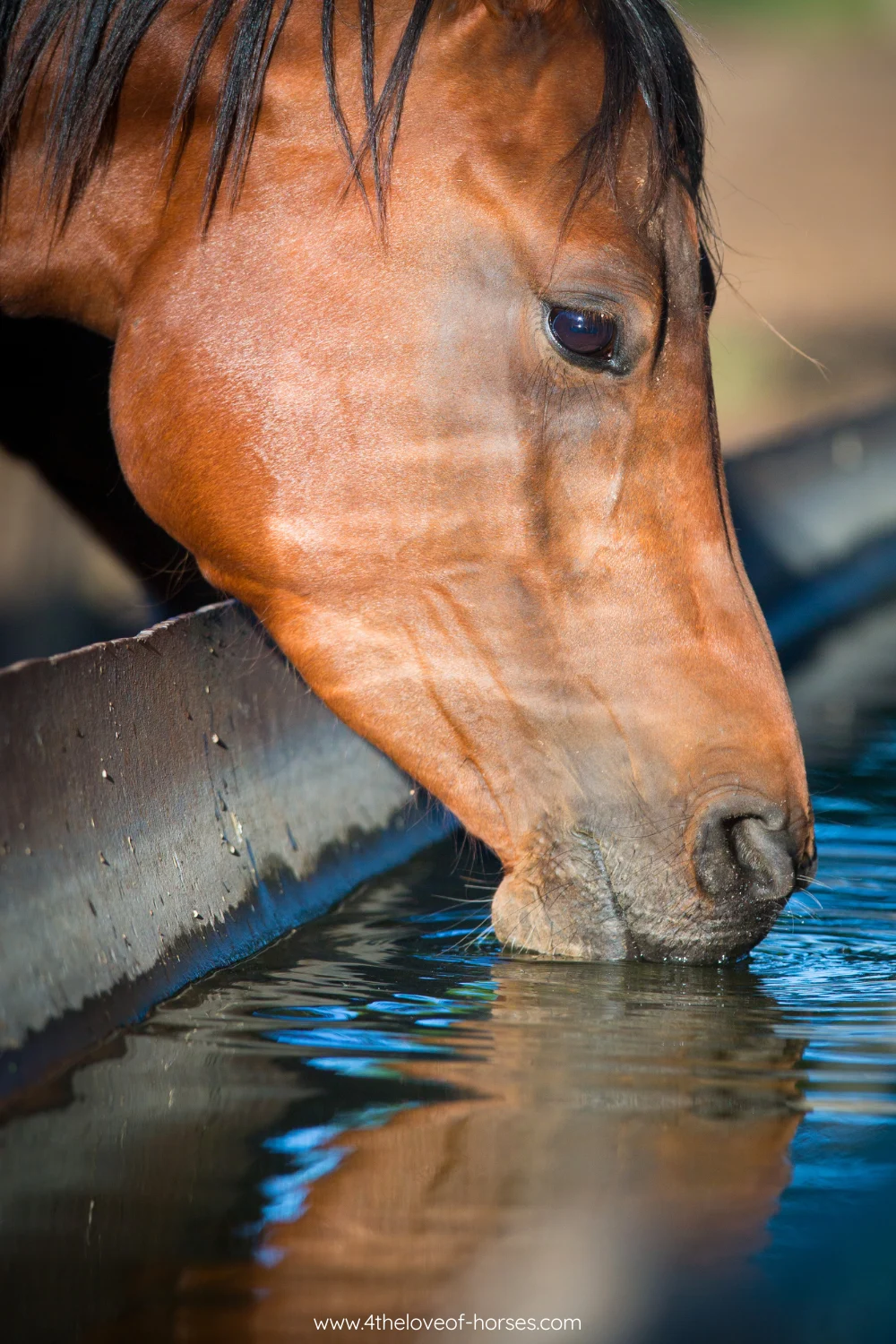
Before anything else — water. Fresh, clean, accessible water is the single most important thing you can provide. And horses need more of it in hot weather than most owners realise.
An average horse at rest drinks 25–55 litres per day. In hot weather, that can double. A horse that is working, lactating, or dealing with any degree of heat stress may need significantly more. Water is also one of the most effective tools for preventing impaction colic, which is more common in summer when horses may drink less than they should.
What good water access looks like in a heatwave:
- Multiple water points — don’t rely on a single trough, especially in a herd situation where dominant horses may guard access
- Check and refill troughs at least twice daily — water left sitting in a hot metal trough can reach temperatures horses refuse to drink
- Shade near the water — horses are less likely to drink if it means standing in full sun to do so
- No algae, no debris — horses will go without rather than drink dirty water
Watch Out
Don’t offer ice-cold water to a hot horse immediately after exercise. Allow them to cool down for 20–30 minutes first, then offer small amounts frequently rather than allowing unlimited intake straight away.
Shade and Airflow
Shade matters — but the type of shade matters too. A solid-roofed barn with no cross-ventilation can actually be hotter than being outside if there’s no airflow. Heat trapped under a metal roof with no breeze moving through it creates an oven-like environment.
What works:
- Natural shade from trees is often better than a closed stable — provided there’s no lightning risk
- Open shelters with cross-ventilation on at least two sides
- Fans in stables — positioned to create airflow, not just circulate hot air. Direct the fan across the horse’s body, not at the face
- Misting systems combined with fans — the evaporative cooling effect can reduce ambient temperature significantly in a stable
Hosing and Cooling Techniques
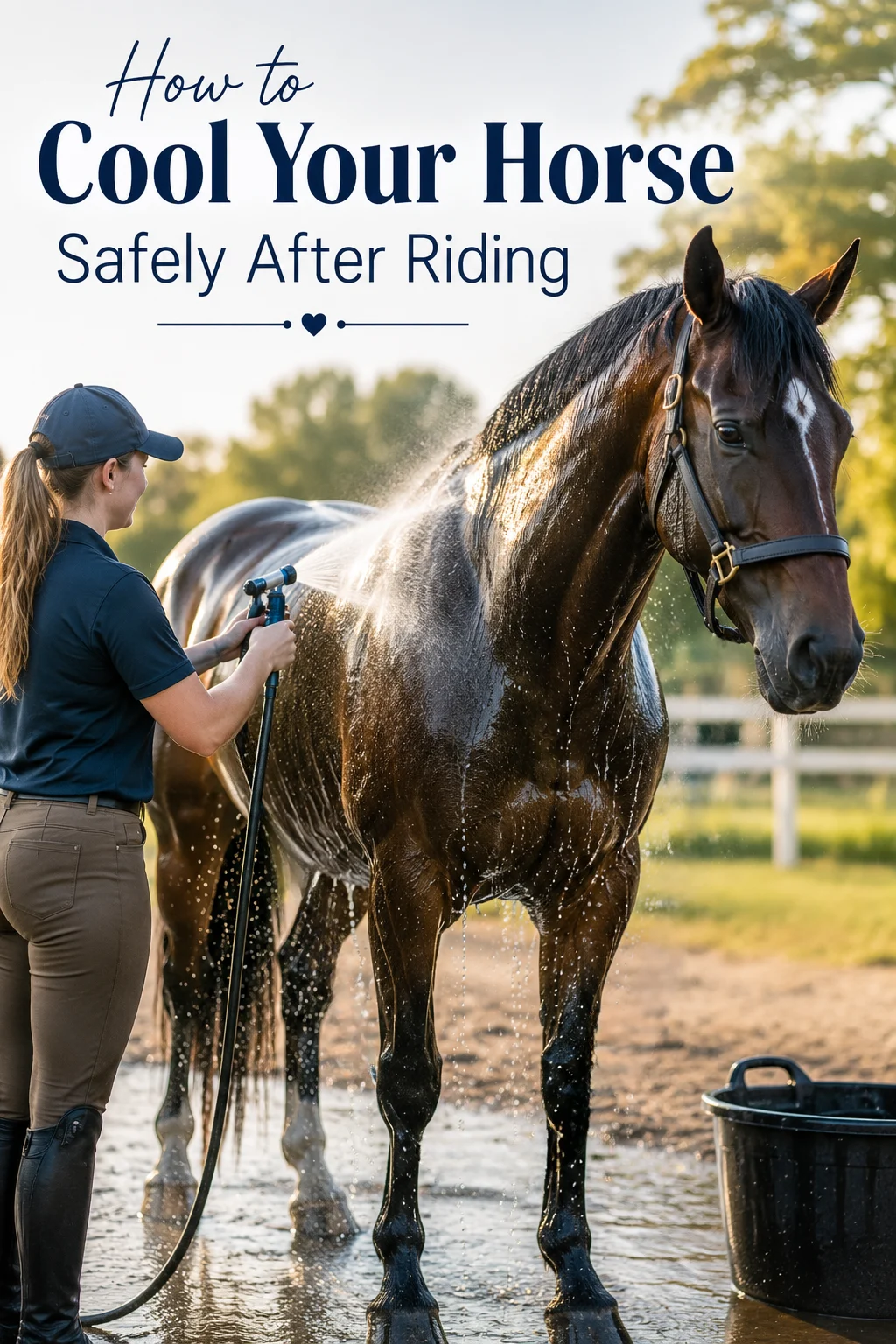
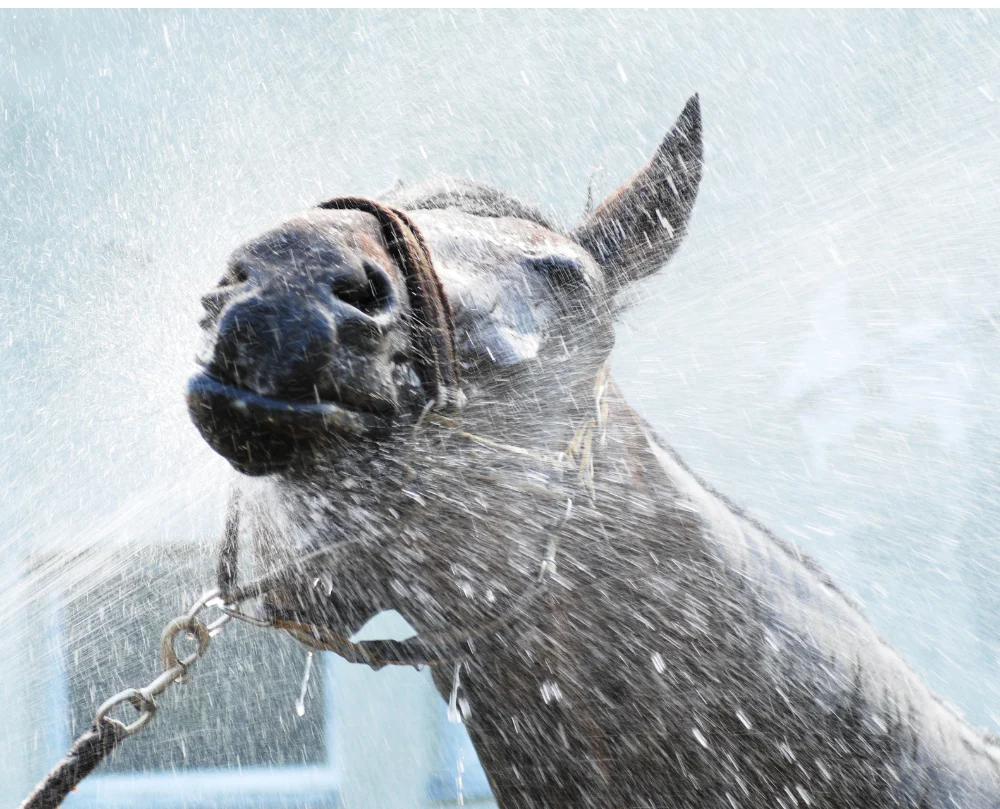
Cold hosing is one of the most effective things you can do for an overheated horse — and it’s often underused because people worry about “shocking” the horse. The reality is that continuous cold water over the large muscle masses is both safe and highly effective, provided you keep scraping the warmed water off and reapplying. The Horse magazine — one of the most trusted equine veterinary publications — consistently recommends this scrape-and-re-hose method as the gold standard for field cooling.
The key is to scrape as you go. Warm water sitting against the skin acts as an insulating layer, so if you hose, scrape the water off, then hose again, you dramatically improve the cooling rate.
Where to focus the hose:
- Major muscle masses — hindquarters, neck, shoulders
- Inner thighs and between the hind legs where major blood vessels run close to the surface
- Jugular groove on the neck
- Avoid prolonged cold water over the back if the horse has just been worked hard and is very tense
Frozen Treats: More Than Just a Nice Idea
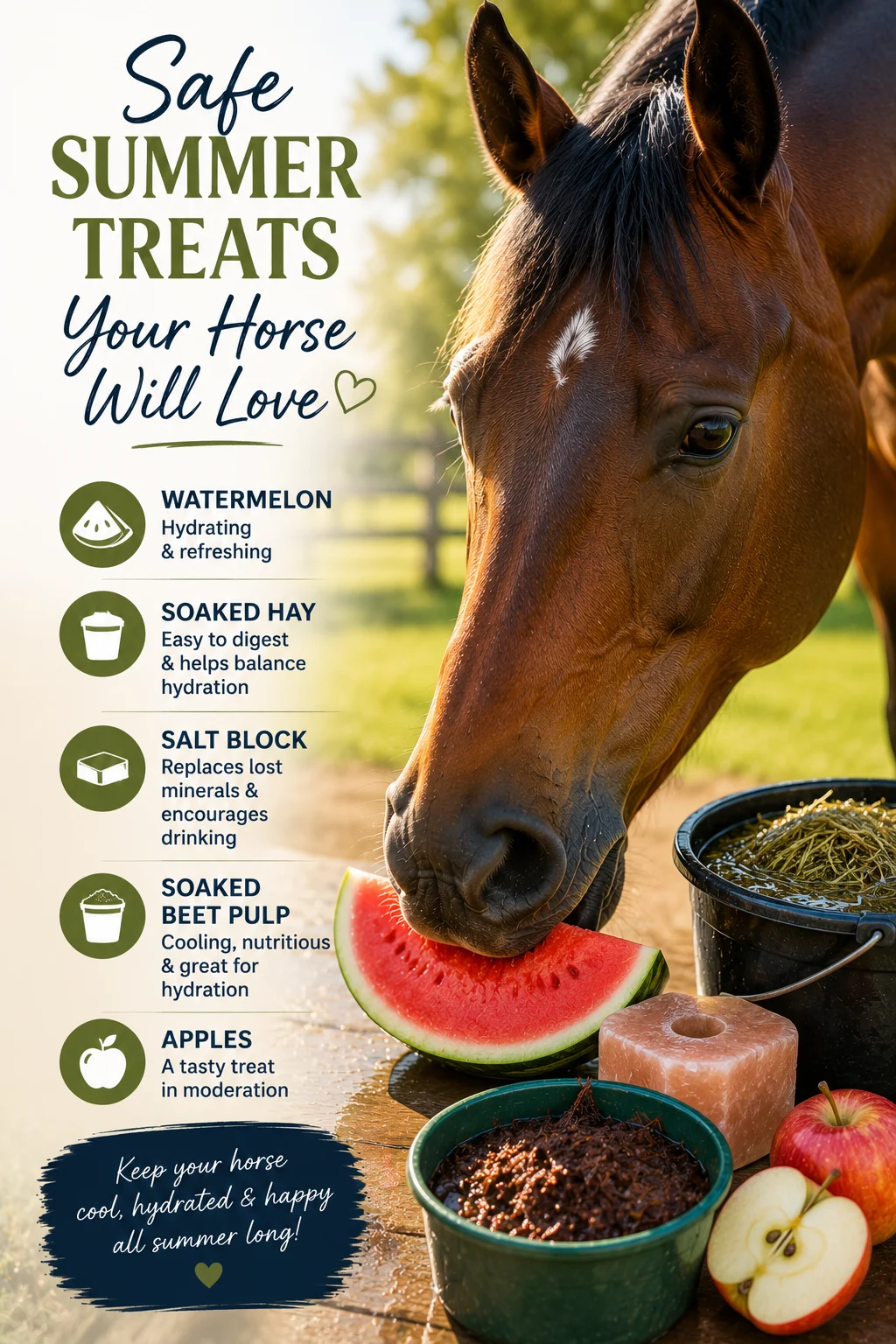
This is where it gets fun — and it actually serves a real purpose. Horses that are reluctant to drink enough in the heat can often be encouraged to take in extra moisture through frozen treats.
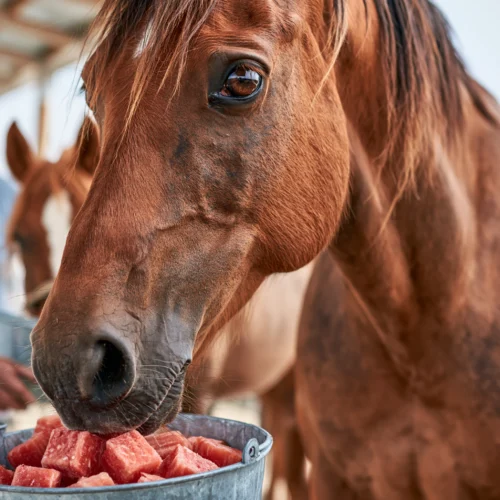
Frozen watermelon chunks are particularly popular, and for good reason: watermelon is roughly 92% water, horses love the sweetness, and it’s easy to prepare in large quantities. Cut into large pieces (big enough that they can’t be swallowed whole), freeze overnight, and offer in a bucket or on a mat in the shade.
Other horse-safe frozen treat ideas:
- Frozen apple slices — classic, easy, well-accepted by most horses
- Frozen carrot sticks — crunchy and entertaining for the horse
- Electrolyte ice blocks — dissolve horse-appropriate electrolytes in water, pour into ice cube trays or small buckets, freeze, and offer as a lick
- Frozen herbal tea cubes (chamomile or mint steeped, cooled, frozen) — some horses find the scent particularly appealing
- Watermelon and apple ice bucket — fill a bucket halfway with water and chopped fruit, freeze overnight, and let the horse lick and work at it as it melts
For a full list of safe, nutritious treat ideas your horse will love year-round, see our free Healthy Horse Treats guide.
Quick Tip
Frozen treats are great for hesitant drinkers, but they’re a supplement to good water access, not a replacement. Always make sure fresh water is available alongside any frozen offering.
Electrolytes: When and How
Electrolyte supplementation is worth discussing because it’s one of the most misunderstood areas of summer horse management. Horses do need electrolyte replacement when they’ve been sweating heavily — but the approach matters.
- Always offer plain water alongside electrolytes — never give electrolytes as the only water source. A horse that refuses the flavoured water and has no alternative is in a worse position than before
- A salt lick or loose salt should be available year-round, but particularly in summer. Plain white salt (sodium chloride) is the primary electrolyte lost in sweat
- Commercial electrolyte pastes or powders are useful after hard work in heat — follow the manufacturer’s guidance on dosing
- Electrolytes don’t replace water — they encourage drinking and help the horse retain fluid, but the horse still needs to drink sufficient water to rehydrate properly
Adjusting Work and Turnout
This one sounds obvious but bears saying: don’t ride in the hottest part of the day. In South African summers, that typically means avoiding work between 10am and 4pm when temperatures are at their peak.
Early morning or evening sessions are both physiologically kinder on the horse and often more pleasant for the rider. If you must ride during the heat of the day, keep sessions short, reduce intensity significantly, and plan for a thorough cooling-down process afterwards. This is particularly important for performance horses, whose higher muscle mass generates considerably more heat under exertion.
Turnout adjustments in a heatwave:
- Consider turning horses out overnight when it’s cooler, and stabling during the hottest part of the day — provided the stable has good airflow
- If horses must be in fields during the day, ensure shade and water access are genuinely sufficient for the number of horses
- Watch for horses that are being kept away from water by a more dominant herd member — this can quickly become a welfare issue in heat
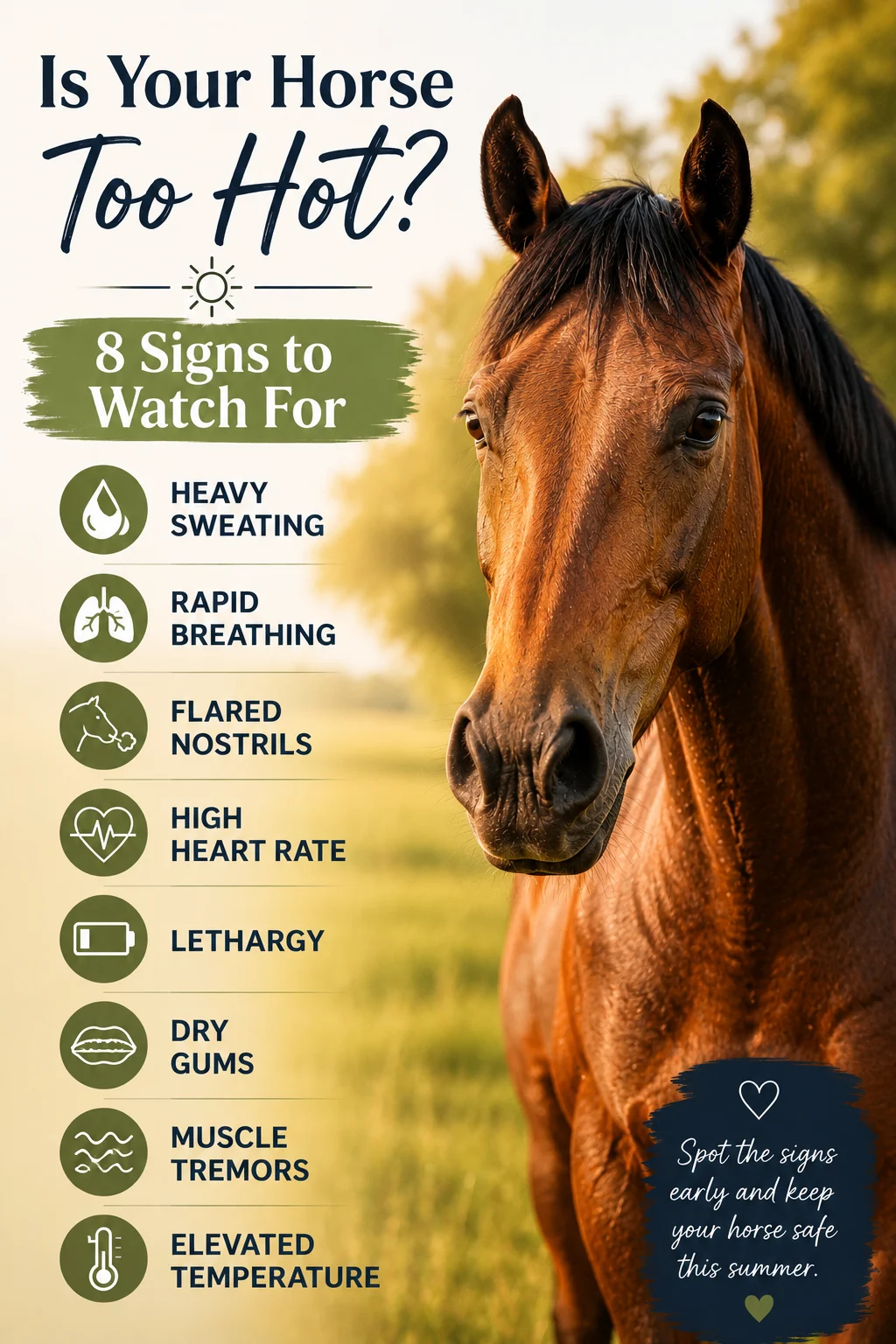
Recognising Heat Stress: Know the Signs
Even with the best management, horses can struggle in extreme conditions. Knowing the signs of heat stress means you can act quickly. These overlap with some of the early warning signs of colic — lethargy, reduced gut sounds, reluctance to eat — which is another reason to take them seriously rather than waiting to see if things improve on their own.
Early signs:
- Heavy sweating with little exertion
- Reluctance to move, lethargy
- Increased respiratory rate (normal resting is 8–16 breaths per minute)
- Elevated heart rate at rest (normal is 28–44 beats per minute)
- Reduced interest in feed and water
More serious signs — act immediately:
- Muscle tremors or weakness
- Stumbling or loss of coordination
- Laboured breathing
- Very dark, concentrated urine — or no urination
- Rectal temperature above 40°C (104°F)
- Rapid deterioration in condition
Call Your Vet
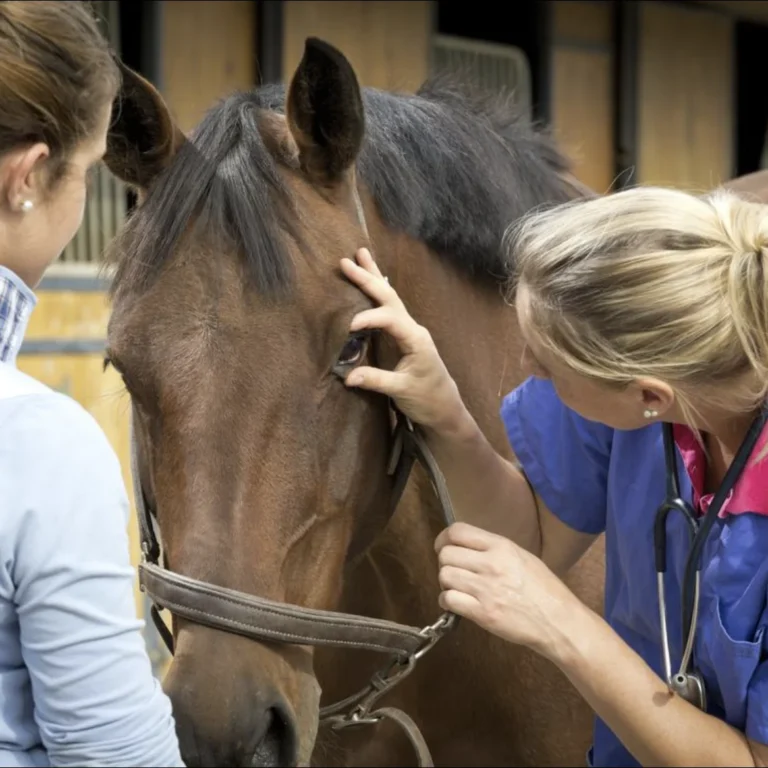
If your horse shows any of the serious signs above, begin cooling immediately (cold hosing, move to shade, airflow) and call your vet without delay. Heat stroke in horses can be life-threatening and deteriorates rapidly. According to The Horse, prompt veterinary intervention is the single most important factor in recovery from serious heat stress.
Rugs and Clipping
A note on rugs: in extreme heat, most horses are better off without any rug at all, unless there’s a specific reason — such as a horse that is photosensitive, or one that cribs and is susceptible to sunburn on pink-skinned areas.
For horses that are clipped out of season (perhaps for competition), a light, breathable sheet can help with insect control and sun protection without significantly trapping heat — but again, only if genuinely needed.
If your horse has a heavy coat and you’re heading into hot weather, consider a clip. A trace clip or full body clip will make a significant difference to how efficiently the horse can cool itself through sweating.
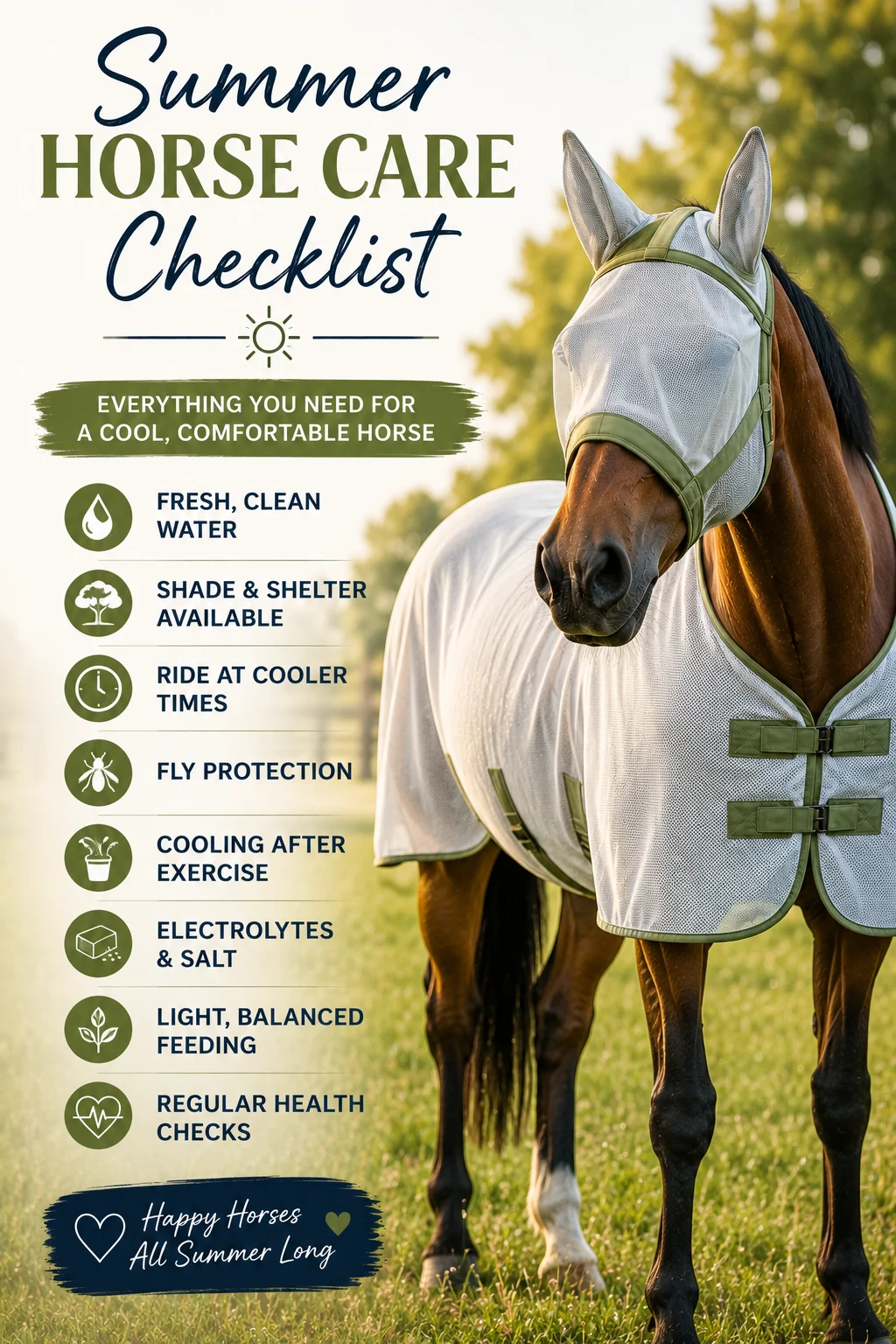
Free Download: Summer Horse Care Checklist
A printable daily checklist covering water, shade, signs of heat stress, and cooling routines — everything in one place for you and your yard team.
Download the Free Checklist →The Daily Heatwave Routine
In practical terms, a solid summer management routine doesn’t need to be complicated. Here’s what good looks like:
- Morning check (before it gets hot): refill and check all water, inspect shade areas, assess each horse for overnight condition
- Work done early: finish exercise before 9am if possible; cool down properly afterwards
- Midday: check in on horses in paddocks, top up water, offer frozen treats or electrolyte supplementation if needed
- Late afternoon: hose down horses that have been standing in heat, check water again
- Evening: assess each horse — eating normally, drinking, moving freely? Arrange overnight turnout if that’s your management choice
Prevention really is the whole game in summer horse management. Check more often than you think you need to, offer water before they seem thirsty, and take heat stress seriously before you can see it.
Your horse can’t tell you when they’re struggling — but they don’t need to if you’re staying ahead of it. And if you want to make sure your broader horse care is as solid as your summer management, that’s a good place to start.
Stay cool out there — and keep your horses cooler.