The New Horse Owner’s Essential Care Guide

Getting your first horse is one of the most exciting things you’ll ever do — and one of the most overwhelming. Here’s everything you actually need to know, in the order you actually need to know it.
I remember the first horse I was ever truly responsible for. Not the ponies I’d ridden as a child, not someone else’s horse I helped care for — but the first one that was mine, that depended entirely on me to get things right. The feeling was equal parts exhilaration and terror. I knew a lot, and I still felt underprepared.
After 45 years with horses and 25+ years of breeding warmbloods, I’ve watched many new owners go through that same feeling. And I’ve noticed that the ones who thrive aren’t necessarily the most experienced — they’re the most organised. They have a system. They know what needs to happen every day, every week, every month. They’ve thought about things before they become emergencies.
That’s what this guide is for. If you’re just starting out, our beginner’s guide to choosing a horse covers everything you need to consider before buying, and our basic horse care guide is a good companion read alongside this one.
Free Download: New Owner’s Essential Care Guide
The complete printable checklist — setup, first week, daily routines, feeding, grooming, professional schedule, and emergency contacts. Everything in one place.
Download the Free Guide →Before Your Horse Arrives
The single best thing you can do for a new horse is have everything ready before they step off the float. A horse arriving to a clean stable, fresh water, and familiar-type feed in front of them is a horse that will settle far more quickly than one arriving to disruption and scrambling.
Walk through your property with fresh eyes before collection day. Check every metre of fencing — horses find gaps you didn’t know existed. Clear any toxic plants from grazing areas, particularly ragwort, yew, and sycamore. Have your vet’s number saved before you need it, not during the first moment of panic.
Do This First
Contact the seller and ask exactly what your new horse has been eating — type of hay, what hard feed, what quantities, and when. Bring the same feed with you. Changing diet suddenly is one of the most common triggers of colic in horses settling into a new home.
If you have other horses on the property, plan for a quarantine period of at least two weeks. New horses can carry infections they show no symptoms of themselves — strangles being the most common concern. An over-the-fence introduction is far preferable to throwing a new horse straight into an established herd.
The First Week at Home
This is the part most new owners underestimate. A horse that has been calm, willing, and easy to handle at their previous home can arrive at yours and seem like a completely different animal. This is not a reflection on them or on you — it’s a completely normal response to the stress of a new environment, new smells, new herdmates, and a changed routine.
Give them time. The instinct to get on and ride, to start training, to begin bonding through activity — I understand it completely. But the most valuable thing you can do in that first week is simply observe. Watch how they move. Notice what their normal posture looks like, how they behave at feeding time, how much water they drink. This baseline is what you’ll measure everything against for the rest of your time together. Learning to read your horse’s body language early makes this process much easier.
Watch water intake particularly carefully. Stressed horses often stop drinking — and dehydration is a fast route to impaction colic. If your horse hasn’t drunk normally within 24 hours of arrival, call your vet for guidance.
Feeding and Water Essentials
There are entire books on equine nutrition, and I’ve written extensively about it elsewhere. But for a new owner, the fundamentals are what matter most, and they’re simpler than the industry would have you believe.
Water first, always
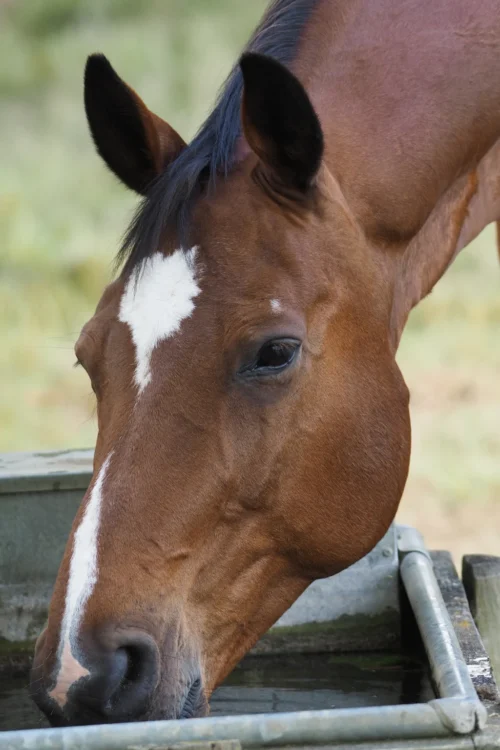
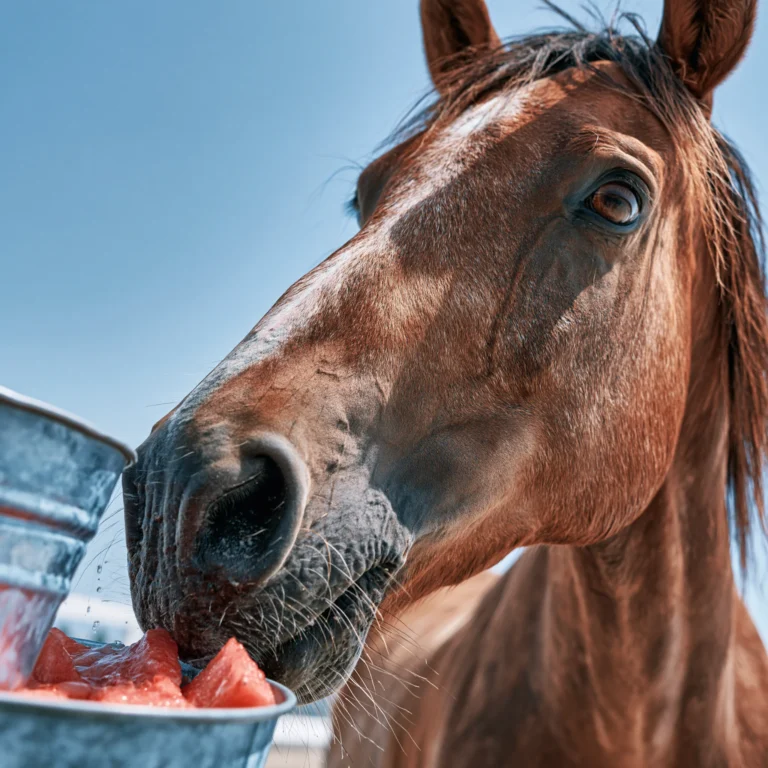
Fresh, clean water available at all times. Not sometimes. Not most of the time. All of the time. A horse can drink between 25 and 60 litres per day — more in hot weather or hard work. Scrub troughs weekly, check daily, and in winter make sure the water isn’t frozen. Horses will not break ice to drink, and many won’t touch water that’s too warm from sitting in a metal trough in summer. Check the temperature, not just the level.
Forage is the foundation
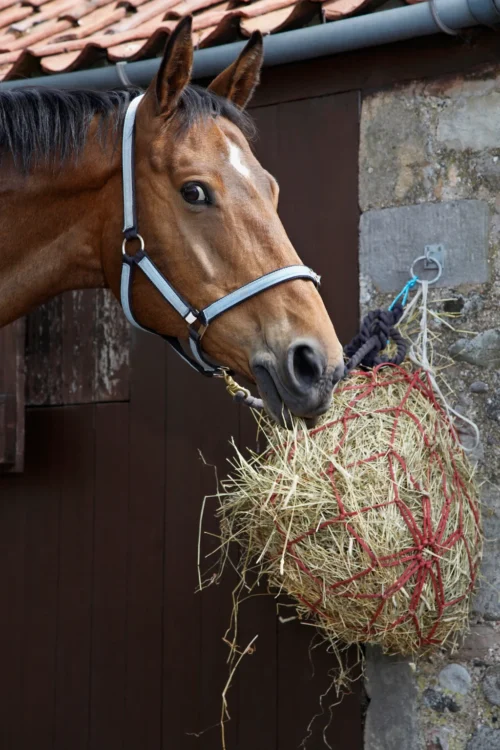
Hay or pasture should make up the vast majority of your horse’s diet — roughly 1.5% to 2% of their body weight per day. For a 500 kg horse, that’s 7.5 to 10 kg of hay daily. Horses are designed to trickle-feed almost continuously, and leaving them without forage for long periods raises the risk of gastric issues, colic, and behavioural problems from boredom and stress. Our complete feeding guide covers all of this in much more detail.
Use our free feed calculator to work out the right amounts for your horse’s weight, age, and workload — it takes 15 seconds and gives you a solid starting point.
Concentrates — less is often more
Hard feed is where new owners most often go wrong, and usually in the direction of too much rather than too little. A horse in light work on good quality hay often needs very little or no hard feed at all. When you do feed concentrates, introduce them gradually over 7–10 days, feed by weight not by scoop (different feeds vary enormously in density), and never feed more than 2 kg in a single meal.
Common Mistake
Over-supplementing is one of the most unnecessary things new owners do. If your horse is on a balanced diet and good quality hay, they likely need very few extras. More supplements do not automatically mean a healthier horse — some combinations cause imbalances. When in doubt, ask your vet before adding anything.
The Daily Routine
Horses are creatures of habit in a way that is almost impossible to overstate. The consistency of your routine — the same feeding times, the same order of tasks, the same handling approach — is not just convenient for you. It is genuinely important for your horse’s wellbeing. A predictable routine reduces anxiety and builds the kind of quiet trust that makes every interaction easier.
The non-negotiables, every single day without exception:
- Check on your horse at least twice — morning and evening minimum
- Fresh water — check and refill every day
- Feed on schedule — same time, every day
- Pick out all four hooves — prevents thrush, catches stones, and gets you handling their feet daily which matters enormously for trust and future vet/farrier visits
- Quick visual scan — any cuts, swelling, heat, or changes in how they’re standing or moving?
That last point is where daily observation pays dividends. A horse that is slightly off — a little quieter than usual, not finishing their hay, standing with one leg rested differently — is telling you something. Catching it early is always better than waiting until it becomes obvious.
Grooming: More Than Just Aesthetics
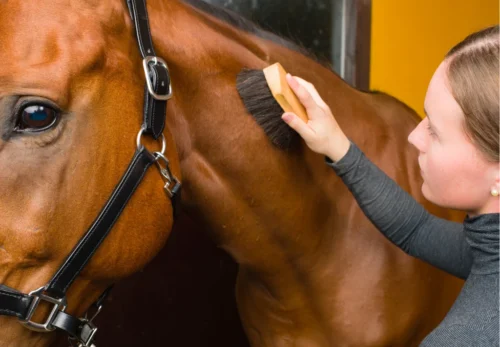
I’ve known people who skip grooming when they’re short on time, treating it as an optional extra. It isn’t. Grooming is your closest, most systematic contact with your horse’s body — and it’s how you catch problems before they escalate.
A regular grooming session should include a body brush, curry comb for loosening mud and hair, mane and tail comb (start at the ends and work upward to avoid breakage), and a damp sponge for the face, eyes, nostrils, and dock area. Run your hands over the entire body as you go. Feel for heat, swelling, lumps, or tenderness. Check under rugs where rubbing and rain rot can develop unseen.
From Experience
The horse you get to know through daily grooming is the horse whose early warning signs you’ll catch immediately. When something is different about their body, you’ll notice — because you know what normal feels like. This is one of the most practical skills you can develop as a horse owner.
Hoof Care
“No hoof, no horse” is one of those sayings that becomes truer the longer you keep horses. Hooves grow continuously and need regular professional attention — shod horses every 6–8 weeks, unshod horses every 8–10 weeks. Don’t let the schedule slip. Growing out an overgrown hoof is harder and more expensive than maintaining one, and the imbalance it creates affects the whole horse from the ground up. For a thorough guide to everything hoof-related, our hoof care guide covers daily maintenance, farrier schedules, and common problems to watch for.
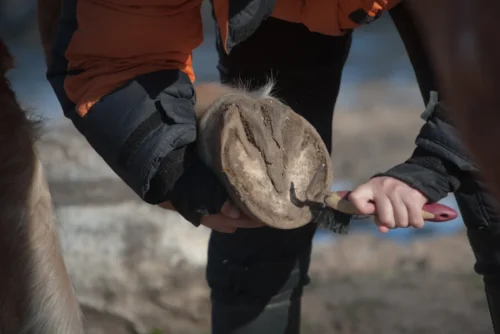
Pick out all four hooves every day. Check for stones, smell for the sweet-sour odour of thrush, and notice any changes in the temperature of the hoof wall. Heat in a hoof after exercise can be normal, but heat in a hoof at rest is always worth paying attention to — it can be an early sign of laminitis, particularly in spring when grass sugar levels spike.
Any lameness — any degree, sudden onset — means rest, no exercise, and a call to both your vet and farrier. Don’t wait and see with lameness.
The Professional Care Schedule
These are the appointments that new owners most often underestimate until they see what happens when they’re skipped.
- Vet — annual vaccinations (influenza, tetanus — confirm with your vet what’s appropriate for your region)
- Vet — dental check every 6–12 months. A horse that can’t chew properly can’t absorb nutrition properly. Dental issues are one of the most common causes of unexplained weight loss in horses, and they’re completely preventable with regular floating.
- Farrier — every 6–8 weeks for shod horses, never longer than 10 weeks for unshod
- Worming — with vet guidance. The old approach of worming every 8 weeks regardless has largely been replaced by targeted treatment based on faecal egg counts. The Horse magazine’s parasite control section is an excellent resource if you want to understand the current thinking — but your vet is the right person to guide your specific programme.
Warning Signs Every New Owner Must Know
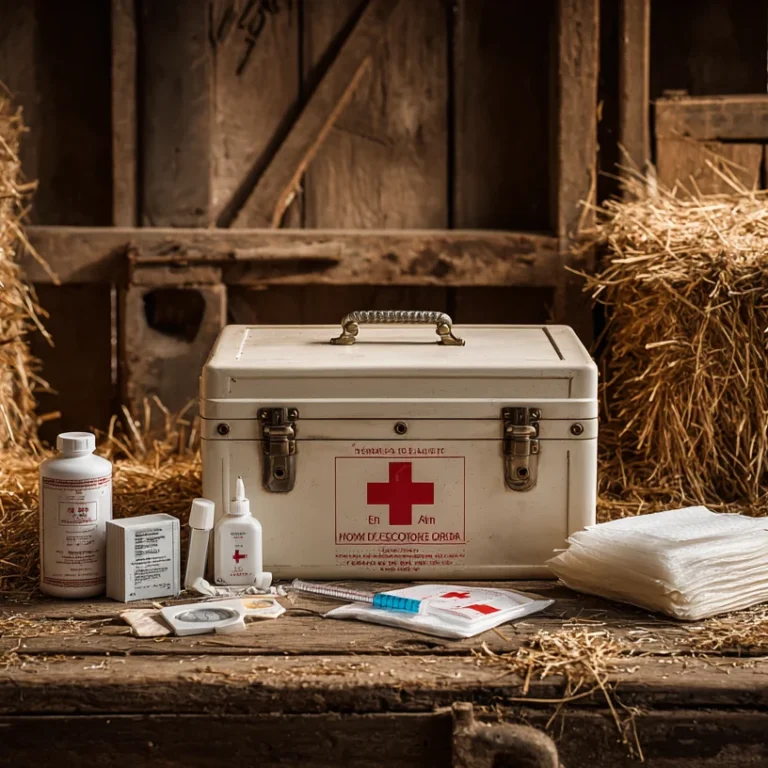
There are things that need a vet call today, and things that can wait for a routine appointment. As a new owner, erring on the side of calling is always the right instinct — good equine vets would rather advise you over the phone than treat a condition that was left too long.
Call Your Vet — Do Not Wait
Signs of colic (pawing, rolling, looking at flanks, refusing to eat) · Not eaten for more than 12 hours · Any lameness, sudden onset · Temperature above 38.5°C · Any wound near a joint, tendon, or eye · A wound that won’t stop bleeding · Laboured or rapid breathing at rest · Gums that are pale, white, blue, or tacky to the touch
Know your horse’s normal vital signs and write them down while they’re healthy. Temperature (normal is 37.2–38.3°C), resting heart rate (28–44 beats per minute), and resting respiration rate (8–16 breaths per minute) are the three you’ll reach for in an emergency. Measure them on a calm, healthy day so you know what you’re comparing against.
Give Yourself Permission to Learn
Here is something I wish someone had told me plainly at the beginning: you will not get everything right. No one does. What matters is that you’re paying attention, that you ask questions, that you build relationships with a good vet and farrier who you can call when you’re not sure.
I have been with horses for over 45 years and I am still learning. The horses teach you, if you’re willing to be taught. The ones who struggle most aren’t the inexperienced owners — they’re the ones who stop asking questions.
For a full printable checklist covering every section in this guide — setup, first week, daily routines, feeding, grooming, professional schedule, and emergency contacts — download the free New Owner’s Essential Guide below.
Free Download: New Owner’s Essential Care Guide
Six pages covering everything from the day before your horse arrives to your ongoing monthly routines. Print it, laminate it, keep it where you can find it.
Download the Free Guide →Every experienced horse owner was once where you are now. The horses that are cared for most consistently are the happiest — and their owners are too.


One Comment