Horse Nasal Discharge: What Each Colour Means

Horse Nasal Discharge: What Each Colour Means
Not all runny noses are equal — the colour of your horse’s nasal discharge is one of the fastest health checks you have, if you know how to read it.
Duet came in from the field one damp autumn morning with a thin trail of clear fluid at both nostrils, and I did not think twice about it — cold mornings and a bit of dust in the hay will do that to any horse. Two days later, when that same trail had turned thick and yellow and she was off her feed, the picture was completely different. Same symptom on the surface, two entirely different conversations with the vet.
That’s really the heart of this topic: nasal discharge on its own tells you very little. Colour, thickness, smell, and which nostril it’s coming from — put those together and you have a genuinely useful read on what’s going on.
Free Vet Emergency Reference Card
Keep the vitals, warning signs, and vet contact template in one place for exactly this kind of moment.
Download Free →Is Nasal Discharge Normal?
Healthy horses produce a small amount of clear discharge fairly often — after exercise, on a cold morning, or when dust and pollen irritate the airway. None of that is cause for concern on its own. What matters is noticing when it changes: in colour, in thickness, in smell, or in which nostril it’s coming from.
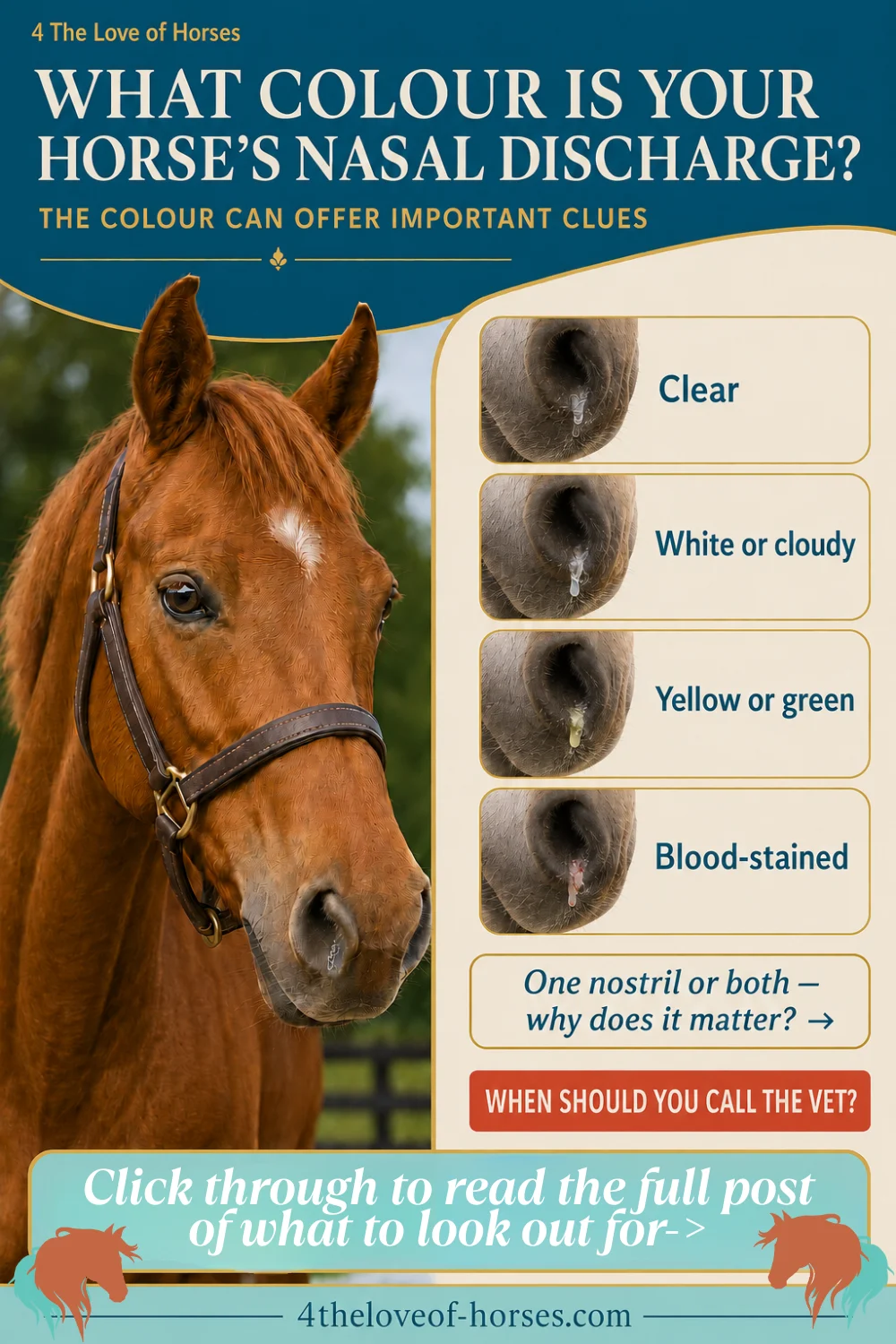
What Does the Colour Mean?
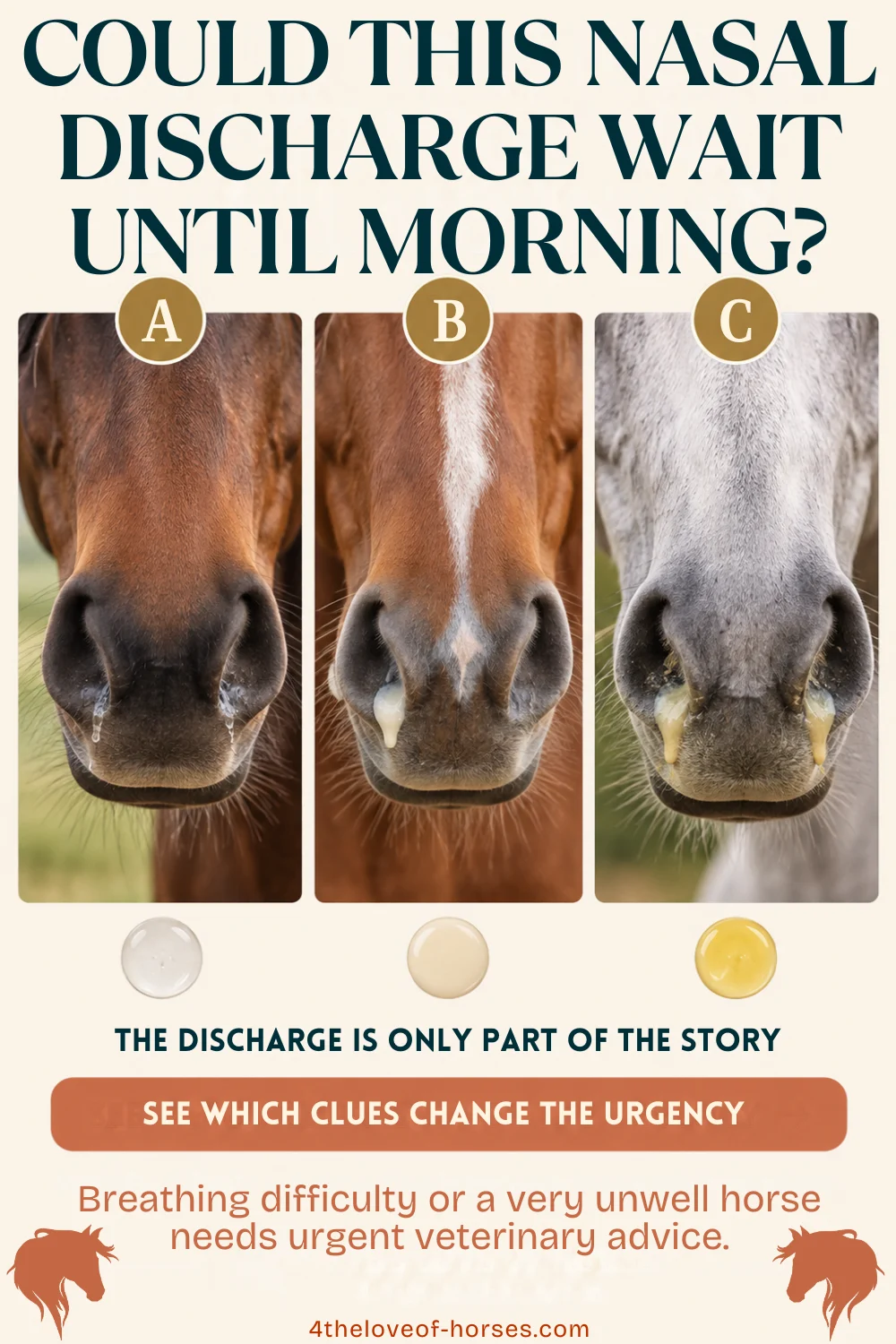
Often normal — after exercise, in cold weather, or around dust and pollen. Bright, eating well, no other signs? Just keep monitoring.
An early warning sign — irritation, allergies, or the start of a respiratory infection. Watch closely over the next day or two.
Usually means the body is fighting an infection — equine influenza, a bacterial infection, or early strangles among the possibilities.
Should never be ignored. Often points to a more advanced infection — strangles, sinus disease, or a dental infection reaching the sinuses.
Worth Knowing
Yellow discharge lasting more than a day or two, or any discharge alongside a fever, is worth a call to your vet rather than a wait-and-see approach.
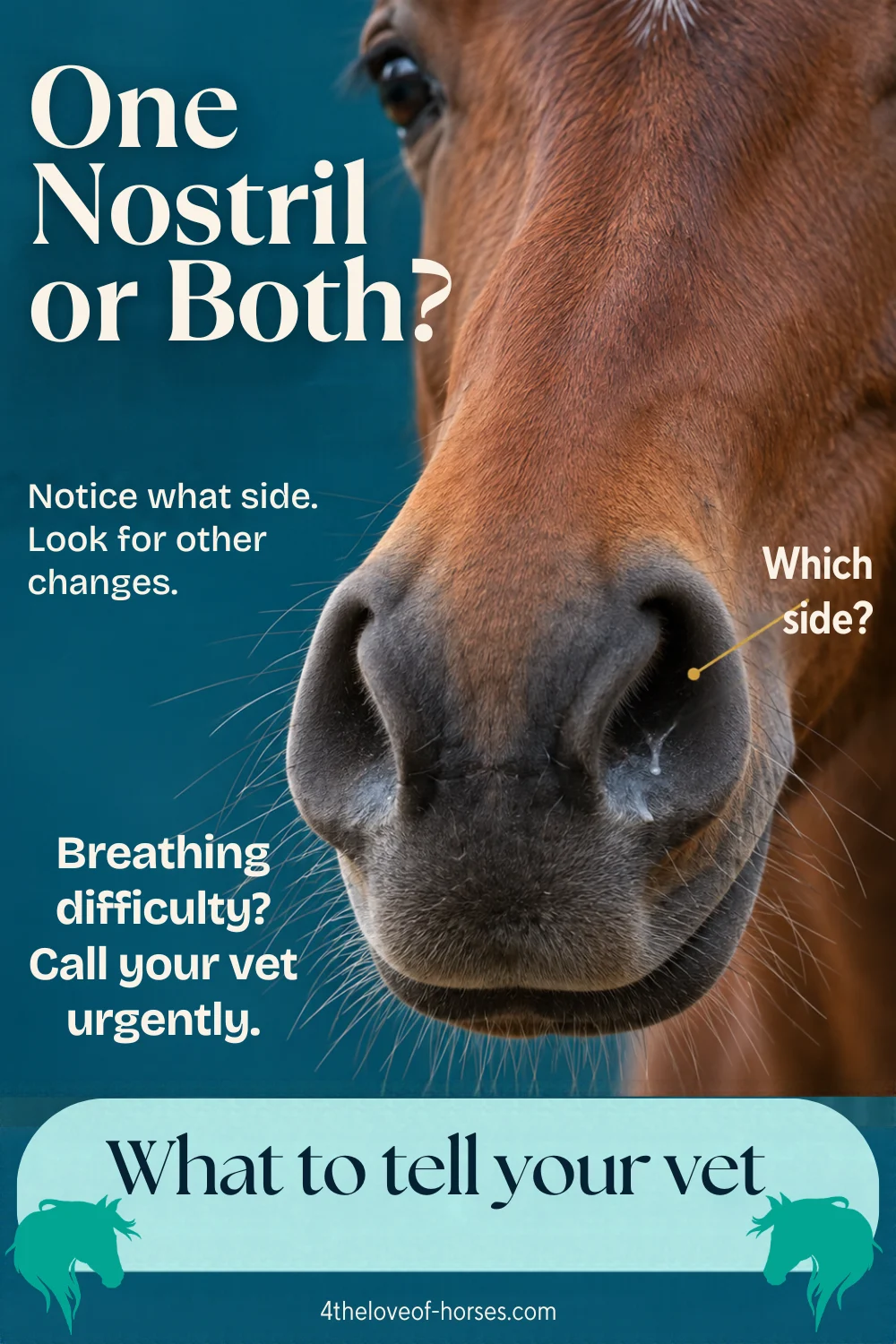
One Nostril or Both?
This is one of the first questions your vet will ask, because it narrows things down quickly.
- Both nostrils usually points to something affecting the respiratory tract more broadly — equine influenza, equine herpesvirus (EHV), strangles, or allergies.
- One nostril more often suggests a sinus infection, a tooth root infection, a foreign body, or an injury to the nasal passage — and is always worth investigating rather than dismissing.
Other Signs Worth Watching For
Nasal discharge rarely shows up entirely on its own. The more of these that appear alongside it, the more likely something is actively developing:
- Fever
- Coughing
- Swollen lymph nodes under the jaw
- Loss of appetite
- Lethargy
- Laboured or difficult breathing
- Reduced performance under saddle
- Head shaking
- A foul smell from the nostrils
Could It Be Equine Influenza?
Influenza tends to move fast — a sudden high fever, a dry harsh cough, and discharge that starts clear before thickening. Because it spreads quickly between horses, isolating a suspected case is essential while you wait for your vet. Our complete guide to equine influenza covers the full picture.
Could It Be Strangles?
Strangles typically starts with a fever, thick nasal discharge, and swollen lymph nodes beneath the jaw, sometimes with difficulty swallowing. As it progresses, those swollen nodes can abscess and burst. It’s highly contagious, so isolation the moment you suspect it matters more than almost anything else you’ll do. Read the full breakdown in our guide to strangles in horses.
Could It Be Equine Herpesvirus (EHV)?
EHV can look almost identical to influenza in its early stages — fever, discharge, coughing, and general depression. Certain strains carry a much higher stake, including neurological disease and abortion risk in pregnant mares, which is why any suspected EHV case warrants an immediate vet call rather than a wait-and-watch approach.
Call the Vet
Yellow or green discharge, thickness lasting more than 24–48 hours, a temperature above 38.5°C (101.3°F), swollen lymph nodes, laboured breathing, or discharge from one nostril that won’t resolve — any of these is a reason to call, not wait.
Can You Prevent Respiratory Illness?
Good stable management goes a long way toward keeping respiratory disease out of the yard in the first place.
- Keep vaccinations current — this is your first line of defence against influenza and EHV.
- Isolate new arrivals for at least two weeks before mixing them with the herd.
- Don’t share buckets, grooming kits, or tack during any suspected outbreak.
- Soak or steam hay if dust is a persistent irritant.
- Provide good ventilation in the stable rather than relying on a closed-up barn.
- Know your horse’s normal temperature so a fever is obvious the moment it appears.
Frequently Asked Questions
Is clear nasal discharge normal?
Yes, in small amounts — particularly after exercise or in cold weather. It’s the change from that baseline that matters.
What colour nasal discharge is serious?
Yellow, green, or foul-smelling discharge is far more likely to signal infection and is worth having your vet look at.
Can allergies cause a runny nose?
Yes — dust, pollen, and mould can all produce clear or cloudy discharge with no infection involved at all.
Can strangles start with just a runny nose?
Yes. Many horses show nasal discharge before the swollen lymph nodes become obvious, which is part of why it spreads so easily before anyone realises what they’re dealing with.
Your horse’s nose can’t tell you everything — but paired with the rest of the picture, it’s one of the earliest warnings you’ll get.
Related Horse Illnesses