Equine Influenza: Symptoms, Prevention and Treatment Guide

Equine Influenza: Symptoms, Prevention and Treatment Guide
Horse flu can move through a yard faster than almost anything else you’ll deal with — one cough at the fence line, and within days half the barn is running a fever.
Blue spiked a fever of just over 39°C on a Tuesday morning, quiet in his stall when normally he would be hanging his head over the door demanding breakfast. By Thursday, two more horses on the same yard were showing the same dry, hacking cough. None of them had left the property in weeks — the virus had come in on a visiting farrier’s truck, or a delivery driver’s boots, or simply on the wind, and there was no way to know which.
That’s the thing about equine influenza that catches so many owners off guard: it does not need direct horse-to-horse contact to spread. A cough can carry the virus fifty metres on a still day, and an infected horse can be shedding it for a full day or two before showing any signs at all. Understanding how it moves, what it looks like, and how to nurse a horse through it is one of the most useful things any owner can learn.
Free Vet Emergency Reference Card
Keep the vitals, warning signs, and vet contact template on hand for exactly this kind of moment.
Download Free →
The Numbers Worth Knowing
Understanding the Virus
Equine influenza is caused by influenza A viruses — specifically the strain known as A/equi-2 (H3N8), which remains the one circulating in horse populations worldwide today. A second strain, A/equi-1, hasn’t turned up in circulation since 1980. Like the human flu virus, it mutates over time, which is exactly why the vaccine your horse gets this year may not be identical to the one from three years ago.
Once a horse breathes in the virus, it attaches to the cells lining the airway and starts reproducing quickly, damaging the very cells that normally keep bacteria and debris out. That damage is the reason secondary bacterial infections are so common during recovery — the airway’s usual defences are temporarily down.
Why It Spreads So Efficiently
- The incubation period works against you. Symptoms typically take 1–3 days to appear, and horses can shed the virus during that window without looking unwell at all.
- The virus survives on surfaces. Water buckets, grooming kits, and even hands can carry it for up to 48 hours, so an outbreak doesn’t need direct nose-to-nose contact to spread through a yard.
- Horses are social by nature. Shared airspace in stables, group turnout, and events where horses from different yards mix all create ideal transmission conditions.
Recognising the Signs
Symptoms tend to follow a fairly predictable order, though how severely any individual horse is hit can vary a good deal.
Early Signs (Days 1–2)
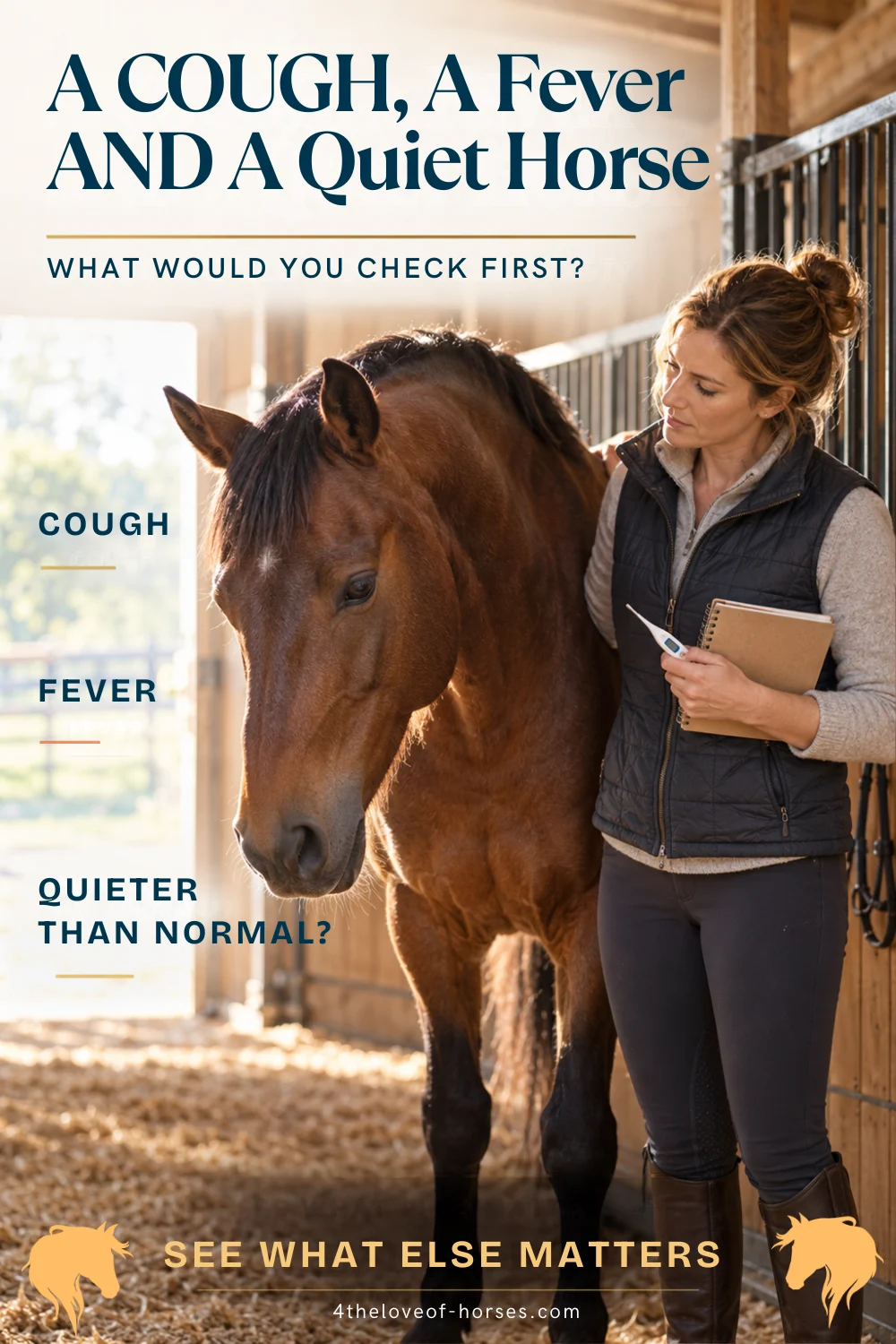
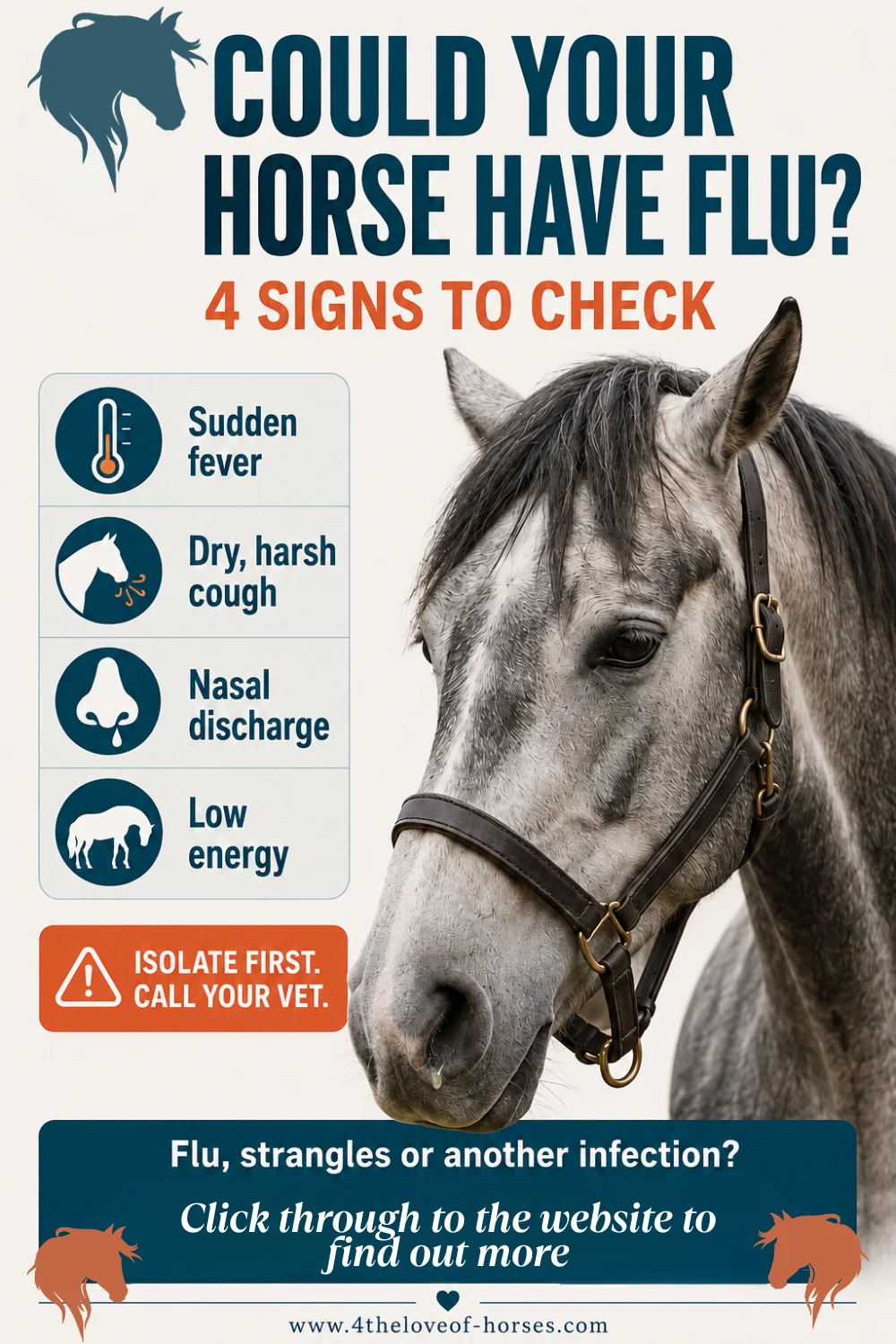
- A sudden fever spike, often 102.5–105.5°F (39.2–40.8°C)
- A quieter, more withdrawn horse than usual, with reduced interest in feed
- A dry, harsh cough developing within the first 24 hours, most noticeable around exercise or dusty conditions
Peak Signs (Days 2–4)
- Nasal discharge that starts clear and watery, then thickens as the immune response ramps up
- Depression and lethargy — a normally energetic horse standing quietly, uninterested in its surroundings
- Reduced appetite, often picking at hay rather than eating with any enthusiasm
- Muscle soreness and stiffness, similar to the achiness people feel with flu
Advanced Signs (Days 4–7)
- Laboured breathing — flared nostrils, more pronounced abdominal effort when breathing
- Mild leg swelling from reduced movement and circulation
Worth Knowing
A change in nasal discharge from clear to yellow or green, or a cough that turns wetter or drags on past the usual recovery window, often points to a secondary bacterial infection layering on top of the flu.
Diagnosis and Testing
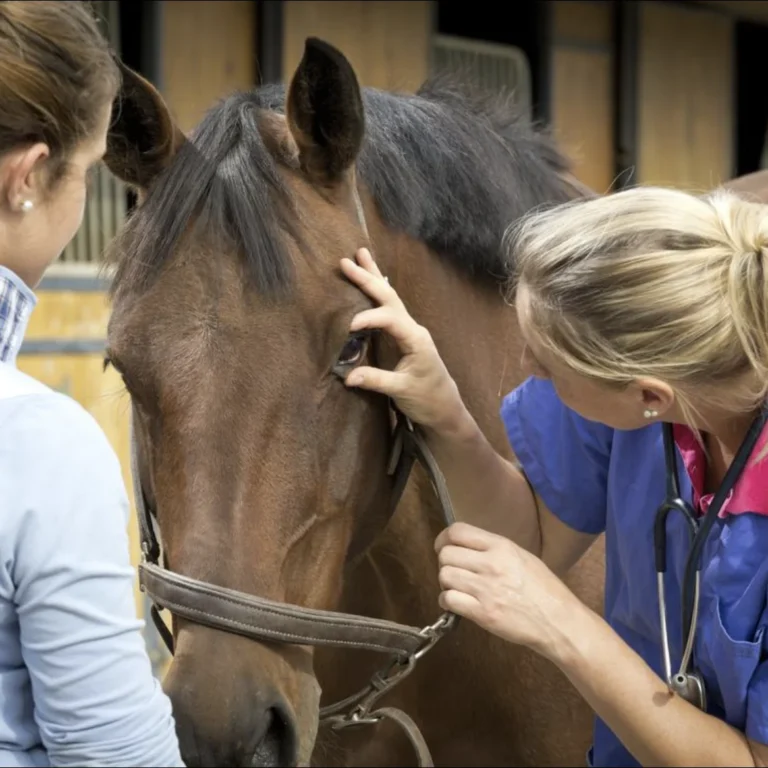
Your vet will usually start with a detailed history — recent travel, vaccination status, contact with other horses — before moving into a physical exam. Equine influenza fever often follows a biphasic pattern, spiking around days 1–2 and again around days 3–4, which on its own helps distinguish it from other respiratory infections.
Testing Options
- PCR nasal swab: The gold standard for confirming an active infection, most accurate when collected within the first 48 hours of symptoms.
- Blood antibody testing: Looks for IgM (recent infection) or IgG (past infection or vaccination) antibodies. Paired samples taken two weeks apart, showing a marked rise, offer strong confirmation.
- Rapid antigen tests: Quick results, most reliable in the first 48 hours, though a negative result may still need confirming with PCR if your vet remains suspicious.
Recent vaccination can muddy antibody test results, since the immune response looks similar whether it’s reacting to a vaccine or a real infection — one more reason to keep vaccination records handy when your vet is working through a diagnosis.
Treatment: Rest Comes First
Because influenza is viral, treatment is about supporting the horse’s own recovery rather than eliminating the virus directly — much the same as human flu.
Non-Negotiable
Complete stall rest during the fever and for 48–72 hours after it breaks, followed by another week of rest with hand walking once temperature is normal, then a gradual return to turnout. Twenty-one days minimum before any return to work.
The cilia lining the airway — the tiny hair-like structures that sweep debris and mucus out — take up to three weeks to regenerate after this kind of damage. Exercising too soon doesn’t just risk a setback; it can genuinely delay how well the airway heals.
Environmental Management
- Keep the stable well ventilated without creating a draft directly on the horse
- Dampen hay before feeding and use dust-free bedding
- Water down the arena or paddock before turnout if dust is an issue
- Move the horse temporarily while mucking out, to cut down dust exposure
Supportive Care
Your vet may prescribe an NSAID such as phenylbutazone or flunixin meglumine to bring the fever and inflammation down and keep the horse comfortable enough to eat and drink properly. In horses showing real respiratory distress, a bronchodilator can help ease breathing. Neither of these treats the virus itself — they buy the horse comfort while its own immune system does the work.
Feeding Through Illness
Offer small, frequent meals of easily digestible feed, add water to create a mash if appetite is poor, and keep fresh water available at all times — some horses drink better if it’s slightly warmed or has electrolytes added.
What to Monitor Daily
- Temperature, twice daily, until it’s been normal (99.5–101.3°F / 37.5–38.5°C) for at least three days
- Respiratory rate and effort at rest
- Appetite and water intake
- Nasal discharge — colour, thickness, and any change from the day before
If a secondary bacterial infection does take hold, your vet may add antibiotics — worth remembering these are treating the secondary infection, not the flu virus itself.
Preventing Equine Influenza
Prevention rests on two pillars working together: vaccination and biosecurity. Neither one alone covers you completely.
Vaccination
An unvaccinated horse starting from scratch needs an initial two-shot series — the second given three to six weeks after the first — to build proper immune memory. From there, competition horses and others at higher exposure risk typically need boosters every six months, while lower-risk horses may be fine on an annual schedule. Timing matters too: vaccinating at least two weeks ahead of a high-risk period, like competition season, gives the immune system time to build protection before exposure.
Biosecurity
- Quarantine new arrivals for at least 14 days, checking temperature twice daily and keeping them fully separate from resident horses.
- Manage traffic through the yard — designated paths for horse movement, separate areas for visiting horses and trailers, and limited unnecessary human traffic.
- Don’t share equipment. Assign buckets, grooming kits, and tack to individual horses, and clean shared equipment regularly.
- Watch ventilation. Good air exchange dilutes airborne virus particles and lowers transmission risk across the whole barn.
Travel and Events
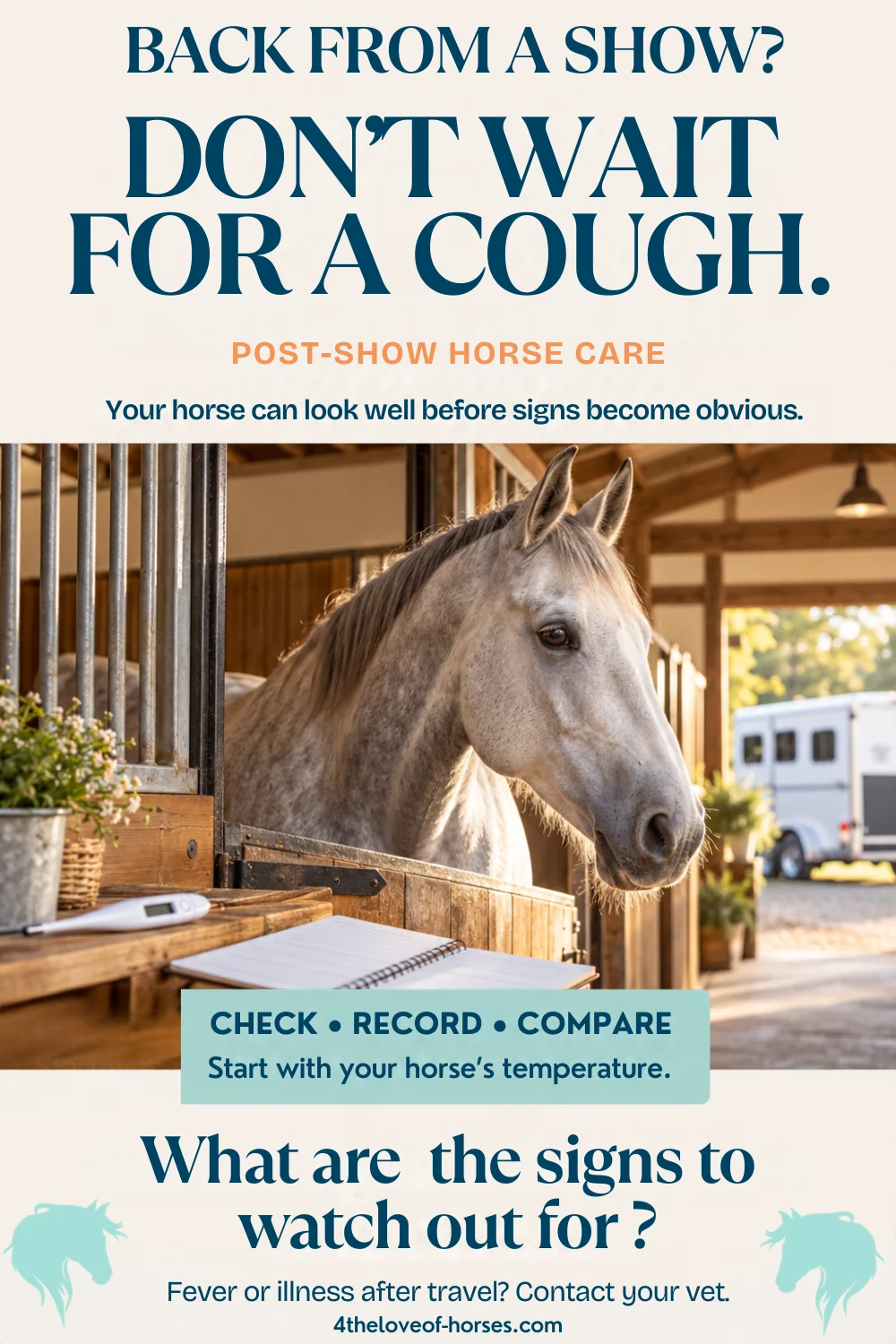
Competitions and travel carry real exposure risk — large numbers of horses from different yards, shared airspace, and shared water sources. Before an event, confirm your horse’s vaccination status meets the entry requirements and pack individual equipment rather than relying on shared kit. During the event, minimise contact between horses and keep a close eye out for early signs. Afterwards, clean all equipment before it goes back into your home stable and monitor your horse closely for several days — a short isolation period on return isn’t overkill, it’s common sense.
Who’s Most at Risk
- Young horses (under 5): Immune systems still developing, often combined with the stress of starting training or competition.
- Elderly horses (15–20+): A naturally slower immune response, sometimes complicated by conditions like Cushing’s disease.
- Competition horses: Training intensity and frequent travel both place extra load on the immune system, right when exposure risk is highest.
- Poorly managed environments: Overcrowding, poor ventilation, and dusty conditions all raise both exposure and susceptibility.
- Unvaccinated or under-vaccinated horses: The single biggest controllable risk factor on this list.
Recovery and Return to Work
Symptoms easing doesn’t mean the airway has finished healing — the cilia lining it are still regenerating for up to three weeks after the obvious signs have gone. Before considering any return to work, your horse should show a normal temperature for at least seven days, normal resting respiratory rate with no increased effort, and a return to normal appetite and energy.
A Structured Return
- Week 1: Hand walking 10–15 minutes twice daily, turnout in a small, dust-free paddock.
- Week 2: Hand walking extended to 20–30 minutes, short in-hand trot periods if breathing stays normal.
- Week 3: Short walking rides of 15–20 minutes, gradually introducing brief trot work, avoiding deep or dusty footing.
- Week 4: Riding sessions extended to 30–40 minutes, longer trot periods, light canter work reintroduced.
Signs to Pull Back
Respiratory rate that doesn’t settle within 15–20 minutes of finishing work, coughing returning during exercise, unusual fatigue, or any nasal discharge during or after work — any of these means dropping back a stage, not pushing through.
Common Mistakes Horse Owners Make
- Returning to work too soon because the fever has broken. The airway lining is still healing for weeks after the obvious symptoms clear.
- Treating a mild cough as “nothing” in an unvaccinated or newly arrived horse. Early signs are easy to dismiss, and dismissing them is exactly how outbreaks take hold.
- Skipping quarantine for new arrivals because they “look fine” — the 1–3 day incubation period means a horse can be shedding virus before showing any signs at all.
- Assuming vaccination means zero risk. A vaccinated horse can still catch the flu — vaccination mainly means a milder case and shorter shedding period, not full immunity.
- Sharing buckets or tack “just this once” during a suspected outbreak, which is often exactly how it spreads to the next horse.
Frequently Asked Questions
How long is a horse contagious for?
Shedding typically continues for seven to ten days following infection, which is why isolation matters even once a horse seems to be improving.
Can a vaccinated horse still get the flu?
Yes — but vaccinated horses that do get infected generally show milder symptoms and shed the virus for a shorter period, which also helps protect the rest of the yard.
How is equine influenza different from strangles?
Both cause fever and nasal discharge, but strangles typically brings swollen, sometimes abscessing lymph nodes under the jaw, while influenza is more centred on the cough and respiratory symptoms. Our guide to strangles in horses covers the distinction in more depth.
Do I need to call the vet for every cough?
Not necessarily, but a sudden fever, a harsh new cough, or nasal discharge that thickens or changes colour are worth a call rather than a wait-and-see approach — our guide to signs your horse needs the vet right now walks through the full list.
Horse flu moves fast, but so can you — a thermometer, a bit of vigilance, and a proper quarantine routine will do more to protect your yard than almost anything else.
Free Vet Emergency Reference Card
Vitals at a glance, warning signs, and a vet contact template — ready before you need it.
Download Free →Related Horse Illnesses
Sources: AAEP Infectious Disease Guidelines: Equine Influenza Virus (EIV)