Horse Coughing Explained: Causes and When to Worry
A single cough clearing the throat after a big drink of water means nothing. The same cough showing up every ride for three weeks running means something entirely different.
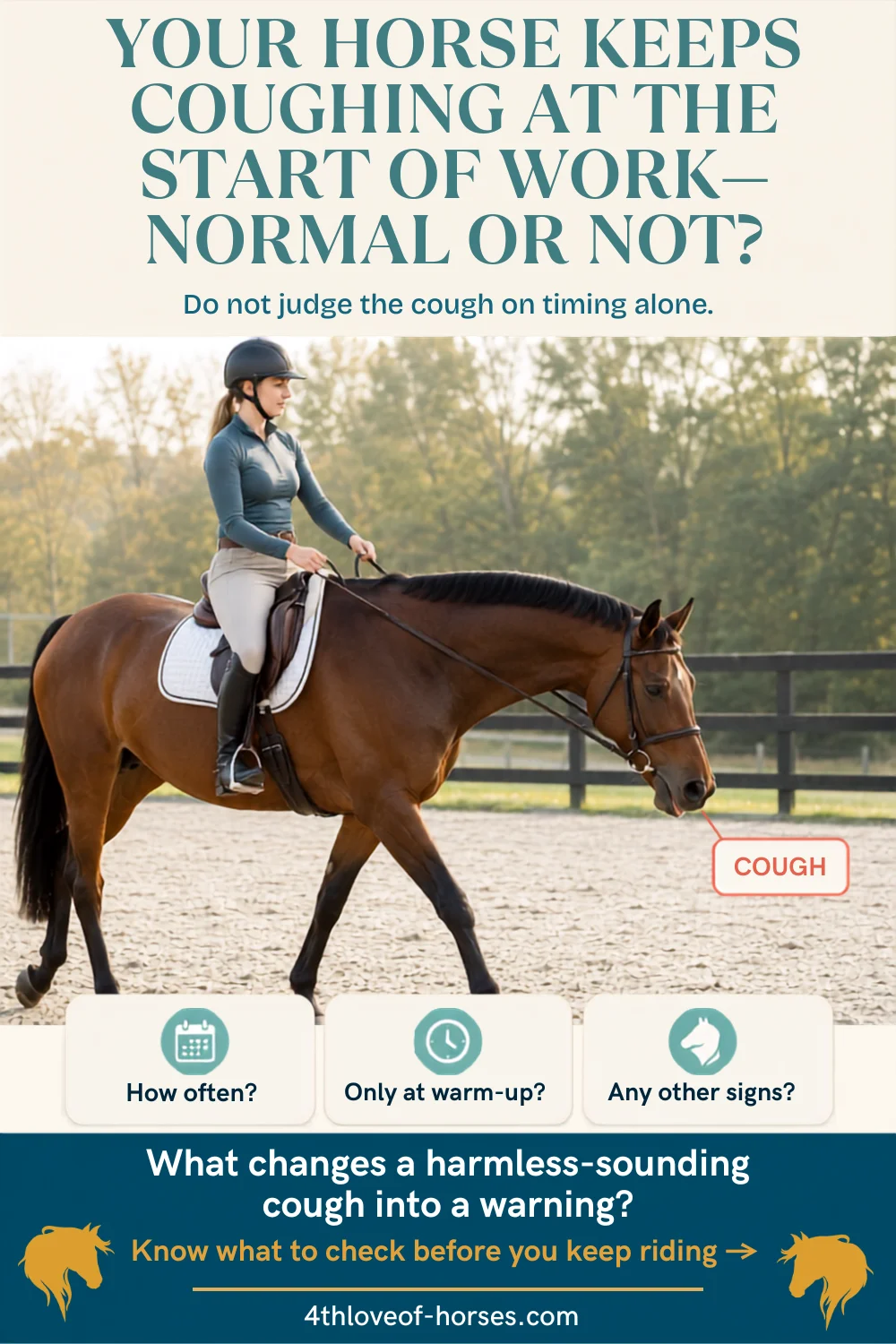
Carrick coughs exactly twice, most mornings, in the first few strides of trot — has done for years, mostly during the dustier months, and it clears the second he’s properly warmed up. I know that cough. It’s not the same cough he had the winter he came down with a genuine respiratory infection, when it was deeper, more frequent, and came with a fever and a horse who didn’t want his breakfast. Learning to tell those two coughs apart, rather than treating every cough the same way, is most of what this post is about.
Free Vet Emergency Reference Card
Vitals, warning signs, and a vet contact template — ready before you need it.
Download Free →
What a Cough Is Actually Telling You
A cough on its own is just a symptom, not a diagnosis — it’s the pattern around it that tells you what you’re dealing with. Two questions matter more than almost anything else: is this sudden or has it been going on for weeks, and is your horse coughing alone, or alongside fever, nasal discharge, or a drop in performance?
Sudden, Short-Term Coughing
A cough that starts abruptly is most often one of a few things:
- A respiratory infection — equine influenza, strangles, or EHV — usually with fever and nasal discharge alongside the cough, not instead of it.
- Dust or irritant exposure — a dusty arena, a fresh bale of poor-quality hay, or strong ammonia in a poorly ventilated stable can trigger a short bout that settles once the horse is out of that environment.
- Choke — esophageal obstruction can trigger coughing as saliva and feed material reach the airway, usually alongside nasal discharge and visible distress.
- A one-off irritation — dust inhaled sharply, a swallow that “goes down the wrong way.” A single cough or two with no other signs and no recurrence is rarely worth worrying about.
Worth Knowing
Fever plus coughing points strongly toward an infectious cause. A cough with no fever, no discharge, and no change in the horse’s general demeanour is far more likely to be irritant-related.

Chronic, Ongoing Coughing
A cough that’s been present for a month or more — particularly one tied to exercise, a specific season, or time spent stabled — is far more often equine asthma than anything infectious. Equine asthma is an umbrella term for what used to be called heaves, RAO, or COPD in horses, and it covers a spectrum from mild airway inflammation to a genuinely limiting chronic condition.
Signs That Point Toward Equine Asthma
- Intermittent coughing during or shortly after exercise, with otherwise normal behaviour at rest
- A pattern tied to hay, bedding, or being stabled — often worse in winter when horses spend more time indoors
- Reduced performance or stamina without an obvious cause
- In more advanced cases, increased effort at rest and a visible “heave line” — thickened abdominal muscle along the bottom of the ribs from the extra work of breathing
Other Signs That Change the Picture
- Cough + fever + lethargy → more likely infectious. Isolate and call your vet.
- Cough + nasal discharge → colour matters here too. Clear discharge with a mild cough is often nothing serious; thick yellow or green discharge alongside a cough is worth a vet visit.
- Cough + weight loss or dropped performance over weeks → worth investigating as chronic airway disease rather than waiting it out.
- Cough only at the start of exercise, clearing quickly → often simply airway clearing, especially in an older horse, though worth mentioning at your horse’s next check-up if it’s new.
Call the Vet
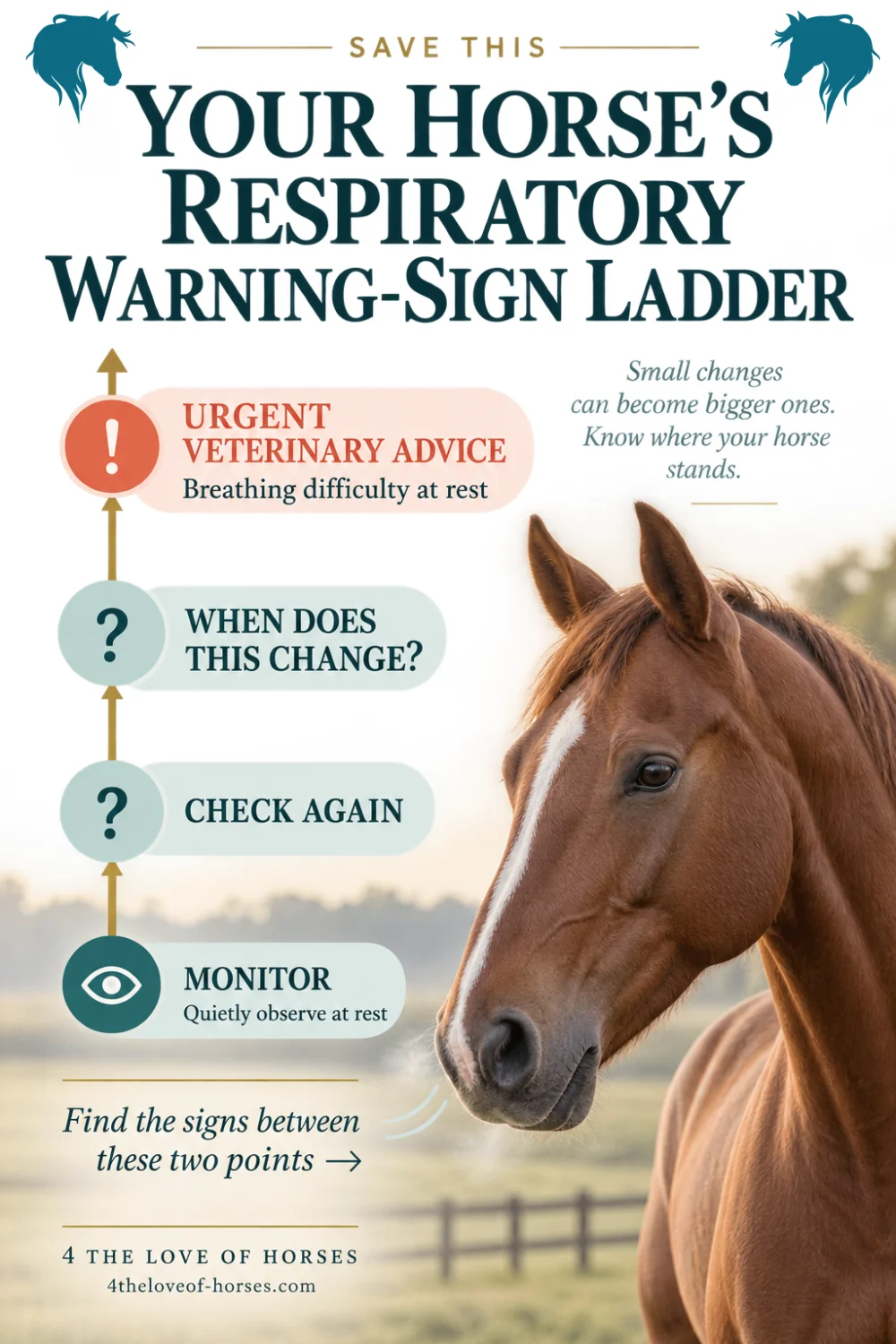
Laboured breathing at rest, flared nostrils, a persistent cough lasting more than a few weeks, or any cough combined with fever or lethargy warrants a proper veterinary work-up rather than a wait-and-see approach.
How Vets Get to the Bottom of It
Beyond a standard physical exam, your vet may use a rebreathing exam — a large bag briefly placed over the nostrils to encourage deeper breathing, making subtle abnormalities easier to hear. For a fuller picture, particularly with chronic cases, an airway endoscopy or a bronchoalveolar lavage (a sample washed from the lower airway) can confirm inflammation and rule out other causes.
Managing an Asthma-Type Cough
Unlike an infection, equine asthma isn’t something you treat and move past — it’s something you manage long-term, and environment does most of the heavy lifting.
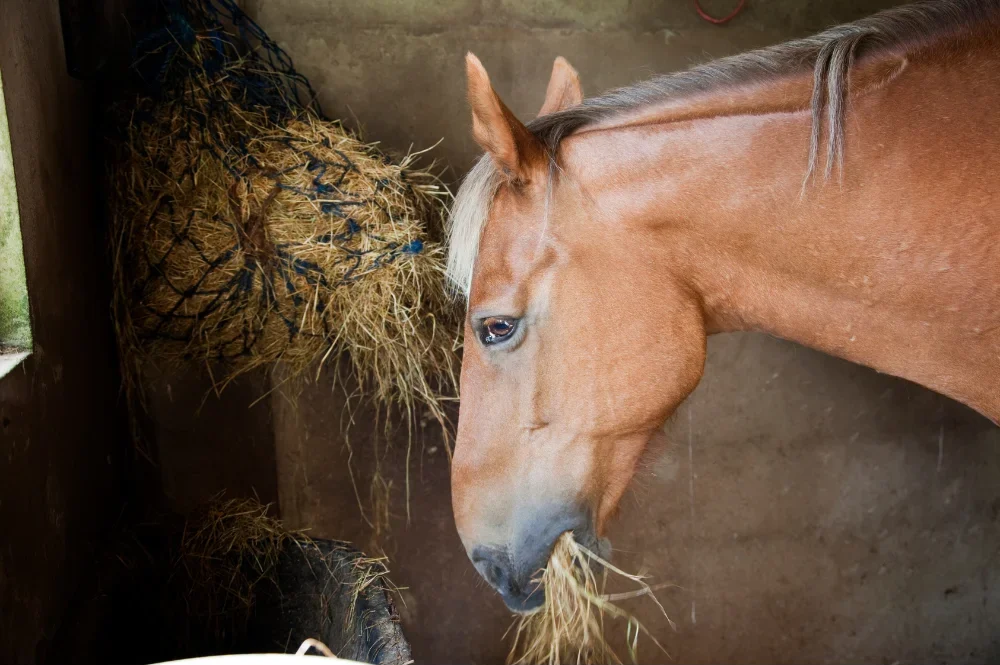
- Soak or steam hay to cut down the dust and mould spores your horse breathes in while eating.
- Choose low-dust bedding — shavings and dusty straw are common triggers; options like paper or specially processed bedding reduce the load considerably.
- Maximise turnout where possible. Time outdoors, away from stable dust and ammonia, is one of the single most effective changes for a horse prone to this.
- Improve stable ventilation and avoid mucking out or sweeping while the horse is still in its stall.
- Be consistent. Dust management only works if it’s kept up every day — a single lapse can undo weeks of otherwise good control.
Worth Remembering
A horse with an asthma diagnosis is generally a “high maintenance” horse for life, not a horse that gets cured. The goal is consistent environmental management, not a one-time fix.
Common Mistakes Horse Owners Make
- Dismissing an exercise-only cough as “just clearing the airway” indefinitely, without ever mentioning it to the vet — this is exactly how mild asthma goes undiagnosed for years.
- Treating every cough as infectious and reaching for isolation and worry, when a single cough with no other signs often isn’t.
- Managing dust inconsistently — soaking hay some days and not others undermines the whole strategy for an asthma-prone horse.
- Waiting for laboured breathing at rest before taking a chronic cough seriously, when performance and exercise-tolerance changes are usually the earlier warning sign.
- Assuming a “clean” looking stable is a low-dust stable. A lot of the relevant dust and mould is invisible to the eye.
Frequently Asked Questions
Is a horse coughing once or twice at the start of work normal?
Often, yes — particularly if it clears quickly and there’s no other sign of illness. Worth mentioning at your horse’s next routine check if it’s a new pattern, rather than urgent on its own.
Can dusty hay cause a cough even in a healthy horse?
Yes — irritant-triggered coughing doesn’t require an existing asthma diagnosis. Poor quality or dusty hay can trigger a short-term cough in any horse.
How long is too long for a cough to last?
Beyond three to four weeks, particularly if it’s tied to exercise or a specific environment, it’s worth a proper veterinary evaluation rather than continued watching and waiting.
Is equine asthma the same as what used to be called heaves?
Yes — heaves, RAO, and COPD in horses are older terms for what’s now grouped under the umbrella term equine asthma, spanning mild to severe presentations.
The pattern matters more than the cough itself — sudden and feverish is a different conversation than chronic and dust-triggered, and telling them apart is most of the battle.
Free Vet Emergency Reference Card
Keep the warning signs and vet contact template on hand before you need them.
Download Free →Related Horse Illnesses