Choke in Horses: Signs, First Response and Prevention
Despite the name, a choking horse isn’t struggling to breathe the way a choking person is — it’s the esophagus that’s blocked, not the windpipe, and knowing that difference changes how you respond.
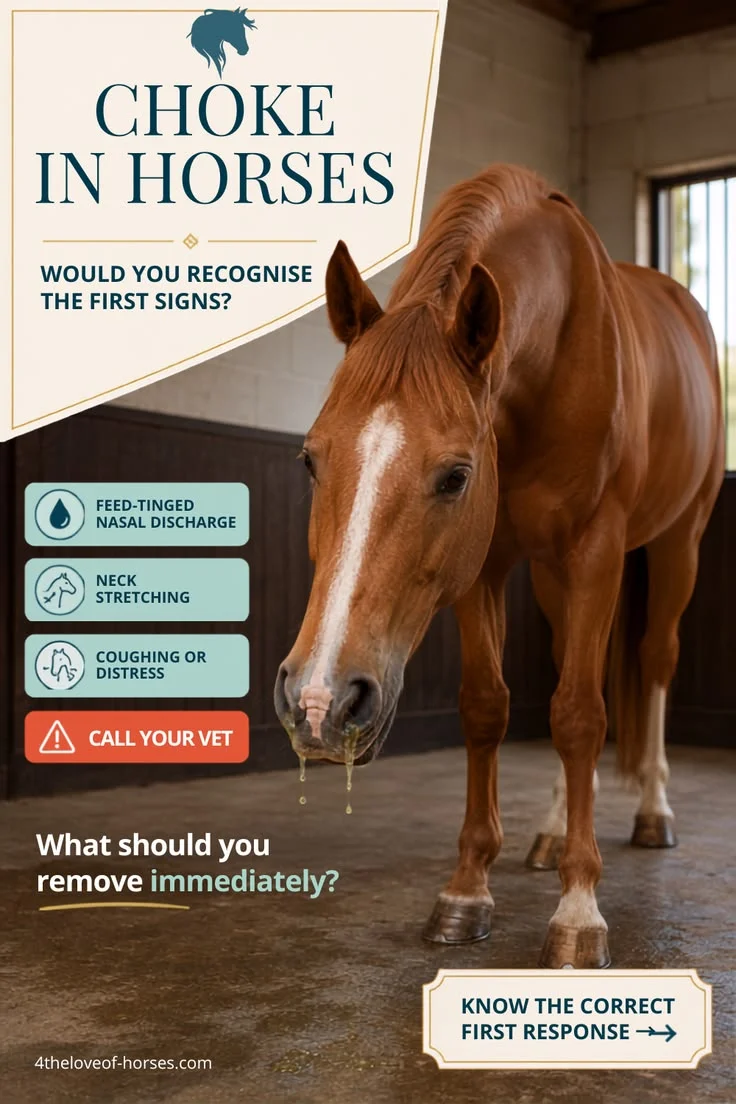
Magoo was hungry when coming in from the paddock in a dry winter when the grazing in his paddock had literally dried up and started eating his hay with great gusto. I was walking past his stable when I noticed him standing akwardly and looking closer I saw green-tinged foam started coming down both nostrils within a minute of me standing there, and he started stretching his neck out and coughing, clearly distressed. I quickly pulled every scrap of feed and water out of reach, moved him to a bare stall, and had the vet on the phone before I’d even finished doing it.
Choke is one of those emergencies that looks alarming and usually resolves without lasting harm — but “usually” is doing a lot of work in that sentence, and it should never be treated as a wait-and-see situation.
Free Vet Emergency Reference Card
Vitals, warning signs, and a vet contact template — ready before you need it.
Download Free →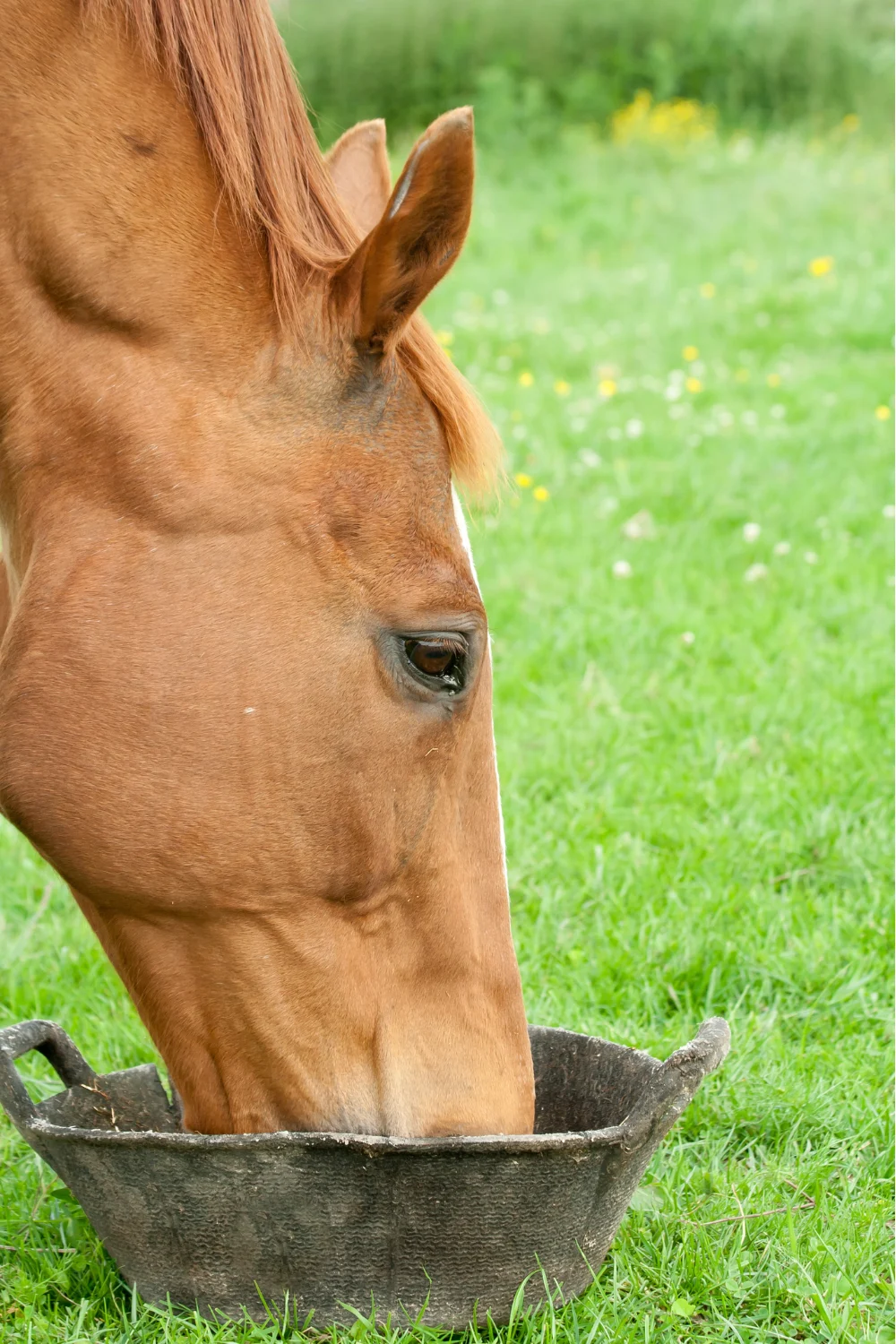
What Choke Actually Is
In horses, “choke” refers to a blockage of the esophagus — the muscular tube carrying food from the mouth to the stomach — not the windpipe. That’s the opposite of what the word usually means in people, and it matters practically: a choking horse can still breathe. What it can’t do is swallow, which is exactly why saliva and feed material back up and come out through the nose instead.
What Causes It
- Bolting feed — eating too fast, especially dry pelleted feed, grain, or beet pulp that hasn’t been soaked.
- Dental problems — a horse that can’t chew properly is far more likely to swallow feed that’s still too coarse.
- Treats swallowed whole — carrots or apples that aren’t cut down, particularly in horses that rush their food.
- Inadequate water intake — a drier mouth means less lubrication moving feed down.
- Foreign objects — anything from baling twine to a chunk of a hay net can end up swallowed.
- Anatomical issues — a stricture or diverticulum (pocket) in the esophagus, often from a previous choke episode, makes future episodes more likely.
Signs to Watch For
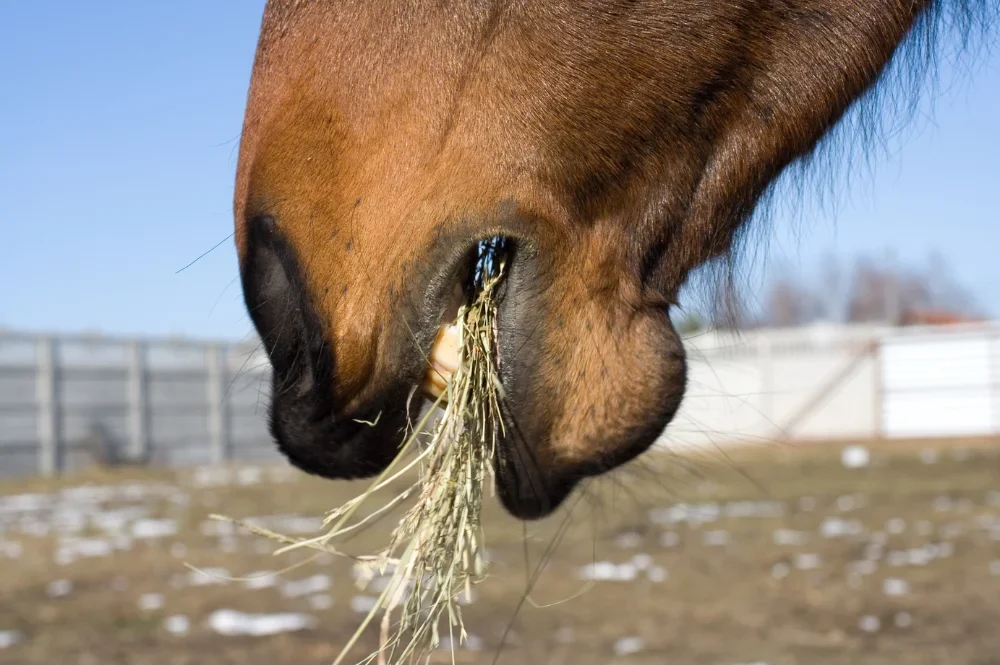
- Greenish discharge from the nostrils — a mix of saliva and feed material, the single most recognisable sign.
- Coughing, often triggered as that discharge reaches the airway.
- Excessive drooling and teeth grinding.
- Anxious behaviour — stretching and arching the neck repeatedly.
- Continuing to try to eat or drink despite the obstruction, which can make things worse.
- A visible or palpable lump on the left side of the neck, in some cases.
Worth Knowing
A mild choke can look similar to a respiratory infection or mild colic at first glance. If there’s any nasal discharge with a greenish tinge and feed particles in it, treat it as choke until your vet says otherwise.
What to Do Right Away
Call the Vet
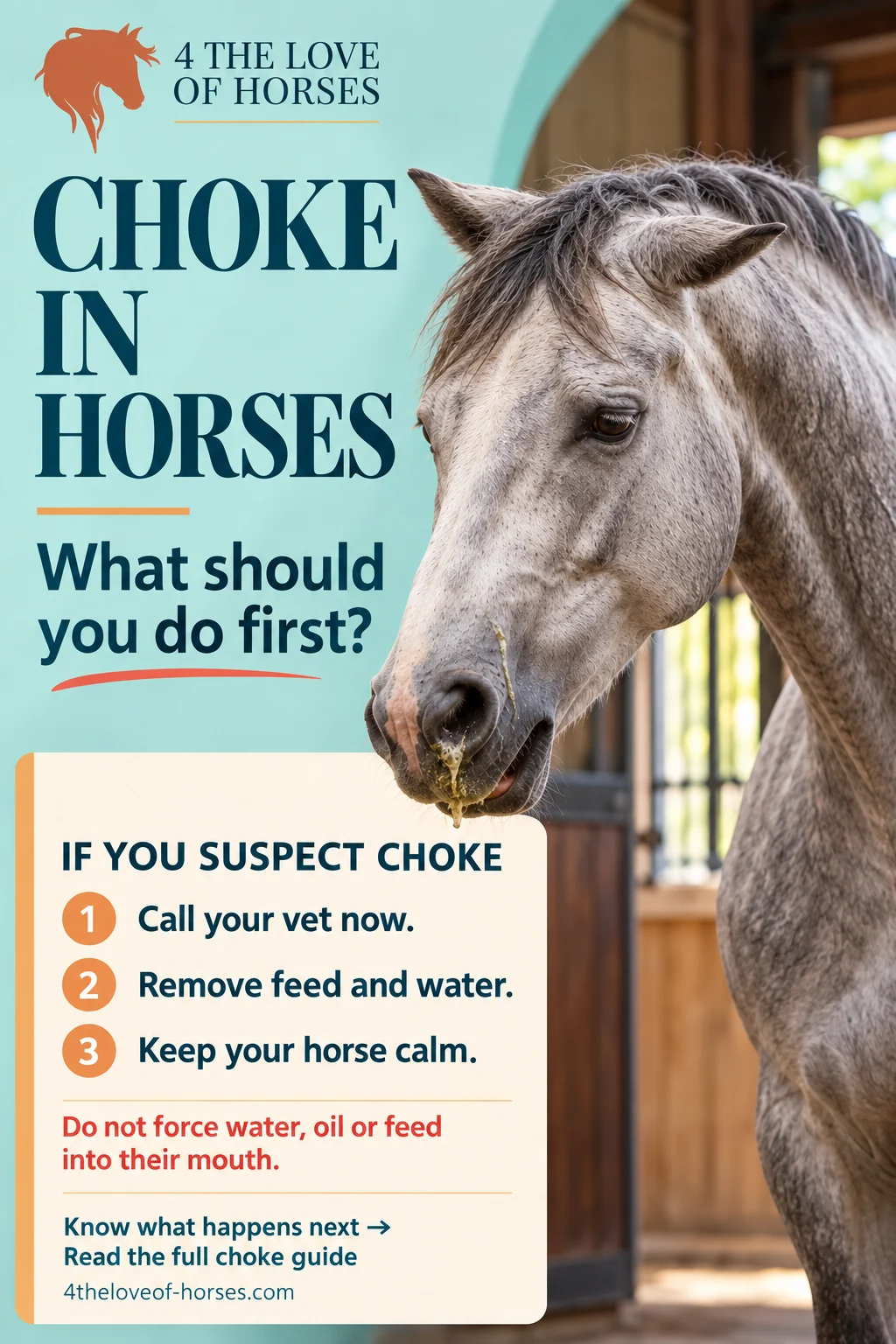
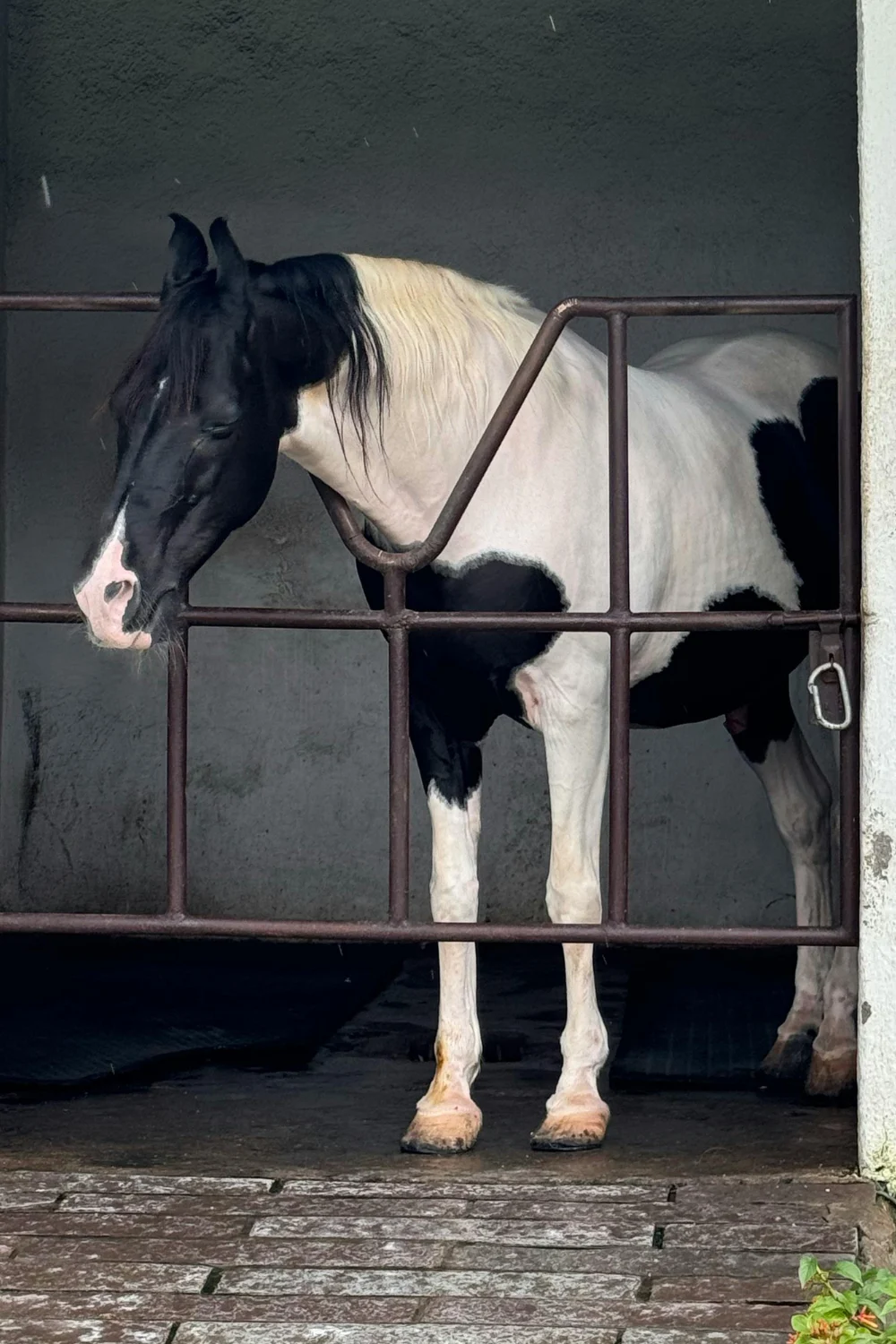
Remove all food and water from reach immediately, move the horse to a bare stall or confined area with nothing to eat, and call your vet — every case, even ones that look mild.
- Don’t tie the horse with its head elevated. Let the head hang low and relaxed, which helps saliva and discharge drain away from the airway rather than toward it.
- Don’t offer anything by mouth — no food, water, or home remedies — until your vet has assessed the horse.
- Stay calm and keep the horse calm. Some chokes resolve on their own within twenty to thirty minutes, but that’s for your vet to confirm, not something to bank on.
Diagnosis and Veterinary Treatment
Your vet will examine the horse, sometimes able to feel or see the obstruction on the left side of the neck, and will typically sedate the horse before passing a nasogastric tube. The obstruction is gently lavaged — flushed with small amounts of water — to break it down and clear it, done slowly and carefully to avoid damaging the esophagus or causing the horse to inhale any of the material. Once cleared, an endoscope is often used to check the esophagus for damage, strictures, or an underlying pocket that might explain why the choke happened in the first place.
Possible Complications
Most straightforward chokes resolve well once cleared, which is exactly why fast veterinary attention matters — the complications are what turn a routine emergency into a serious one.
- Aspiration pneumonia — the main risk, caused by feed material or saliva being inhaled into the lungs.
- Esophageal damage or rupture — from the pressure of a prolonged obstruction or from an overly forceful attempt to clear it.
- Stricture — scarring that narrows the esophagus, increasing the risk of choke happening again.
- Dehydration and electrolyte imbalance, particularly with longer obstructions.
Getting Back to Feeding
Once the obstruction is cleared, food is reintroduced gradually and as a soaked, sloppy mash rather than jumping straight back to normal feed. Your vet may prescribe pain relief or antibiotics if there’s any concern about damage to the esophagus or early signs of aspiration, and a dental check is usually part of the follow-up, especially if poor chewing played a role.
Preventing Choke
- Soak anything that swells — beet pulp, hay cubes, and hay stretcher pellets should be a sloppy, mush-like consistency before feeding, not fed dry.
- Cut treats down. Carrots and apples should be sliced, not left whole, for any horse prone to bolting.
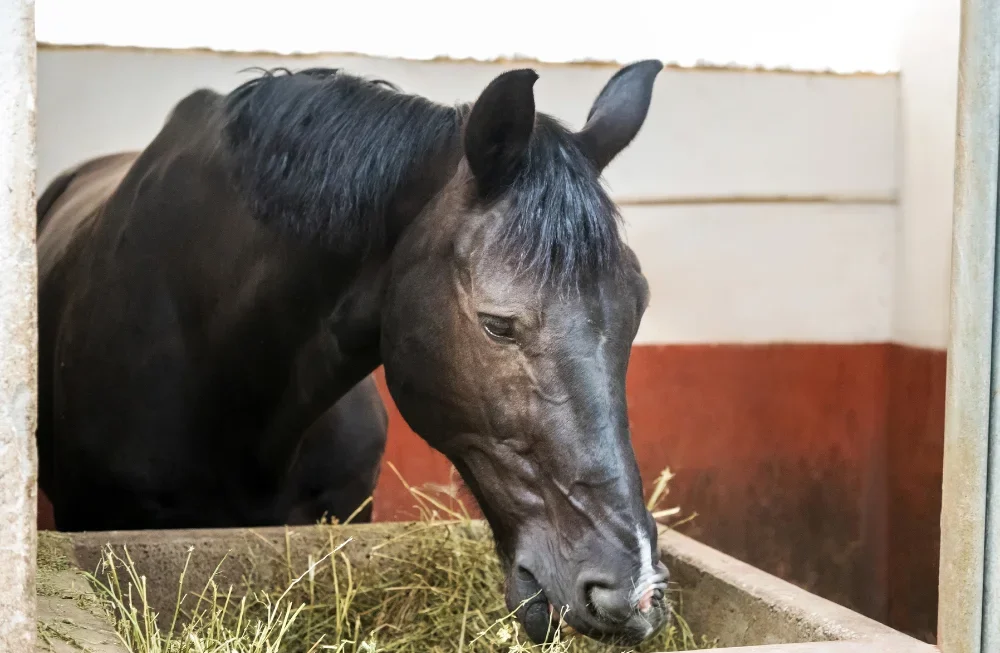
- Slow a fast eater down. A large, smooth rock or a salt block placed in the feed bin (too big to swallow) forces a horse to eat around it rather than gulping. Slow-feed hay nets work the same way for forage.
- Spread feed out or use multiple shallow containers rather than one deep bucket, which naturally slows intake.
- In group feeding situations, provide enough separate feed stations that less dominant horses aren’t rushing to beat the others.
- Keep up with dental care. Regular checks catch the chewing problems that make choke more likely long before they become obvious.
- Always have clean water available — a well-hydrated horse produces enough saliva to help feed move down normally.
Common Mistakes Horse Owners Make
- Waiting to see if it clears on its own before calling the vet. Some do resolve quickly, but that’s not something to gamble on with a genuine obstruction.
- Offering water to “help it go down.” This can make things worse and increases the risk of aspiration — always leave this to your vet.
- Feeding beet pulp or hay cubes dry “because there wasn’t time to soak it” — this is one of the most common preventable causes.
- Not addressing the cause after a first episode. A horse that’s choked once without a clear one-off explanation is worth a dental check and a hard look at feeding management, since strictures make repeat episodes more likely.
- Rushing feed back to normal too soon after an episode, instead of the gradual, soaked reintroduction your vet recommends.
Frequently Asked Questions
Can a horse breathe while choking?
Yes — the blockage is in the esophagus, not the windpipe, so breathing itself isn’t directly obstructed. The real danger is aspiration, not suffocation.
Will choke resolve without a vet?
Sometimes, but there’s no reliable way to tell a case that’ll clear on its own from one that needs intervention just by looking at it. Every case is worth a call.
Is my horse more likely to choke again after a first episode?
It can be, particularly if the original episode caused any scarring or if there’s an underlying anatomical issue — which is exactly why a follow-up exam matters, not just clearing the immediate blockage.
Should I withhold feed after a choke episode, even once it seems fine?
Follow your vet’s guidance specifically, but generally yes — feed is reintroduced gradually as a soaked mash rather than going straight back to a normal ration.
Choke looks frightening in the moment, but a calm, fast response — food and water away, head low, vet on the phone — is almost always enough to see a horse through it well.
Free Vet Emergency Reference Card
Keep the warning signs and vet contact template on hand before you need them.
Download Free →Related Horse Illnesses
Sources: AAEP: Understanding Choke in Horses