“I’ve seen it too many times — a horse that was perfectly well at morning feed found collapsed by lunchtime. In several of those cases, the cause was a plant. Something that had always been in the hedgerow or the field corner, eaten once when grazing was thin. Plants that horse owners walk past every day without knowing what they’re looking at.”
Horses cannot vomit. This single biological fact makes plant poisoning far more dangerous for them than for most other animals — whatever they eat, they must process. Some plant toxins accumulate silently over weeks before symptoms appear. Others act within hours. A few kill within minutes.
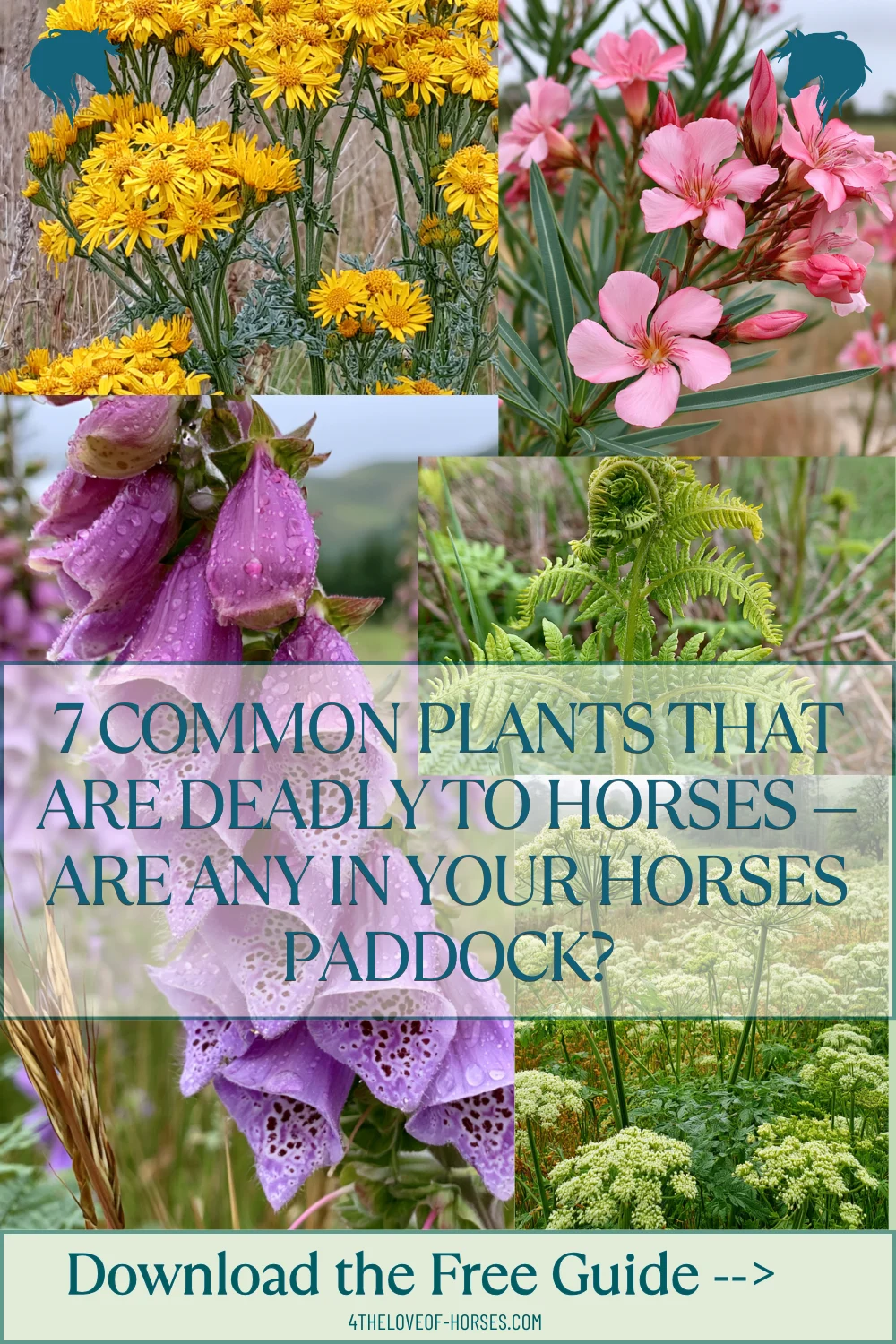
This post covers the seven plants most likely to kill a horse in a typical paddock, garden boundary, or yard environment — what they look like, where they grow, how they cause harm, and what to do if you suspect exposure. Not all of them are rare or exotic. Some are in most hedgerows in the British Isles and Southern Africa right now.
At the end there’s a free downloadable toxic plants reference guide — print it and keep it in your tack room and your first aid kit. Share it with anyone else who cares for horses at your yard.
⚠️ If you suspect your horse has eaten a toxic plant, call your vet immediately — don’t wait for symptoms to develop. With many plant toxins, by the time symptoms are visible significant damage has already occurred. Early intervention is the difference between survival and organ failure.
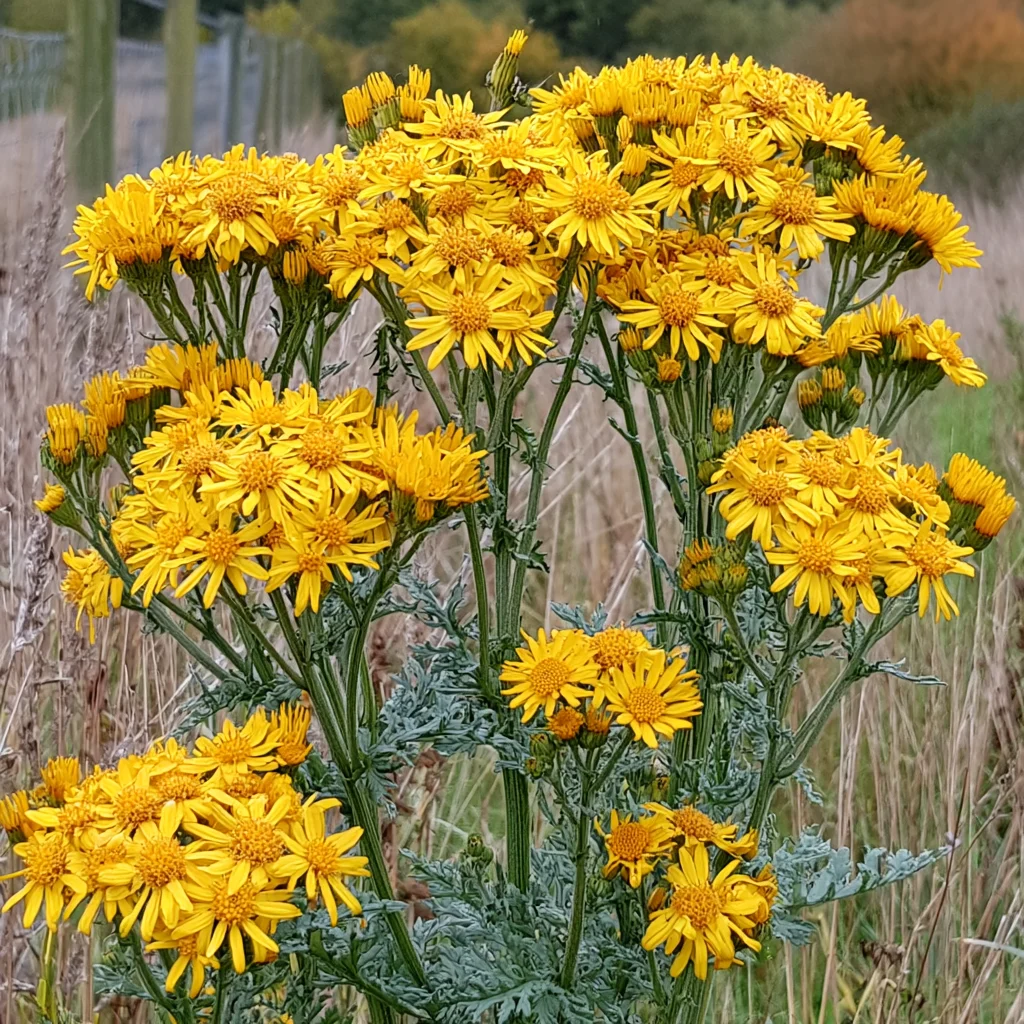
Ragwort is responsible for more horse deaths from plant poisoning than any other species in the British Isles — and it’s common across South Africa, Europe, North America and Australasia. The challenge is that horses naturally avoid it when it’s fresh and growing because it tastes bitter. The danger comes when it’s cut and dried in hay, where the bitter compounds are lost but the toxins remain fully active.
Pyrrolizidine alkaloids damage liver cells progressively. Each exposure adds to the cumulative load. By the time a horse shows symptoms — weight loss, jaundice, photosensitisation, abnormal behaviour — the liver damage is often irreversible. There is no specific antidote.
Identification
Bright yellow daisy-like flowers in flat-topped clusters. Deeply lobed, irregular leaves. Grows 60-120cm. Often biennial — a rosette in year one, a tall flowering plant in year two.
Where it grows
Roadsides, railway embankments, overgrazed pasture, disturbed ground. Thrives where grass competition is low. Seeds spread widely by wind.
Toxic compound
Pyrrolizidine alkaloids — damage liver cells irreversibly. Cumulative. Toxic dried or fresh, alive or dead.
Timeline
Weeks to months of sub-lethal exposure before symptoms appear. Acute poisoning possible from a single large dose.
🚨 Symptoms
Weight loss despite normal appetite, jaundice (yellow gums/eyes), photosensitivity (sunburned pale-skinned areas), depression, head pressing, staggering, abnormal behaviour. Symptoms indicate advanced liver damage.
✅ What to do
Call your vet if symptoms appear. Remove all ragwort from paddocks — pull by the root, bag and dispose of carefully (do not compost or burn near horses). Check hay sources carefully. In the UK, landowners have a legal duty to control ragwort.
Plant 02
Yew
Taxus baccata and related species
☠️ Most Deadly
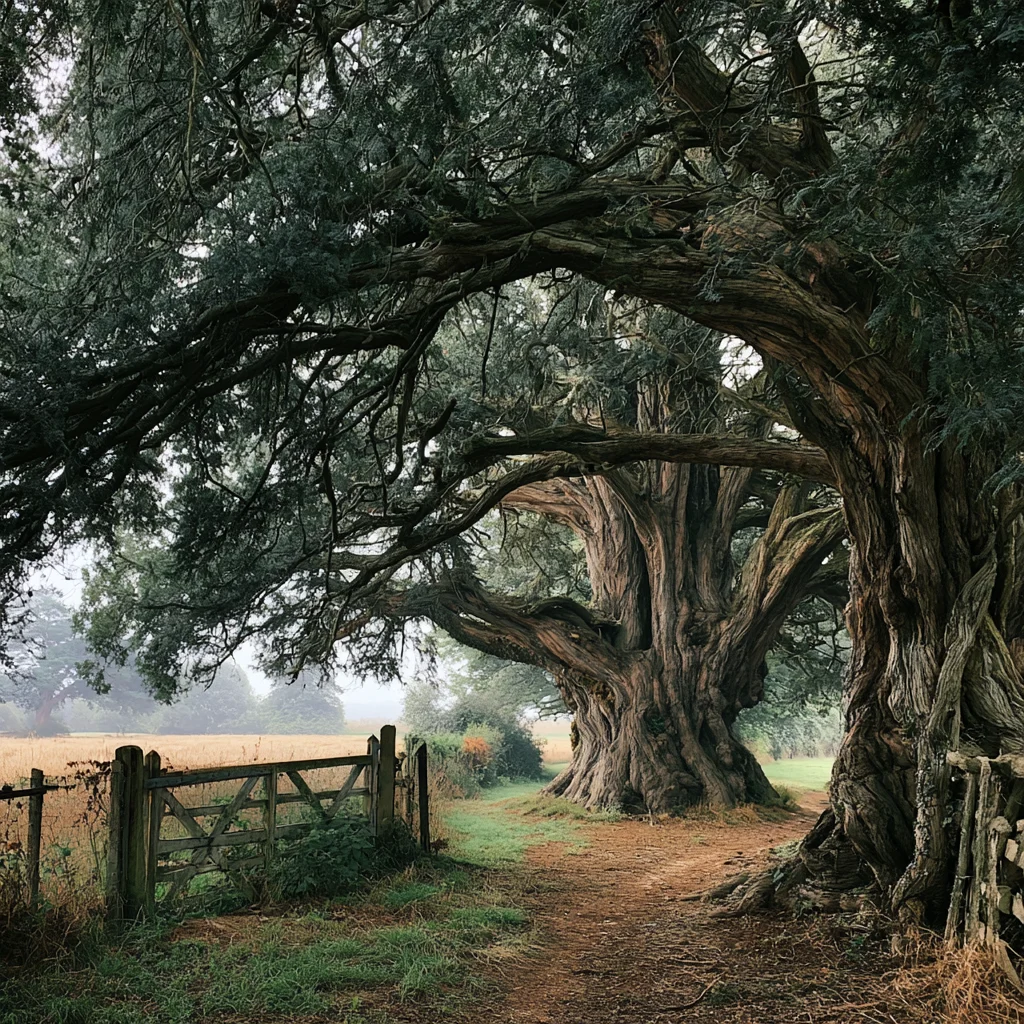
Yew — dark glossy needles, red berries. Common as a garden hedge.
Yew is the most acutely toxic plant a horse is likely to encounter in a paddock or garden boundary. As little as 200 grams of fresh clippings can kill an adult horse — and death can occur so rapidly that there are no warning signs. Horses are often found dead near yew trees with no prior symptoms. The taxine alkaloids in yew interfere directly with the electrical conduction of the heart, causing cardiac arrest.
The red berries look appealing. The dark glossy needles persist year-round. All parts are toxic — fresh, dried, or as clippings thrown over a fence. Never throw yew trimmings anywhere a horse can access them.
Identification
Dark green glossy needles, flat and linear. Red fleshy berry-like arils (seed cups) in autumn. Reddish-brown scaly bark. Slow-growing evergreen tree or hedge. Common in churchyards and formal gardens.
Where it grows
Hedgerows, garden boundaries, churchyards, formal landscaping. Often planted along fence lines. One of the most common ornamental hedge plants in the UK.
Toxic compound
Taxine alkaloids — block calcium and sodium transport in heart muscle cells. Direct cardiac toxin. No antidote exists.
Timeline
Death can occur within 1–3 hours. Often found dead with no prior illness. Occasionally horses show brief muscle tremors or difficulty breathing before collapse.
🚨 Symptoms
Often none — sudden death. If observed: muscle tremors, difficulty breathing, collapse, heart irregularities. Death within hours of ingestion.
✅ What to do
Emergency vet call immediately if ingestion is suspected — do not wait for symptoms. Remove or securely fence all yew from paddock boundaries. Never throw yew clippings where horses can access them. Check neighbouring gardens and hedgerows.
Plant 03
Sycamore & Maple
Acer pseudoplatanus and related Acer species
⚠️ Extreme
Sycamore — 5-lobed leaves and winged seeds (helicopters). Check paddocks in autumn.
Sycamore is the cause of Atypical Myopathy — a catastrophic muscle-destroying disease that has killed increasing numbers of horses across Europe and the UK in recent years. The toxin, hypoglycin A, is found in the seeds (the winged “helicopters” that fall in autumn and spring) and the seedlings. When horses eat them, hypoglycin A is converted in the body into a compound that blocks the enzymes needed for energy production in muscle cells — including the heart.
The disease can progress from mild stiffness to death within 24-72 hours. Survival rates even with treatment are around 30-50%. The danger is highest in autumn when seeds are falling and in spring when seedlings emerge, particularly when grass is short and horses are hungrier than usual.
Identification
Large 5-lobed leaves, winged paired seeds (samaras) that autorotate as they fall. Grey-brown bark that flakes in irregular patches on mature trees. Seedlings have distinctive oval seed leaves.
Where it grows
Extremely common in UK and Europe — hedgerows, field edges, parks, gardens. Seeds blow considerable distances. Seedlings can appear anywhere.
Toxic compound
Hypoglycin A in seeds and seedlings. Blocks fatty acid oxidation in muscle cells. Causes Atypical Myopathy (AAMU). Box Elder (A. negundo) also implicated in North America.
Timeline
Signs appear within 12-24 hours of ingestion. Can progress rapidly to death within 24-72 hours. Most dangerous: autumn seed fall and spring seedling emergence.
🚨 Symptoms
Sudden weakness and muscle stiffness, reluctance to move, dark brown urine (myoglobin from muscle breakdown), sweating, low head carriage, trembling, difficulty swallowing, recumbency. Rapid deterioration.
✅ What to do
Emergency vet immediately — this is life-threatening. Remove from affected pasture at once. Treatment (IV fluids, vitamins, supportive care) improves survival odds but must start early. During seed season, remove seeds from pasture where possible, supplement forage so horses are less likely to graze bare ground.
Plant 04
Bracken Fern
Pteridium aquilinum
⚠️ High
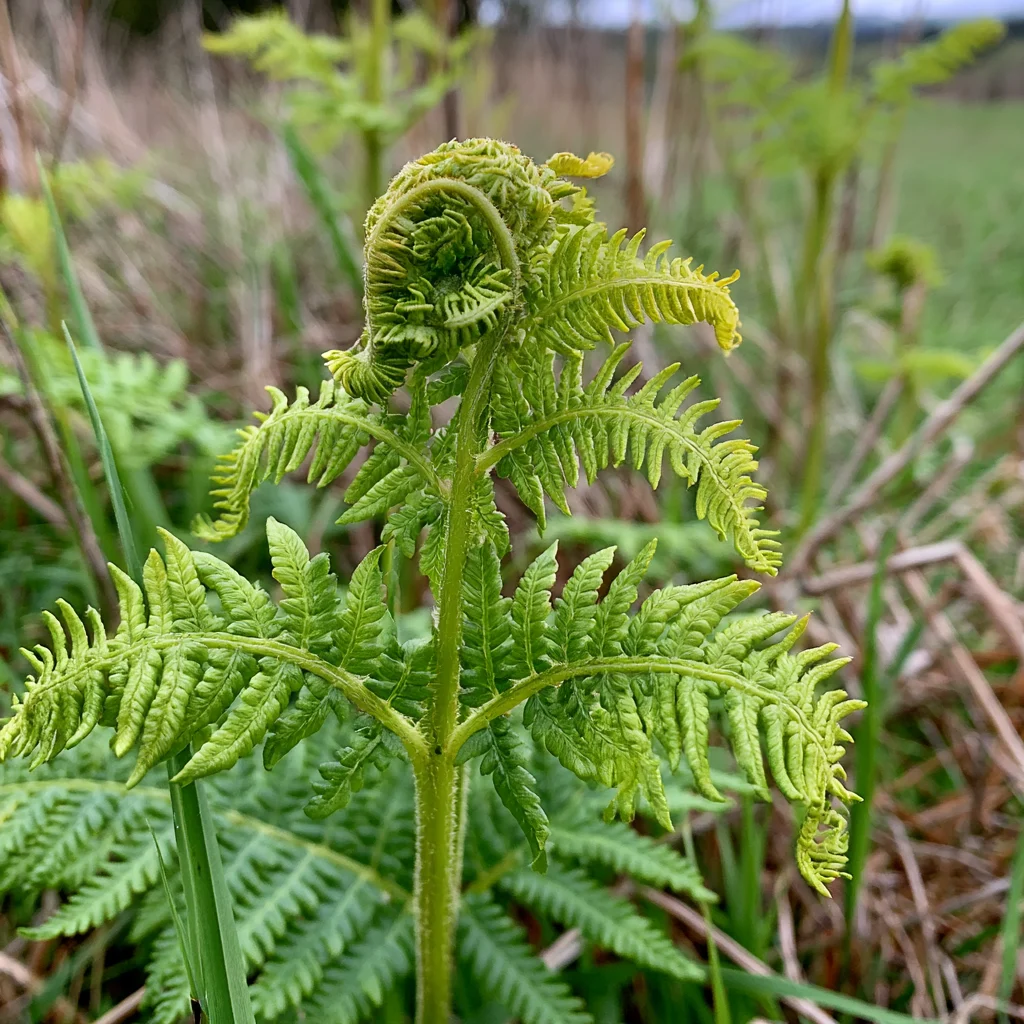
Bracken Fern — large triangular fronds, spreads via underground rhizomes.
Bracken fern is one of the most widespread plants in the world and is found on acid soils, heathland, and woodland edges everywhere horses are kept. Horses don’t generally eat it by choice, but when pasture is poor, overgrazed, or scarce — particularly in late summer and autumn — they will consume it. The toxicity is cumulative.
Bracken contains an enzyme called thiaminase that destroys vitamin B1 (thiamine). Without thiamine, the nervous system and energy metabolism begin to fail. It also causes aplastic anaemia — destruction of bone marrow — after larger doses. Bracken also contains ptaquiloside, a carcinogen linked to bladder tumours in cattle.
Identification
Large triangular fronds, coarse-textured, bright green in summer turning brown in autumn. Young fronds unroll from a characteristic “shepherd’s crook” shape in spring. Spreads via underground rhizomes — patches can cover large areas.
Where it grows
Acid, well-drained soils. Heathland, moorland, hill pasture, woodland edges. Common in rough grazing areas with poor management.
Toxic compound
Thiaminase (destroys vitamin B1), ptaquiloside (carcinogen and bone marrow toxin). Both fresh and dried bracken are toxic.
Timeline
Cumulative — weeks of consumption before neurological signs appear. Requires sustained ingestion of significant quantities (1-5% of body weight over several weeks).
🚨 Symptoms
Weight loss, muscle weakness, incoordination, arched back, difficulty walking, heart irregularities. Severe cases: collapse, convulsions. Anaemia from bone marrow damage in chronic cases.
✅ What to do
Call your vet — thiamine injections are an effective treatment if given early. Improve pasture management to provide adequate alternative forage. Control bracken by repeated cutting (weakens rhizomes over time) or chemical treatment. Do not use bracken as bedding.
Plant 05
Foxglove
Digitalis purpurea
⚠️ Extreme
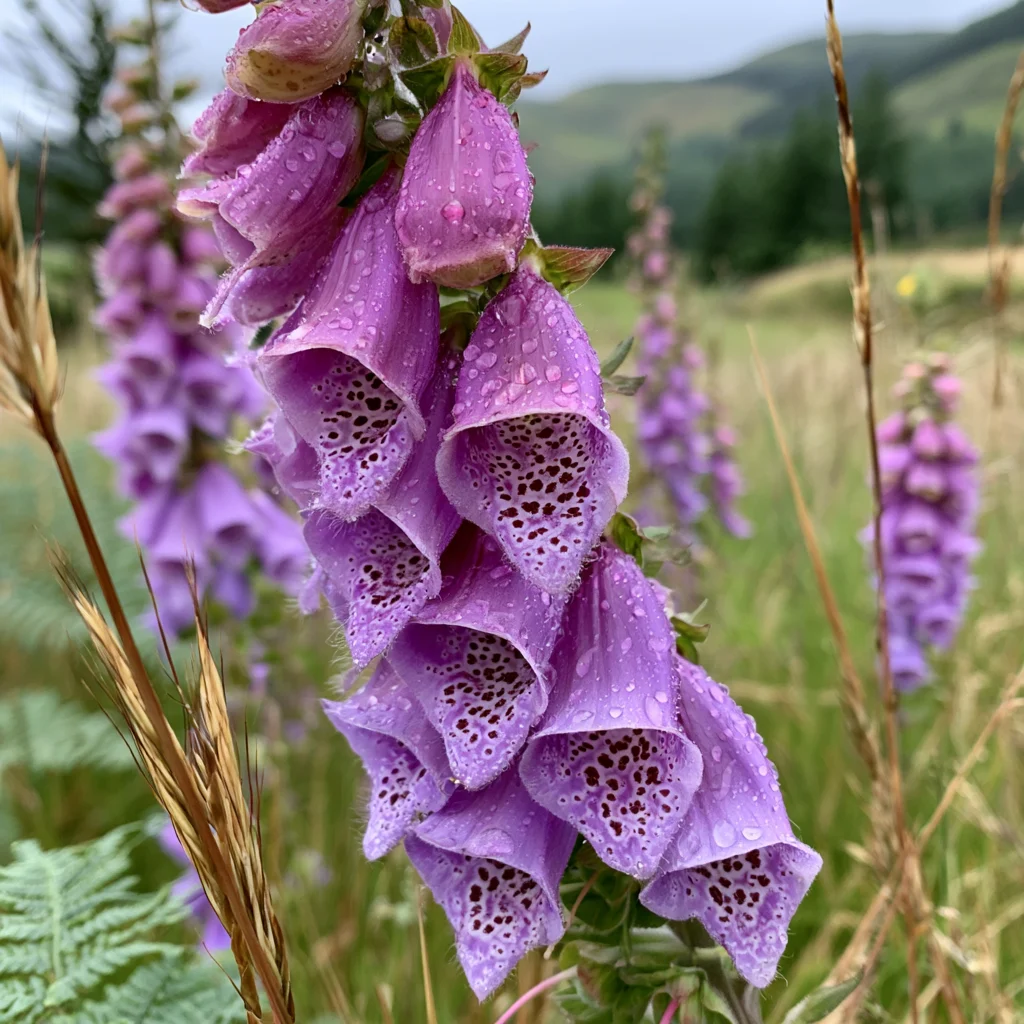
Foxglove — tall spike of pink-purple tubular flowers with spotted interior.
Foxglove is one of the most recognisable wildflowers — and one of the most toxic plants a horse can encounter. The entire plant, fresh and dried, contains cardiac glycosides including digitoxin and digoxin. These compounds disrupt the electrical rhythm of the heart by interfering with the sodium-potassium pump in cardiac muscle cells, causing potentially fatal arrhythmias.
The same compounds are used medically (at precisely controlled doses) to treat human heart failure — but at the doses a horse might consume by grazing, the effect is the opposite. Foxglove is particularly dangerous because it dries well and retains full toxicity in hay.
Identification
Tall spike (up to 180cm) of distinctive tubular pink-purple (occasionally white) flowers with spotted interiors. Soft, grey-green woolly leaves forming a basal rosette in year one. Biennial. Unmistakable when flowering.
Where it grows
Woodland edges, hedgebanks, disturbed ground, roadsides. Common in gardens as an ornamental. UK, Europe, North America, naturalised in many regions including parts of South Africa.
Toxic compound
Cardiac glycosides (digitoxin, digoxin, gitoxin) — disrupt heart electrical conduction. All parts toxic fresh and dried. Retains full toxicity when dried in hay.
Timeline
Within hours of ingestion. Can be rapid and acute with a large dose. Chronic exposure from contaminated hay produces more gradual signs.
🚨 Symptoms
Irregular heartbeat (detectable with a stethoscope), weakness, depression, cold extremities, muscle tremors, abdominal pain, collapse. Sudden death in acute cases.
✅ What to do
Emergency vet call immediately — cardiac monitoring required. Remove from pasture. Supportive care and cardiac treatment by your vet. Check hay sources if multiple horses affected simultaneously. Remove foxglove from all paddock boundaries and accessible garden areas.
Plant 06
Oleander
Nerium oleander
☠️ Most Deadly
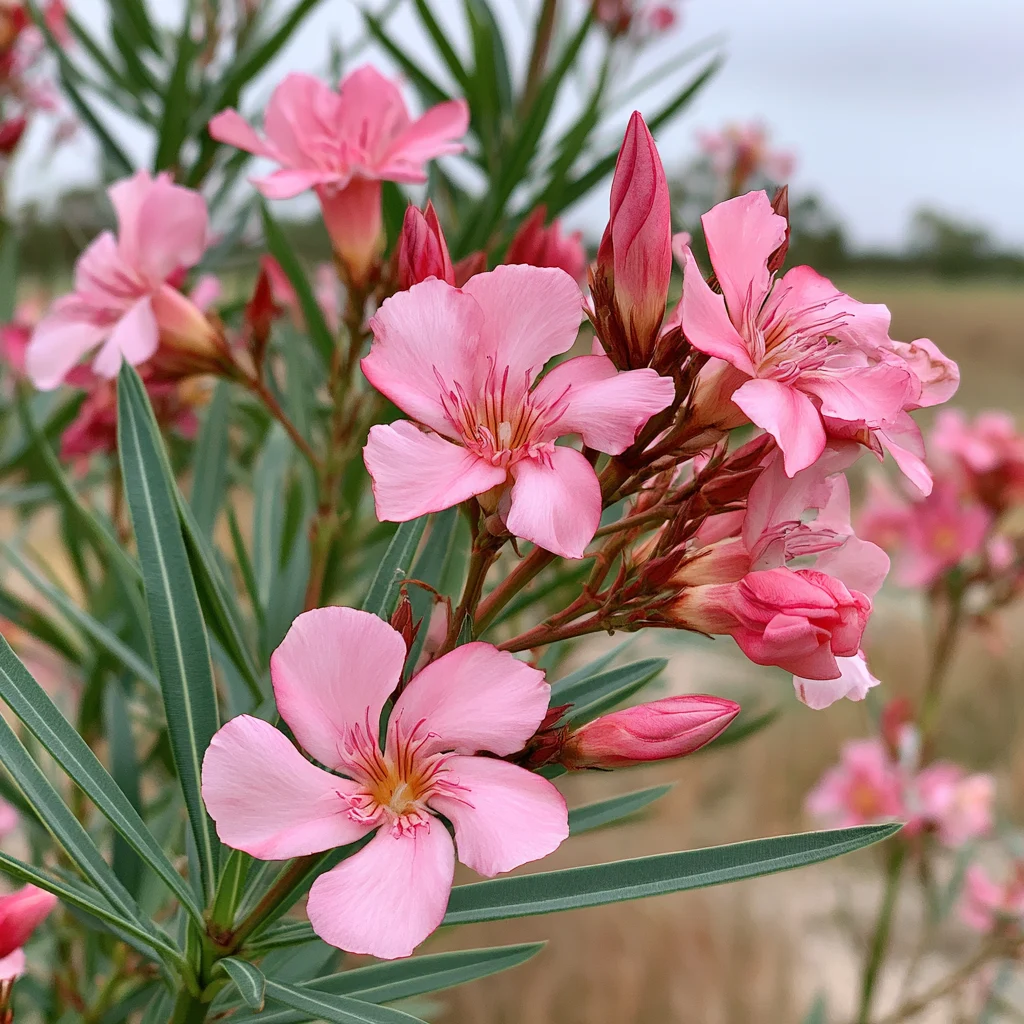
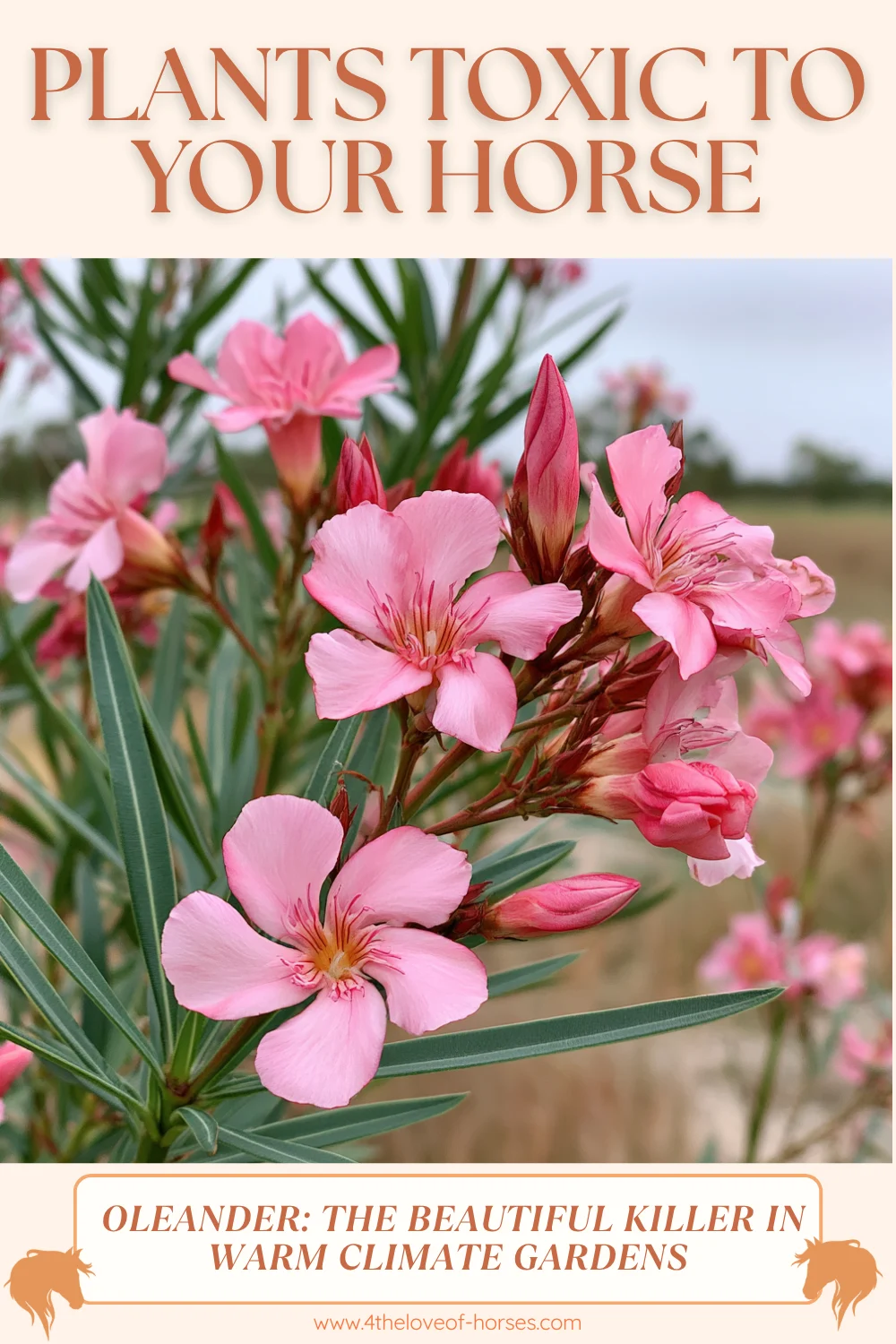
Oleander — evergreen shrub with pink, white or red flowers. Extremely common in warm-climate gardens.
Oleander is one of the most toxic plants in the world and is extremely common as an ornamental shrub in warm climates — Southern Africa, the Mediterranean, the Middle East, parts of Australia, the southern United States, and California. Its beautiful clusters of pink, white or red flowers make it a popular garden and roadside plant, which creates a constant proximity risk for horses in these regions.
Like foxglove, oleander contains cardiac glycosides — but at higher concentrations. As few as 20-30 leaves can kill a horse. All parts of the plant are toxic including flowers, leaves, stems, roots, and the water in which cut oleander has been placed. The toxicity is fully retained when dried.
Identification
Evergreen shrub or small tree, 2-6m. Long narrow leathery leaves in whorls of three. Clusters of 5-petalled flowers in pink, white, red or yellow. Common as a roadside or garden hedge plant in warm climates.
Where it grows
Warm climates worldwide. Extremely common as a garden ornamental and roadside planting in Southern Africa. Often planted along yard boundaries without awareness of its toxicity.
Toxic compound
Oleandrin and related cardiac glycosides — extremely high concentration. All parts toxic including water from cut stems. Does not lose toxicity when dried.
Timeline
Rapid — symptoms within hours. Death can occur within 24 hours of significant ingestion.
🚨 Symptoms
Colic, excessive salivation, muscle tremors, irregular or racing heartbeat, weakness, difficulty breathing, collapse. Can progress rapidly to death.
✅ What to do
Emergency vet immediately — this is life-threatening with a narrow treatment window. If oleander is anywhere near your horses’ access area in a warm climate, remove it completely or replace with non-toxic hedging. Do not allow trimmings anywhere near horses or compost they can access.
Plant 07
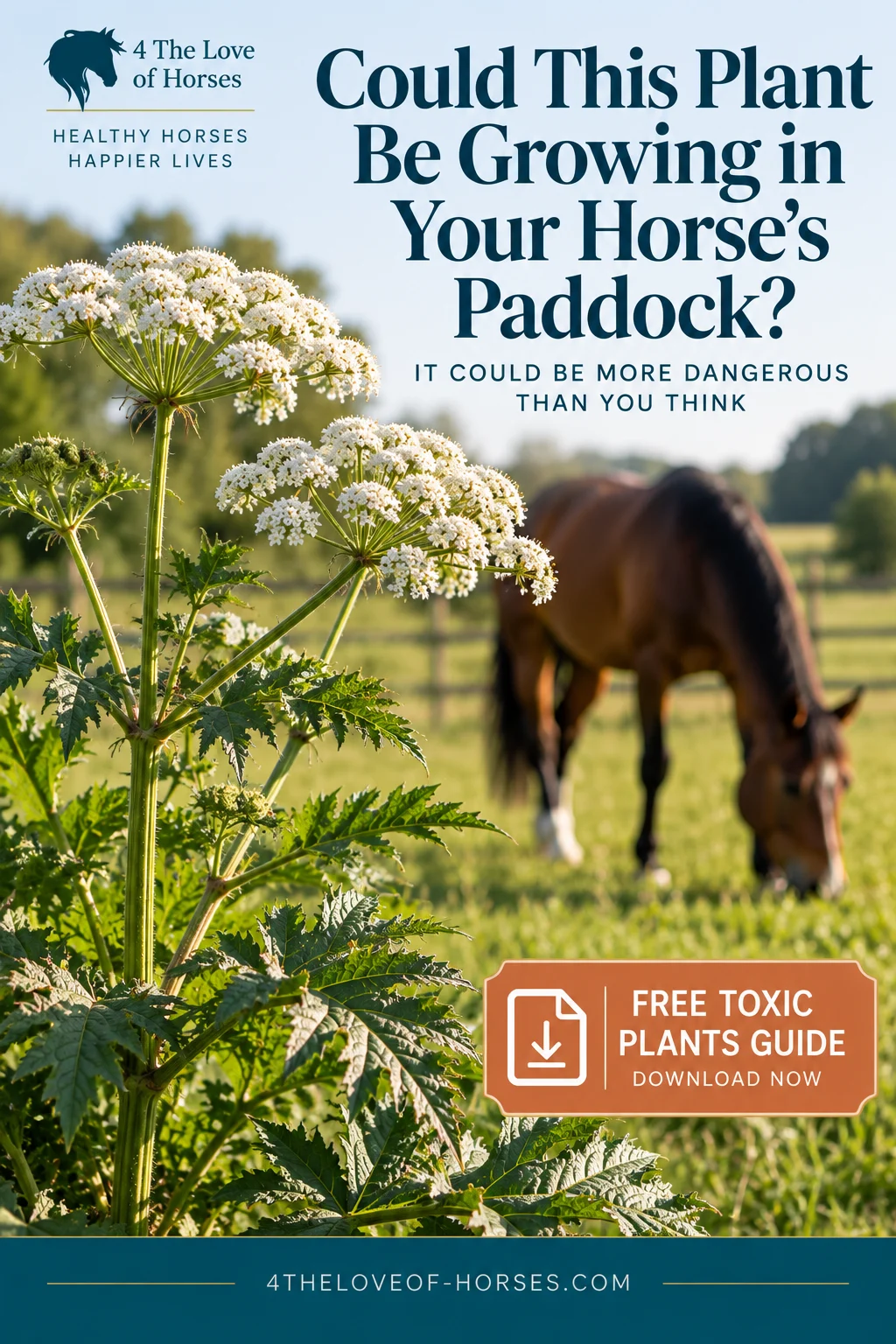
Hemlock
Conium maculatum (Poison Hemlock) / Cicuta species (Water Hemlock)
☠️ Most Deadly
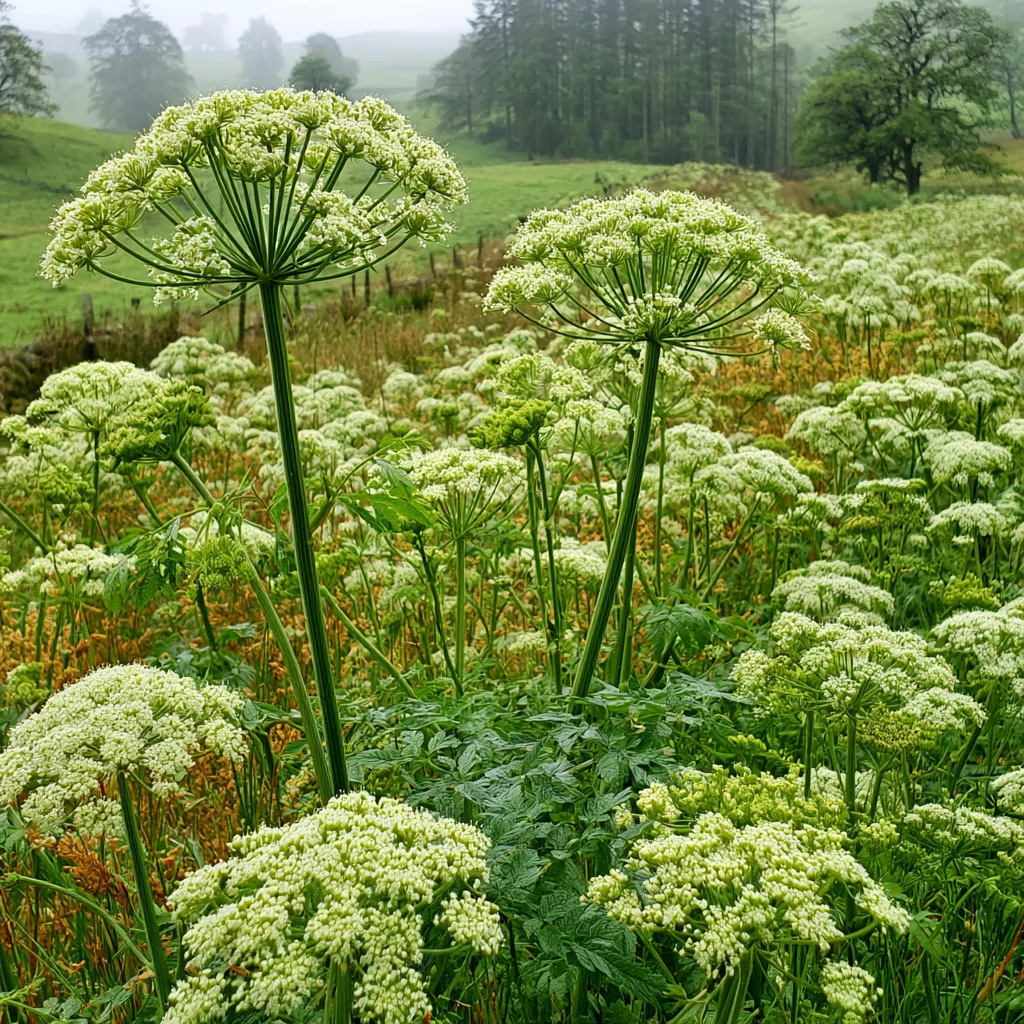
Poison Hemlock — hollow purple-spotted stems, white umbrella flowers. Often mistaken for cow parsley.
There are two distinct plants commonly called hemlock and both are extremely dangerous, though in different ways. Poison Hemlock (Conium maculatum) is the plant used to execute Socrates and is found across Europe, North America, and naturalised globally. Water Hemlock (Cicuta species) is considered by many botanists to be the most violently toxic plant in North America.
Both plants are particularly dangerous because they resemble common harmless species — poison hemlock looks similar to cow parsley and wild carrot; water hemlock can be confused with wild parsnip or water parsley. Purple-spotted stems are the most reliable distinguishing feature of poison hemlock. The smell when crushed — described as “mousy” — is another identifier.
Identification — Poison Hemlock
Tall (up to 2m), hollow stems with distinctive purple-red blotching or spotting. White umbrella-shaped flower clusters. Finely divided, fernlike leaves. Unpleasant “mousy” smell when crushed.
Identification — Water Hemlock
Grows in wet ground, ditches, stream margins. Hollow stems with distinctive chambered roots when cut. White umbrella flowers. Tubers are most toxic — smell of parsnip or carrot when cut.
Toxic compound
Coniine (Poison Hemlock) — ascending paralysis, respiratory failure. Cicutoxin (Water Hemlock) — violent convulsions, CNS stimulant. All parts toxic.
Where it grows
Roadsides, waste ground, stream banks, wet meadows, ditches. Common in Europe, North America, naturalised widely. Often grows along fence lines and waterways.
🚨 Symptoms
Poison Hemlock: salivation, incoordination, muscle weakness, ascending paralysis, respiratory failure. Water Hemlock: rapid onset violent convulsions, excessive salivation, muscle tremors. Both can kill within hours.
✅ What to do
Emergency vet immediately — both are rapidly fatal. Learn to identify these plants accurately — the resemblance to harmless species makes misidentification a real risk. Remove from pastures, ditches, and stream margins. Particular vigilance in spring when young growth appears.
Paddock Audit — Do This Walk Today
The best protection is systematic inspection. Walk every paddock boundary, hedge, and water source at least twice a year — once in spring when plants are emerging and once in autumn. Here’s what to check:
Walk entire fence and hedge line — check what’s growing through from the other side
Check any trees in or adjacent to paddocks — particularly yew, sycamore, oak
Inspect ditches, stream banks and wet corners for hemlock and water hemlock
Check hay sources — ragwort and foxglove retain full toxicity when dried
In warm climates: scan all boundary planting for oleander
Look for bracken in rough corners, particularly on acid soils
Photograph any plants you can’t identify and send to your vet or local agricultural extension service
Ask new livery yards specifically about what’s in the hedge and field boundaries
💡 The autumn seed season risk: Autumn is the most dangerous time for sycamore seeds, acorns, and other fallen plant material. If you’re in the UK or Europe, inspect paddocks for sycamore seeds throughout September and October. Short grass increases risk — horses graze the ground more closely when there’s less available and are more likely to eat seeds.
If You Suspect Plant Poisoning — What to Tell Your Vet
When you call your vet, the information you provide in those first minutes is critical. Have the following ready:
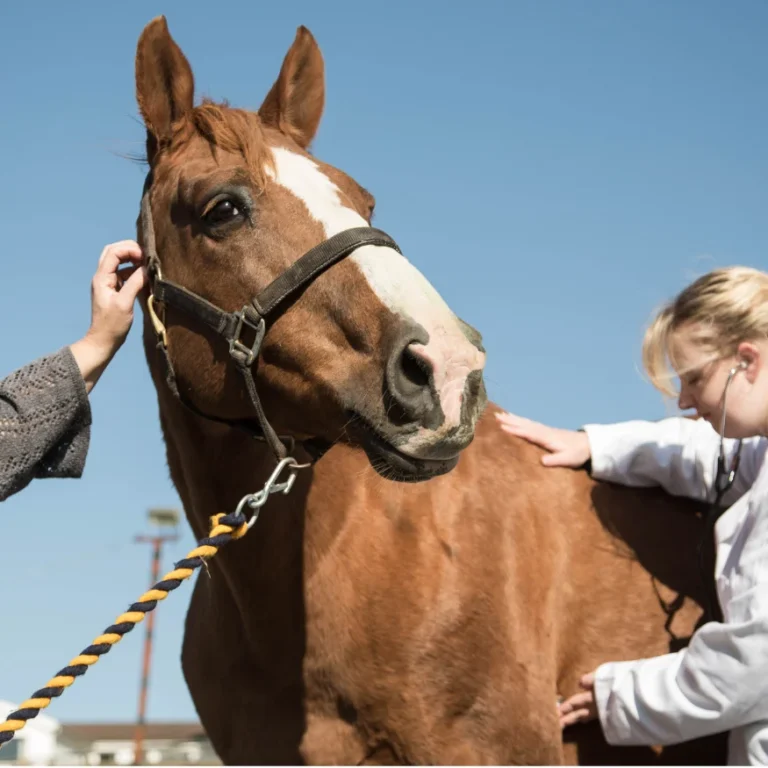
What plant you think was consumed — a photo or sample if possible. Even an approximate identification helps direct treatment.
How much you think was eaten — estimate based on what’s missing from the plant or what you observed.
When you think it was consumed — hours or days ago makes a significant difference to treatment options.
Symptoms you’ve observed — when they started, what they look like, whether they’re worsening.
🚨 Do not wait for symptoms to appear before calling your vet. With yew, oleander, and hemlock, symptoms may not appear until irreversible damage has occurred. If you know or strongly suspect your horse has eaten any of these, call immediately and say so — don’t hedge or qualify your concern.
For a full list of your horse’s normal vital signs, keep a completed reference card in your stable. If your horse’s values are already recorded when they’re healthy, you have an immediate baseline for comparison in an emergency. Our emergency signs guide covers the full range of situations that require an urgent vet call.
A printable 4-page reference guide to all 7 plants covered in this post — identification photos descriptions, symptoms, and emergency action steps. Print it and keep it in your tack room and first aid kit. Share it with everyone at your yard.
Working with stallions presents a unique set of challenges and rewards, each demanding a deep understanding of their distinct behaviors. Stallions are often perceived as…
Strangles in Horses: Containment, Treatment and Prevention RESPIRATORY HEALTH Strangles in Horses: Containment, Treatment and Prevention Strangles has been recorded in horses since medieval Europe,…
Welcome to our comprehensive five-part series on broodmare nutrition! Whether you’re a first-time breeder or managing a large breeding operation, understanding how to feed your…
Equine Influenza: Symptoms, Prevention and Treatment Guide RESPIRATORY HEALTH Equine Influenza: Symptoms, Prevention and Treatment Guide Horse flu can move through a yard faster than…