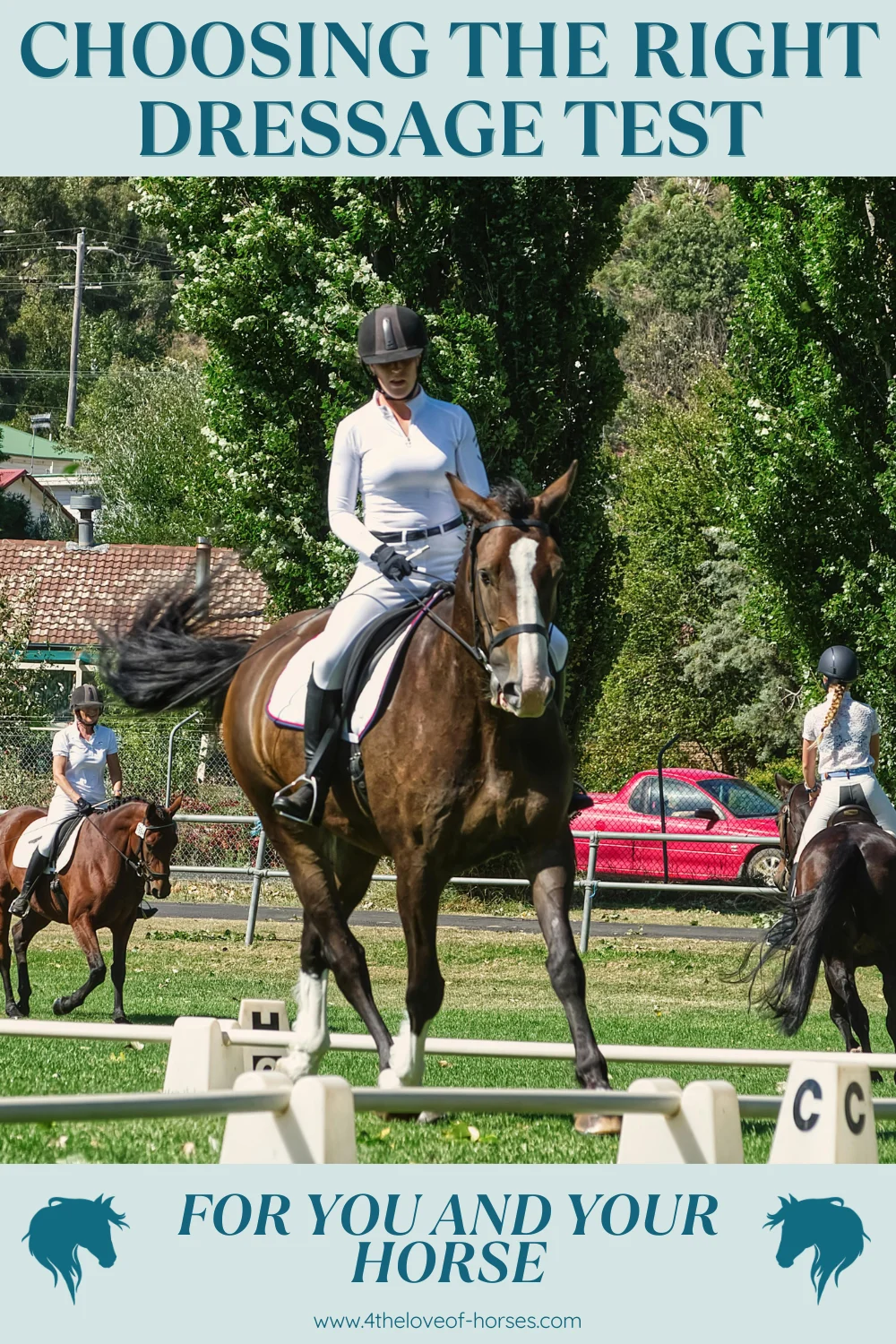
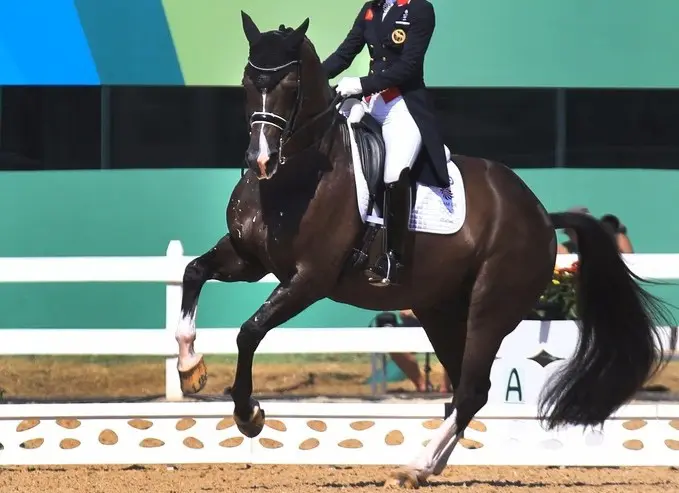
How to Ride a Better Dressage Test


Dressage tests can feel deceivingly simple on paper, but riding a polished, confident test takes more than just correct movements. It takes preparation, strategic thinking, and the ability to stay present when nerves kick in. Whether you’re competing at introductory level or working through the higher tests, these principles apply at every level.
🎯 Dressage Test Day Checklist
Everything you need to prepare, warm up, and ride your best test — from the week before to the final halt. Print it, pin it, use it.
→ Download FREE Checklist FREE — instant download, no fuss1. Know Your Test Thoroughly — But Don’t Memorise it Blindly
There’s a difference between knowing your test and truly understanding it. Most riders can recite the movements in order, but the ones who ride consistently well have internalised the test as a ride, not a sequence of movements to survive.
Walk your test on foot. Ride it in your head while going about your day. When you can picture every transition, every turn, every corner, the cognitive load on the day drops enormously — and that frees up your brain to actually ride your horse.
Break it into phrases, not steps
Rather than thinking “trot at A, medium walk at E, free walk at B,” group your test into phrases the way a musician reads music. “Enter, establish the rhythm, prepare early for the first turn” is a riding thought. “Trot at A” is just a cue — and reactive riding never feels fluent.
2. Master Your Geometry
Geometry is where tests are won and lost, and the exciting thing is that good geometry is entirely within your control. The judge cannot influence your circles or your centre lines — but you can, every single time.
- 20-metre circles should touch the track at two points and bulge to the quarter line at each side. Ride to the actual letter, not vaguely near it.
- Centre lines are the most scrutinised lines in any test. Aim for the K–E–H or F–B–M axis, stay straight, and prepare early for your turn at C.
- Corners are free collection. Use every single corner as a preparation for whatever comes next — they’re not obstacles to avoid, they’re tools.
- Transitions should happen at the letter, not after it. Aim to have the transition begin as your shoulder passes the letter.
3. Warm Up With a Plan
The warm-up ring is where many tests are quietly ruined — and just as quietly saved. Going in without a clear warm-up strategy means you’re reacting to your horse rather than preparing him.
- Start with walk on a long rein — give your horse time to stretch, look around, and settle. Rushing into trot straightaway creates tension.
- Establish rhythm and relaxation first. Nothing else matters until your horse is swinging through his back and accepting the contact.
- Run through your movements in a different order to what the test dictates. You don’t want your horse anticipating.
- Save your best work for the arena — don’t over-school in the warm-up. Two or three good transitions are worth more than twenty average ones.
- Finish your warm-up 5–8 minutes before your time and walk quietly. A horse that enters the arena settled scores better than one that enters over-worked.
4. Ride Every Single Movement
This sounds obvious, but it’s surprisingly easy to mentally “leave” a movement once you’ve started it. You ask for trot at A and then your mind jumps ahead to the circle at C — and suddenly your trot just… happens, without you riding it.
The riders who impress judges are the ones who are present in every stride. They’re asking questions, adjusting, supporting, and rewarding — even in a competition test. The horse can feel this, and judges can see it.
Transitions are scored individually, but they also colour the impression of everything around them. A crisp, balanced transition into canter makes the subsequent canter look better. A late, falling transition undermines the movement before it too. Focus on transitions above almost everything else.
5. Manage Your Nerves — And Your Horse’s
Competition anxiety is real, and it affects your horse directly through your seat, hands, and breathing. The good news is that the same tools that calm you also help your horse.
- Breathe deliberately. Take a deep, slow breath as you enter at A. It lowers your heart rate and releases tension in your back.
- Soften your hands — anxious riders grip without realising it. Open and close your fingers gently to check your contact is alive, not locked.
- Sit tall but not rigid. Stiffness travels straight into your horse. Think “tall and soft” rather than “straight and correct.”
- Smile. Not for the judge — genuinely. A real smile changes your physiology, and horses are extremely sensitive to changes in your muscle tension.
- Ride forward. When in doubt, more forward. A horse that is genuinely in front of the leg covers mistakes and looks confident.
6. Presentation Counts
Presentation is the finishing touch that signals to the judge that you take the sport seriously — and judges are human. A tidy, well-turned-out horse and rider creates a positive first impression before you’ve even begun your centre line.
- White saddle pad, clean tack, and a plaited or well-pulled mane make a real difference.
- Arrive at the arena ready in good time — frantic last-minute arrivals telegraph in how you ride.
- Acknowledge the judge with a genuine, confident halt and salute. This is the first and last thing they see of you.
- Your final halt and salute should be ridden as carefully as your centre line entry. Many riders mentally “finish” before the test is actually over.
7. Use Your Score Sheet as a Training Tool
Every test you ride gives you a free coaching session in the form of your score sheet — and most riders barely glance at it. Your judge’s comments are gold. Read them with curiosity, not defensiveness.
Look for patterns across multiple tests. Are you consistently losing marks at the same movement? Is “needs more activity” appearing in every test? That’s your homework list. Targeted improvement in your two lowest-scoring movements will do more for your percentage than vague general improvement across everything.
Putting It All Together
Riding a great dressage test isn’t about being perfect. It’s about being consistent, present, and prepared. When you know your test inside-out, ride accurate geometry, warm up with a plan, and stay in each stride rather than leaping ahead in your head, your scores will reflect the work you’ve done at home.
Dressage is a conversation between you and your horse — and the arena is where you get to show the world how good that conversation has become.
🎯 Dressage Test Day Checklist
A comprehensive checklist covering your pre-competition week, warm-up routine, arena entry, and post-test debrief — so nothing gets forgotten on the day that matters.
→ YES! I Want My Free Checklist FREE download — straight to your inbox