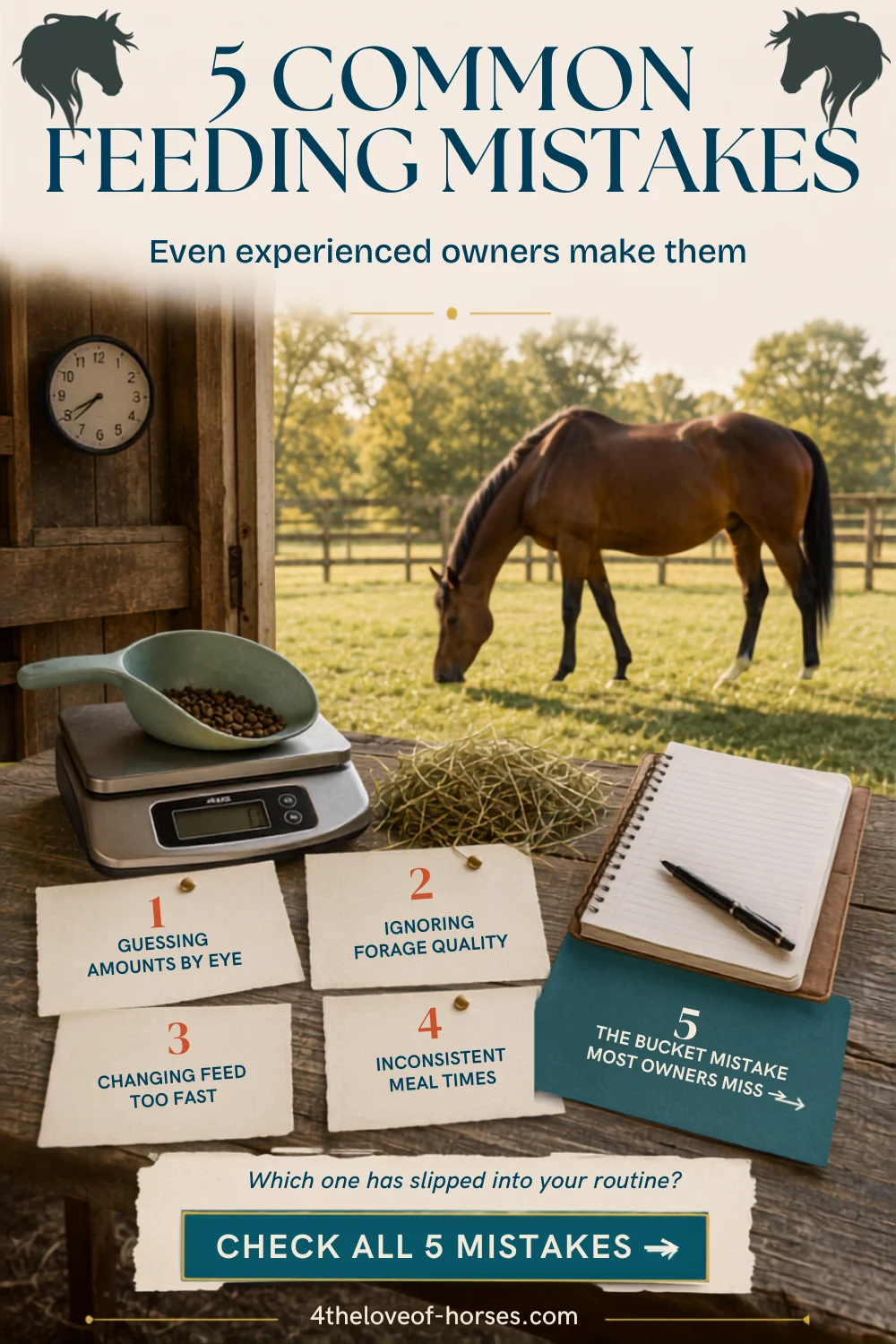
Top 5 Common Mistakes Horse Owners Make When Feeding Their Horses

Even the most well-meaning horse owners can make feeding mistakes that quietly affect their horse’s health and performance. Here are the five that come up again and again — and what to do instead.
Skip the reading — get a number in 15 seconds
Tell us your horse’s weight and a bit about them, and we’ll give you a rough idea of how much hay and concentrates to feed.
Step 1: Weight
👆 Click to unlock Step 2
How confident are you in your horse’s current feeding amounts? Most owners feel sure about their approach — until they actually sit down and calculate what their horse needs. Let’s walk through the five mistakes I see most often, and how to fix each one.
Overfeeding or Underfeeding Based on Visual Assessment
“He looks fine!” — it’s a phrase I hear often when discussing feeding with horse owners. But relying solely on visual assessment is one of the riskiest approaches to feed management. Your eye can tell you a lot, but it shouldn’t be your only tool.
A horse that appears to be at an ideal weight in winter might actually be carrying too much condition under a fluffy coat. A horse that looks “well-covered” in summer might be masking ribs with poor muscle tone instead. This is where the science of feeding needs to replace guesswork.
The Fix
Start with your horse’s actual weight, using a weight tape monthly and recording the results. Combine this with regular Body Condition Scoring on the 1–9 scale, aiming for a score of 4–6 depending on breed and workload. Once you have these numbers, our feed calculator turns them into precise daily forage and concentrate amounts — just describe your horse in your own words and get an instant estimate.
Know This
Small, consistent adjustments matter more than dramatic changes. It’s not about overhauling the diet overnight — it’s about getting the portions right, day after day.
Ignoring Forage Quality
Not all hay is created equal. Most owners understand that forage should make up the majority of a horse’s diet, but far fewer realise how much forage quality changes the picture. A horse can be fed plenty of hay and still lose condition if that hay is nutritionally poor.
Signs of Good Quality Hay
- Sweet, fresh smell — never musty or moldy
- Bright green colour, not yellow or brown
- A leaf-to-stem ratio that favours leaves
- Free from dust, weeds, and foreign objects
- Consistent texture throughout the bale
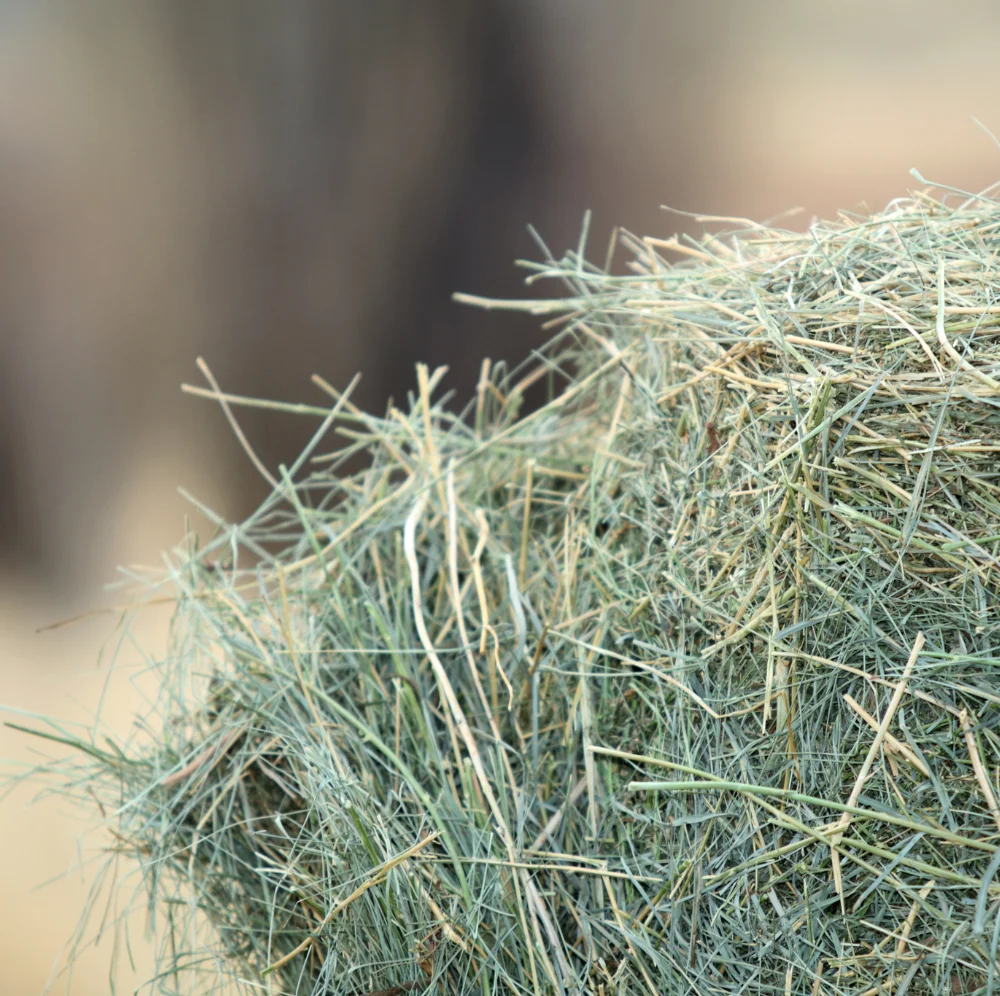
If you want to go deeper than a visual check, our guide to understanding hay analysis reports walks through what a lab test actually tells you and how to use the numbers when deciding what to feed alongside it. The type of forage you’re feeding — hay, haylage, or pasture — is also one of the first things our feed calculator accounts for, since it changes how much your horse actually needs.
Sudden Changes in Feed Routine
The feed store runs out of your usual brand. A new product promises amazing results. Whatever the reason, switching feeds too quickly is one of the leading causes of digestive upset in horses — even when the new feed is genuinely a good one.
Your horse’s gut relies on a community of microbes specialised in processing whatever they’re currently being fed. Change the feed abruptly, and you shock that community, raising the risk of colic, loose droppings, and behavioural changes.
How to Transition Properly
Any feed change should happen over 10–14 days minimum:
- Days 1–3: 75% old feed, 25% new feed
- Days 4–6: 50% old feed, 50% new feed
- Days 7–9: 25% old feed, 75% new feed
- Days 10–14: 100% new feed
Watch Out
Keep a small buffer supply of your current feed on hand. Running out mid-transition forces a faster switch than your horse’s gut can comfortably handle.
An Improper Feeding Schedule
Horses in the wild graze 16–18 hours a day. In domestic settings, many are fed just two or three large meals instead. That mismatch between natural grazing patterns and stable routines can lead to real health and behavioural problems.
Your horse’s stomach produces acid continuously, whether food is present or not. Constant grazing buffers that acid naturally. Long gaps between meals leave the stomach empty but still producing acid — a setup for ulcers and discomfort.
Signs Your Schedule Needs Attention
- Wood chewing or cribbing
- Weaving or stall walking
- Aggression around feeding time
- Weight loss despite adequate feed quantity
- Poor concentration during work
Better Feeding Timing
- Never leave your horse without forage for more than 4 hours
- Space concentrate feeds evenly through the day
- Consider slow feeders for extended forage access
Our feed calculator also suggests how many meals to split your horse’s concentrates across, based on the total daily amount — useful if you’re not sure where to start.
Over-Supplementing Without Assessment
“Better safe than sorry” is a mindset that leads many owners to reach for supplements. It comes from a good place, but random supplementation without proper assessment can be both costly and potentially harmful — some feed rooms end up looking more like supplement stores than tack rooms.
Multiple supplements stacked together can mean a horse is getting far more of certain nutrients than they need, while still missing others. Selenium in particular has a narrow safety margin between deficiency and toxicity, and it’s easy to overshoot it without realising when supplements are layered carelessly.
Before You Add a Supplement, Ask
- What specific issue am I trying to address?
- What nutrients is my horse already getting from feed and forage?
- Has the need for this supplement actually been confirmed?
- How will it interact with their current diet?
The first step in smart supplementation is understanding your horse’s base diet. Start with our feed calculator to get a baseline read on forage and concentrate needs — once you know what your horse is already getting, you’re in a much better position to judge what, if anything, they actually need on top.
Know This
More isn’t always better when it comes to supplements. The most effective approach is usually the simplest one, based on confirmed need rather than marketing claims.
Bringing It All Together
Getting your horse’s feeding program right doesn’t have to be complicated, but it does take attention to detail. Take a moment to think honestly about your own routine: are you confident in your feed quantities? How’s your forage quality? Is your feeding schedule actually working for your horse?
If you want more on the fundamentals before fine-tuning any of the above, our complete guide on how much to feed your horse covers the 2% rule, a full weight-by-workload chart, and the factors that move the number up or down.
Get Your Horse’s Numbers
Describe your horse in your own words and get an instant feeding estimate — or the full personalised plan with meal splits, emailed straight to you.
Try the Free Feed Calculator →The most successful feeding programs are the ones that get reviewed and adjusted as your horse’s needs change. Whether you’re managing one horse or an entire yard, having the right tools — and the willingness to actually use them — makes all the difference.
Your horse’s nutrition is the foundation of their health, performance, and happiness. Getting it right is one of the best investments you can make in their wellbeing.