Horses of the World: A Historical Guide to Regional Breeds

Every horse breed is the product of centuries of adaptation — to landscape, climate, war, agriculture, and the people who depended on them. This is a guide to where they came from and what shaped them.
I have been around horses my whole life, but the moment that made me understand breeds differently was standing in a field in England watching a group of young Warmbloods move. I had seen plenty of horses move before, but something about the way those horses carried themselves — the particular suspension in the trot, the natural balance through the back — made me realise it wasn’t just training. It was generations of selection, written into the way they were built. The breed was doing half the work.
That feeling has stayed with me. After 45 years with horses and 25 years of breeding warmbloods, I am still fascinated by the way a horse’s origins show up in how they move, how they think, and how they respond. It’s not mystical — it’s the result of centuries of humans selecting for very specific qualities in very specific landscapes. This guide is an attempt to tell some of those stories.
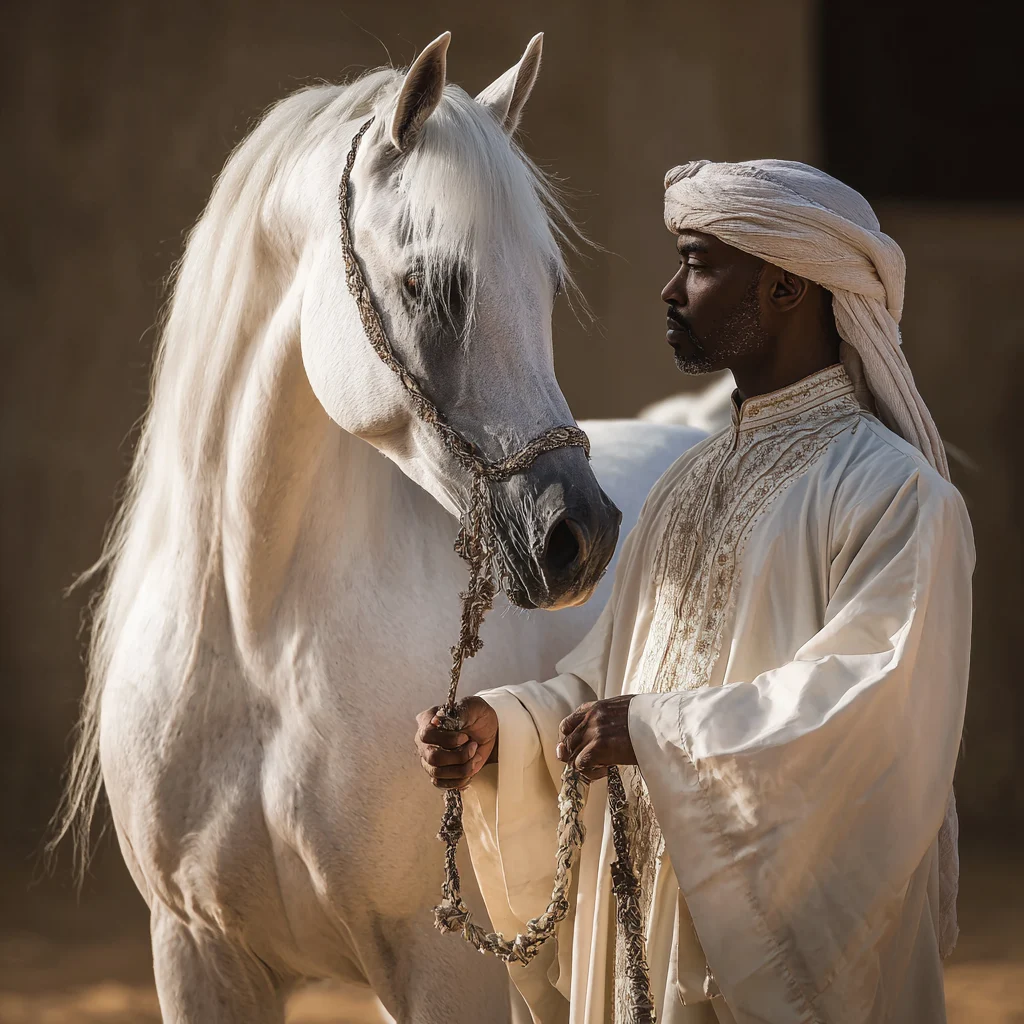
A Note Before We Begin
This guide covers the major regional breeds and their origins — it is not exhaustive. There are over 350 documented horse breeds in the world, each with its own story. Consider this a starting point rather than a complete picture.
| Region | Featured Breeds | Defining Quality |
|---|---|---|
| British Isles | Thoroughbred, Shire, Welsh Cob | Speed, power, versatility |
| Spain & Portugal | Andalusian, Lusitano | Classical collection, elevated movement |
| Middle East | Arabian, Akhal-Teke | Endurance, refinement, heat tolerance |
| Central Asia | Mongolian, Turkoman | Stamina, hardiness, extreme climate survival |
| South Asia | Marwari | Loyalty, desert endurance, distinctive conformation |
| Americas | Quarter Horse, Criollo, Mustang | Sprint speed, cattle work, feral resilience |
| Africa | Boerperd, Barb | Adaptability, stamina, terrain hardiness |
| Oceania | Australian Stock Horse, Kaimanawa | Versatility, outback endurance, wild survival |
Europe: Where Classical Riding Was Born
Europe’s contribution to the horse world is enormous and varied — from the fastest flat racehorse ever bred to the heaviest working horse still in existence. What unifies European breeds is the long history of deliberate, recorded breeding programmes, which means their development is better documented than almost anywhere else in the world.

British Isles The Thoroughbred
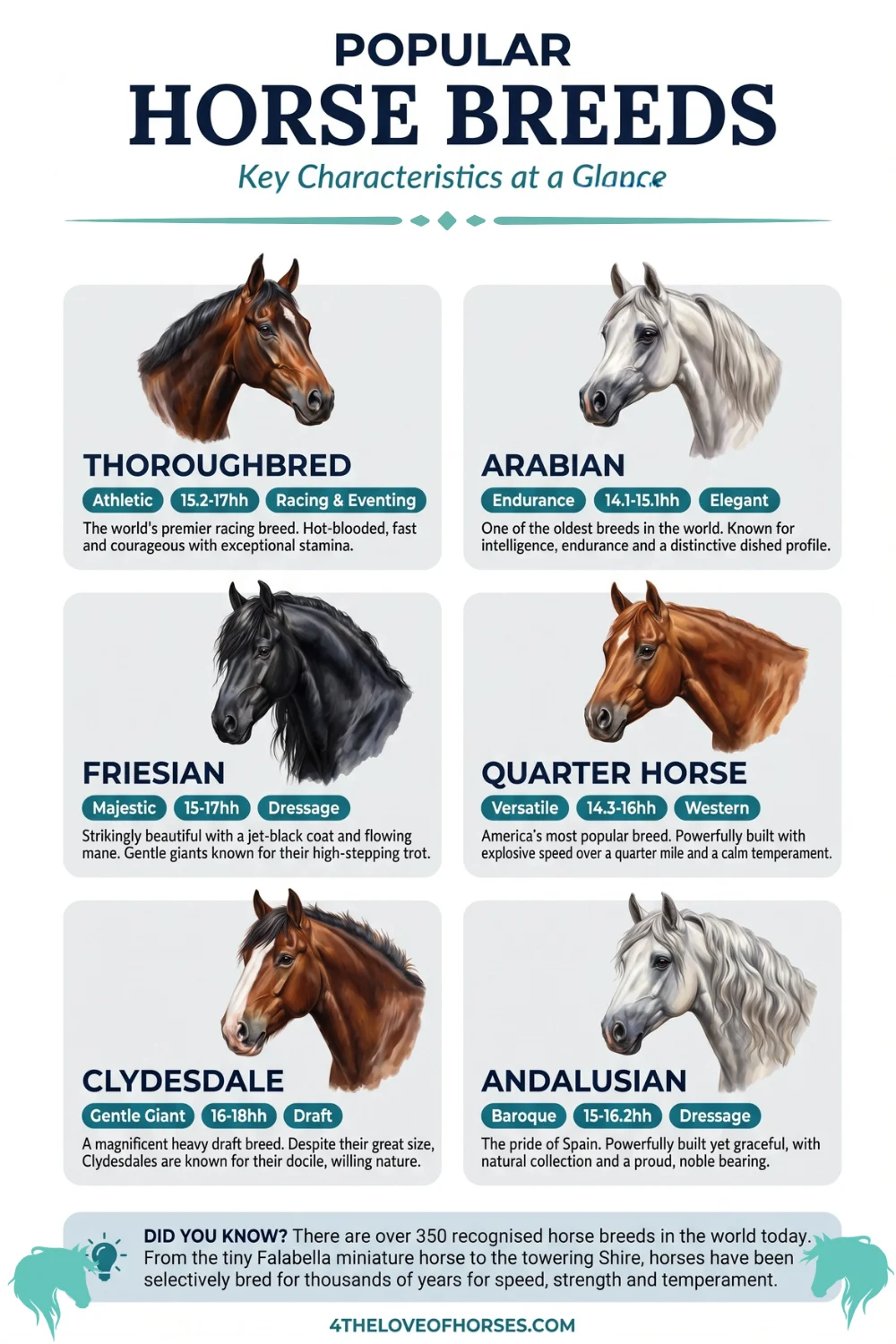
The Thoroughbred is one of the most influential horse breeds ever created — not just because of what it is, but because of what it has contributed to nearly every other modern sport horse. Its origin story is precise: in the late 17th and early 18th centuries, English breeders crossed native mares with three imported Arabian stallions — the Byerley Turk, the Darley Arabian, and the Godolphin Arabian. Every Thoroughbred alive today traces its male line to one of those three horses.
What resulted was a horse with an engine unlike anything that had existed before: a deep chest housing enormous lung capacity, long limbs built for stride length, and a competitive drive that is almost palpable. On the racetrack the Thoroughbred is supreme. Off it, the same qualities — sensitivity, athleticism, forward thinking — make it a formidable sport horse in showjumping, eventing, and dressage, though one that rewards an experienced rider. If you’re interested in the Thoroughbred beyond the racetrack, our post on the versatility of Thoroughbred horses covers this in detail.
Breed Note
The Thoroughbred’s influence extends far beyond racing. It forms a significant part of the genetic foundation of the modern Warmblood — which is why breeding warmbloods has always required an understanding of what the Thoroughbred brings to the cross: refinement, scope, and that competitive edge.
Spain The Andalusian
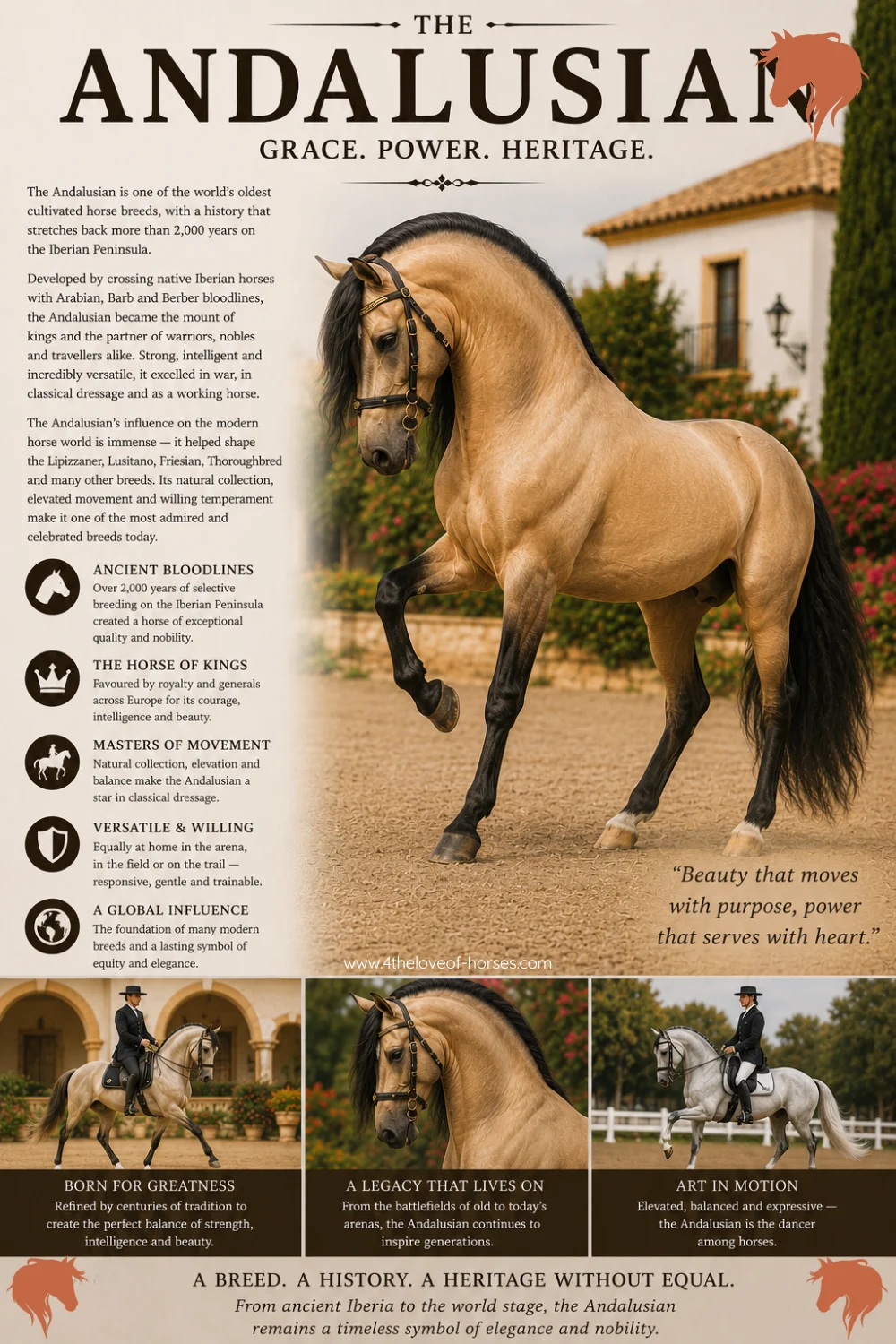
The Andalusian — known in Spain as the Pure Spanish Horse or PRE (Pura Raza Española) — is one of the oldest documented breeds in the world, and one of the most beautiful. It was the horse of kings, conquerors, and the classical riding academies of Renaissance Europe. When the great riding masters of the 16th and 17th centuries were developing the movements that became classical dressage, they were almost certainly doing it on Andalusians.
The breed’s defining physical characteristics are its compact, muscular build, its naturally arched neck, and the high, flowing action in its paces. It collects easily and naturally — something that can take years to develop in other breeds feels almost inherent to the Andalusian. This makes it exceptionally well suited to classical and high school dressage, though its powerful hindquarters and agility have also made it a historic warhorse and a modern bullfighting horse in Portugal and Spain.
The Middle East: Where Endurance Became an Art Form
The two breeds that define the Middle East’s contribution to the horse world could hardly look more different on the surface — but both were shaped by the same brutal selection pressure: survive the desert, or don’t survive at all.
Arabian Peninsula The Arabian
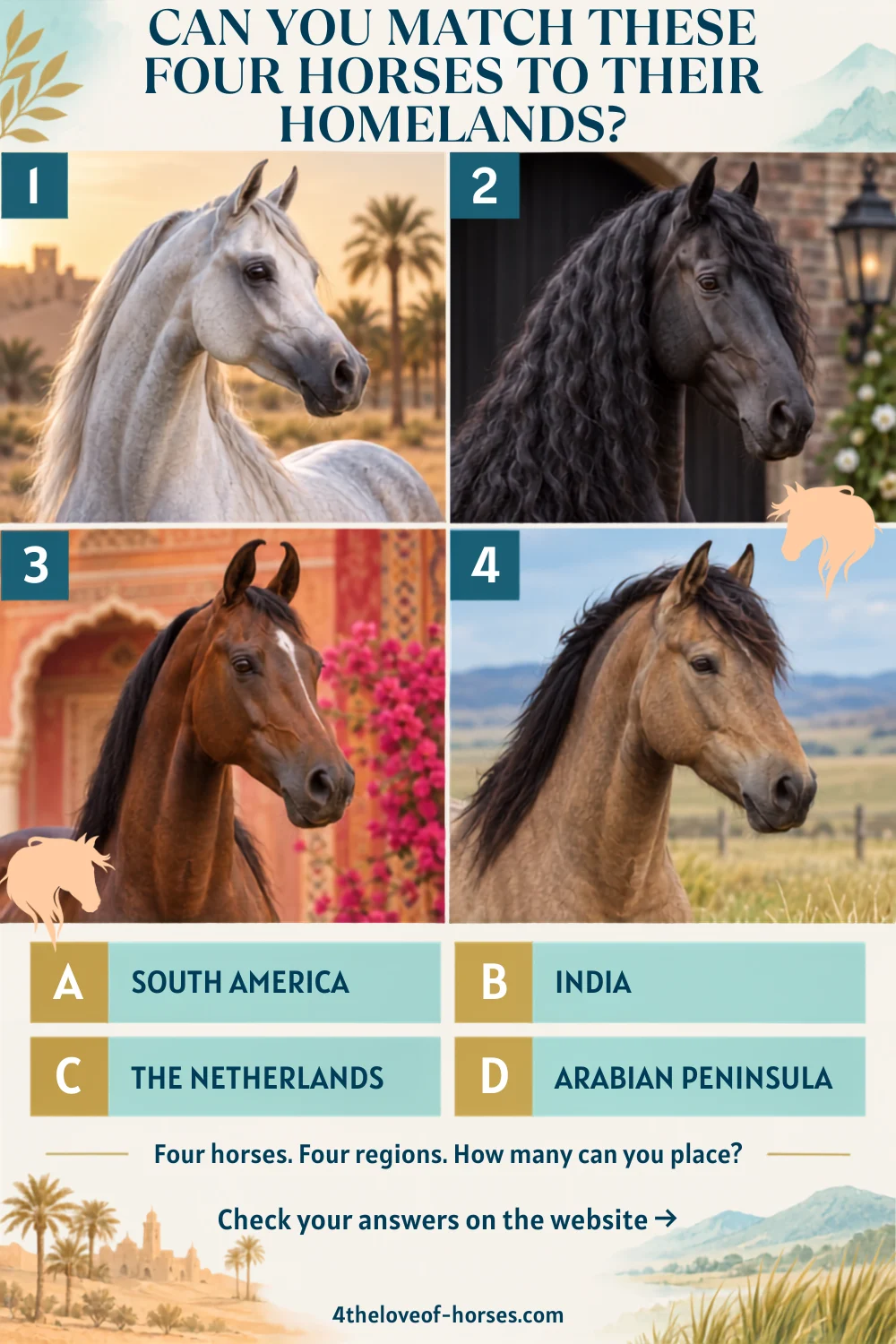
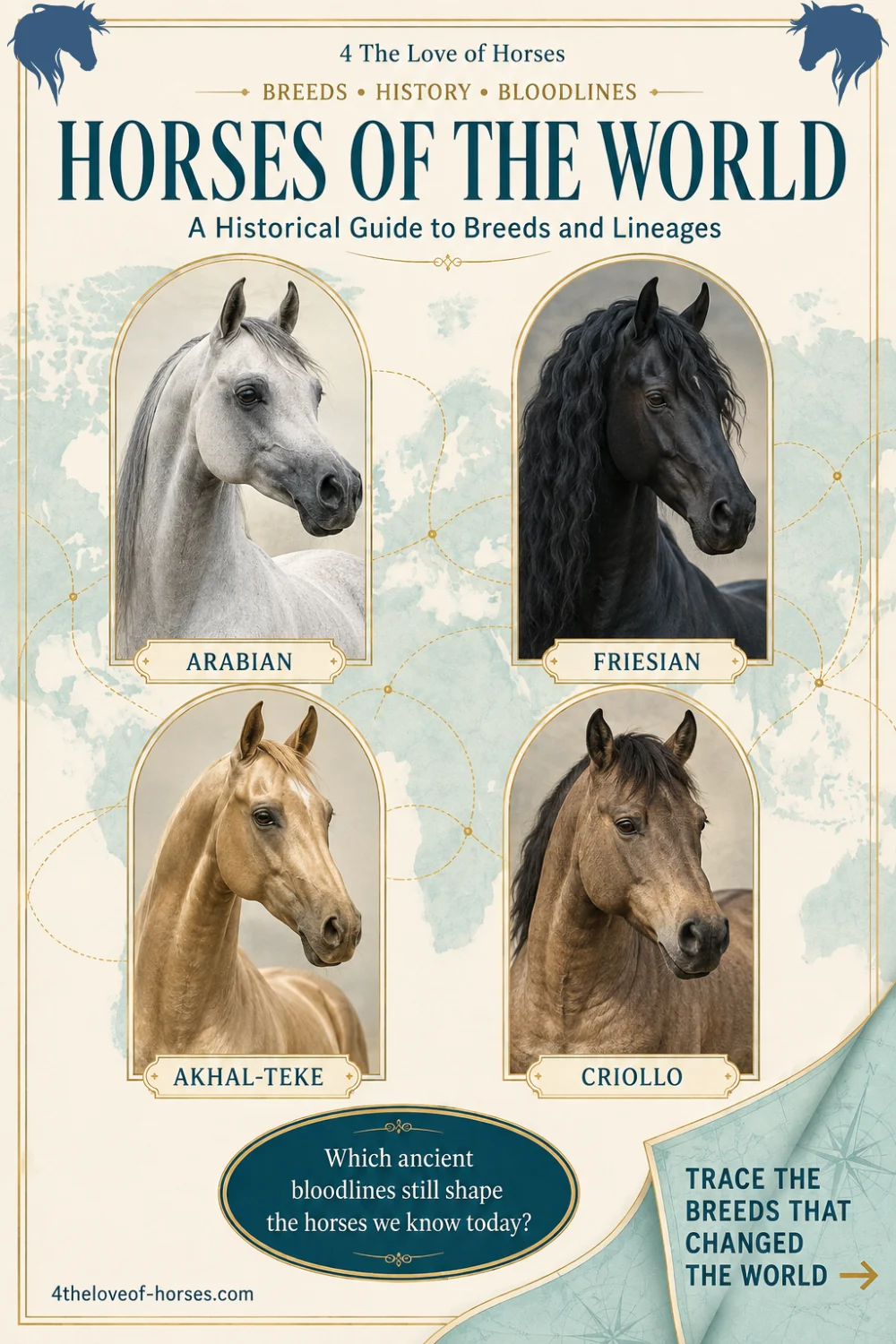
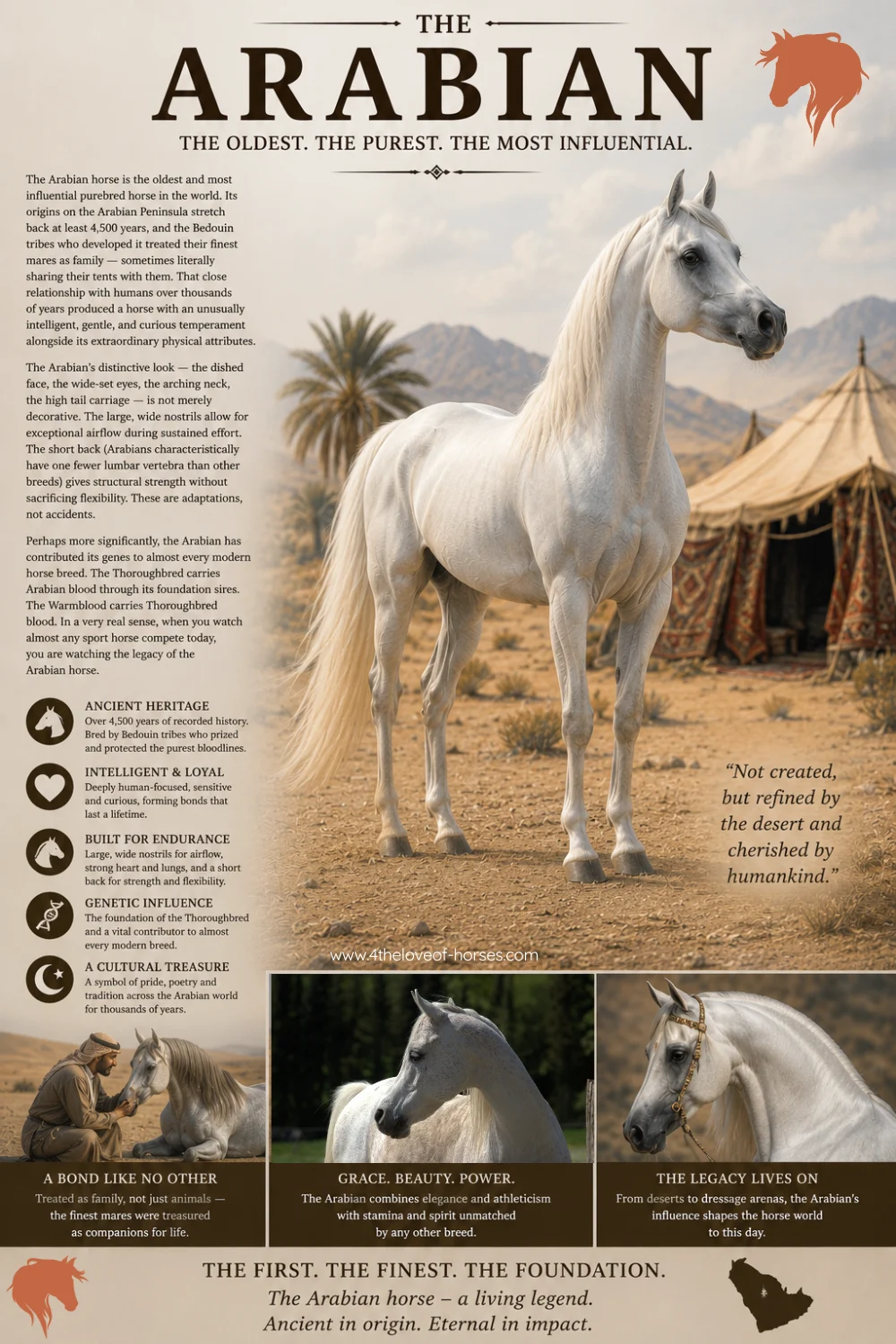
The Arabian horse is the oldest and most influential purebred horse in the world. Its origins on the Arabian Peninsula stretch back at least 4,500 years, and the Bedouin tribes who developed it treated their finest mares as family — sometimes literally sharing their tents with them. That close relationship with humans over thousands of years produced a horse with an unusually intelligent, gentle, and curious temperament alongside its extraordinary physical attributes.
The Arabian’s distinctive look — the dished face, the wide-set eyes, the arching neck, the high tail carriage — is not merely decorative. The large, wide nostrils allow for exceptional airflow during sustained effort. The short back (Arabians characteristically have one fewer lumbar vertebra than other breeds) gives structural strength without sacrificing flexibility. These are adaptations, not accidents.
Perhaps more significantly, the Arabian has contributed its genes to almost every modern horse breed. The Thoroughbred carries Arabian blood through its foundation sires. The Warmblood carries Thoroughbred blood. In a very real sense, when you watch almost any sport horse compete today, you are watching the legacy of the Arabian horse. Our guide to equine genetics and horse traits explores how these inherited characteristics show up in behaviour and conformation.
Central Asia The Akhal-Teke
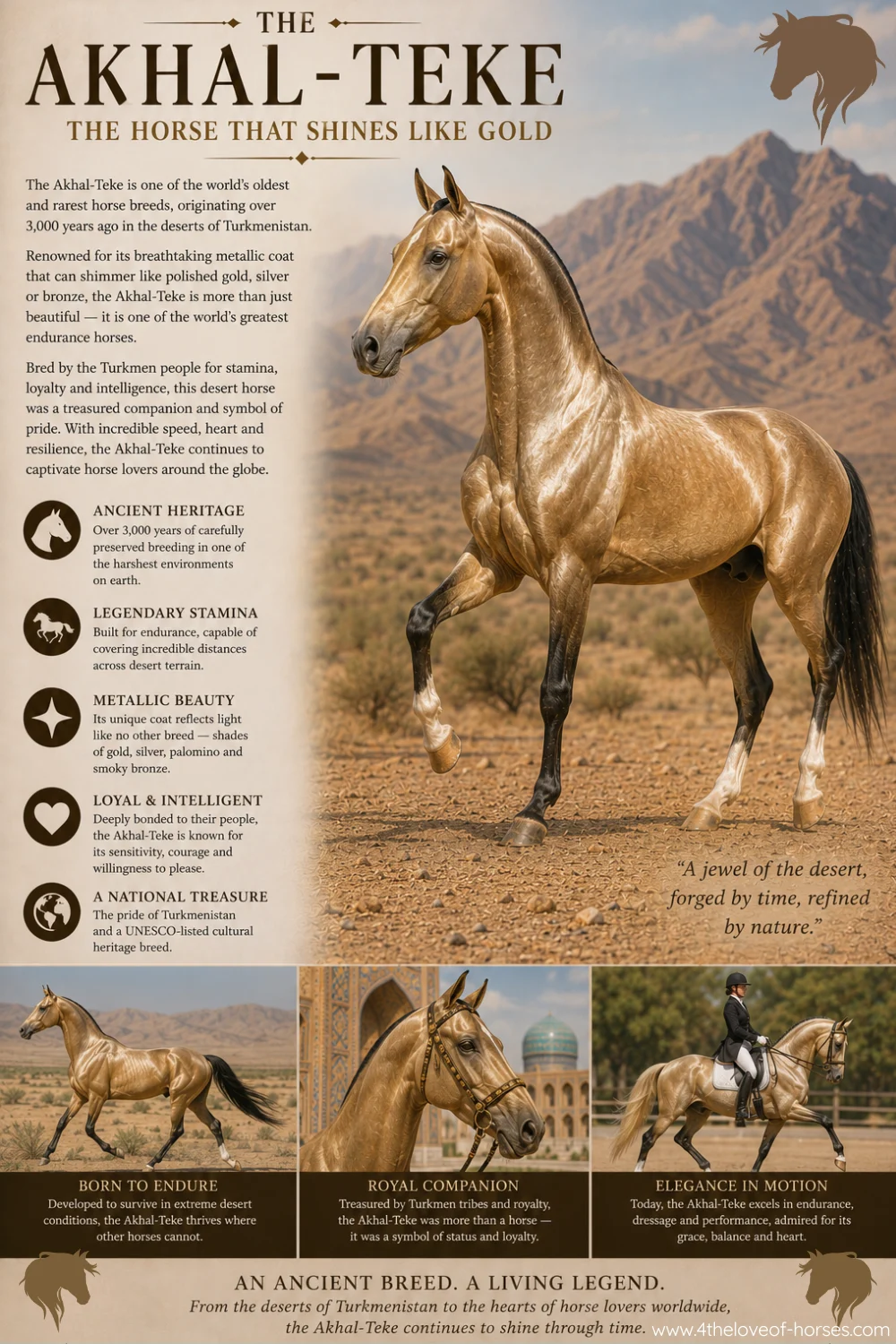
The Akhal-Teke is one of the world’s oldest and rarest breeds, developed by the Turkmen people of Central Asia over at least 3,000 years. It is perhaps best known for its extraordinary metallic sheen — a genuine optical effect caused by the structure of the hair shaft, which acts almost like a prism. Photographs of a well-bred Akhal-Teke in sunlight are genuinely difficult to believe.
But the breed’s real story is one of endurance. The Akhal-Teke was bred to survive the harsh conditions of the Karakum Desert, covering enormous distances on minimal food and water. In 1935, a group of Turkmen riders rode 4,300 kilometres from Ashgabat to Moscow in 84 days — crossing the Karakum Desert with only a three-day stop — to prove the breed’s stamina to the Soviet government. It is one of the most extraordinary feats of equine endurance on record.
Asia: Ancient Lineages and Rugged Survivors
Asia’s contribution to the horse world is characterised above all by hardiness. The horses that developed across the Asian continent were shaped by extremes — of temperature, terrain, and distance — that would have eliminated softer breeds entirely.
Mongolia The Mongolian Horse
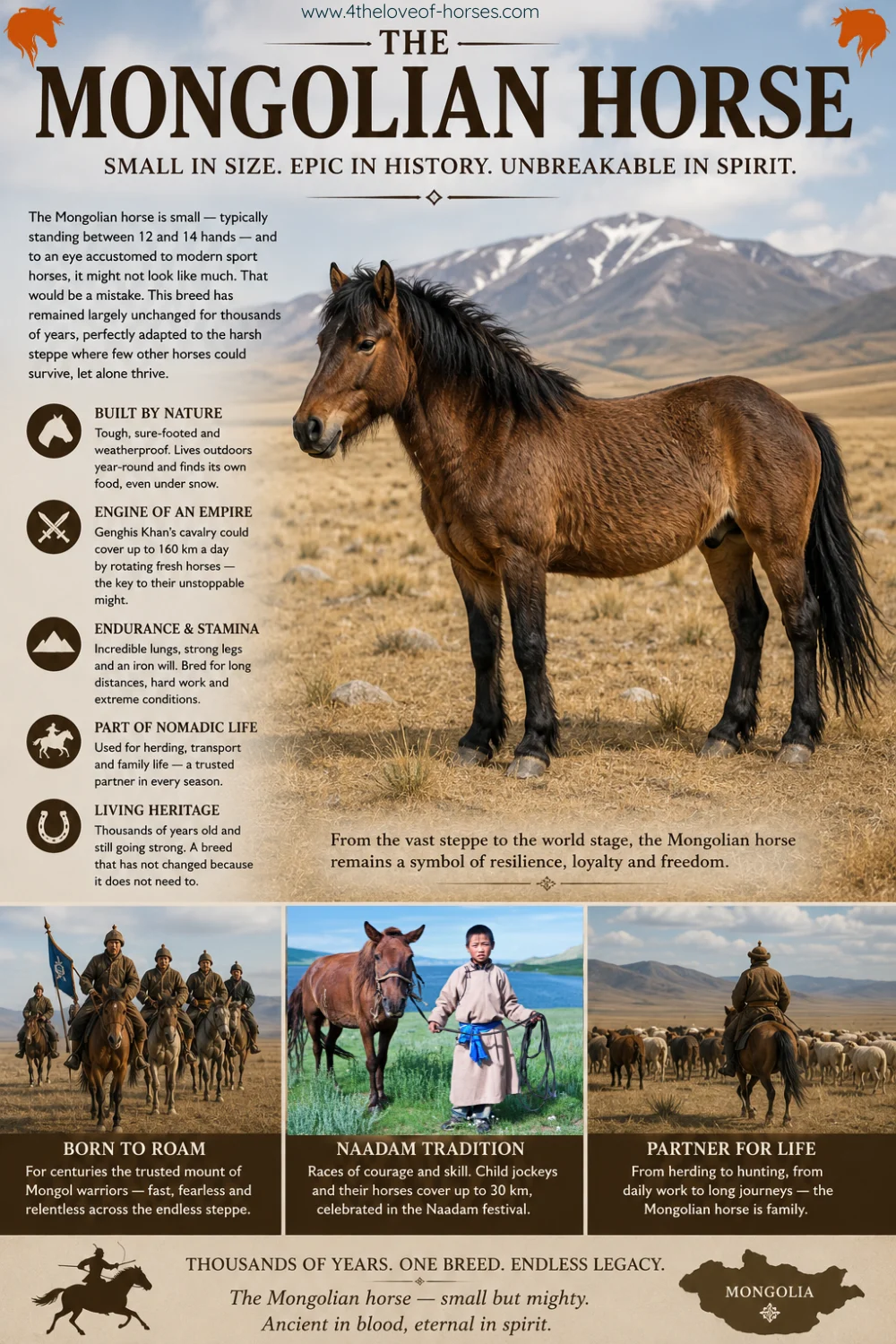
The Mongolian horse is small — typically standing between 12 and 14 hands — and to an eye accustomed to modern sport horses, it might not look like much. That would be a mistake. This breed has remained largely unchanged for thousands of years, and its genetic stability is itself a testament to how perfectly suited it is to its environment. Mongolian horses live outdoors year-round, forage for their own food under snow, and are ridden hard from a young age.
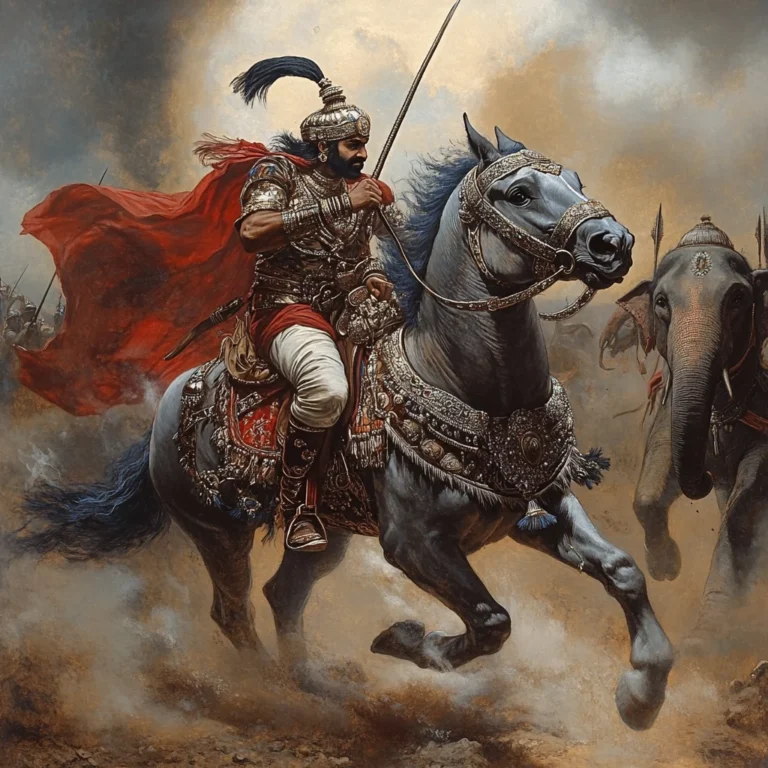
The Mongolian horse was the engine of the Mongol Empire — arguably the most significant military force in history. Genghis Khan’s cavalry could cover up to 160 kilometres a day because each warrior rode with a string of horses and rotated them constantly, allowing sustained speed across the vast steppe. It was the horse that made the empire possible.
Today the Mongolian horse is still central to nomadic life on the steppe, used for herding, transport, and the traditional Naadam racing festival in which child jockeys race horses over distances of up to 30 kilometres. The breed has not changed because it does not need to.
India The Marwari
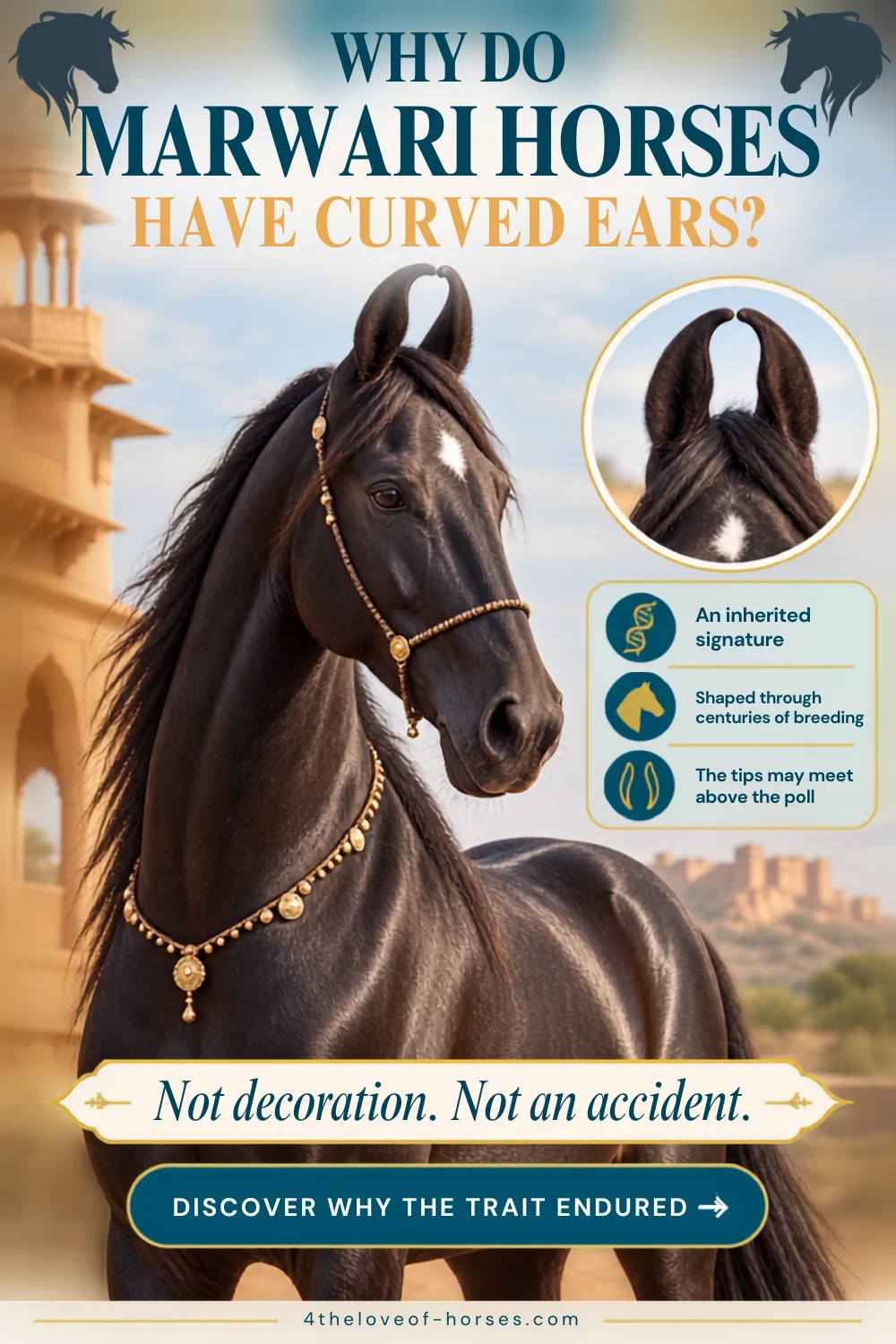
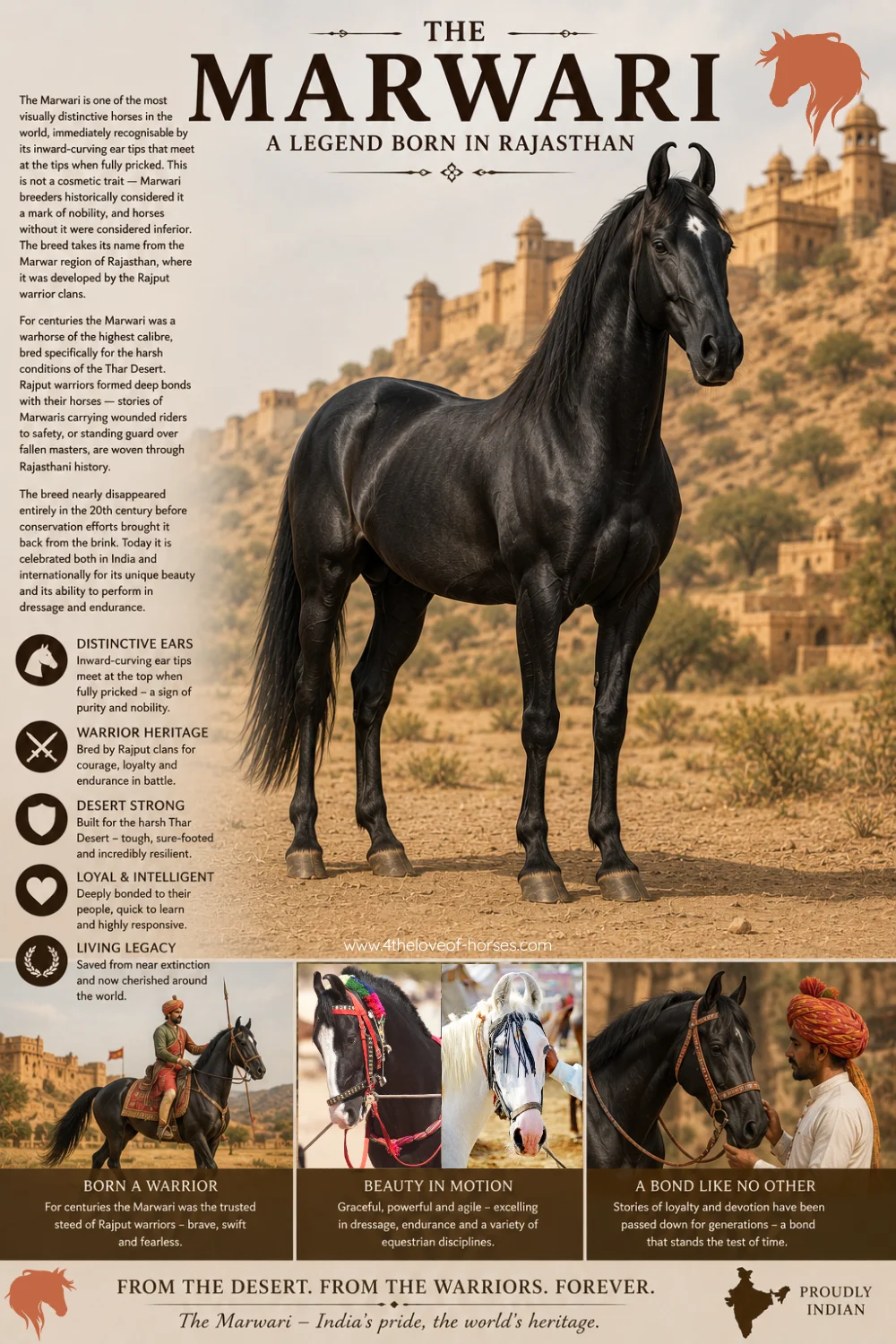
The Marwari is one of the most visually distinctive horses in the world, immediately recognisable by its inward-curving ear tips that meet at the tips when fully pricked. This is not a cosmetic trait — Marwari breeders historically considered it a mark of nobility, and horses without it were considered inferior. The breed takes its name from the Marwar region of Rajasthan, where it was developed by the Rajput warrior clans.
For centuries the Marwari was a warhorse of the highest calibre, bred specifically for the harsh conditions of the Thar Desert. Rajput warriors formed deep bonds with their horses — stories of Marwaris carrying wounded riders to safety, or standing guard over fallen masters, are woven through Rajasthani history. The breed nearly disappeared entirely in the 20th century before conservation efforts brought it back from the brink. Today it is celebrated both in India and internationally for its unique beauty and its ability to perform in dressage and endurance.
Conservation Note
Several of the breeds in this guide — including the Akhal-Teke and the Marwari — are considered endangered or vulnerable. Preserving rare breeds matters not just for their historical significance but for the genetic diversity they represent. Loss of a breed means loss of traits that cannot be recovered.
The Americas: Breeds Born of a New World
There were no horses in the Americas when the Spanish arrived in the 15th century — the horse had been extinct on the continent for approximately 10,000 years. What followed was one of the most rapid and consequential introductions of a domestic animal in history. Within two centuries, horses had transformed the continent’s cultures, economies, and landscapes.

United States The American Quarter Horse
The Quarter Horse is the most numerous horse breed in the world by registration, and for good reason: it is extraordinarily versatile. The name comes from its speed over a quarter mile — historically the standard racing distance in colonial America — but the breed’s real value has always been in ranch work. Its powerful hindquarters, low centre of gravity, and remarkable ability to stop, turn, and accelerate make it the ideal cattle horse, and the cutting horse disciplines it excels in are as technically demanding as any equestrian sport.
The Quarter Horse was developed by crossing English Thoroughbreds with the Chickasaw horse, a breed maintained by the Chickasaw Nation that descended from Spanish horses. The result was a horse that combined Thoroughbred speed with the stockiness and tractability needed for frontier life. That calm, willing temperament is one of the breed’s most consistent and valued traits. For those interested in how different disciplines — including the cattle work Quarter Horses excel at — affect nutritional needs, our guide to feeding the performance horse covers this by discipline.
Latin America The Criollo
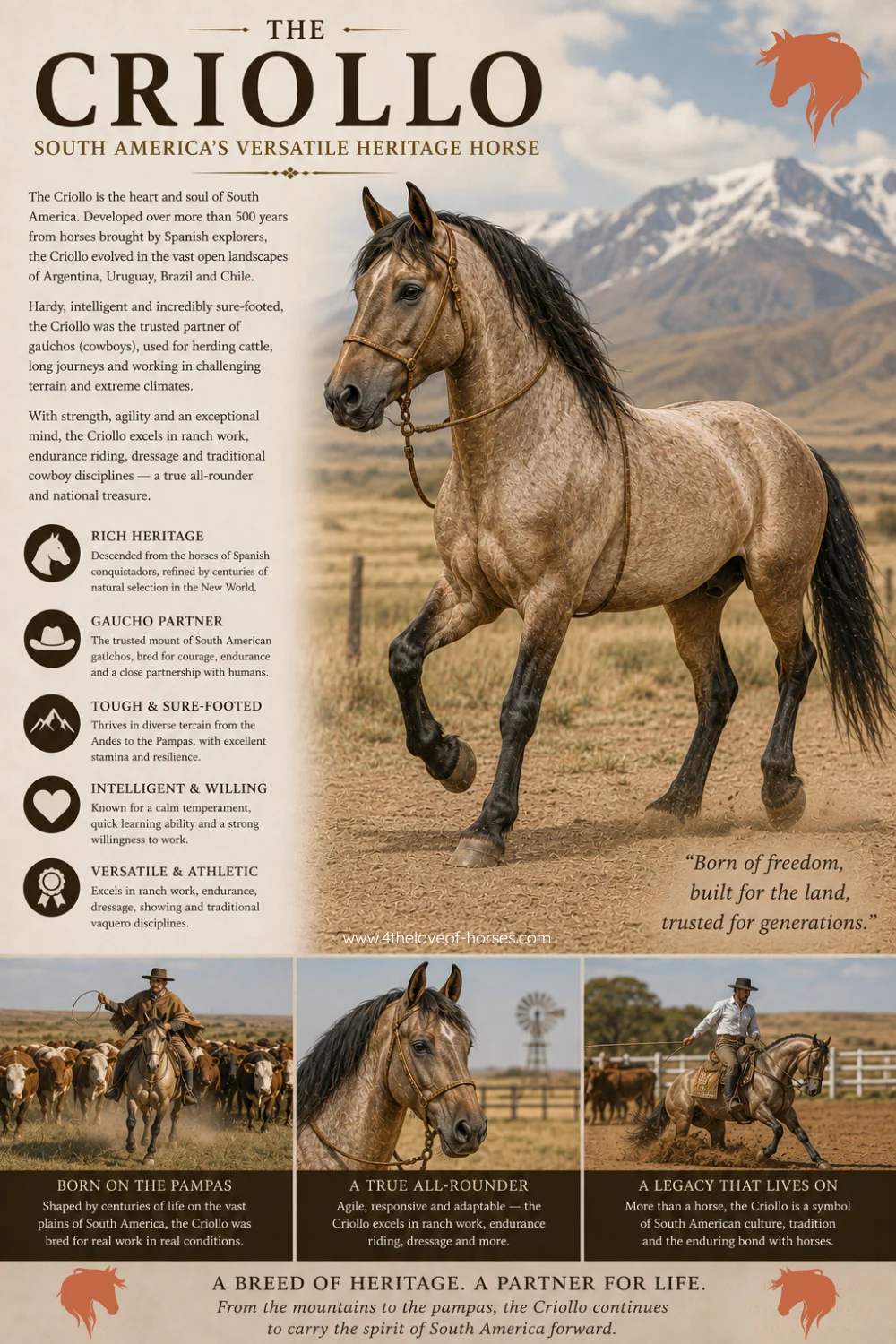
The Criollo is what happens when Spanish horses are turned loose on the Pampas and the Andes for 300 years and left to survive without human intervention. The weak died. The Criollo is what remained — a compact, extraordinarily tough horse with a metabolic efficiency that allows it to maintain condition on poor grazing that would leave other breeds looking skeletal.
The breed’s most famous test of endurance is the Cabalgata, a long-distance ride across South America that has become a defining event of Criollo horsemanship. Swiss author Aimé Tschiffely completed a 10,000-mile ride from Buenos Aires to Washington D.C. in the 1920s on two Criollos, Mancha and Gato — both of whom were already in their teens when they started. Mancha died at 40. Gato at 36. The breed’s longevity is almost as remarkable as its stamina.
Africa: Hardy, Adaptable, Overlooked
Africa’s horses are among the least well-known in the international equestrian world, which is a genuine loss. The continent’s breeds represent thousands of years of adaptation to conditions — heat, poor grazing, disease pressure — that have produced animals of remarkable resilience.
South Africa The Boerperd
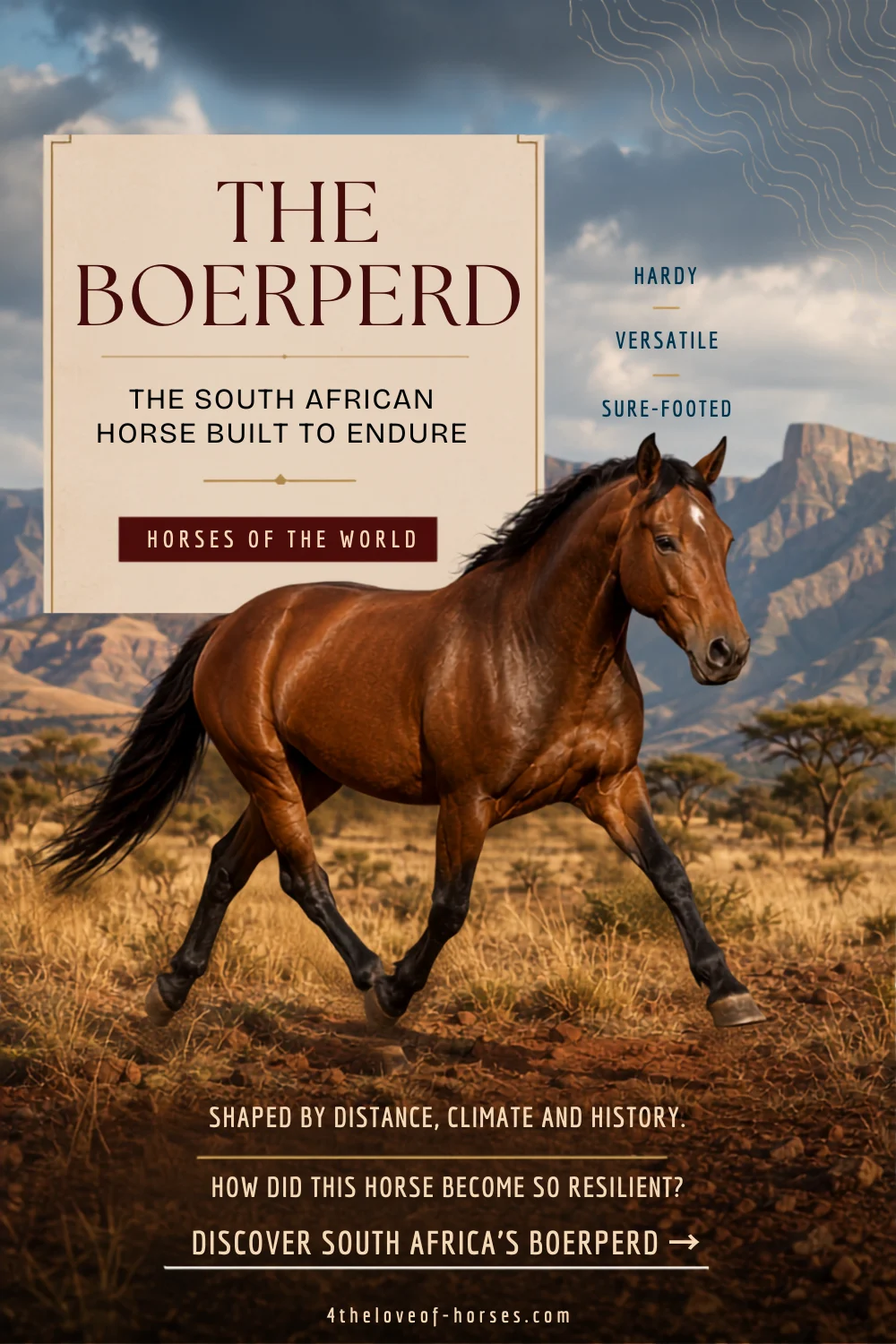
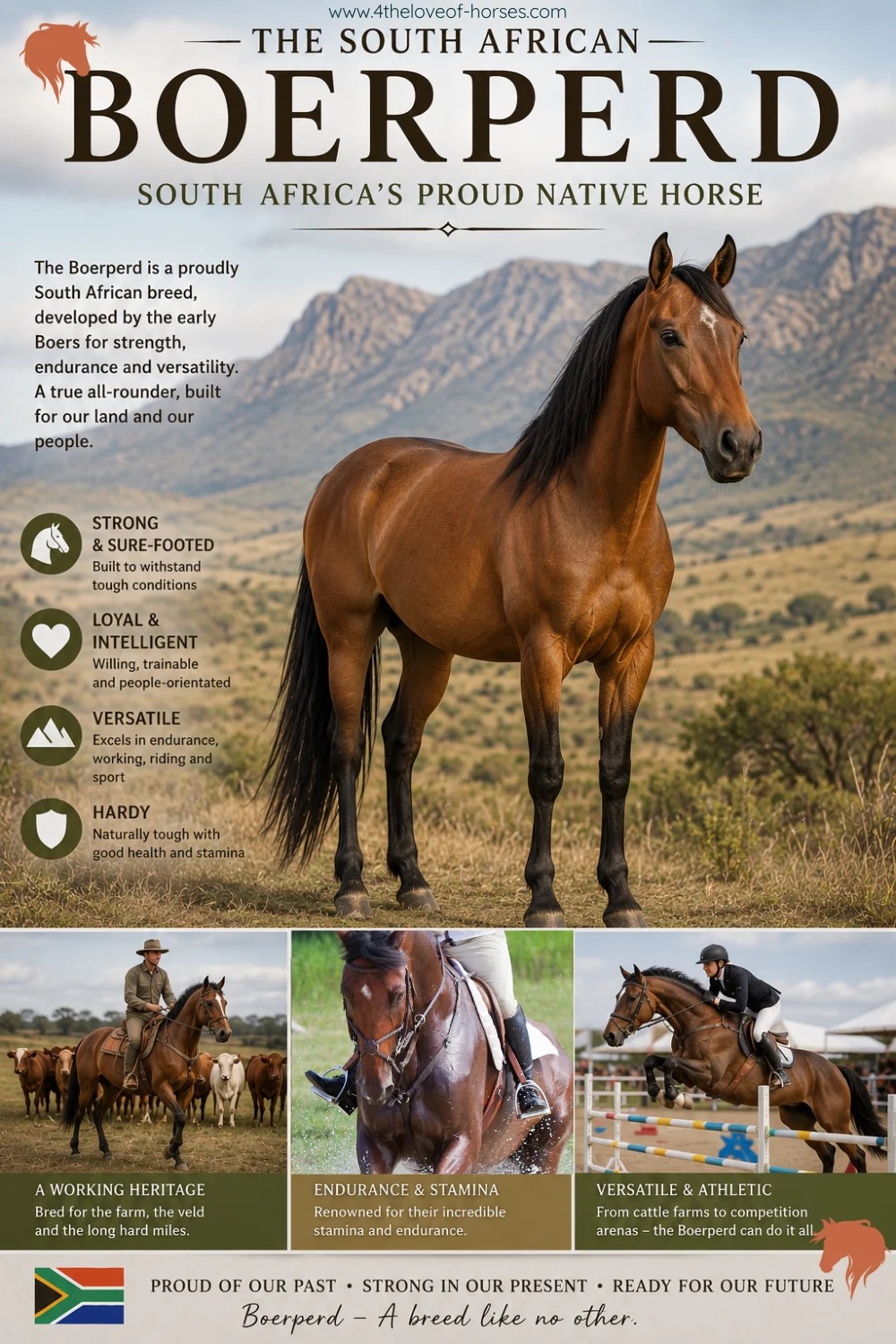
The Boerperd holds a particular place in my heart simply because it is part of the landscape I know. Developed by the Boer settlers who arrived from the Netherlands in the 17th century, the Boerperd evolved over generations on the Cape and later across the interior, crossing with horses brought by other colonial settlers and the indigenous horses of the region. The result is a horse that is genuinely suited to South African conditions — calm, sound, able to work in heat, and versatile enough to move between farm work and competition without missing a beat.
The Boerperd’s role in South African history is significant — these horses carried Boer commandos across enormous distances during the Anglo-Boer War, and their ability to sustain hard work on minimal rations made them a tactical asset. Today the breed is celebrated for its even temperament and adaptability, competing across disciplines from endurance to dressage.
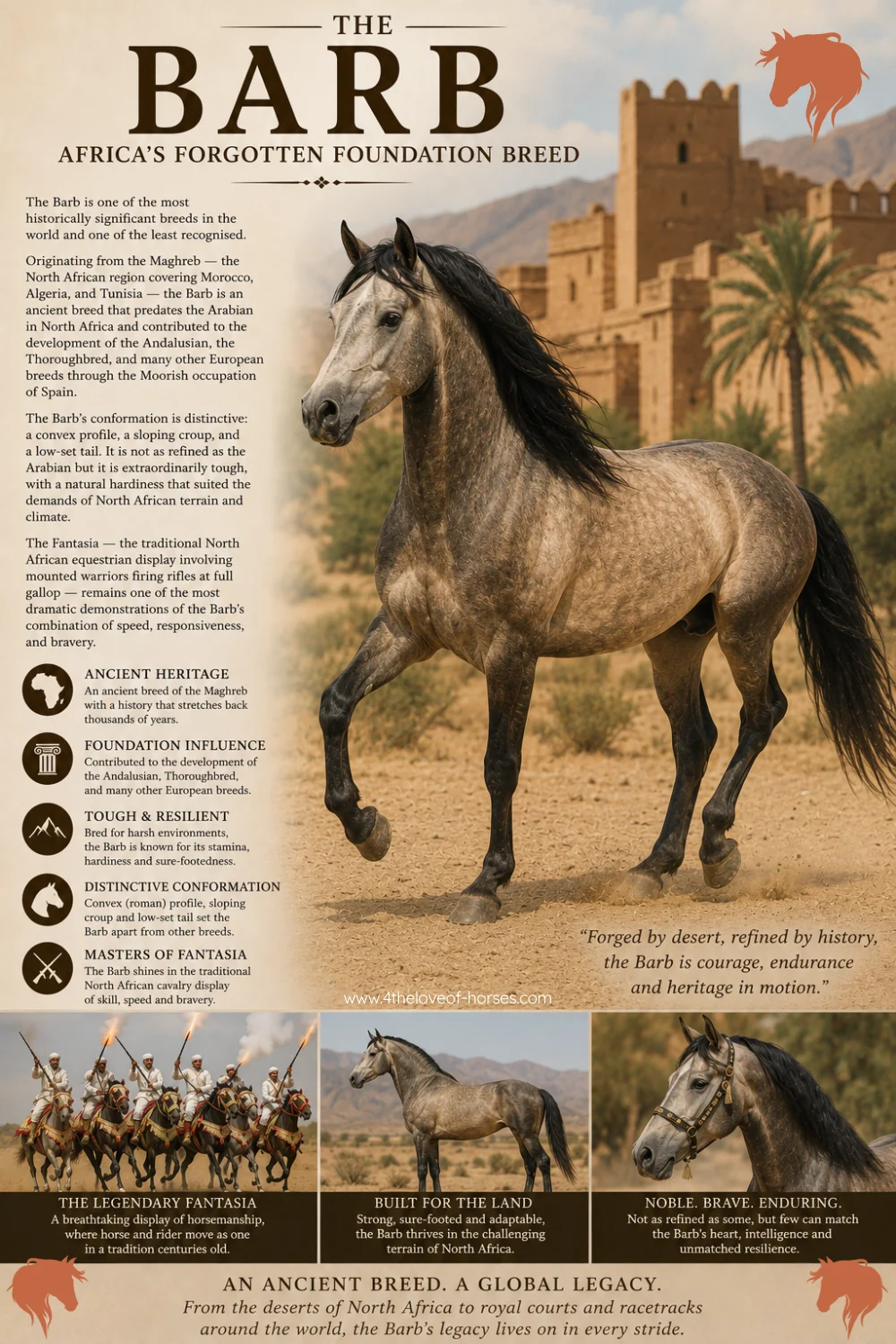
North Africa The Barb
The Barb is one of the most historically significant breeds in the world and one of the least recognised. Originating from the Maghreb — the North African region covering Morocco, Algeria, and Tunisia — the Barb is an ancient breed that predates the Arabian in North Africa and contributed to the development of the Andalusian, the Thoroughbred, and many other European breeds through the Moorish occupation of Spain.
The Barb’s conformation is distinctive: a convex rather than dished profile, a sloping croup, and a low-set tail. It is not as refined as the Arabian but it is extraordinarily tough, with a natural hardiness that suited the demands of North African terrain and climate. The Fantasia — the traditional North African equestrian display involving mounted warriors firing rifles at full gallop — remains one of the most dramatic demonstrations of the Barb’s combination of speed, responsiveness, and bravery.
Oceania: Built for the Outback and the Wild
The horses of Oceania arrived with European settlers and then adapted to environments that had no precedent in the equine world. What emerged from that process — whether through deliberate breeding or feral survival — are animals of remarkable toughness.
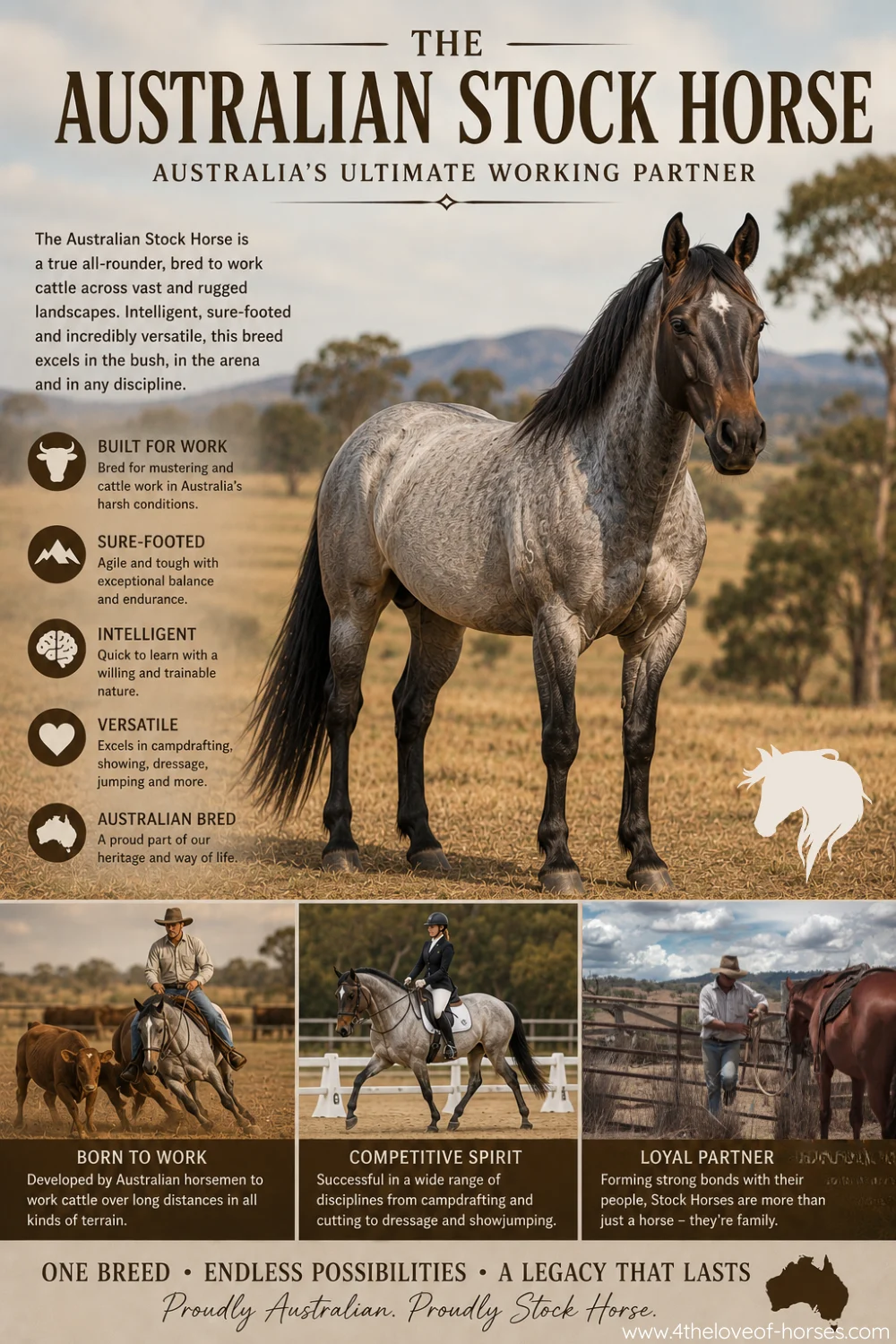
Australia The Australian Stock Horse
The Australian Stock Horse is not the most glamorous breed in this guide, but it may be the most genuinely useful. Developed from the horses brought to Australia from 1788 onward — Thoroughbreds, Arabians, Timor ponies, and later other breeds — the Stock Horse was shaped entirely by the demands of working cattle across the Australian outback. Extreme heat, rough terrain, long distances, and the physical demands of mustering cattle on horseback produced a horse with outstanding stamina, cow sense, and the kind of sensible temperament that keeps riders alive in isolated country.
The Stock Horse excels in campdrafting — a uniquely Australian discipline in which horse and rider cut a single beast from a mob of cattle and work it through a course — as well as polocrosse, showjumping, and endurance. Its versatility is its defining trait. Whatever discipline you ride, our guide to developing a well-rounded exercise schedule covers warm-up, cool-down, and conditioning principles that apply across all of them.
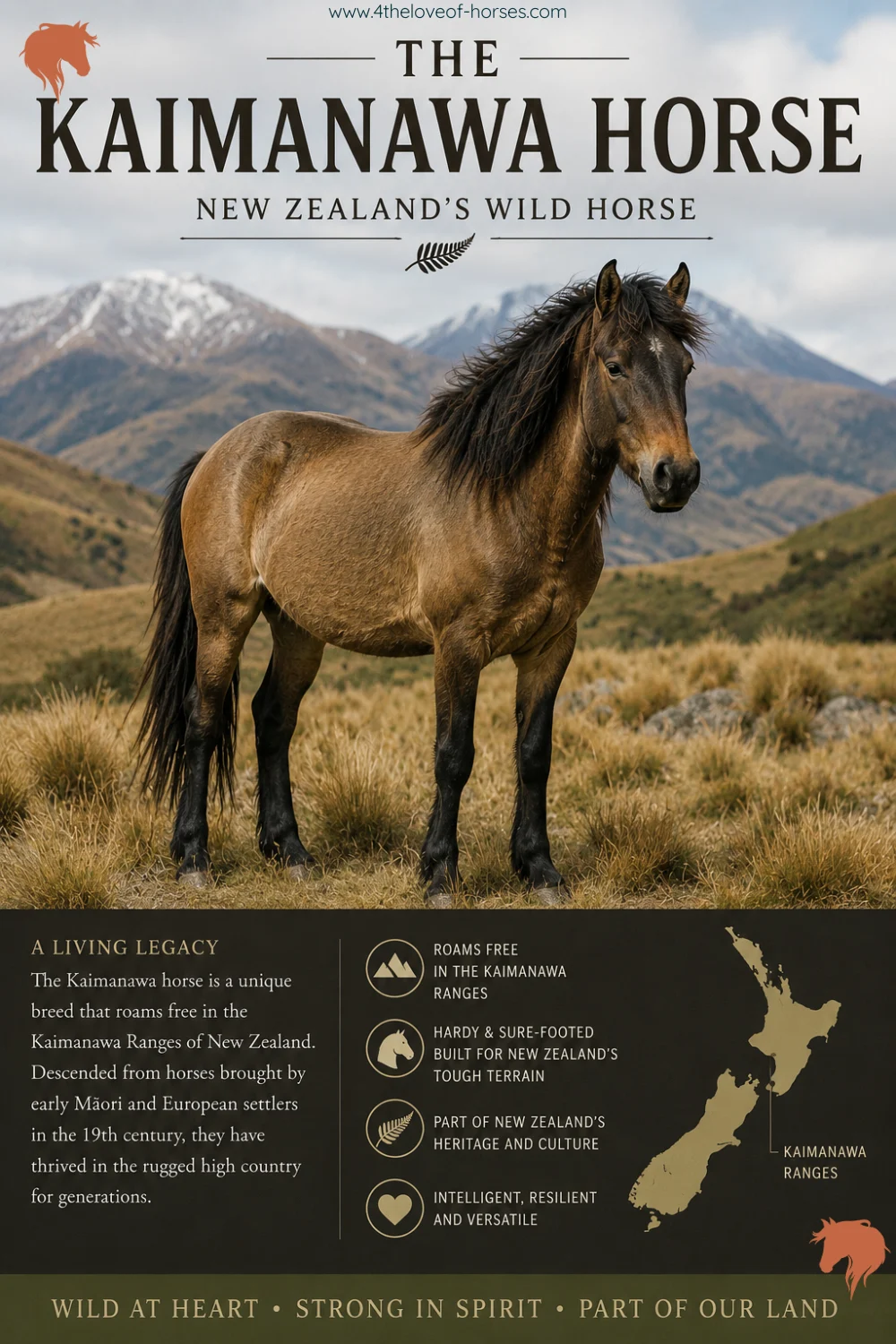
New Zealand The Kaimanawa
The Kaimanawa horses of New Zealand’s Central Plateau are a genuinely unusual case — a feral population descended from domestic horses released or escaped into the wild from the late 19th century onward, now managed by the New Zealand government as a heritage herd. They live in one of the most inhospitable environments any horse in this guide occupies: volcanic plateau, cold winters, rough terrain, and sparse grazing.
Periodic musters bring young horses into domestication, where they have proven remarkably trainable despite their wild origins. The Kaimanawa is not a breed in the conventional sense — it is more accurately a feral population — but its survival and the attachment New Zealanders feel to it make it a genuine part of that country’s equine story.
What Breeds Can Teach Us
Reading through the history of horse breeds, what strikes me most consistently is how much they reveal about the people who bred them. The Arabian tells you something about the Bedouin relationship with survival and beauty. The Thoroughbred tells you something about the English obsession with racing. The Boerperd tells you something about the demands of colonial life in southern Africa. The Mongolian tells you something about an entire civilisation built around the horse.
Breeds are not just categories of animal. They are the accumulated decisions of hundreds of generations of breeders who were trying to solve specific problems in specific places. Understanding that history doesn’t just make you a more knowledgeable horse person — it makes you a better observer of the horse in front of you. When you know what a breed was built to do, you start to see it doing that thing even in a paddock.
If this has sparked an interest in breed history, the two books I would recommend starting with are Elwyn Hartley Edwards’ The Encyclopedia of the Horse, which is the most comprehensive single-volume reference available, and Stephen Budiansky’s The Nature of Horses, which approaches breeds through the lens of evolution and behaviour rather than conformation. Both are worth having on the shelf. For ongoing research, the FAO’s Domestic Animal Diversity Information System maintains one of the most complete databases of horse breeds and their conservation status worldwide — particularly useful if you’re interested in the endangered breeds mentioned in this guide.
The more horses you meet, the more you understand breeds. The more you understand breeds, the more you understand the horses you meet.