In the 1860s, the British gifted a Thoroughbred stallion to the Basotho King Moshoeshoe I as a token of goodwill. It didn’t survive a single winter in his mountain kingdom. What replaced it did more than survive — it became the horse an entire nation still rides today, and its story is as good a place as any to understand why.
🌍 A Guide to the World’s Horse Breeds
The Basotho Pony is just one of many extraordinary breeds shaped by the places and people who needed them most. I’m putting together a full guide to the horses that shaped history and cultures around the world — join the waitlist and be the first to know when it’s ready.
→ Join the Waitlist No spam, just a heads-up when it launchesA Breed Forged by Africa’s Mountain Kingdom
The Basotho Pony’s story starts with the Cape Horse — a mix of Java, Persian and Arab bloodlines first brought to the Cape by the Dutch East India Company from 1652 onward. From around 1825, the Basotho people acquired these horses as spoils of war and through trade with the Zulu and later the Boers, and took them into the highlands of what was then Basutoland.
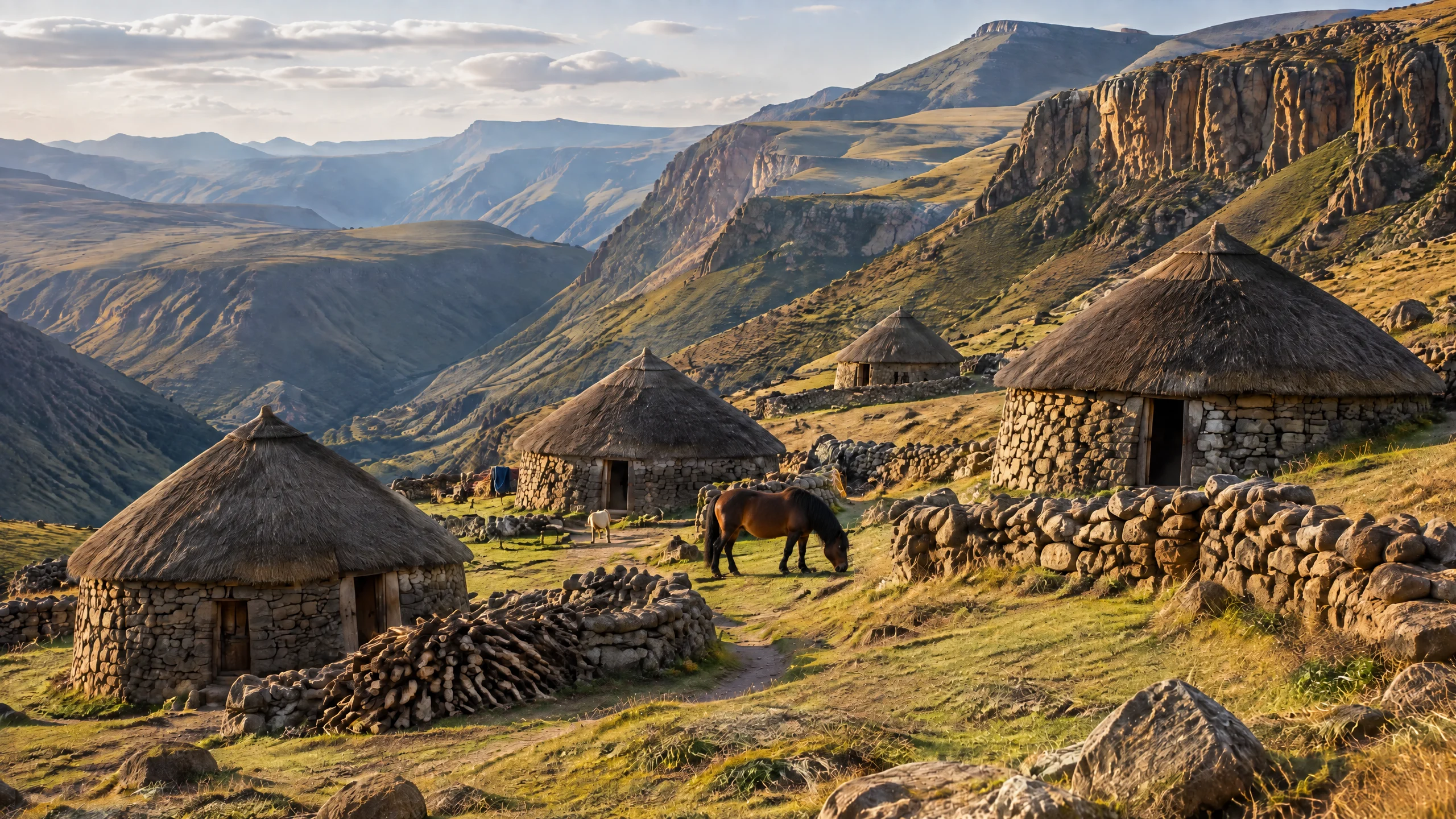
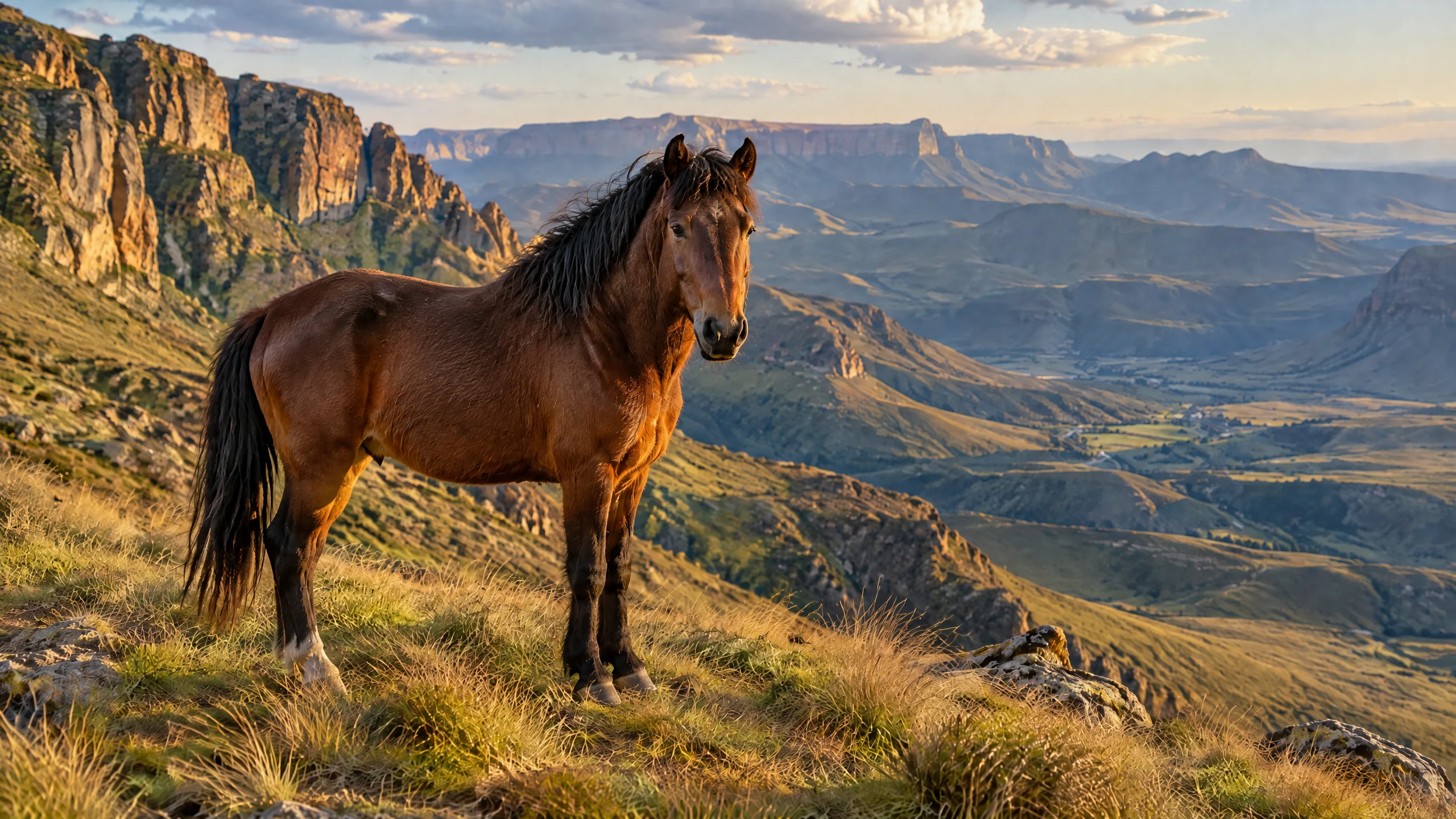
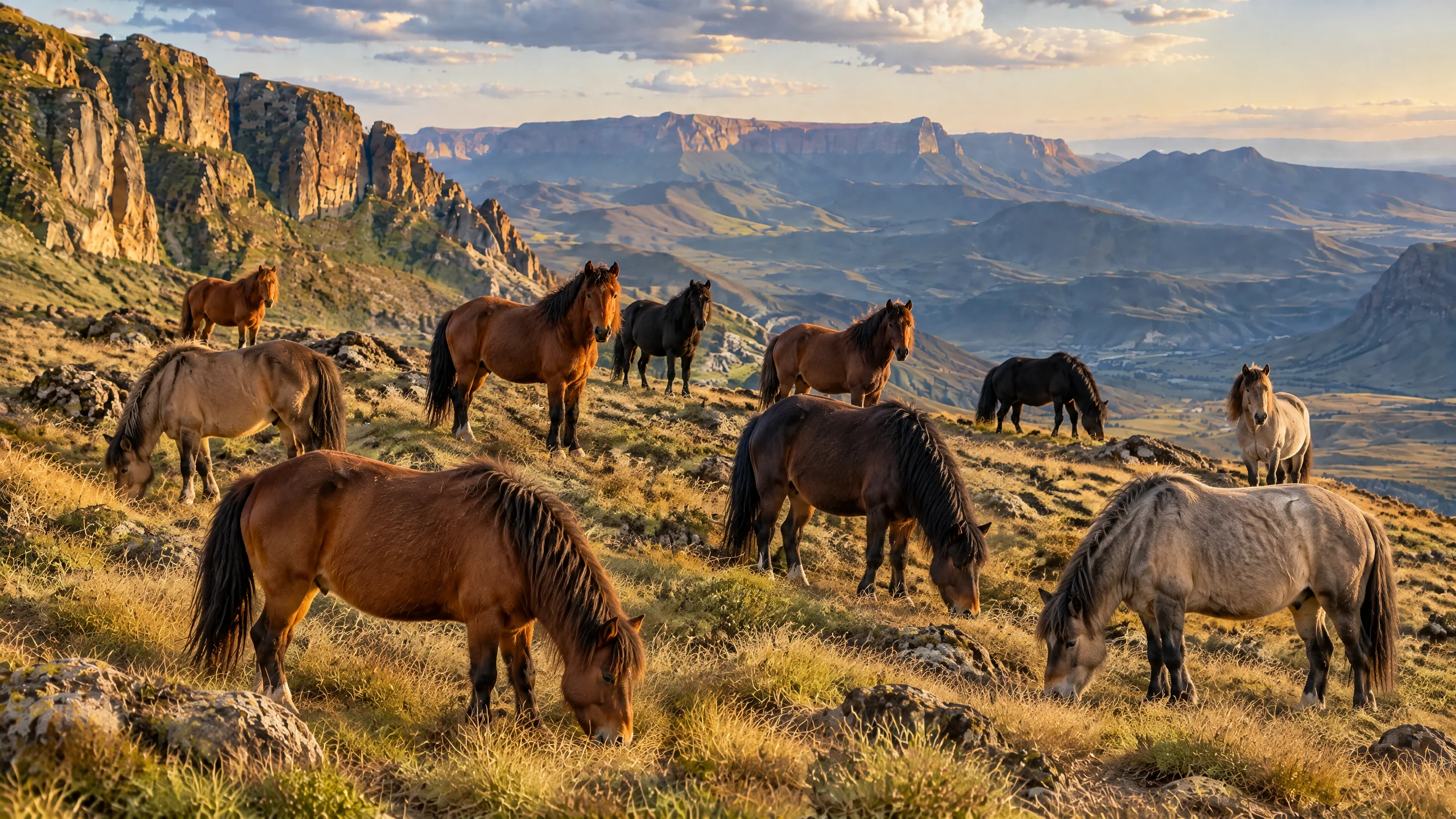
That move into the mountains is really where the breed as we know it begins. Basutoland — now Lesotho, still nicknamed “The Mountain Kingdom” — sits almost entirely above 1,000 metres, with winters cold enough for regular snow and grazing thin enough that only the hardiest animals could hold condition. With very little deliberate human management, the terrain and climate did the selecting: horses with weak lungs, poor feet, or a nervous temperament simply didn’t last. What survived, generation after generation, was tougher, smaller, and remarkably sure-footed.
A Nation’s Indispensable Partner
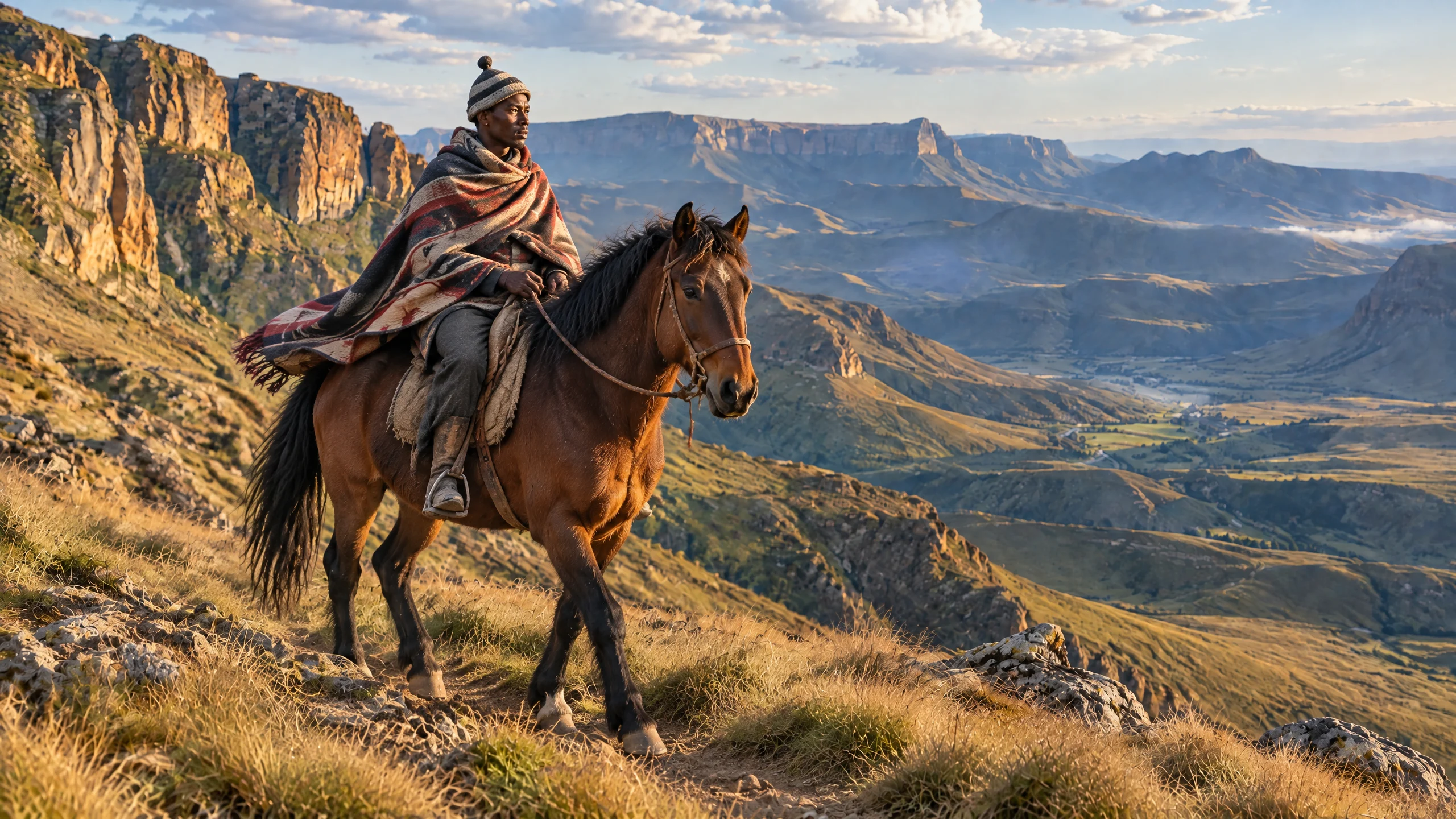
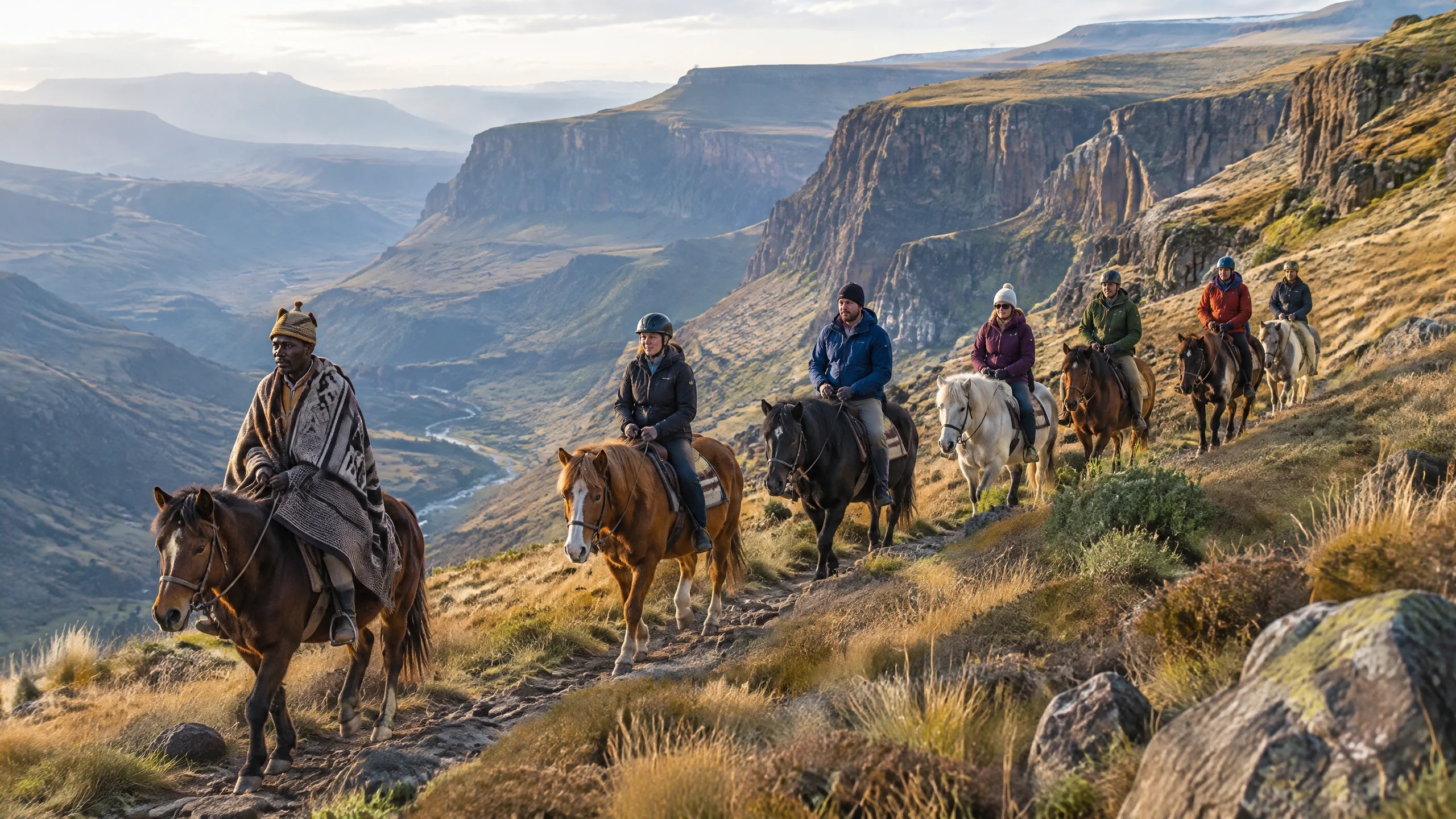
Lesotho is often called a nation of horsemen, and it’s not an exaggeration. In many rural mountain villages, a pony isn’t a hobby animal — it’s still the only practical way to travel, and often the only alternative to walking. The image of a Basotho herder wrapped in a traditional blanket, mokorotlo hat on, riding along a mountain pass is one of the most iconic pictures of the country itself.
That everyday reliance is exactly what shaped the pony’s temperament as much as its body. A horse that a herder depends on to get safely down a rocky mountain trail, day after day, in all weather, has to be calm, sensible, and trustworthy rather than flashy. The Basotho Pony’s reputation for being docile and easy to handle isn’t an accident of breeding — it’s a direct result of what the job has always demanded.
- Built for the terrain, not the show ring. Thick-walled, well-formed hooves handle rocky trails that would damage most breeds.
- A working gait. The tripling gait covers rough ground faster than a trot, without tiring the pony or its rider.
- Genuinely essential transport. In parts of Lesotho’s highlands, the pony remains the only practical way to reach isolated villages.
Proven — and Nearly Lost — in War
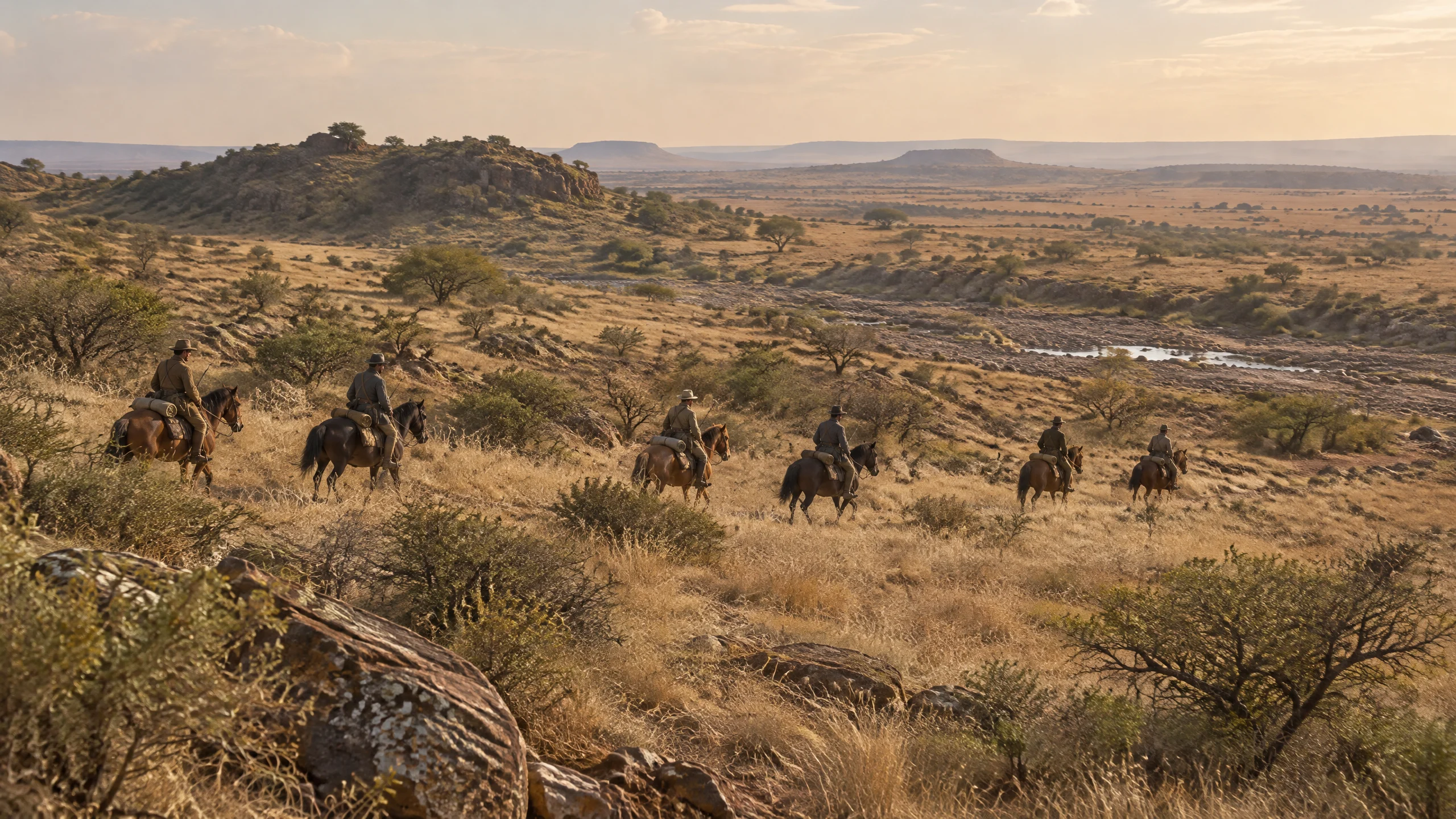
By the time the British replaced King Moshoeshoe I’s struggling Thoroughbred with a hardy local pony in the 1860s, word of the breed’s toughness was already spreading. That reputation exploded during the Anglo-Boer War of 1899–1902, when the British army alone acquired around 30,000 Basotho Ponies as remounts, prized for exactly the qualities the mountains had bred into them: stamina, soundness, and the ability to keep going on very little.
That fame came at a real cost. War losses, combined with decades of crossbreeding that followed as owners chased height and “quality,” steadily eroded the qualities that had made the breed remarkable in the first place. Some international conservation records now list the historic, pure Basotho Pony as critically endangered or extinct as a formally registered breed — even though ponies of this type are still everywhere across Lesotho’s mountains today. That gap says less about ponies on the ground and more about how much dilution followed the war years, which is exactly why deliberate preservation work has mattered so much since.
The Basotho Pony Today
In 1978, Lesotho and Ireland launched the Basotho Pony Project, a breed improvement programme built around a national stud farm in Thaba-Tseka, community-level “mare camps” for breeding stock, and a proper selection and culling programme aimed at rebuilding what the war years and crossbreeding had worn away. It’s the same kind of deliberate rescue effort that’s saved more than one breed on the brink — proof that a bad few decades doesn’t have to be the end of the story.
Today, ponies of this type still carry mountain communities that no road reaches, and pony trekking has become a genuine source of income for those same communities — visitors ride multi-day routes through Lesotho’s highlands on the same sure-footed ponies that have always made the journey possible. Basotho Ponies also compete on the regional endurance racing circuit, still proving, generations after Tschiffely-style feats weren’t even needed to make the point, that a horse built by hardship rarely needs convincing to keep going.
A Small Horse With an Enormous Legacy
The Basotho Pony’s story keeps circling back to one idea: a horse shaped entirely by necessity, not fashion, tends to end up remarkably hard to break. It survived a mountain kingdom’s climate with no help from anyone. It survived a war that took thirty thousand of its own. And today, in the same highlands where it began, it’s still the horse a nation trusts to get them home.
🌍 A Guide to the World’s Horse Breeds
Every breed has a story like this one. I’m building a complete guide to the horses that shaped history around the world — join the waitlist to get it the moment it’s ready.
→ Join the Waitlist No spam, just a heads-up when it launches