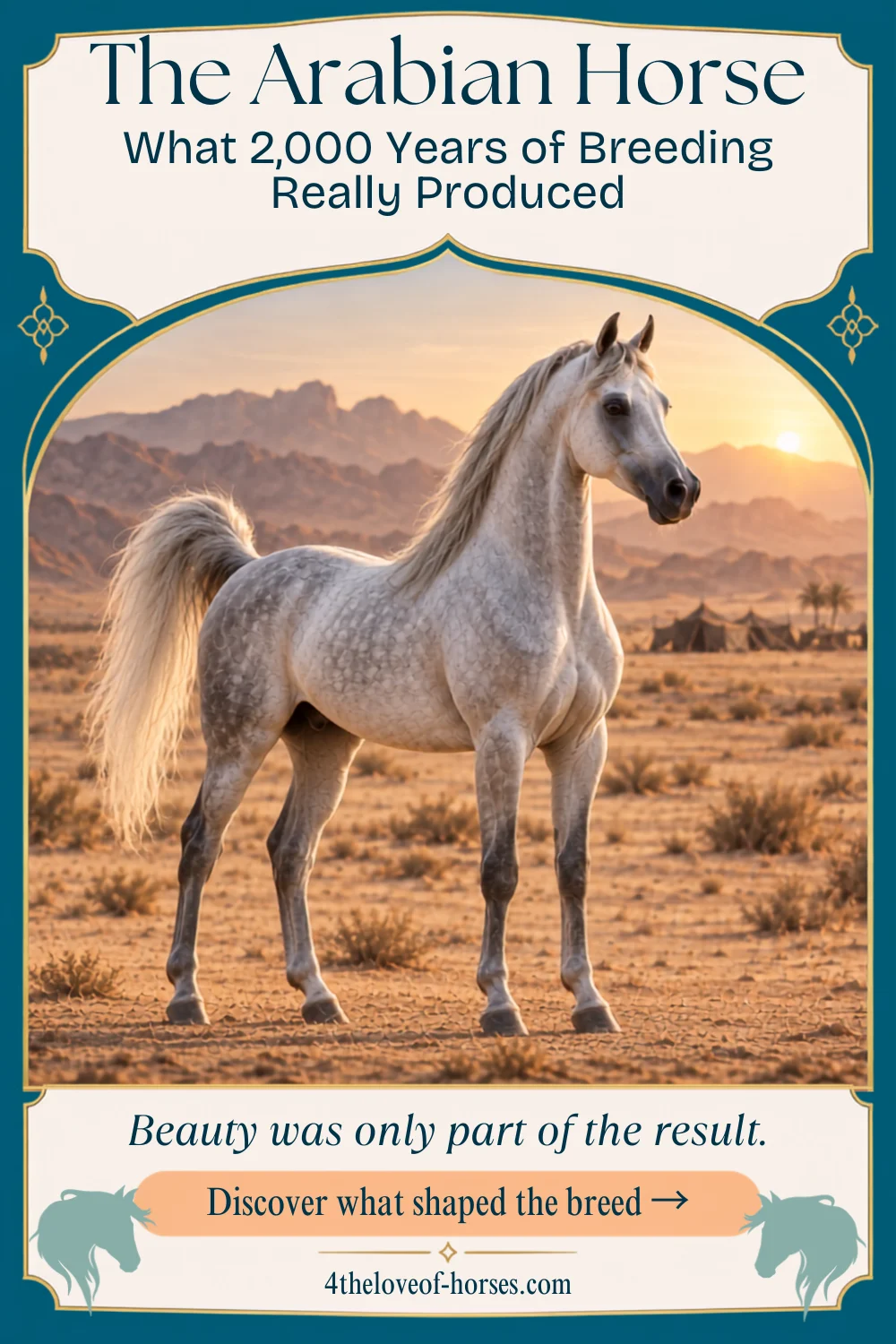
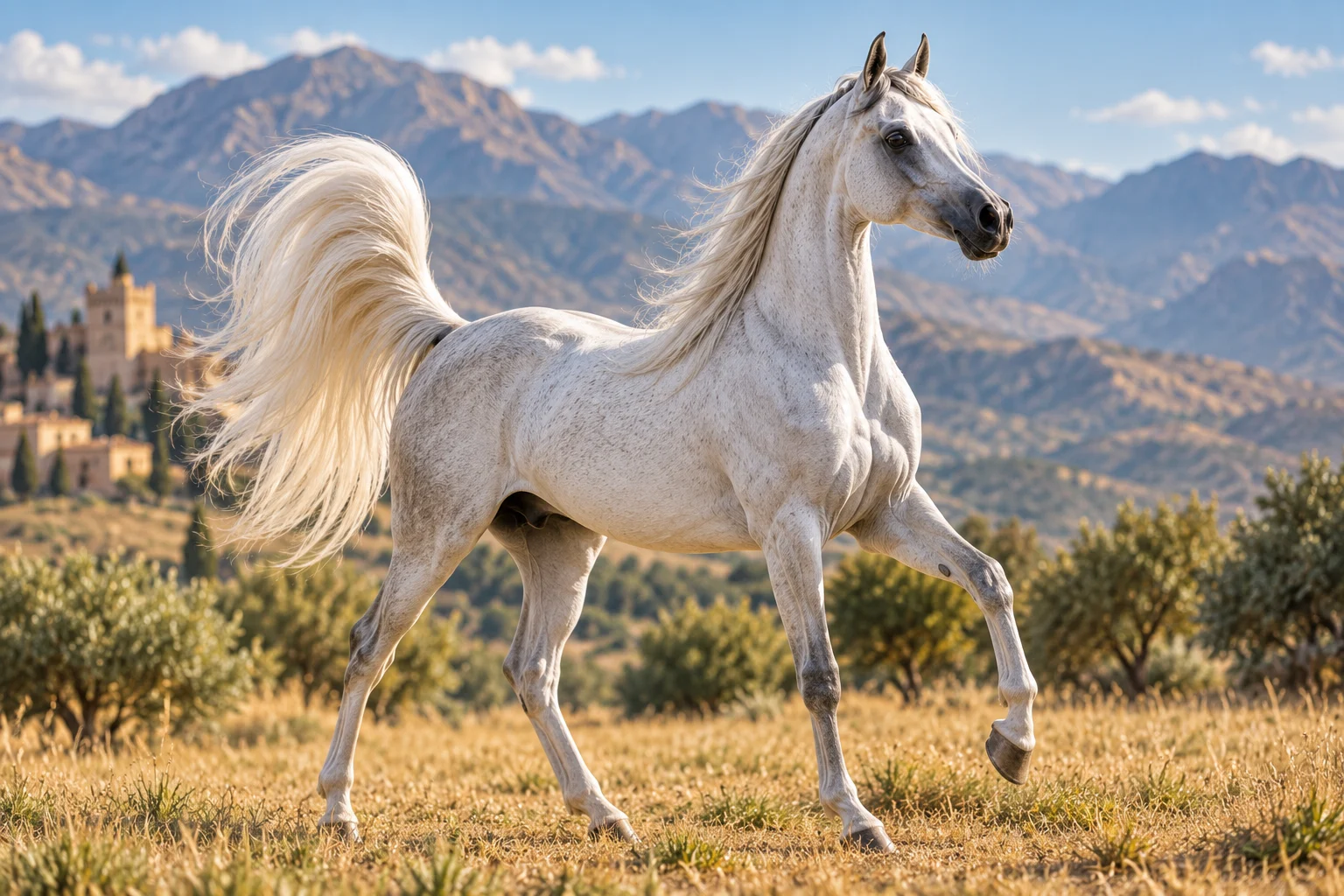
There’s a reason breeders have spent three thousand years trying to capture what the Bedouin already had: a horse refined enough to live in a family’s tent, and tough enough to survive a desert that would kill most other breeds outright. It’s a combination that turned out to be so valuable, other breeds simply borrowed it wholesale.
🌍 A Guide to the World’s Horse Breeds
The Arabian is just one chapter. I’m putting together a full guide to the horses that shaped history and cultures around the world — join the waitlist and be the first to know when it’s ready.
→ Join the Waitlist No spam, just a heads-up when it launchesA Heritage Written in the Sand
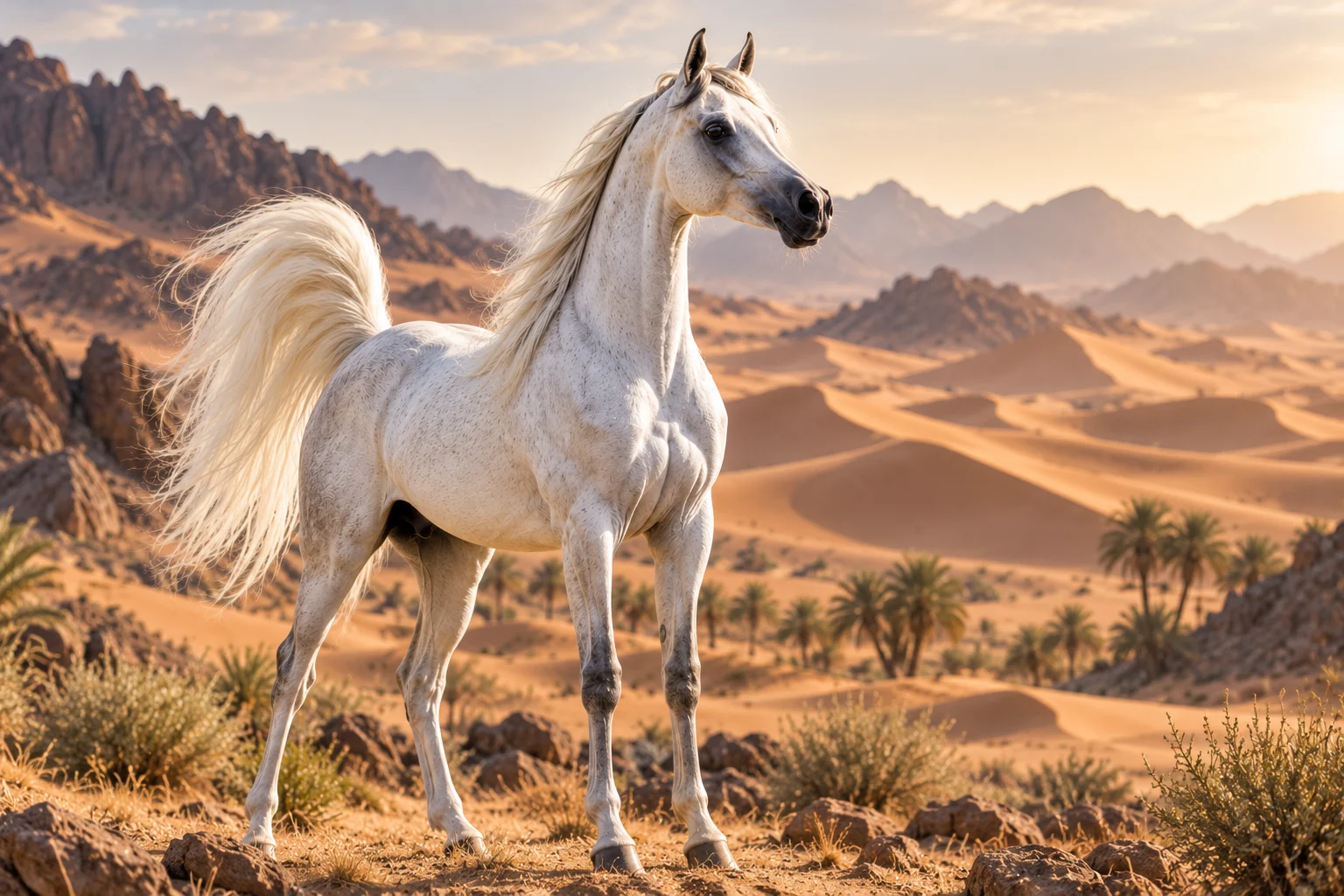
The Arabian’s story starts around 2500 BC, when Bedouin tribes moving into the interior of the Arabian Peninsula began developing the desert horses that became the breed’s direct ancestors. There was no room for error in that environment — the peninsula had already been arid for thousands of years, and any horse that couldn’t cope with extreme heat, minimal water, and long days of travel simply didn’t survive to breed.
What emerged from that pressure wasn’t just toughness — it was a genuinely distinctive animal. Arabians carry one fewer rib, one fewer lumbar vertebra, and one fewer tail bone than almost every other horse breed, a skeletal quirk believed to contribute to their stamina and the compact, strong-backed frame that could carry a rider for enormous distances. Even their most famous features have practical origins: the “jibbah,” the gentle bulge between the eyes that Bedouin breeders prized as a mark of blessing, is thought to have given the breed extra sinus capacity for its native desert climate.
The Bedouin’s Family Horse
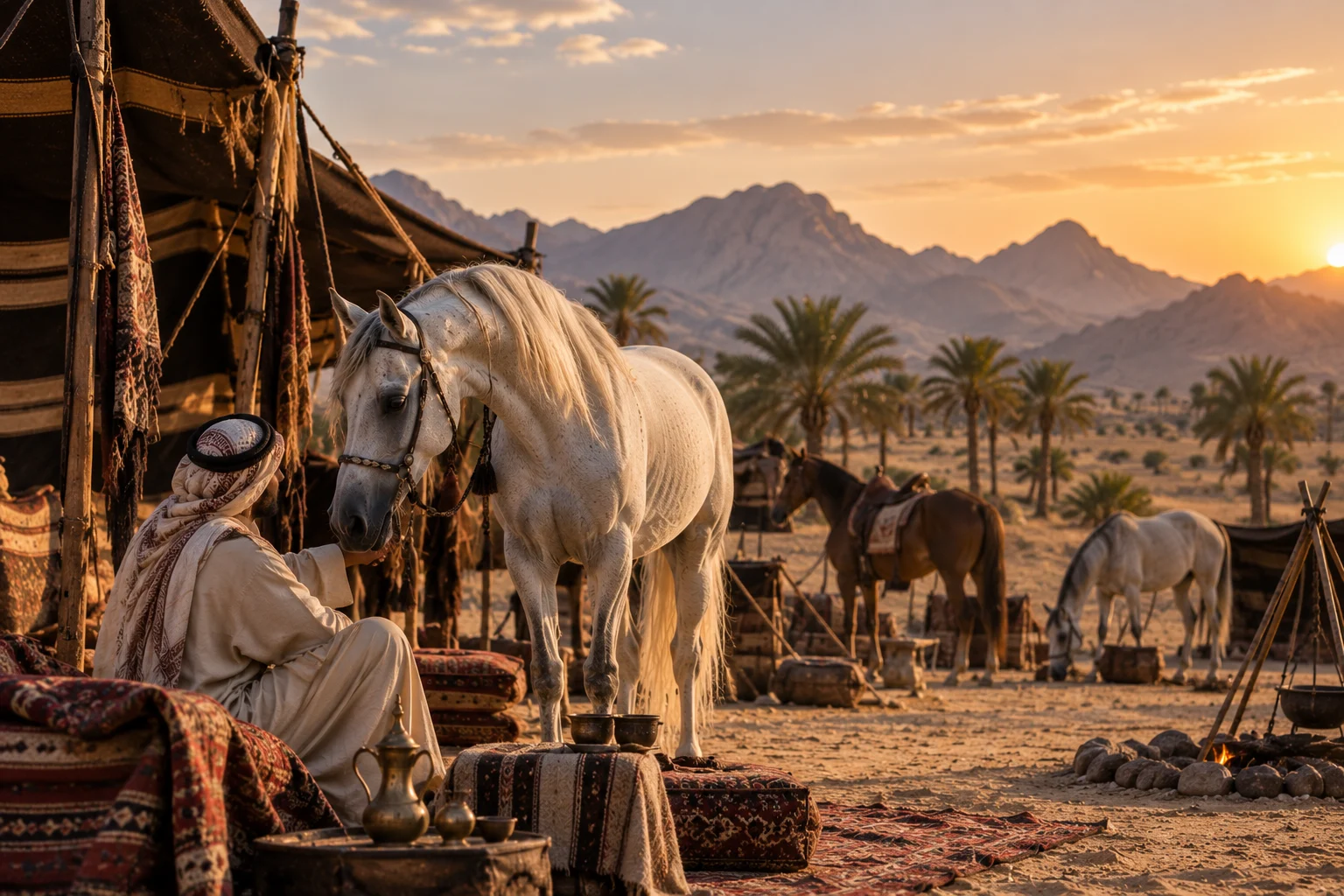
Where most working breeds were kept apart from their handlers, the Arabian was often kept inside the family tent — sharing shelter with the people who owned it, protected from theft and from the worst of the desert night. That closeness shaped a temperament that’s still one of the breed’s defining traits: Arabians are famously people-oriented, forming strong bonds with their handlers in a way that goes beyond simple obedience.
Their original job was war and raiding — fast, quiet forays across open desert where a camel’s stamina was no substitute for a horse’s speed and manoeuvrability. Mares were particularly prized for raids because they were considered less likely to give away a rider’s position by calling out, and it’s largely through the mare line that Bedouin breeders tracked their most valued pedigrees.
- Bred for partnership, not distance from people. Living alongside their handlers created a breed that is unusually responsive and attuned to human handling.
- Selected under real pressure. Only the soundest, most trainable, hardiest horses were kept for breeding — there was no margin for a horse that couldn’t perform.
- Pedigree as sacred record. Formal oaths and dam-line tracking gave the Arabian some of the oldest continuously documented bloodlines of any horse breed.
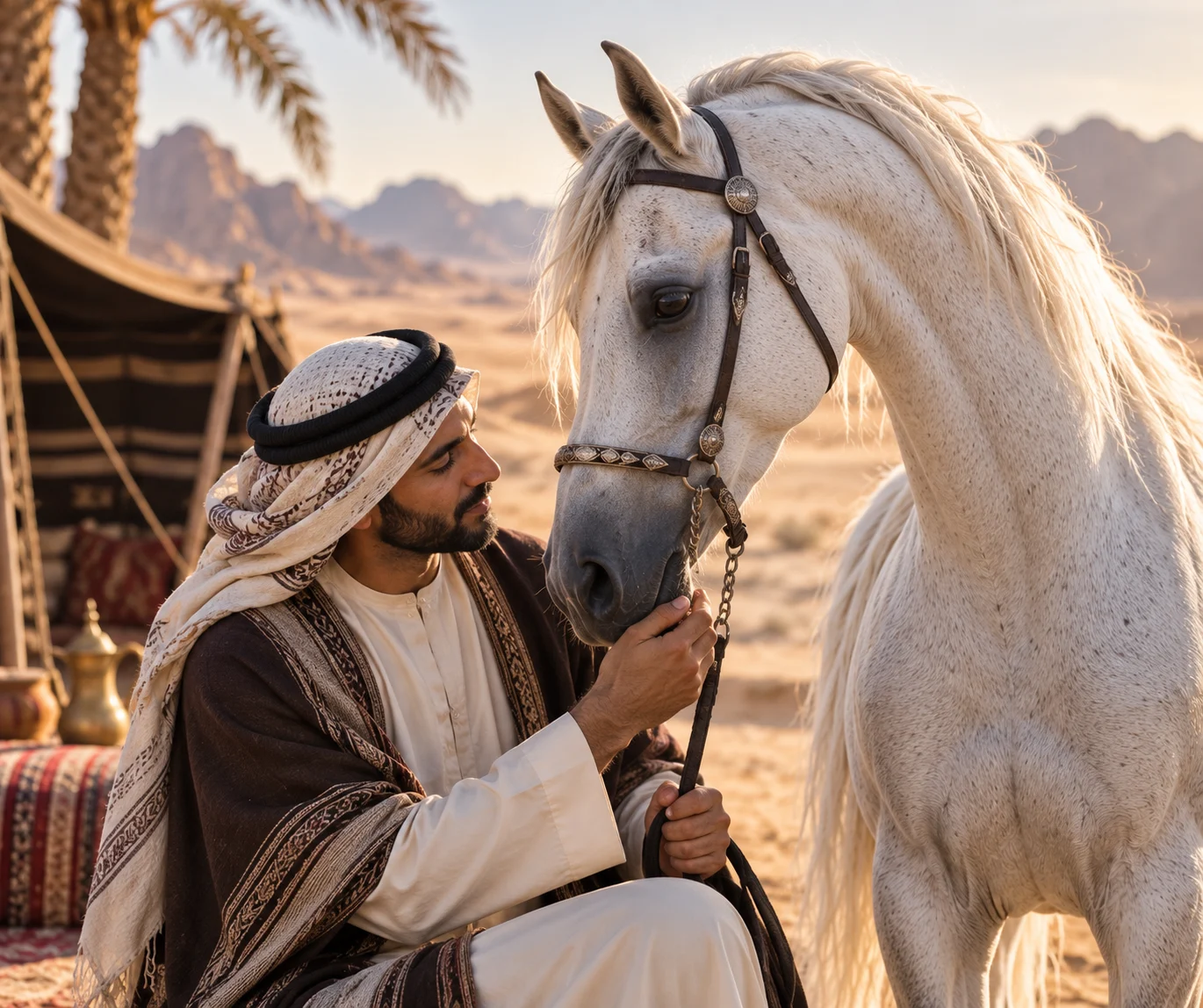
Built for the Desert: The Breed That Built Every Other Breed
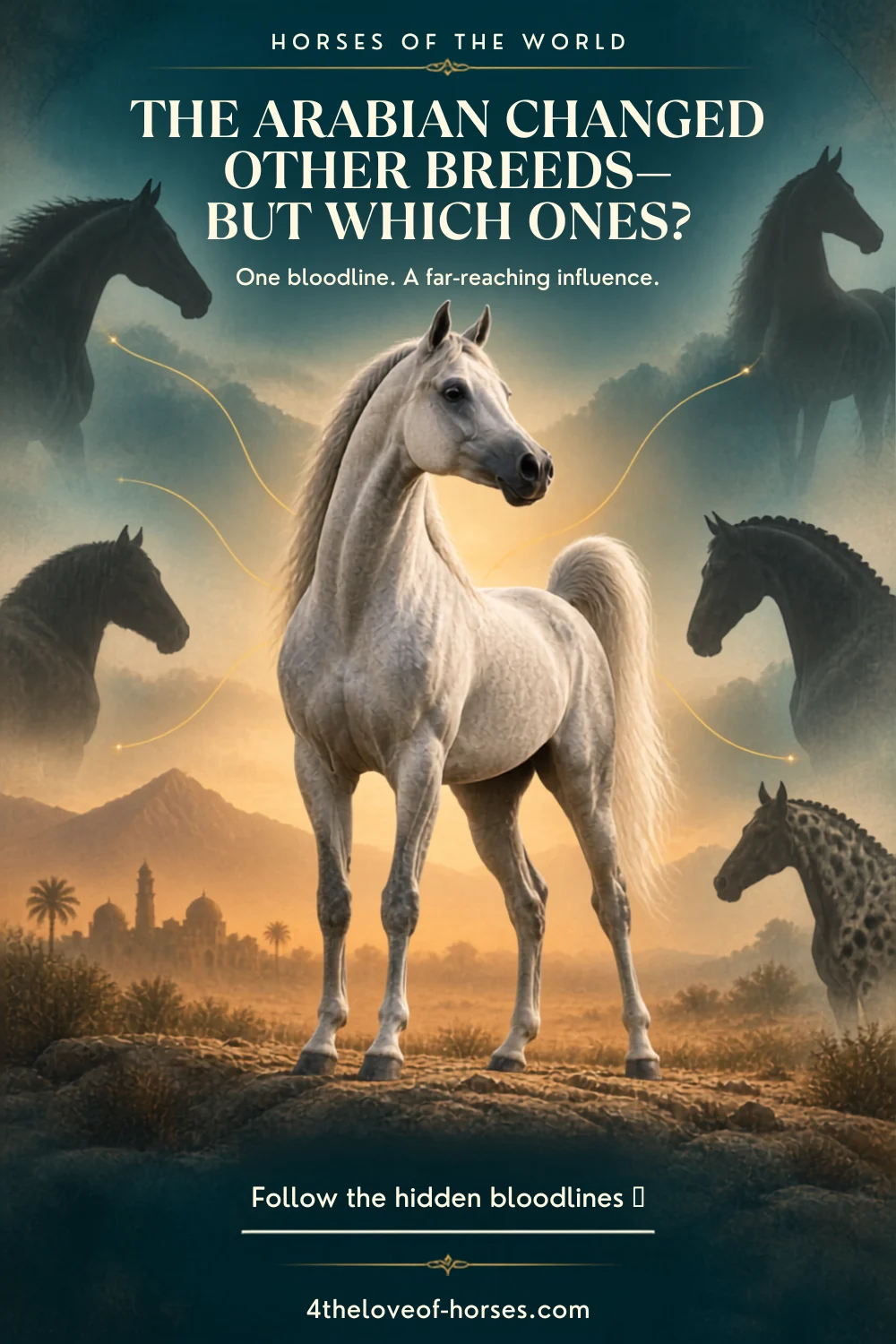
By the early 1700s, three Arabian-type stallions had been imported into England: the Byerley Turk, the Darley Arabian, and the Godolphin Arabian. Almost every Thoroughbred racehorse alive today traces its male line back to one of those three horses — which means the Arabian isn’t just a breed with a long history, it’s one of the direct architects of modern horse racing.
That pattern repeated itself again and again. When European breeders wanted more stamina, more refinement, or more soundness in a bloodline, the Arabian was almost always the tool they reached for. In England, the Crabbet Stud carried on that legacy into the 20th century, becoming a foundation for Arabian breeding programs in the UK, the US, Australia and South Africa — meaning that if you trace almost any modern light horse breed back far enough, there’s a very good chance an Arabian shows up in the family tree.
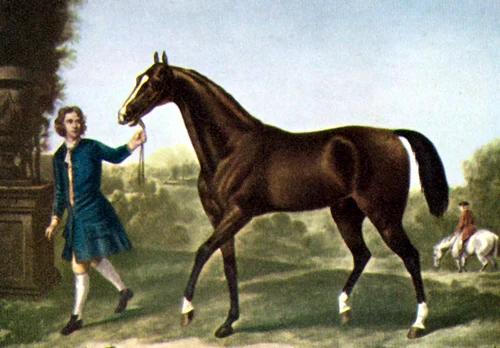
The Arabian Today
The Arabian’s original endurance is still very much intact — the breed dominates modern long-distance endurance racing, regularly winning 100-mile events against horses bred specifically for the discipline. That’s not a coincidence; it’s the same trait the Bedouin selected for three thousand years ago, still doing exactly the job it always did.
Beyond endurance, Arabians compete in dressage, show jumping, western disciplines, and their own dedicated purebred show circuit, prized for the same refinement and expressive movement the Bedouin bred for. And their influence hasn’t stopped — breeders around the world still cross Arabian bloodlines into other breeds today, chasing the same combination of soundness, stamina and temperament that made the breed indispensable in the first place.
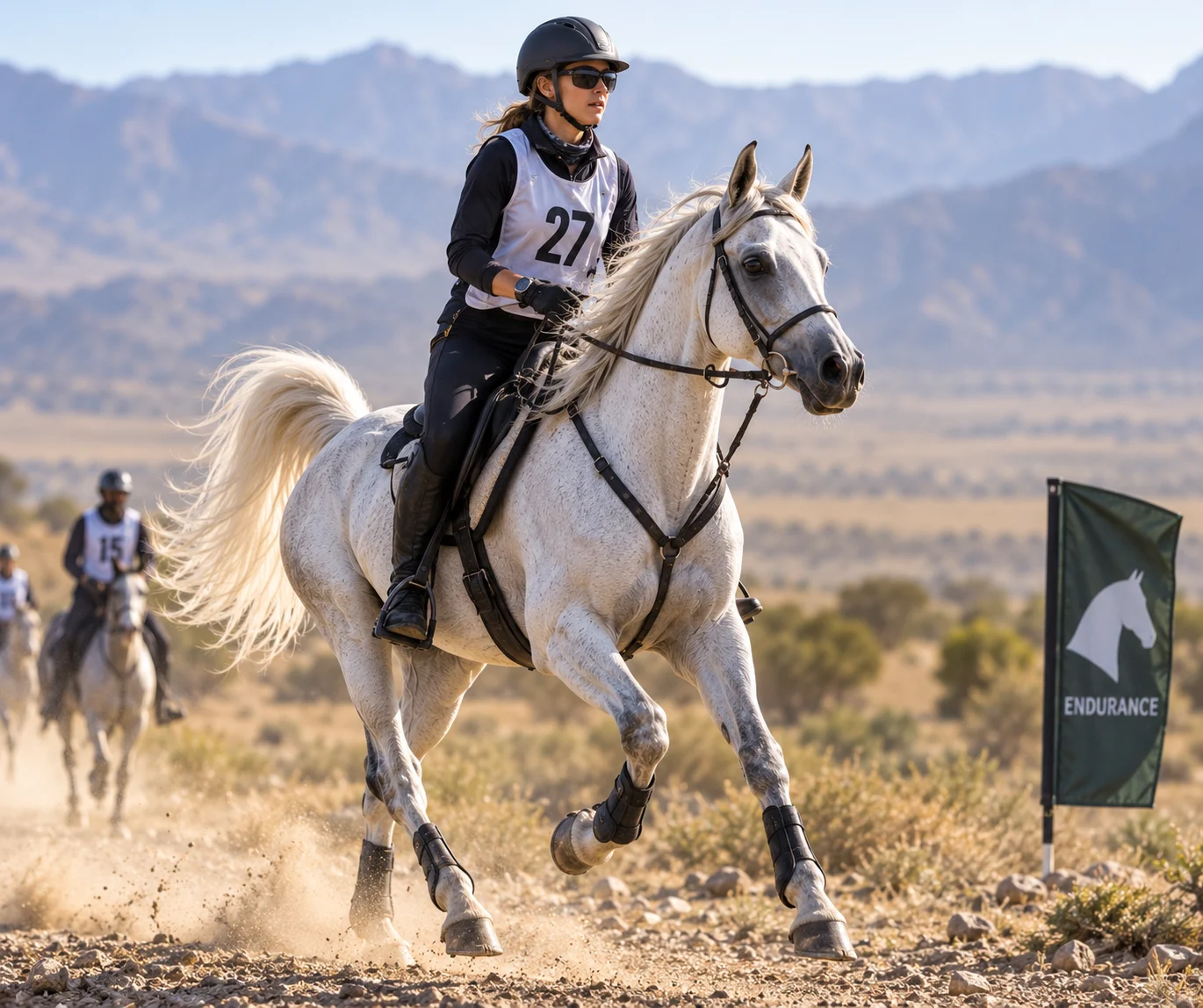
A Breed of Heritage, A Partner for Life
The Arabian’s story is really about what happens when a breed gets everything right at once — stamina, soundness, temperament, and a bond with people close enough that it lived in their tents. Three thousand years later, that combination is still so valuable that you’ll find it quietly running through the pedigree of racehorses, endurance champions, and family riding horses that have never heard the word “Bedouin” in their lives.
🌍 A Guide to the World’s Horse Breeds
Every breed has a story like this one. I’m building a complete guide to the horses that shaped history around the world — join the waitlist to get it the moment it’s ready.
→ Join the Waitlist No spam, just a heads-up when it launches