The Complete Horse First Aid Kit Checklist (Free Download)

After 45 years working with horses — from riding racehorses on the track to breeding warmbloods — I’ve seen my share of emergencies. A horse can go from perfectly healthy to critical in a matter of minutes, and the difference between a good outcome and a devastating one often comes down to one question: is your first aid kit ready?
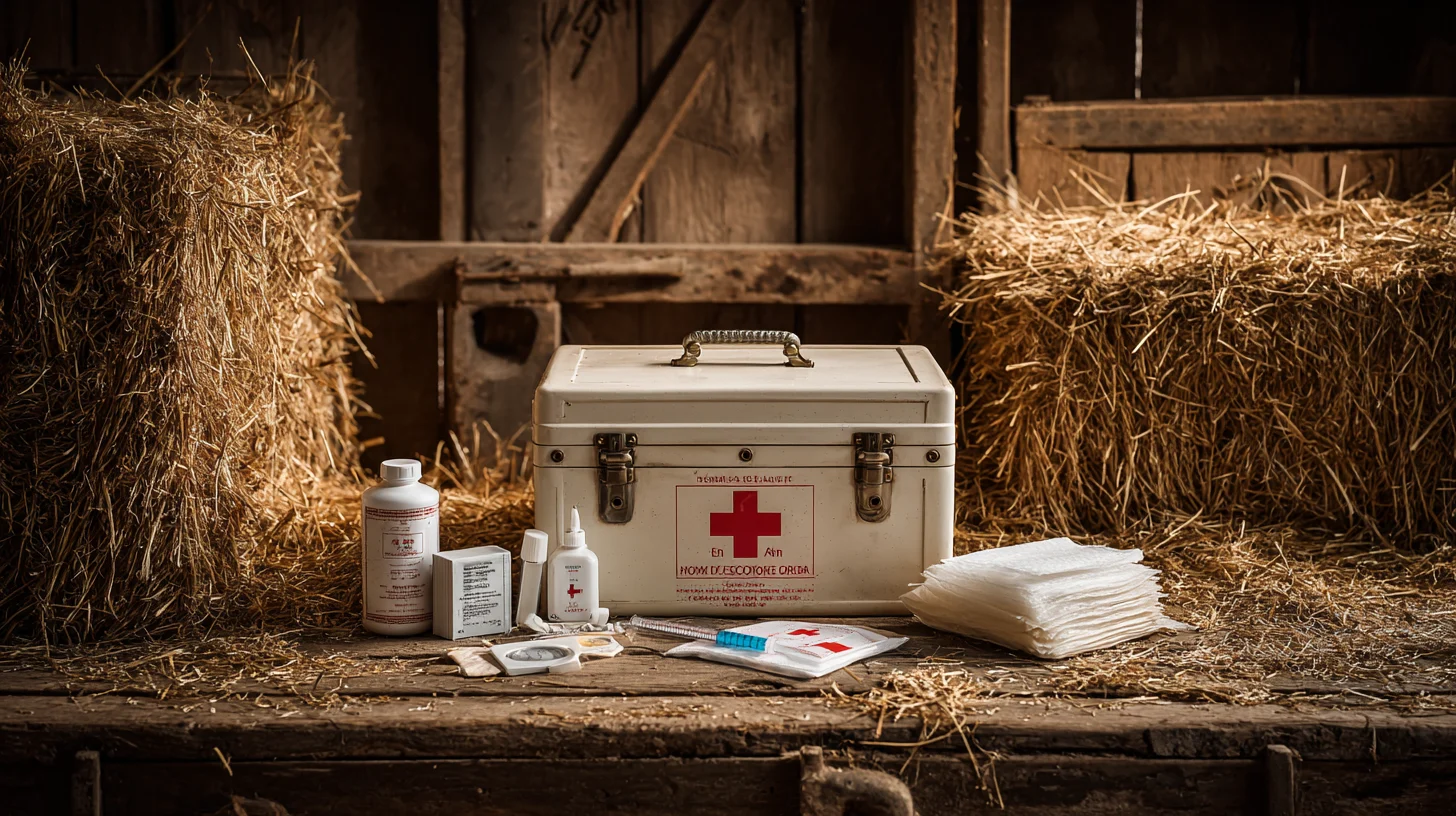
Most horse owners have some version of a kit. A bandage here, some wound spray there. But a proper equine first aid kit — one that can actually handle an emergency before the vet arrives — needs to be complete, organised, and immediately accessible.
In this guide I’ll walk you through exactly what should be in your horse’s first aid kit, what each item is used for, and the common mistakes owners make when putting one together. I’ve also put together a free printable checklist you can download, print and keep in your stable so nothing ever gets forgotten.
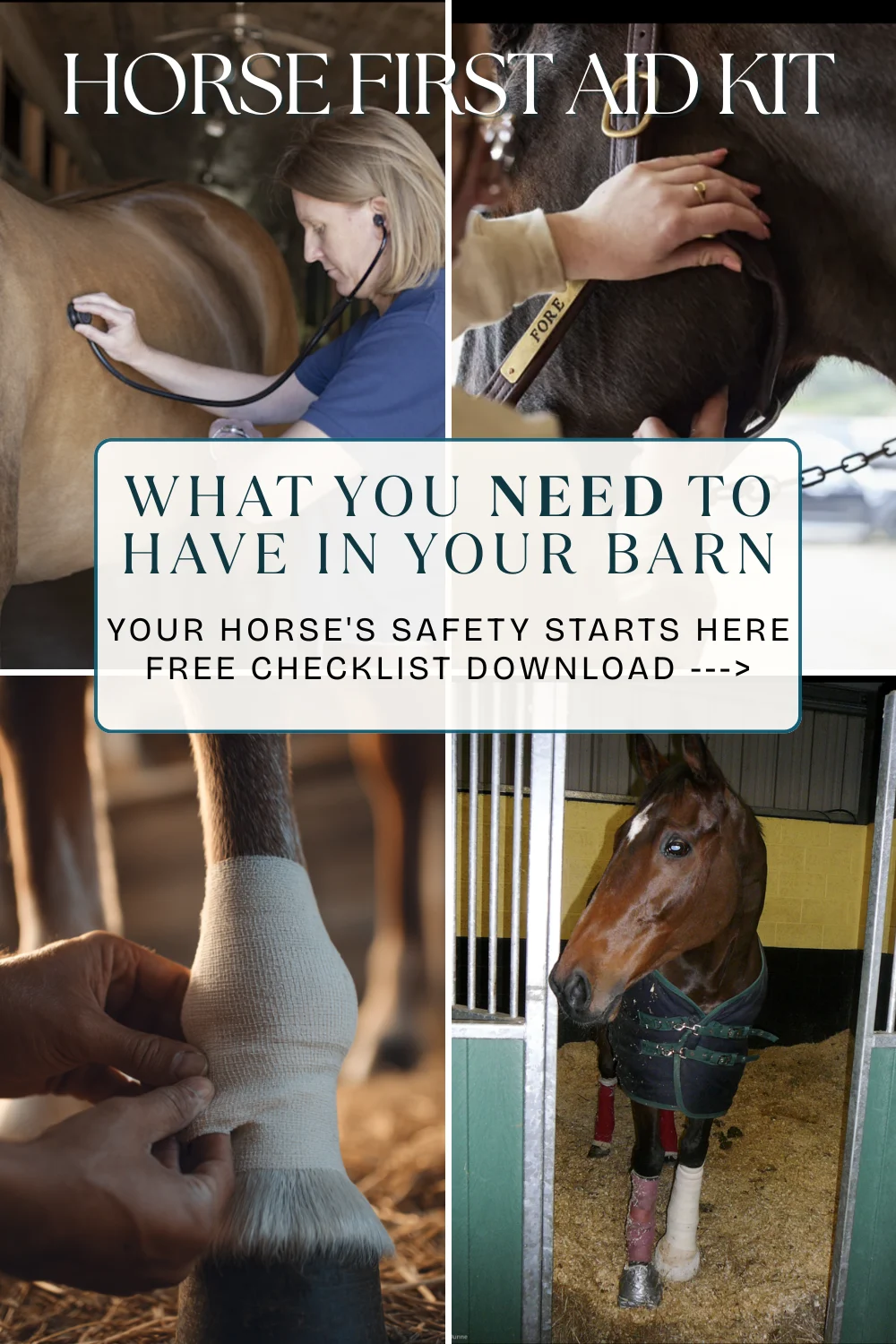
🐴 Is Your First Aid Kit Actually Complete?
Download the free printable checklist and find out exactly what yours is missing — before an emergency does.
Download Your Free Checklist →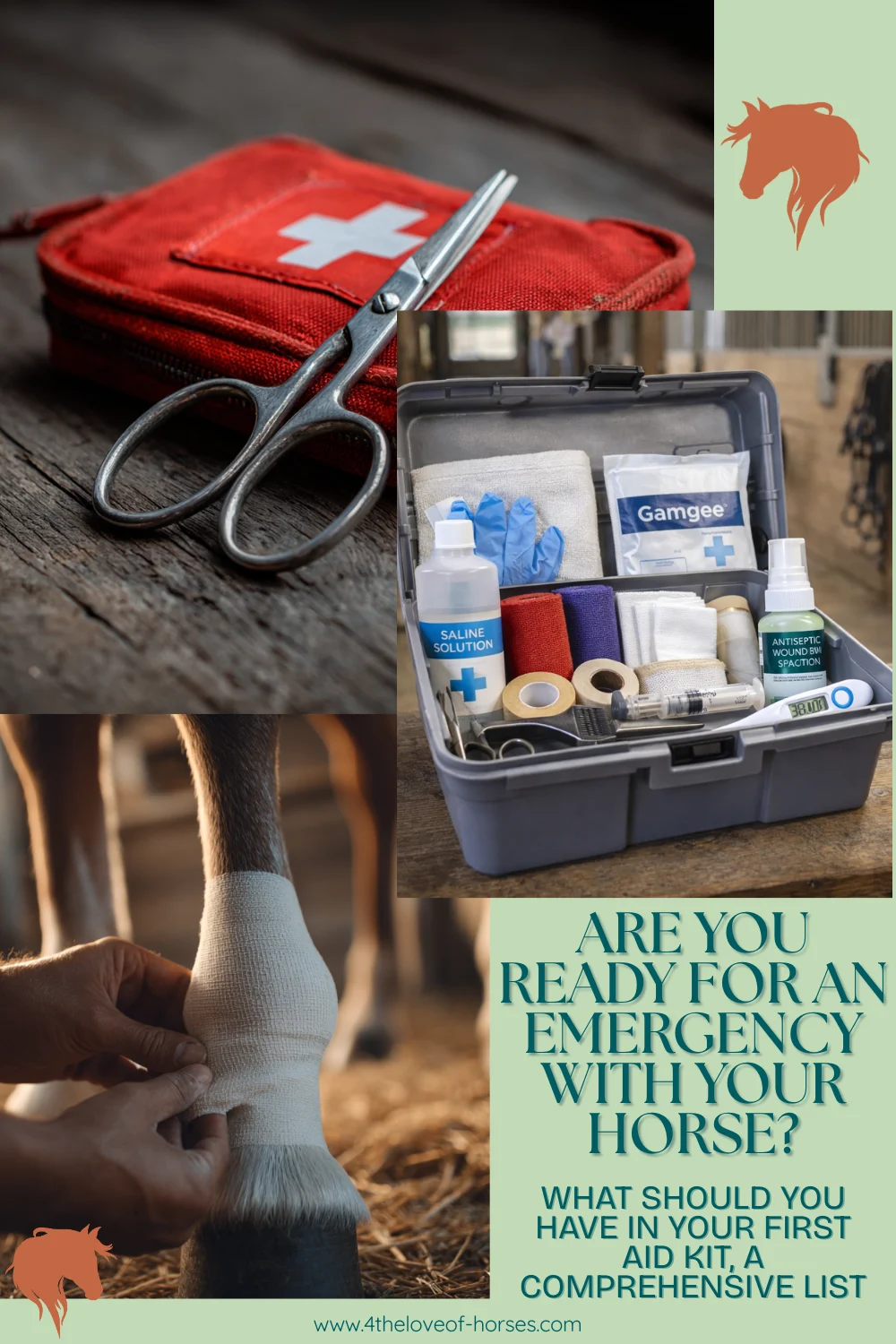
Why Every Horse Owner Needs a Proper First Aid Kit
Horses are simultaneously the toughest and most fragile animals I have ever worked with. They can sustain a minor leg injury that derails months of training, develop colic at midnight on a Sunday, or slice themselves open on something you’d swear wasn’t sharp. The vet won’t always be there in the first twenty minutes. You will be.
A well-stocked first aid kit means you can:
- Clean and dress a wound before infection sets in
- Take accurate vital signs to give your vet over the phone
- Provide pain relief or support while waiting for professional help
- Prevent a minor injury from becoming a major one
- Stay calm because you’re prepared, not panicking because you’re not
The golden rule I’ve always followed: your kit should be ready to use at 2am in the dark, by someone who’s frightened. That means clearly labelled, properly stocked, and in a fixed location everyone at your yard knows about.
Where to Keep Your Horse First Aid Kit
Before we talk about what goes in the kit, let’s talk about where it lives. This matters more than people realise.
- Keep it in a fixed, known location — not wherever is convenient at the time
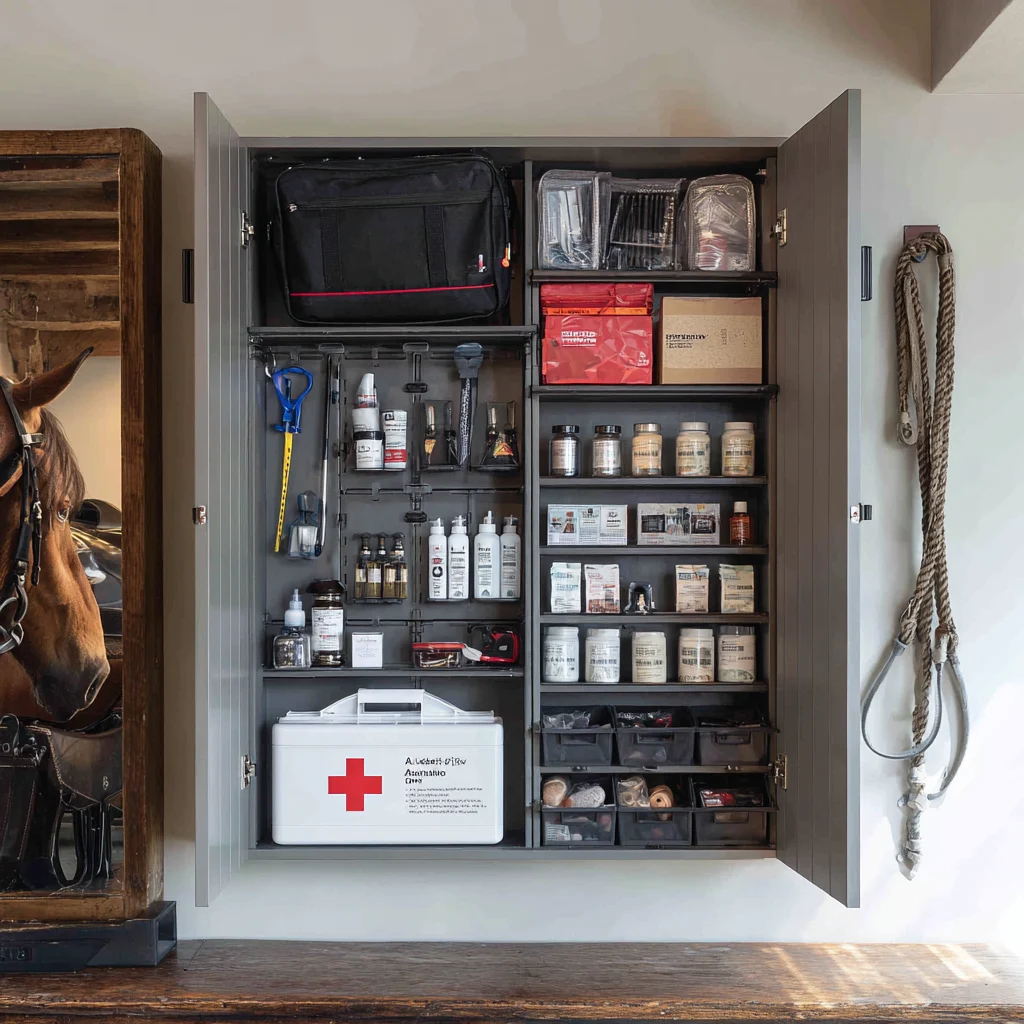
- Use a proper container: a sturdy plastic box with a handle, a dedicated bag, or a wall-mounted cabinet with a clear front
- Label it clearly from the outside — RED label or cross so it’s instantly identifiable
- Keep a second smaller kit in your horsebox or trailer for away trips
- Check and restock every three months — medications expire, bandages get used, antiseptic runs out
| After a foaling emergency in the middle of winter, I switched from a bag to a proper wall-mounted cabinet in the stable. Being able to see everything at a glance without rummaging changed everything. Whatever container you use, make sure someone unfamiliar with your yard could find and use it in an emergency. |
The Complete Horse First Aid Kit — What You Need and Why
I’ve divided the kit into sections to make it easier to check and restock. The printable checklist at the end follows this same structure.
1. Wound Care Essentials
These are your most-used items and the ones most likely to run low. Check this section first when restocking.
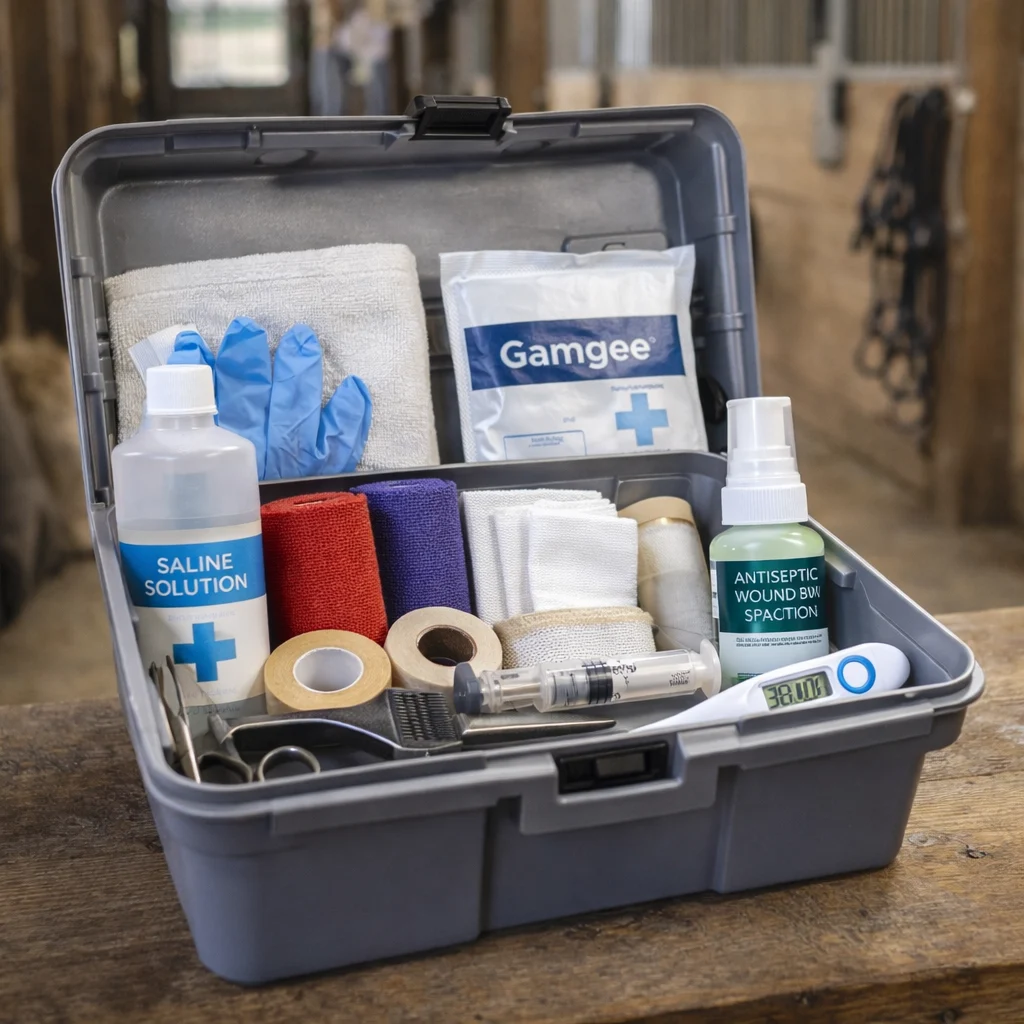
- Wound wash or saline solution (500ml minimum) — for flushing out wounds before dressing. Never use hydrogen peroxide on horse wounds as it damages healing tissue
- Antiseptic spray or solution (Hibiscrub or diluted betadine) — for cleaning the wound area
- Non-stick wound dressings (several sizes) — goes directly over the wound
- Sterile gauze squares — for cleaning and applying pressure
- Cotton wool — for padding and cleaning. Never put directly on a wound as fibres stick
- Gamgee or synthetic padding — essential for bandaging legs
- Cohesive bandages (Vetrap or similar) — at least 4 rolls. These go over the padding
- Stable bandages — for support and protecting lower legs
- Duct tape — for emergency hoof boots and keeping dressings in place
- Wound gel (Aloe vera or hydrogel) — promotes healing on granulating wounds
2. Vital Signs Equipment
Being able to accurately report your horse’s vital signs to your vet over the phone is one of the most useful things you can do in an emergency. Know the normal ranges before you need them.
- Digital thermometer (rectal) — normal temperature 37.2–38.3°C / 99–101°F
- Stethoscope — for heart rate (normal 28–44 beats per minute) and gut sounds
- Watch or phone with a second hand — for counting pulse and respiration
- Pen and notepad — to record observations and times for the vet
| Normal vital signs to know by heart: Temperature 37.2–38.3°C | Heart rate 28–44 bpm | Respiration 8–16 breaths per minute | Gut sounds present on both sides | Capillary refill time under 2 seconds | Mucous membranes pink and moist. Write these on a card and tape it inside your kit lid. |
3. Medication and Pain Relief
Important: Always consult your vet before administering any medication. The items below require a vet’s guidance on dosing. Keep your vet’s emergency number written inside your kit lid.
- Bute (phenylbutazone) — veterinary prescribed anti-inflammatory and pain relief. Discuss dosing with your vet before you need it
- Banamine / Flunixin — for colic pain. Vet prescribed — know when and how to use it before an emergency
- Optrex or saline eye wash — for flushing foreign objects or mild eye irritants
- Fly spray — not an emergency item but essential in stable kits during summer
- Your vet’s emergency number — written clearly, not just in your phone
- Nearest equine hospital details — know where you’d take a horse in a serious emergency
4. Hoof and Leg Care
- Hoof pick — always in the kit, not just in your grooming bag
- Poultice material (Animalintex or similar) — for hoof abscesses and drawing out infection
- Hoof boots (one size fits most or fitted to your horse) — for lost shoes or protecting a hoof injury
- Epsom salts — for foot soaking to draw out abscesses
- Stockholm tar or hoof hardener — for soft, crumbling hooves
- Farrier’s details and emergency contact number
5. Tools and Extras
- Sharp scissors (round-ended for safety) — for cutting bandages, dressings and removing stuck material
- Tweezers — for removing splinters and debris from wounds
- Disposable gloves (several pairs) — always handle wounds with gloves
- Headtorch or torch — for working in dark stables or at night
- Clean bucket — for preparing saline or soaking hooves
- Twitch — for restraint during treatment if needed
- Emergency blanket / shock rug — for a horse showing signs of shock or hypothermia
- Insect sting treatment — bees and wasps can cause rapid swelling
- Camera or phone charged — photograph wounds for your vet
🩺 Free Printable: Horse First Aid Kit Checklist
Everything we’ve covered in this article is in the free checklist — formatted as a printable you can keep in your stable. Tick off what you have, spot the gaps, and restock with confidence.
Send Me the Free Checklist →How to Build Your First Aid Kit on a Budget
You don’t need to buy everything at once. Start with the essentials and build over time. Here’s the order I’d prioritise:
- Week 1 — Wound care: saline, Hibiscrub, non-stick dressings, gauze, Gamgee, 4 cohesive bandages. These are your most-used items and you’ll need them first.
- Week 2 — Vital signs: thermometer, stethoscope, notepad. These cost little and are worth their weight in gold when you’re on the phone to the vet at midnight.
- Week 3 — Hoof care: poultice, hoof boot, Epsom salts. Abscesses are one of the most common equine emergencies and often happen when your farrier is unavailable.
- Week 4 — Tools and medication: scissors, gloves, torch, and speak to your vet about keeping Bute on hand.
Once your kit is fully stocked, set a quarterly calendar reminder to check expiry dates, replace used items, and make sure everything is clean and dry. A first aid kit you can’t trust in an emergency is worse than none at all.
What to Do in an Equine Emergency — The First 5 Minutes
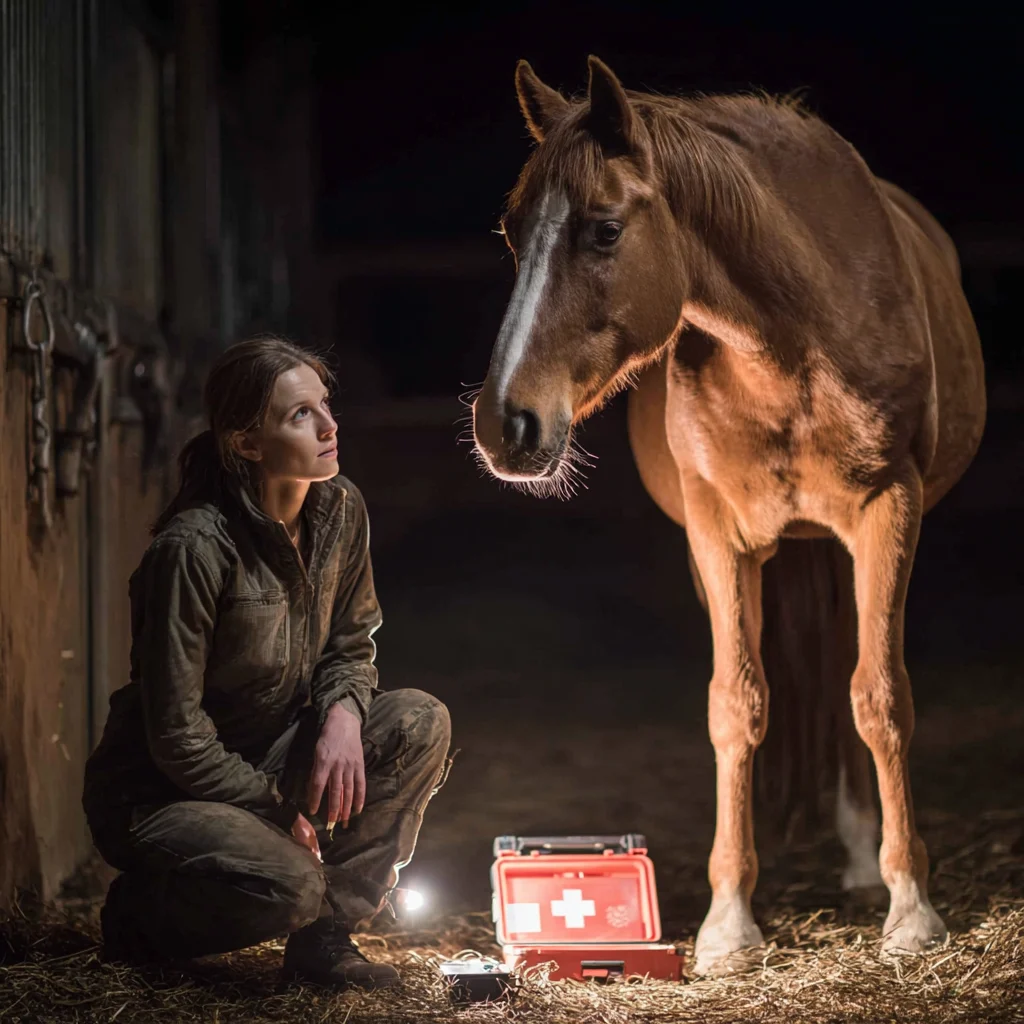
Having the kit is one thing. Knowing how to use it calmly is another. These five steps apply to almost any equine emergency:
- Stay calm. Your horse reads your energy. A panicking handler makes an injured horse more dangerous to everyone.
- Assess before you act. Don’t rush in. Take 20 seconds to look at the situation — is it safe? Is the horse weight-bearing? Where exactly is the injury?
- Call your vet immediately if there is: arterial bleeding (bright red, spurting), suspected fracture, eye injury, signs of colic, puncture wound near a joint, or anything you’re uncertain about.
- Control bleeding. Direct pressure with gauze or a clean cloth. Hold firmly for a minimum of 3 minutes before checking.
- Keep the horse still and calm. Tie safely or have someone hold them. Minimise movement while you assess and treat.
Write your vet’s emergency number on a card and tape it inside your kit lid. In a real emergency you don’t want to be scrolling through your phone.
Common First Aid Mistakes Horse Owners Make
After 45 years I’ve seen well-meaning owners accidentally make things worse. The most common mistakes:
Using hydrogen peroxide to clean wounds This one is everywhere and it needs to stop. Hydrogen peroxide feels like it’s doing something — it fizzes, it looks active, it seems thorough. But what it’s actually doing is destroying the new tissue trying to form. It kills healthy cells along with bacteria and significantly slows healing. Always use saline or diluted Hibiscrub. If you have hydrogen peroxide in your kit right now, remove it.
Bandaging too tightly or for too long A bandage bow — damage to the flexor tendons caused by incorrect bandaging — is one of the most heartbreaking injuries I’ve seen, because it’s entirely preventable and it happens to caring owners who are trying to help. If you’re not confident in your bandaging technique, it is genuinely safer to keep a wound clean and uncovered while you wait for the vet than to risk applying a bandage incorrectly. Ask your vet or an experienced equestrian to show you the correct technique before you need it.
Giving Bute without knowing the right dose Phenylbutazone is a powerful drug and the dose matters enormously. Too little and it doesn’t manage the pain effectively. Too much and you risk gastric ulcers and kidney damage, particularly in older horses. The correct dose is calculated on body weight. Speak to your vet and write the correct dose for your horse on a card inside your kit — before you ever need it.
Not calling the vet soon enough Horse people are stoic by nature, and we tend to apply that same stoicism to our horses. But certain injuries deteriorate extremely fast and need professional eyes quickly. Call your vet immediately for any wound near a joint or the coronet band, any eye injury, suspected fractures, arterial bleeding, or any wound deeper than superficial skin level. When in doubt, call. Vets would always rather talk you through something that turns out to be minor than see a horse 24 hours after an injury that needed immediate attention.
Leaving an injured or distressed horse alone A horse in pain is a frightened horse, and a frightened horse can injure itself further — or you. Stay with them, keep your voice low and calm, and minimise their movement while you assess the situation and wait for help. If you need to leave briefly to get something from your kit, tie them safely first.
Assuming no weight-bearing means a fracture — or vice versa Horses can be completely non-weight-bearing on a badly abscessed hoof and fully weight-bearing on a fractured leg in the early stages. Never diagnose based on weight-bearing alone. Assess the whole horse, note the vital signs, and let your vet make the call.
Using dirty water to flush wounds Tap water contains bacteria and contaminants that can introduce infection into an open wound. Always use sterile saline solution to flush. This is why your first aid kit should have at least 500ml of saline at all times — it’s the single most important wound care item you own.
Forgetting to photograph the injury When you’re panicking the last thing on your mind is taking a photo, but a clear photograph of a wound sent to your vet before they arrive can genuinely change the outcome. They can assess severity, gather what they need, and arrive prepared rather than diagnosing blind. Make it a habit — phone out, photo first, then treat.
Download Your Free Horse First Aid Kit Checklist
I’ve put together a complete printable checklist covering all the items above — formatted so you can tick off what you have, see the gaps at a glance, and know exactly what to restock. It’s completely free to download.
Print it out, laminate it if you can, and keep one copy inside your kit and one pinned in your stable. Share it with anyone who looks after your horse — grooms, livery yard staff, family members. Everyone who might need to respond in an emergency should know what’s in the kit and where it lives.
🖨️ Print It, Laminate It, Keep It in Your Stable
The free printable checklist covers every item from this guide — formatted for the stable wall, not a screen. Share it with your groom, your yard manager, anyone who might need to act in an emergency. Completely free, delivered instantly to your inbox.
Get the Free Checklist →About the author: Jenni has 45 years of hands-on equestrian experience, from starting as a track rider for racehorses to 25+ years of warmblood breeding. She creates practical horse care guides, custom equestrian art and digital tools for horse owners at 4theloveof-horses.com.
Further Resources
Veterinary & Medical Authorities
The Horse magazine — thehorseowner.co.uk or thehorse.com (US) One of the most respected equestrian publications. Link to their wound care or first aid articles in your wound care section. Google recognises this as a high-authority domain.
American Association of Equine Practitioners (AAEP) — aaep.org They have excellent first aid resources and emergency guides. Link to their emergency preparedness page in your “when to call the vet” section. Extremely high domain authority.
British Horse Society (BHS) — bhs.org.uk Perfect for your UK audience. They have horse health and safety resources. Link in your introduction or vital signs section.
Merck Veterinary Manual — merckvetmanual.com The gold standard veterinary reference. If you mention any specific condition (laminitis, colic, wound types) link to their relevant page. Extremely authoritative in Google’s eyes.
What do you find the most useful item in your First Aid Kit? Leave a comment below:



Leave a Reply