Why Is Your Horse Losing Weight Despite Eating Well?

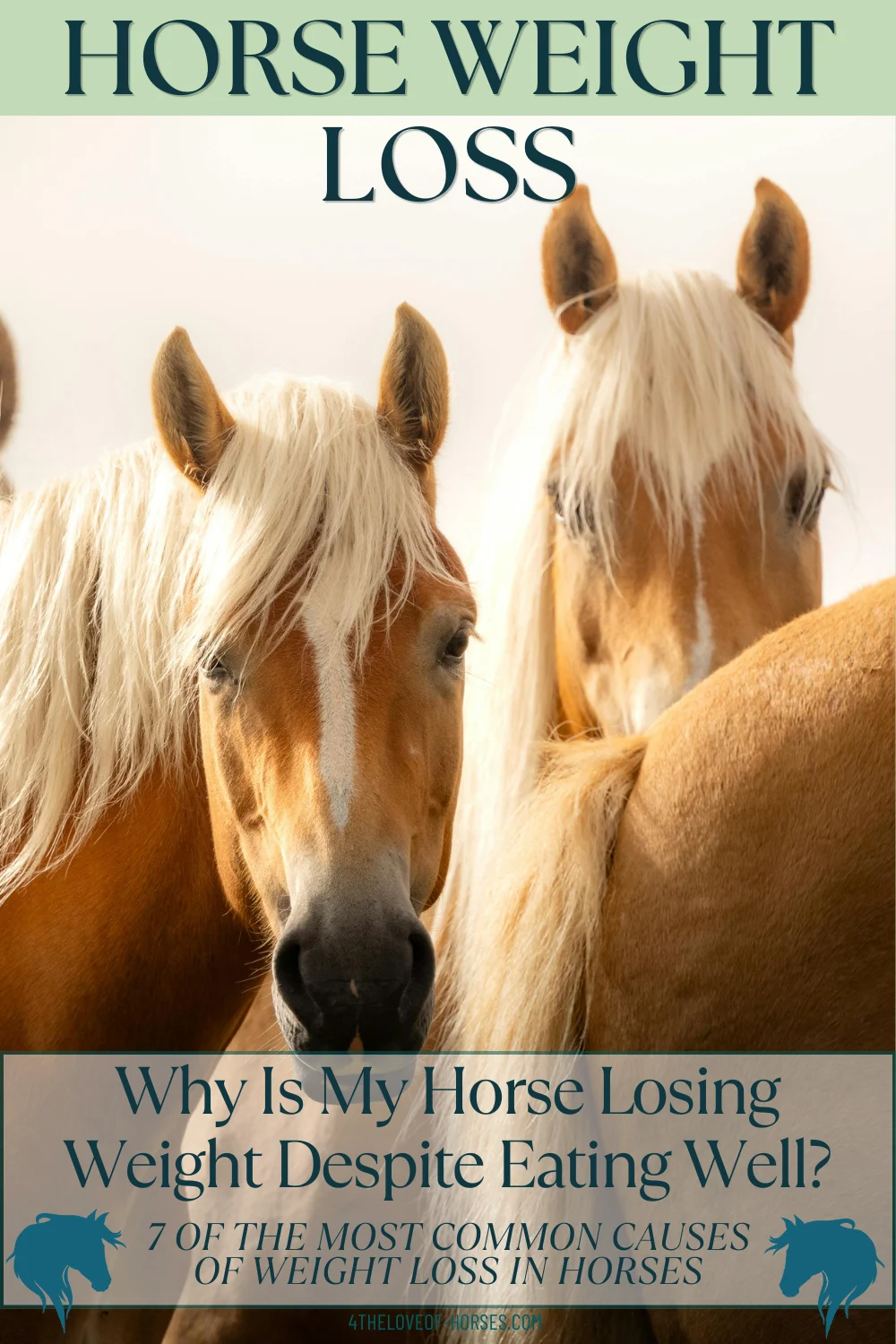
When the feed isn’t the problem — the seven most common causes of weight loss in horses who are eating adequately, and what to do about each one.
There are few things more frustrating — or more worrying — than a horse who is eating well but still losing weight. You’re doing everything right on paper. The hay is in front of them, the feed bucket is being emptied, and yet the ribs are becoming more visible, the topline is disappearing, and the coat is losing its shine. You increase the feed and nothing changes. You add a supplement and still nothing shifts.
The problem, in almost every case, is not the amount going in. It is something interfering with what the horse can absorb and utilise. Once you understand that distinction, the investigation becomes much more focused — and the solutions become much more straightforward.
After 45 years with horses I have worked through this problem many times, in horses of all ages and types. Here are the causes I have found most frequently, and the questions to ask about each one.
First — Assess Body Condition Score Objectively
Before investigating causes, establish exactly where your horse sits on the body condition scoring scale. This gives you an objective baseline to measure progress against, and helps your vet understand severity when you call.
The Henneke Body Condition Scoring system rates horses 1–9. A score of 4–5 is ideal for most horses. A score of 3 or below despite adequate feeding warrants prompt veterinary investigation.
Run your hands firmly over your horse’s ribs. In a horse at ideal weight, ribs should be easily felt but not visible. If you can see the ribs without touching the horse, the BCS is likely 3 or below. Also assess the spine, withers, neck crest, tailhead and hindquarters — weight loss shows in these areas as the horse mobilises fat reserves. Do this check with your hands, not just your eyes — a thick winter coat disguises weight loss effectively.
7 Reasons Your Horse May Be Losing Weight Despite Eating
1. Dental Problems
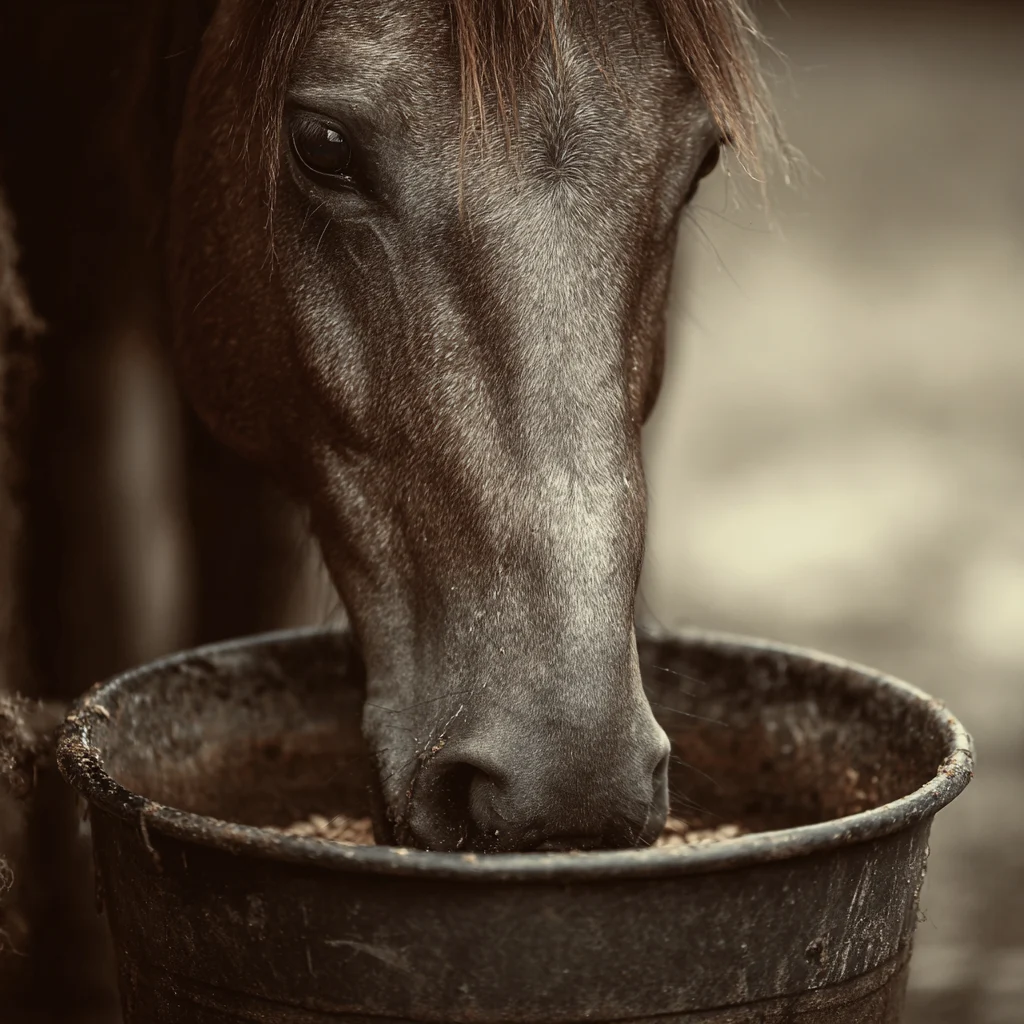
This is the first thing I check in any horse losing weight despite eating — and it is the most frequently overlooked cause, particularly in horses over ten years old. Dental problems mean the horse physically cannot chew and break down their feed properly, regardless of how much they eat.
Sharp points, hooks, wave mouth, missing or cracked teeth, and periodontal disease all interfere with the grinding action that is essential for efficient digestion. A horse with significant dental issues is effectively only absorbing a fraction of the nutritional value of their feed — the rest passes through in long fibre strands undigested.
Signs to look for: Dropping food while chewing (quidding), long hay strands in droppings, tilting the head while eating, reluctance to accept the bit, nasal discharge, or obvious discomfort when eating.
Annual dental checks are the minimum. Horses over 15 often benefit from checks every six months. If your horse has not seen a dentist in the past 12 months, start here.
2. Parasite Burden
Internal parasites compete directly with the horse for nutrition, damage the gut lining reducing absorptive capacity, and in significant burdens cause chronic low-grade inflammation throughout the digestive tract. A horse carrying a heavy worm burden can eat large amounts and still lose weight consistently.
The key point here is that regular worming does not necessarily mean low worm burden. Resistance to commonly used wormers is widespread, and a horse who appears to be on a regular programme can still carry a significant burden if the wormer used is not effective against the worms present.
The right approach: Faecal egg counts should guide worming decisions rather than a calendar-based programme. A faecal egg count will tell you what worm burden your horse is actually carrying and which wormers are likely to be effective. Strategic worming based on egg counts is now considered best practice and is far more effective than routine dosing on a fixed schedule.
3. Gastric Ulcers
Gastric ulcers affect up to 90% of performance horses and are far more common in leisure horses than most owners realise. They cause weight loss through two mechanisms — direct interference with nutrient absorption in the affected stomach lining, and reduced feed intake because eating is uncomfortable.
A horse with active ulcers often shows a subtle reluctance to eat — particularly concentrates. They may eat hay readily but leave hard feed, or eat more slowly than they used to, or show anxiety around meal times. The connection between eating and discomfort creates a pattern of eating just enough to take the edge off hunger, but not enough to maintain weight.
Ulcers are also significant because they are commonly accompanied by hindgut issues — and both conditions simultaneously compromise the horse’s ability to absorb nutrients from what they are eating.
The only definitive diagnosis is gastroscopy. Do not attempt to treat for suspected ulcers without a confirmed diagnosis — treatment for squamous and glandular ulcers differs, and treating the wrong type delays recovery.
4. Metabolic Conditions — Cushing’s Disease and EMS
Cushing’s disease (Pituitary Pars Intermedia Dysfunction — PPID) is the most common endocrine disorder in horses and is significantly underdiagnosed. It is caused by a benign tumour on the pituitary gland and becomes increasingly common in horses over 15. One of its effects is muscle wasting and weight loss, particularly of topline, even in horses eating well.
Other signs of Cushing’s to watch for include a long, curly coat that fails to shed normally in spring, increased drinking and urination, pot-bellied appearance, recurrent infections, and lethargy. However, early Cushing’s can present with very subtle signs — weight loss and topline loss alone are enough to warrant testing.
Equine Metabolic Syndrome (EMS) presents differently — typically with regional fat deposits, cresty neck, and laminitis risk — but can also disrupt the horse’s ability to maintain healthy body condition. Both conditions are diagnosed by blood test and both are manageable with veterinary guidance.
5. Inadequate Caloric Density — The Feed Is Not Enough
Sometimes the answer is simpler than a medical cause — the horse is eating, but not enough of the right things. This is particularly common in horses in hard work, breeding mares in late pregnancy and lactation, youngstock growing rapidly, and veteran horses whose digestive efficiency naturally declines with age.
A common scenario: the horse is getting hay and a maintenance ration of hard feed — which was appropriate when they were in lighter work or at a stable weight — but their workload has increased, or the season has changed, and their caloric requirements have simply outpaced what they are receiving.
Hay quality is also frequently underestimated. Not all hay is equal — and a horse eating large amounts of low-quality, low-nutrient hay may be keeping their stomach busy without actually receiving the calories and protein they need. A hay analysis will tell you exactly what your forage is providing.
6. Chronic Stress or Social Pressure
Chronic stress has a direct physiological effect on weight maintenance in horses. The stress response elevates cortisol, which increases metabolic rate, suppresses appetite, and diverts resources away from weight maintenance toward a state of physiological readiness. A horse under sustained stress burns more calories than a horse at ease, even at the same level of physical work.
Sources of chronic stress that owners sometimes miss: competition between horses at the hay feeder with one horse being regularly moved off and not getting adequate intake; a change in herd dynamics following the arrival or departure of a companion; a yard environment with insufficient turnout; noise, activity or proximity to aggressive horses; the loss of a long-term companion.
Weight loss from chronic stress is often gradual and insidious. The horse appears to be eating — but if they are being bullied away from food, or spending large amounts of time in a state of low-grade anxiety rather than relaxed grazing and resting, the numbers will not add up.
7. Underlying Illness or Organ Dysfunction
Weight loss despite adequate feeding can be a sign of underlying systemic illness that has not yet presented other obvious symptoms. Liver disease, kidney disease, protein-losing enteropathy, inflammatory bowel disease, and various infections can all cause weight loss as one of their earliest and most consistent signs.
In these cases the weight loss is typically progressive — it doesn’t plateau, it continues despite increasing feed — and is often accompanied by subtle changes in energy level, coat quality and general demeanour that the owner notices but may not be able to articulate clearly.
If dental problems, parasite burden, ulcers, metabolic conditions and dietary inadequacy have all been investigated and ruled out, and the horse is still losing weight, a comprehensive blood panel is the next step. This will assess liver and kidney function, protein levels, inflammatory markers and a range of other indicators that can point toward the underlying cause.
It is common to find more than one contributing cause in a horse that is struggling to maintain weight. A horse with dental issues may also have a higher-than-expected worm burden because they have been unable to effectively absorb nutrition and their immune function is compromised. A horse with ulcers may also have developed hindgut dysbiosis. Treat each finding as part of the picture rather than assuming the first cause you identify is the only one.
Your Investigation Checklist
Work through this checklist systematically before your vet visit — or use it as the basis of your conversation when you call. The more information you have gathered, the more efficiently your vet can help you.
Feeding Strategies to Support Weight Gain
While you investigate and address the underlying cause, these feeding principles support weight gain and should be implemented alongside your veterinary investigation — not instead of it.
What to Increase
- Forage availability — hay ad lib where possible
- Oil as a calorie-dense addition to feed
- Quality protein sources — alfalfa, soybean meal
- Feeding frequency — smaller meals more often
- Soaked hay or haylage for horses with dental issues
- Senior feeds for veterans — highly digestible formulations
What to Avoid
- Large concentrate meals — split into smaller feeds
- Rapid changes to the diet — always introduce gradually
- Feeding in competitive situations — separate if needed
- High starch feeds alongside a compromised gut
- Supplementing without addressing the root cause
- Increasing feed without knowing why weight is being lost
The weight-loss horse that improves most quickly is almost always the one whose owner investigated methodically and treated the actual cause — not the one whose owner added supplement after supplement hoping something would stick. If your horse is losing weight despite eating, the feed is not the answer until you know what the question is. Get your vet involved early. The causes are almost always treatable when found promptly.
Free Download: Horse Emergency Reference Card
Normal vital signs, 10 warning signs to never ignore, and what to tell your vet when you call — all on one printable card for your tack room wall.
Download Free →