Horse Senses: The 5 Superpowers That Make Horses Extraordinary (Science-Backed)

Your horse knows you’re nervous before you even realize it yourself. They hear your car approaching from 4 miles away. They remember every single person who’s ever handled them—and exactly how each one made them feel.
These aren’t exaggerations or old wives’ tales. They’re scientific facts about the extraordinary sensory abilities horses possess.
After 45 years of working with horses and 25+ years breeding warmbloods, I’ve witnessed these superpowers in action thousands of times. But it wasn’t until I started diving into the research that I truly understood just how remarkable horses’ senses really are—and why so many “training problems” are actually just horses responding normally to stimuli we can’t even perceive.
Understanding how your horse experiences the world changes everything about how you train, handle, and connect with them. Let’s explore the five sensory superpowers that make horses such extraordinary animals.
📥 Download Your Free Horse Communication & Senses Guide
Want a printable reference guide you can keep in your tack room? Get our complete 12-page Horse Communication & Senses Guide with quick-reference charts, troubleshooting tables, training checklists, and a complete barn environment audit.
1. Hearing – Better Than Dogs (Yes, Really!)
We’ve all been there: riding peacefully through the arena when suddenly your horse spooks at absolutely nothing. You look around, see nothing, hear nothing, and wonder if your horse is being dramatic.
Here’s the truth: your horse isn’t overreacting. They heard something you physically cannot hear.
The Science of Equine Hearing
Horses can detect sounds up to 4 miles away—that’s twice the distance of dogs, who can hear about 1-2 miles. Their hearing range spans from 55 Hz to 33,500 Hz, while humans can only hear 20 Hz to 20,000 Hz. Those high-pitched frequencies we can’t detect? Your horse hears them crystal clear.
But it gets even more impressive. Each of your horse’s ears can rotate 180 degrees independently, creating a sophisticated 360-degree sound-tracking system. They’re constantly mapping their acoustic environment, pinpointing the location and distance of every sound around them.
Think about that for a moment. While you’re focused on your riding, listening to maybe one or two things at a time, your horse is processing dozens of sounds simultaneously—many of which you can’t hear at all.
What This Means for Training and Handling
That “spook at nothing” suddenly makes perfect sense when you realize your horse heard a vehicle approaching on a distant road, a dog barking three properties over, or thunder rumbling miles away that won’t reach you for another ten minutes.
I learned this lesson dramatically about 15 years ago. I was riding a young mare in our outdoor arena when she suddenly stopped, head high, ears locked forward toward the woods. I couldn’t hear anything unusual. I urged her forward. She refused, tension radiating through her body.
Thirty seconds later, a massive tree branch came crashing down exactly where she’d been staring. She’d heard the wood cracking and splintering long before it became audible to my inferior human ears. Her “spook” likely saved us both from serious injury.
This changes how we should think about “spooky” horses. They’re not being silly or dramatic—they’re processing significantly more auditory information than we are, and sometimes that information signals genuine danger.
Practical Takeaways for Horse Owners
Use calm, consistent voice tones. Your horse doesn’t just hear your words—they hear every nuance in your voice. Tension, frustration, fear, excitement—it’s all there in frequencies and tones you might not even realize you’re producing.
Warn horses before loud activities. If you’re about to start clippers, fire up a tractor, or bang around in the feed room, give your horse a heads-up. Sudden loud noises are legitimately startling when you can hear this well.
Consider ear protection for sensitive horses. Show environments are incredibly loud to equine ears—hundreds of horses whinnying, loudspeakers, tractors, trailers clanging. Some sensitive horses genuinely struggle with the auditory overload. Ear bonnets or even foam earplugs can help.
Quiet barns make calmer horses. Constant noise—radios blaring, people shouting, metal gates banging—creates chronic low-level stress for horses. They can’t “tune out” background noise the way humans can. A quieter environment allows horses to truly relax.
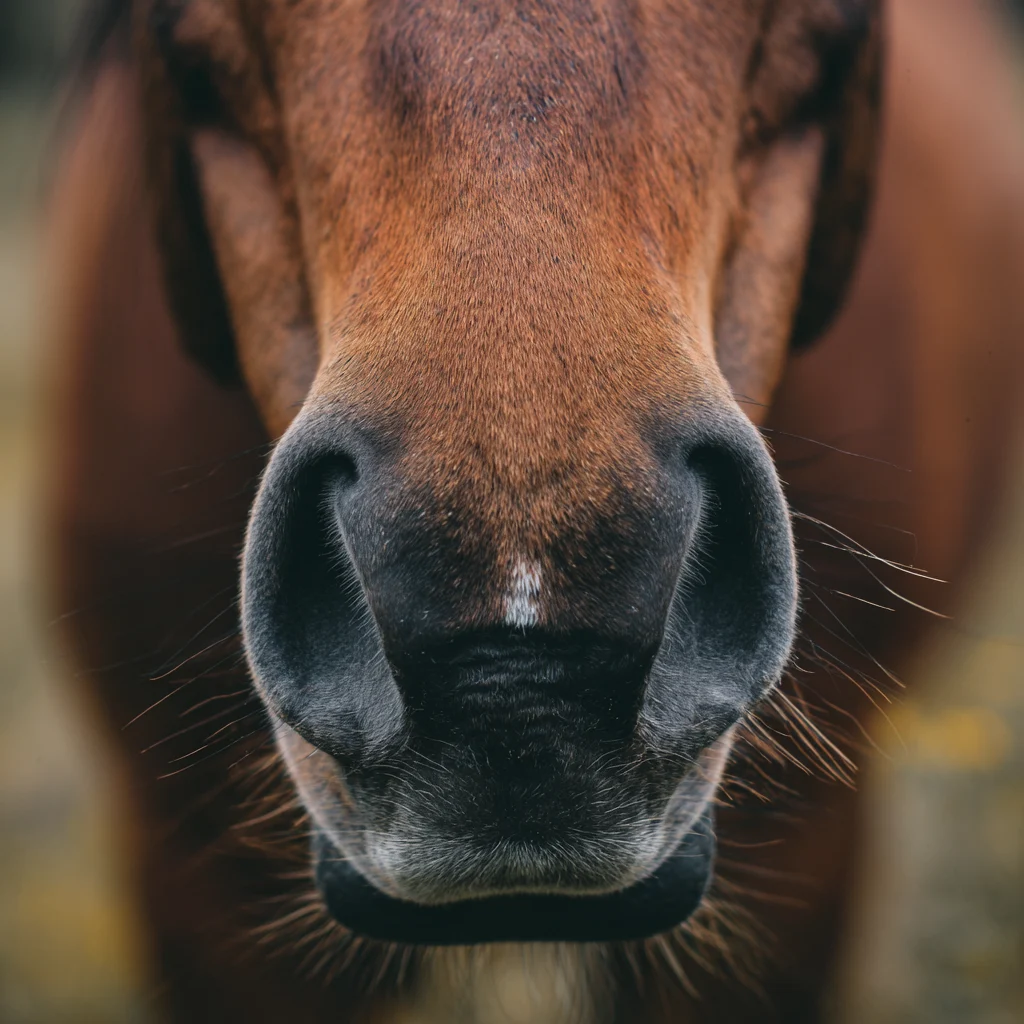
2. Smell – They Literally Smell Your Emotions
Ever tried to “fake confidence” around your horse? How’d that work out?
Horses aren’t fooled by your brave face or calm voice because they’re not relying on those cues. They’re smelling the truth in your sweat.
The Science of Equine Smell
A horse’s sense of smell is approximately 1,000 times more sensitive than yours. They detect pheromones and hormonal changes in human sweat that betray your emotional state, no matter how well you think you’re hiding it.
When you’re nervous, your body releases adrenaline and cortisol. These stress hormones change your sweat composition in ways imperceptible to humans but glaringly obvious to horses. You might think you’re projecting confidence, but your horse is getting a completely different message from your biochemistry.
This extraordinary olfactory ability evolved over millions of years. Wild horses needed to detect predators by scent long before they could see or hear them. Predators hunting actively smell different than predators at rest—their bodies release different hormones during the chase. Horses who could smell this distinction survived. Horses who couldn’t became lunch.
Today, domesticated horses still possess this survival-critical ability. And they’re using it on you every single day.
What This Means for Training
Here’s the uncomfortable truth: you cannot hide your emotions from your horse. That pre-ride anxiety you’re trying to suppress? Your horse smelled it the moment you walked into the barn. That frustration you’re bottling up because you’re trying to stay “calm”? The chemical signature in your sweat is broadcasting it loud and clear.
This explains so much about why horses respond differently to different handlers, even when those handlers are using identical techniques. It’s not just about skill—it’s about emotional state. The calm, confident trainer gets better results not because they’re doing something radically different mechanically, but because their biochemistry is signaling safety to the horse.
I saw this play out repeatedly when I was breeding. We had a mare who was notoriously difficult during breeding exams—nervous, uncooperative, sometimes dangerous. Most handlers struggled with her. But one particular vet tech could walk up to her, and she’d relax immediately. Same barn, same procedure, completely different response.
The difference? That vet tech genuinely loved her job, felt no anxiety around difficult mares, and approached every horse with authentic calm. The mare smelled that calm and responded accordingly. She wasn’t being difficult with other handlers out of spite—she was reacting to the nervous tension she smelled in their sweat.
Practical Takeaways
Acknowledge your emotions honestly. If you’re nervous, scared, or frustrated, admit it—at least to yourself. Trying to suppress emotions often makes them stronger, which means stronger chemical signals in your sweat. Sometimes the best thing you can do is acknowledge “I’m anxious today” and adjust your expectations accordingly.
Do breathing exercises before riding. Deep, slow breathing genuinely reduces stress hormones in your bloodstream. This isn’t just about feeling calmer—it’s about changing your biochemical signature to something that smells calmer to your horse.
Don’t force yourself to ride when genuinely scared. Fear creates powerful hormonal responses. If you’re terrified but trying to “push through it,” you’re flooding your horse’s sensitive nose with fear signals while simultaneously asking them to trust your leadership. That’s confusing at best, dangerous at worst.
Understand why horses react to you differently on bad days. If your horse is more tense or difficult when you’ve had a stressful day at work, it’s not coincidence. They smell your stress and respond to it as if it were their stress—because prey animals key into herd members’ emotional states for survival information.
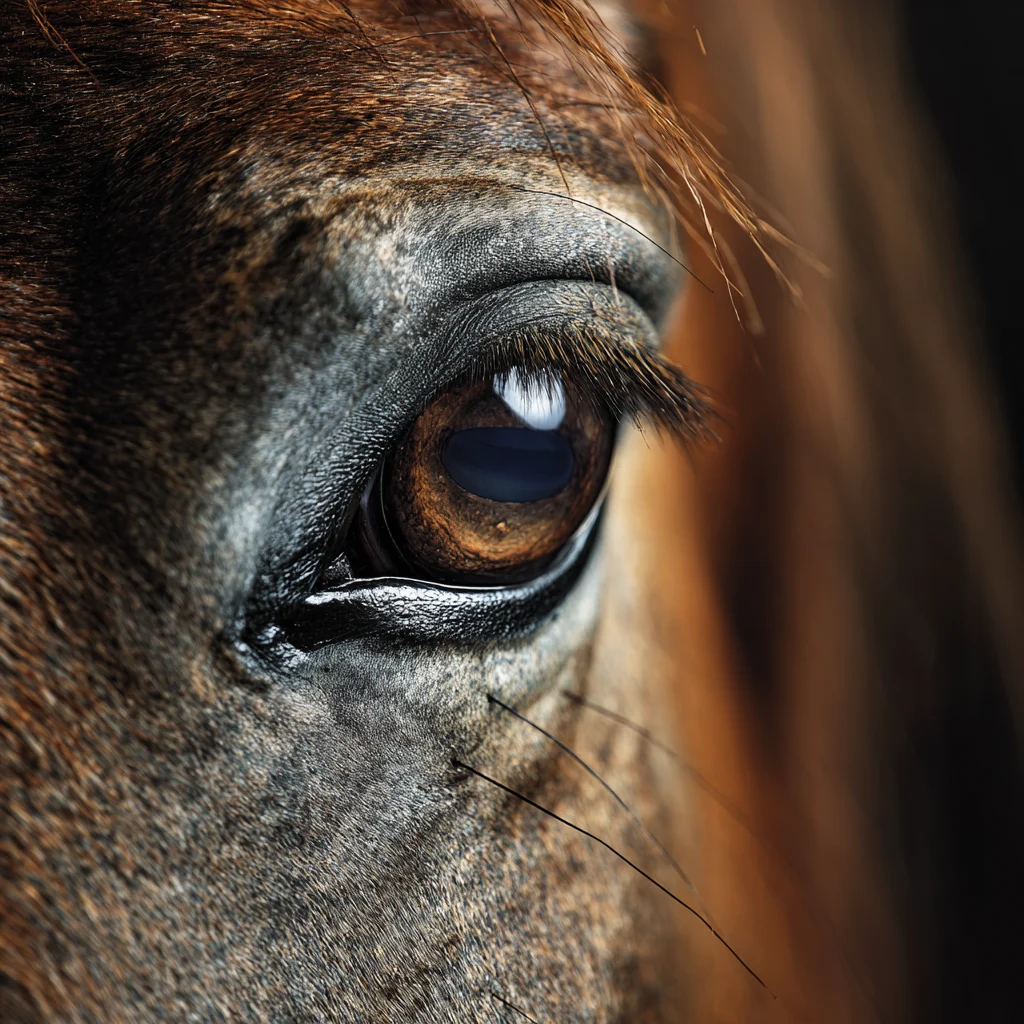
3. Vision – Nearly 360 Degrees (But Not How You Think)
Horses’ visual abilities are both incredible and limited in ways that explain so much of their behavior—if you know what you’re looking at.
How Horses See the World
With eyes positioned on the sides of their heads, horses have approximately 350 degrees of vision, with only a 10-degree blind spot directly behind them and a small blind area right in front of their noses. This panoramic vision allowed wild horses to spot predators approaching from virtually any direction while grazing—head down, vulnerable, but still watching.
Horses also have significantly better night vision than humans, thanks to a reflective layer behind their retina called the tapetum lucidum (the same structure that makes cat eyes glow in photos). This tapetum amplifies available light, allowing horses to navigate dark trails confidently while you’re stumbling around essentially blind.
But here’s the trade-off: all this peripheral vision comes at the cost of depth perception. Horses have limited binocular vision (where both eyes see the same thing simultaneously, allowing depth judgment). This is why shadows, puddles, and holes can be genuinely scary—your horse literally cannot judge depth accurately in many situations.
Additionally, horses can’t refocus quickly between objects at different distances. When you suddenly pull a plastic bag out of your pocket, your horse’s eyes need several seconds to refocus and process what they’re seeing. During those seconds, all they know is something appeared suddenly in their space, and their prey animal instinct says “RUN FIRST, ASK QUESTIONS LATER.”
What This Means for Handling
Understanding equine vision transformed how I approach horses. That “silly” spook at a shadow? Not silly at all when you can’t judge whether that dark spot is a flat shadow or a foot-deep hole. That hesitation at a puddle? Perfectly reasonable when you’re being asked to step into something that could be one inch or one foot deep—your eyes can’t tell.
I used to get frustrated when horses would balk at water crossings on trails. “You’ve done this before! It’s fine!” But then I learned about their depth perception limitations and realized: from their perspective, every water crossing is a new gamble. Is it hoof-deep or shoulder-deep? They genuinely can’t tell by looking.
Now I walk through first, showing them the depth. Or I let them drop their heads low (which improves their depth perception by changing the angle) and sniff the water, giving their eyes time to process. Suddenly, “water crossing training” became dramatically easier because I was working with their visual reality instead of against it.
The Blind Spots Matter
That blind spot directly behind them? It’s real, and it’s why you should never approach a horse from directly behind. They can’t see you, and sudden touch in their blind spot triggers predator-attack responses. Approach from the side—within their visual field—and they’ll relax.
The blind spot right in front of their nose is smaller but important for hand-feeding treats. Hold your hand too close to their face, and they literally can’t see what you’re offering. This is why some horses seem to “miss” treats or get mouthy—they’re trying to find the treat by feel because they can’t see it.
Practical Takeaways
Walk horses through scary obstacles first time. If something looks unfamiliar or potentially deep, show them it’s safe. Your weight on that bridge, your leg through that water—these give your horse information their eyes can’t provide alone.
Light up trailers for loading. To a horse, stepping into a dark trailer is stepping into a black hole. They can’t see inside; can’t judge the depth or what might be lurking in there. Interior lights or positioning the trailer so sunlight streams in makes loading exponentially easier.
Approach at the shoulder, not head-on. Coming straight at a horse puts you in their weakest visual zone—limited binocular vision, poor depth perception, difficulty processing approaching objects. Approach from a 45-degree angle at shoulder height instead.
Give horses time to process visual changes. When you pull out the saddle pad, the fly spray, the hoof pick—pause after you retrieve it. Give your horse’s eyes time to refocus and identify what you’re holding. Those few seconds prevent startled reactions.
⚠️ Want Quick Solutions for Common Behavior Issues?
Understanding your horse’s senses solves so many “training problems.” Our downloadable guide includes a complete troubleshooting section linking sensory causes to common issues—spooking, trailer anxiety, water crossing refusal, and more. Get instant answers when you need them.
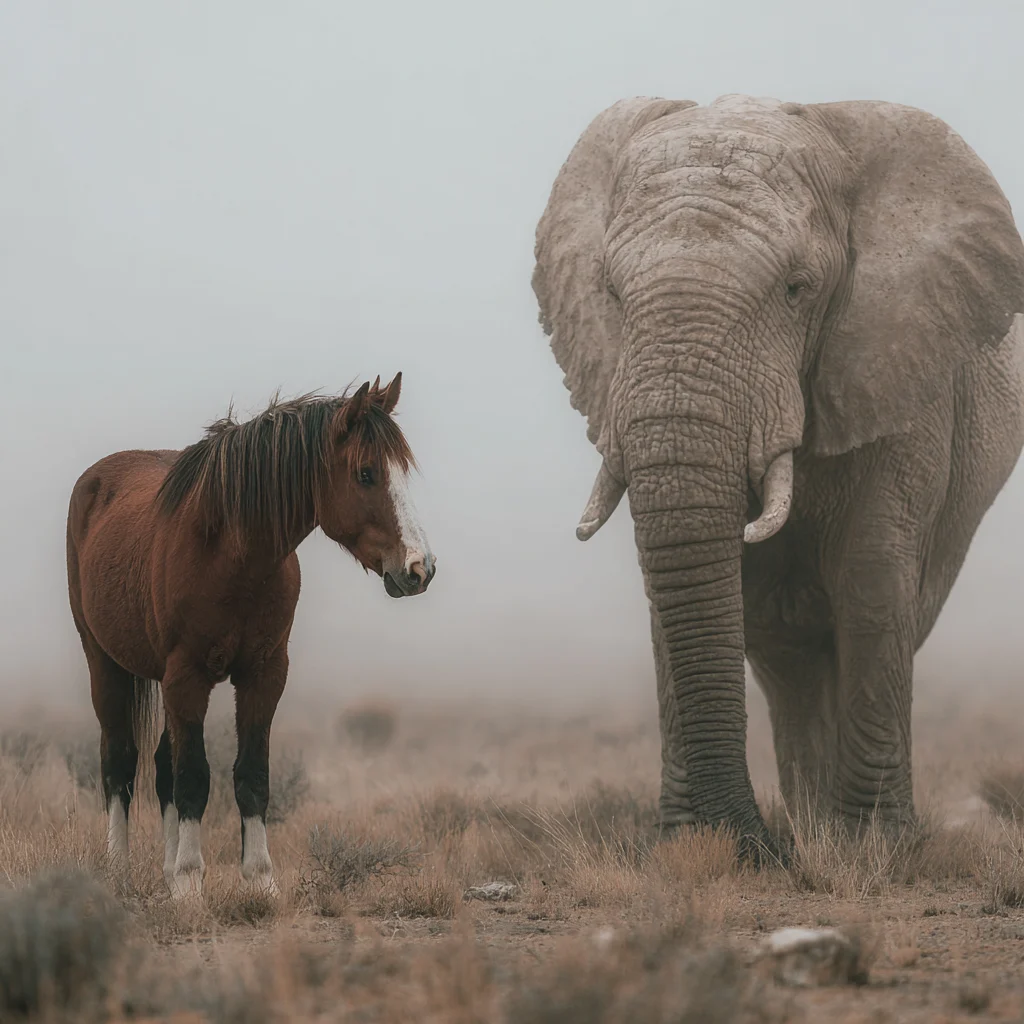
4. Memory – Better Than Elephants (Yes, Really!)
“Elephants never forget” is a well-known saying. But here’s what most people don’t know: horses may have better long-term memory than elephants.
The Science of Equine Memory
Recent research suggests horses possess extraordinary memory capabilities that rival or exceed elephants. Studies show horses can recognize specific human faces in photographs two years after last seeing that person. They remember training cues learned decades earlier. They retain complex spatial maps of their environment, including locations of food, water, danger, and shelter.
But the most powerful type of memory horses possess is emotional memory—the memory of how experiences made them feel. This memory type persists for their entire lifetime and shapes virtually all of their behavior.
Every interaction with your horse deposits into their memory bank, positive or negative. Every time you’re patient or impatient, gentle or rough, clear or confusing—your horse is recording it. And they’ll remember.
What This Means for Training and Handling
This extraordinary memory is both gift and burden. The gift: horses who receive patient, kind, consistent training retain confidence and willingness for years. Build a solid foundation of positive memories, and you’re investing in decades of partnership.
The burden: horses also remember every frightening, painful, or confusing experience. A single traumatic event can create fear that persists for life. Rough handling by one farrier can make a horse difficult for all farriers forever.
I have a mare in her twenties now who still performs dressage movements I taught her fifteen years ago—movements we haven’t practiced in over a decade. The muscle memory faded, sure, but the mental memory remains crystal clear. When I cue the movement, I can see the recognition in her eye: “Oh! I remember this!”
But I also have a rescue gelding who came to me ten years ago, terrified of clippers. Someone in his past obviously traumatized him during clipping—held him roughly, maybe hit him, certainly frightened him. A decade of patient, positive clipping experiences have improved his tolerance, but that fear memory never fully disappeared. On some deep level, clippers will always mean danger to him because they meant danger once, and he remembers.
Why First Experiences Matter So Much
Young horses are memory-building machines. Their first trailer ride, first farrier visit, first vet exam, first bath, first saddle—all of these create permanent memories that shape their attitude toward these activities forever.
Make a young horse’s first trailer ride terrifying (rushing them, trapping them, driving recklessly), and you may spend years overcoming that trauma. Make it calm and positive (patient loading, smooth driving, good destination), and you’ve just created a horse who loads willingly for life.
This is why I’m obsessive about positive first experiences when starting young horses. It’s not just about that moment—it’s about the memory that moment creates, which will influence every similar situation for the rest of that horse’s life.
Practical Takeaways
Make first experiences wonderful. Whether it’s a foal’s first grooming, a young horse’s first ride, or an adult horse’s first day at a new barn—invest the time to make these memories positive. You’re building their database of “safe” vs “scary,” and first entries carry tremendous weight.
Understand that “random” fears usually aren’t random. Horse terrified of tarps? Probably got tangled in one once. Horse who panics when longe whips appear? Likely had one used aggressively in the past. The fear has a root cause—a memory. Patience and positive reconditioning can help, but acknowledge you’re working against years of memory.
Build trust knowing it’s a permanent investment. Every patient interaction, every moment you prioritize your horse’s emotional comfort over your convenience—these accumulate in their memory. You’re not just training behaviors; you’re creating a database of “this human is safe, trustworthy, kind.”
Bad experiences take years to overcome—if they can be overcome at all. This isn’t meant to discourage you, but to illustrate why prevention matters so much. One bad experience can undo months of good ones because fear memories are particularly sticky in prey animals (fear keeps them alive, so evolution hardwired fear memories to persist).
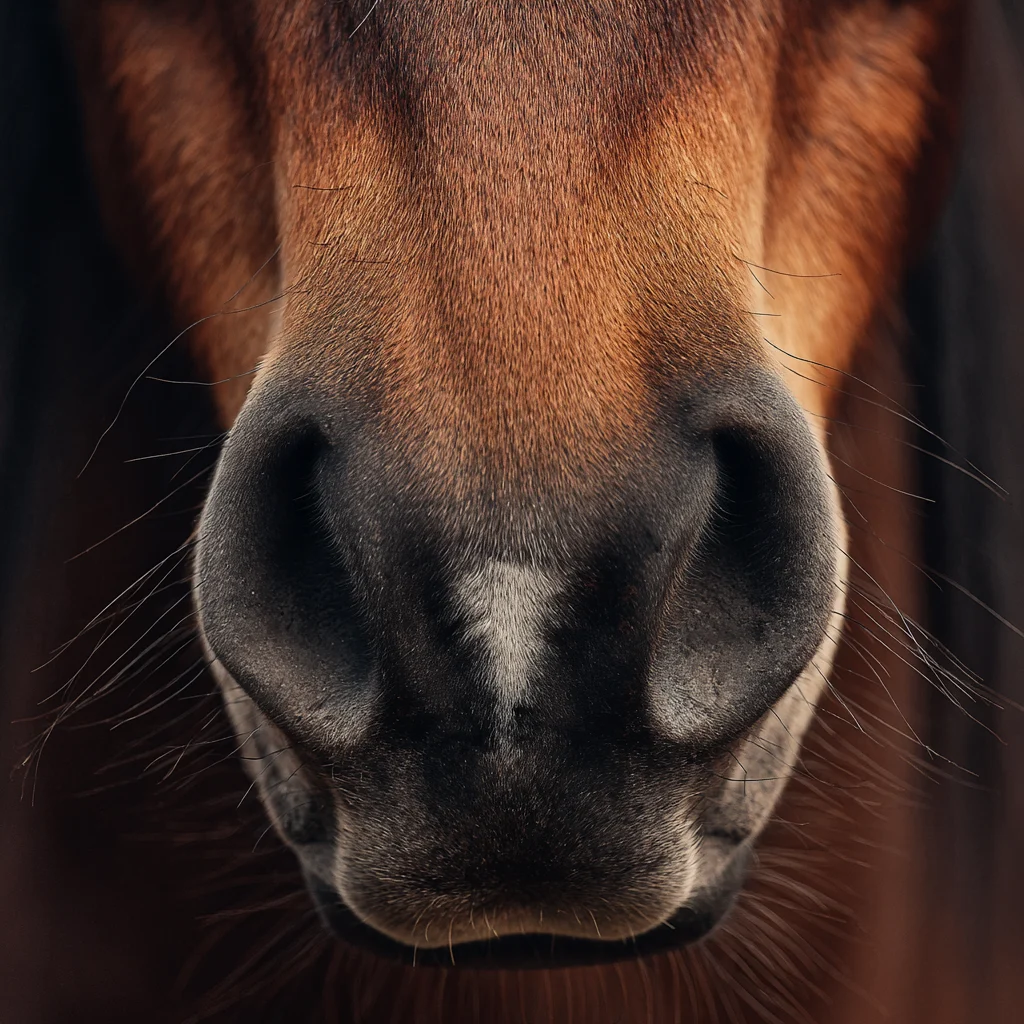
5. Touch – Incredibly Sensitive (A Single Hair!)
If you’ve ever watched your horse’s skin twitch to dislodge a single fly, you’ve witnessed just how sensitive their sense of touch truly is.
How Sensitive Are Horses?
Horses can feel a fly landing on a single hair. Let that sink in for a moment. Not just the fly’s weight on their skin—the displacement of one hair. Their skin is so sensitive that individual hairs function as sensory organs, detecting the slightest pressure or movement.
Their muzzle and whiskers are even more sensitive than human fingertips. Horses use these whiskers to “see” in their blind spots, detect objects in darkness, and gather information about texture and temperature. (This is why cutting horses’ whiskers is not only unnecessary but actively harmful—you’re removing important sensory tools.)
Beyond skin sensitivity, horses sense the subtlest changes in rider position and tension. That tiny shift in your weight? They felt it. That slight tightening of your thigh muscles? Registered. The tension in your shoulders that you didn’t even notice? Your horse noticed—it translates through your seat, through the reins, through your legs.
What This Means for Riding
After 45 years of riding and training, I can tell you: most riders dramatically overestimate how much pressure their aids require. Horses are so sensitive that they detect the intention to apply an aid before you actually apply it—they feel your muscles begin to engage.
This is why accomplished dressage riders look like they’re doing nothing while their horses perform complicated movements. They’re not doing nothing—they’re just doing it so subtly that human eyes can’t see it. But the horse feels every microscopic shift.
Heavy hands, hard kicks, rough jerks on the reins—these aren’t just unpleasant for horses, they’re confusing. It’s like someone shouting at you when you’re standing two feet away. The horse already felt your request. The escalation suggests you want something different or bigger, leading to miscommunication and resistance.
The Gift of Sensitivity
This extreme sensitivity is actually a gift—if we learn to use it. It means you can communicate with your horse through the lightest of aids, building a partnership based on whispers rather than shouts.
I remember a turning point in my own riding when I truly understood this. I was working with a sensitive Thoroughbred mare who would tense and brace whenever I picked up the reins. My instructor had me think about softening my hands without actually moving them. Just thinking about softness changed something imperceptible in my forearm muscles. The mare immediately relaxed.
She’d been responding to my tension—not my hand position or rein contact, but the tension in my muscles that transmitted through my entire body into the saddle and reins. When I released that tension mentally, she felt the physical release immediately. No visible change from the ground, but the mare knew instantly.
Grooming as Communication
Grooming isn’t just about removing dirt and loose hair—it’s a conversation. Where your horse leans into the brush, they’re saying “more here, that feels good.” Where they pin their ears or swish their tail, they’re saying “too hard” or “that’s sensitive, be gentle.” Where they move away, they’re saying “not there” or “I’m not comfortable with that today.”
Respect these communications. Horses who accept grooming only because they’ve been trained to stand still despite discomfort are horses who’ve learned their communication doesn’t matter. Horses who’ve learned they can communicate boundaries and those boundaries will be respected? Those horses relax, trust, and actually enjoy being groomed.
Practical Takeaways
Use the lightest aids possible. Start with a thought, progress to a breath, then minimal physical cue. If your horse doesn’t respond, check whether they actually understand what you’re asking rather than immediately assuming you need MORE pressure. Often, they don’t respond because the aid is too loud—too much pressure, too confusing, too sudden.
Pay attention to your own tension. Your horse feels your emotional state through physical tension in your muscles. Tight shoulders, clenched jaw, held breath—all of these transmit through your body into the saddle and reins. Your horse reads them as communication, even when you don’t intend them that way.
Respect their sensitivity as the gift it is. This sensitivity allows for incredibly subtle, nuanced communication. It’s what makes the lightness and precision of high-level dressage, reining, or cutting possible. Don’t try to dull your horse’s sensitivity with heavy equipment or aggressive aids. Develop your own refinement instead.
Never cut their whiskers. These aren’t cosmetic—they’re sensory organs. Horses use whiskers to navigate in darkness, judge whether openings are wide enough, detect objects in blind spots, and explore texture and temperature. Cutting them is like blindfolding your horse’s sense of touch.

✓ Audit Your Barn Environment Using Your Horse’s Senses
Is your barn optimized for horses’ sensory needs? Our guide includes a 40-point barn environment checklist evaluating acoustic comfort, olfactory wellness, visual safety, and more. Discover simple changes that dramatically reduce horse stress and improve behavior.
Understanding Builds Better Partnerships
After 45 years with horses, the most important lesson I’ve learned is this: horses aren’t mysterious, difficult, or unpredictable. They’re just experiencing a completely different reality than we are.
They hear sounds we can’t hear. They smell emotions we’re trying to hide. They see threats we don’t notice. They remember experiences we’ve forgotten. They feel touches we consider barely there.
When you understand these five sensory superpowers—when you truly grasp how different their world is from ours—so many “training problems” dissolve. That spooky horse isn’t being difficult; they’re responding appropriately to stimuli you can’t perceive. That “stubborn” horse isn’t refusing your aid; they felt it five seconds ago and are confused about why you keep asking louder. That “unpredictable” horse isn’t random; they’re remembering something from their past that you don’t know about.
These superpowers evolved over millions of years to keep horses alive as prey animals in dangerous environments. Today, they make horses extraordinarily perceptive partners who notice everything—including things we wish they wouldn’t.
But here’s the beautiful part: when you learn to work with these sensory abilities instead of against them, everything improves. Training becomes clearer. Trust deepens. Communication refines. The partnership transforms from “me forcing horse to do things” to “us collaborating with mutual understanding.”
Your horse has been communicating with you all along through these five sensory channels. They’ve been hearing, smelling, seeing, remembering, and feeling every interaction. The question isn’t whether horses are trying to tell us things—they are, constantly. The question is: are we paying attention?
Now you know what they’re sensing. Now you understand how different their reality is from yours. Use that knowledge wisely. Honor their superpowers. Respect their perceptions. Work with their senses, not against them.
Your horse will thank you for it—and your partnership will reach levels you never thought possible.
Want to Learn More About Horse Behavior?
Understanding how horses think, sense, and communicate transforms everything about your relationship. Download our FREE Horse Communication Guide with body language signals, training tips based on equine cognition science, and more insights into how horses experience the world.
📥 Download Your Free Horse Communication & Senses Guide
Want a comprehensive, printable reference you can keep in your tack room? Our complete guide includes:
- Quick reference chart – All 5 senses at a glance
- Deep dives into each sense – Hearing, smell, vision, memory, touch
- Troubleshooting guide – Common problems with sensory solutions
- Multi-sensory training strategies – Work WITH their senses
- 40-point barn environment audit – Optimize your facility
- Printable checklists – Training, handling, safety protocols
Print it out and post it in your barn—you’ll reference it constantly!
Pin this article to save it for later!
📌 Save This Guide to Pinterest!
Pin this article so you can reference it anytime. Share it with other horse owners who need this information!
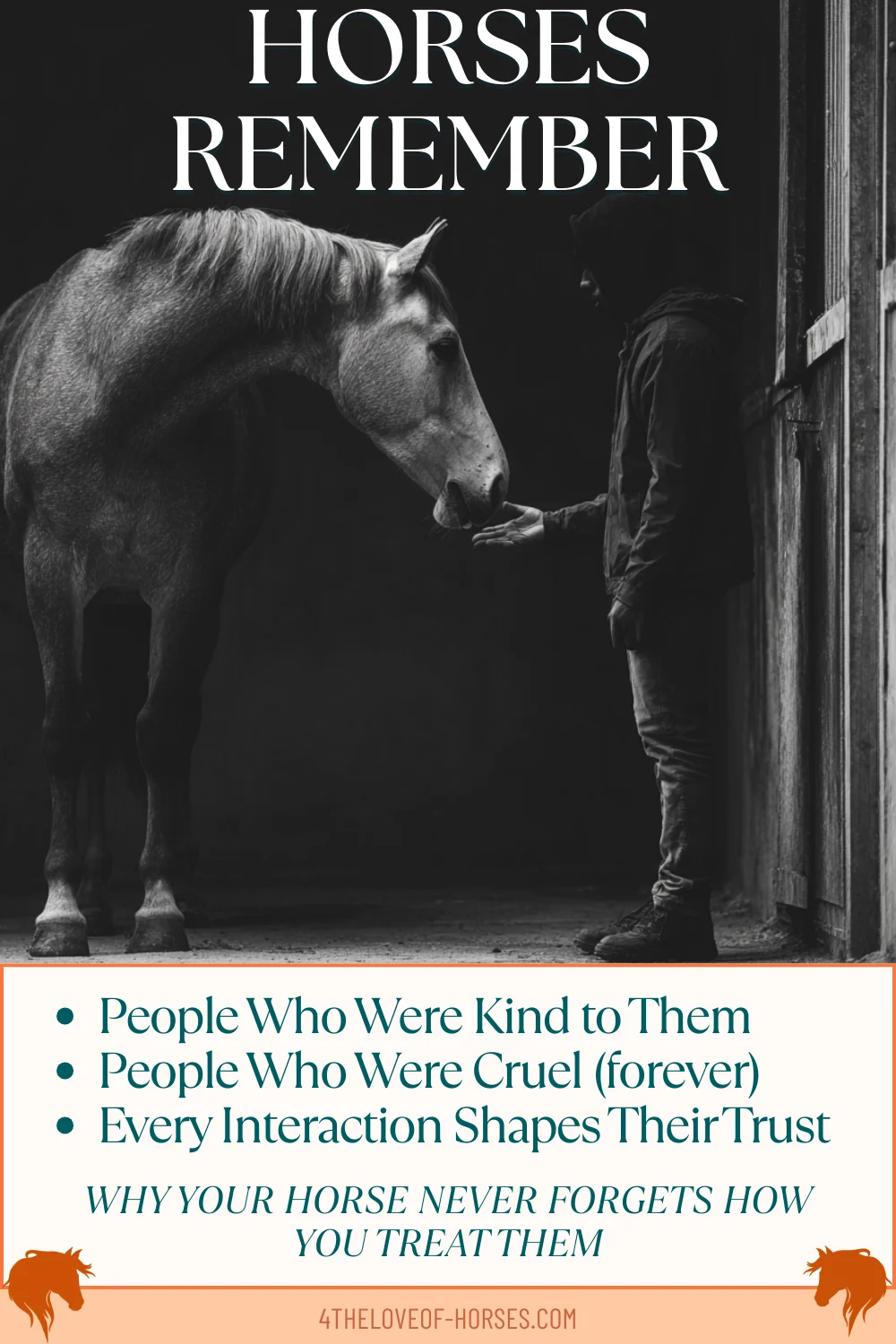
Click the image or button to save to your Pinterest board
Related Articles You’ll Love:
- How Horses Read Human Emotions: The Science Explained
- Horse Body Language: What Your Horse Is Really Telling You
- Why Horses Are Natural Therapists: The Science of Equine Healing
- Safe & Toxic Foods for Horses: Complete Feeding Guide
After 45 years with horses and 25+ years breeding warmbloods, I’m passionate about sharing what I’ve learned to help others build better partnerships with their horses. Have questions about horse senses or behavior? Leave a comment below—I read and respond to every one!
— Jenni @ 4 The Love of Horses