
Sergeant Reckless: The Unlikely Korean War Hero

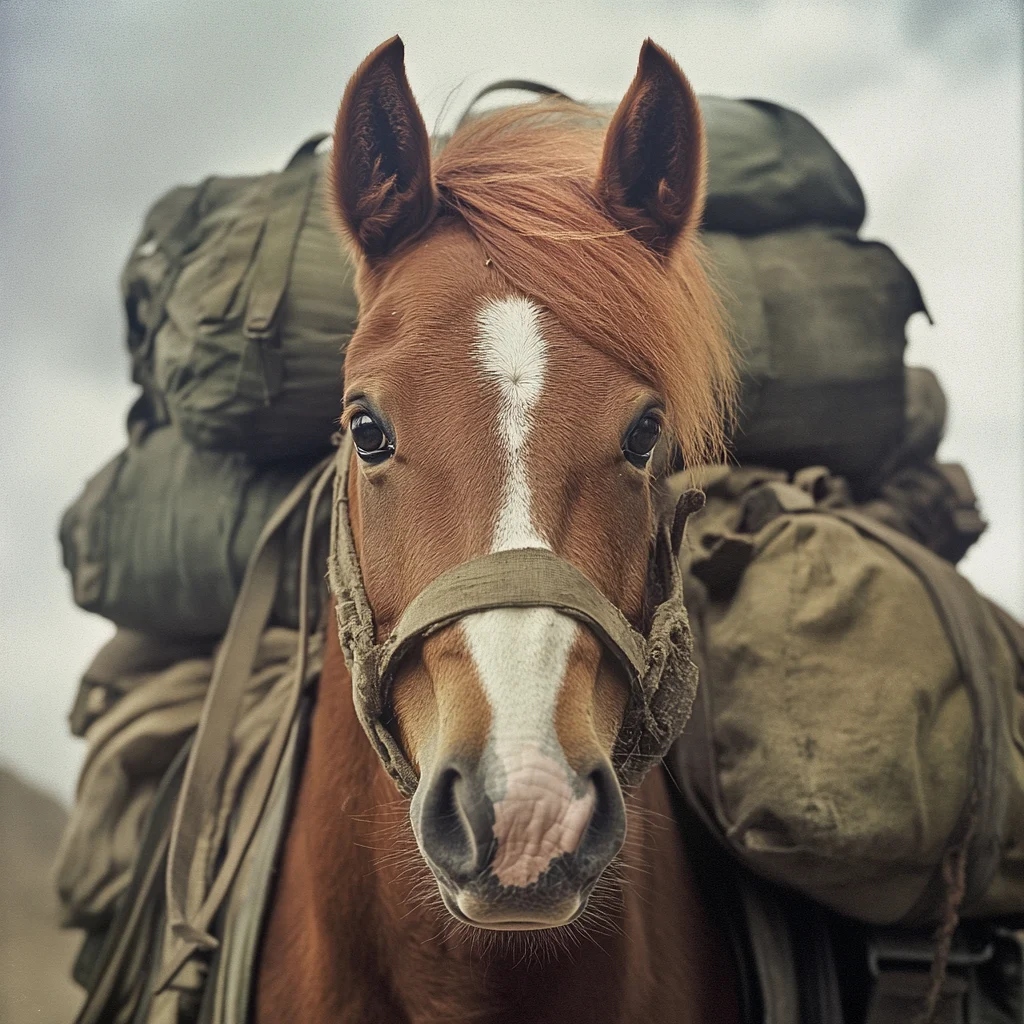
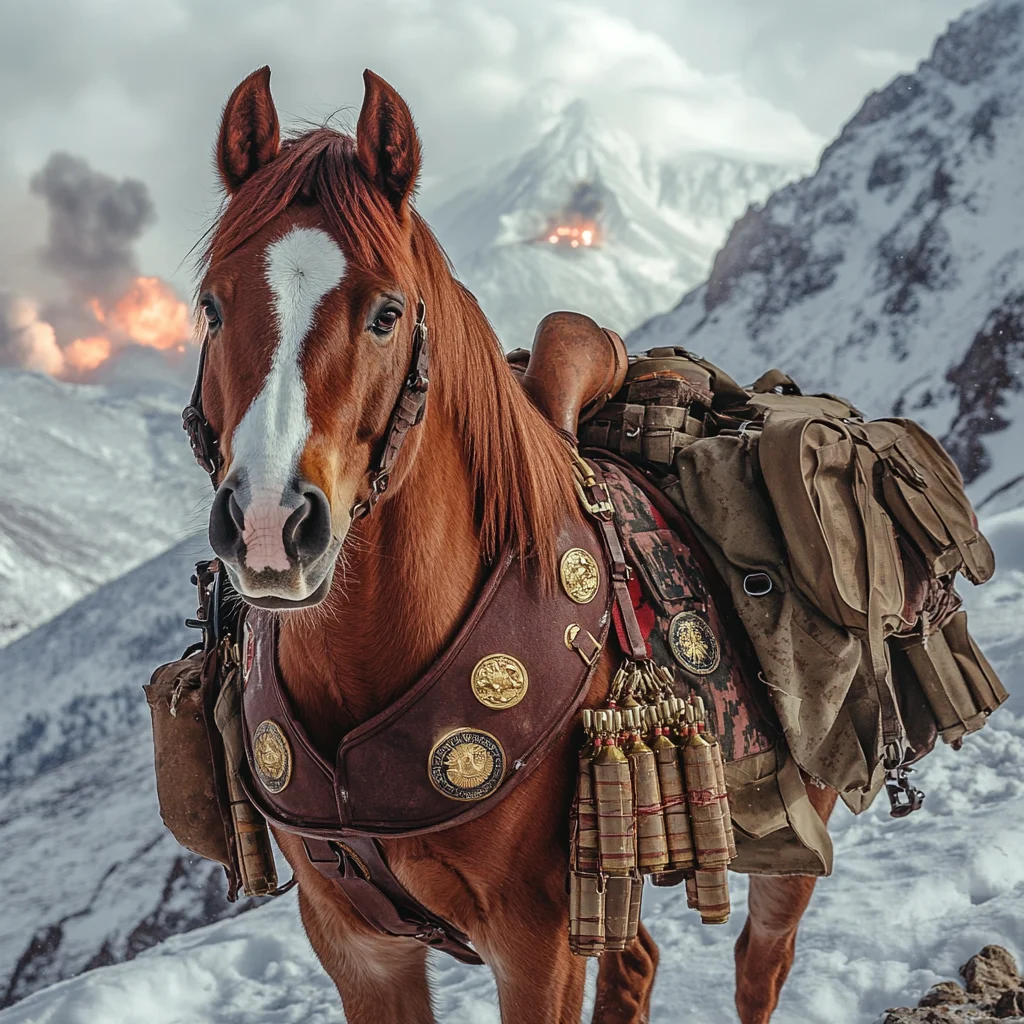
In the frigid mountains of Korea in March 1953, as artillery shells exploded and bullets whizzed through the air, a small chestnut mare made her 51st solo trip up steep terrain to deliver ammunition to frontline Marines. With no handler to guide her through the chaos of battle, she navigated by memory, dodging artillery fire and returning with wounded soldiers on her back. This wasn’t just any horse – this was Staff Sergeant Reckless, perhaps the most extraordinary animal hero in U.S. military history.
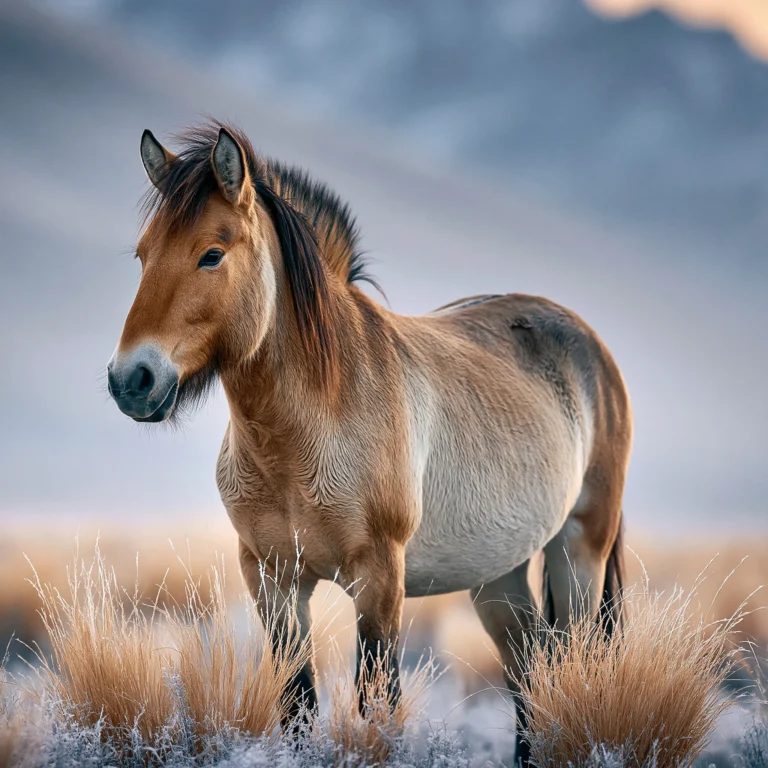
Reckless was a Mongolian mare who achieved something remarkable: becoming an actual service member of the United States Marine Corps during the Korean War. While many military units have had mascots, Reckless was different – she held an official rank, wore military decorations, and performed critical combat duties that saved countless lives. Her courage under fire and intelligence in battle made her more than just a pack animal; she became a beloved sister-in-arms to the Marines who served alongside her.
What made this small horse’s contributions so extraordinary that she would receive two Purple Hearts, be promoted to the rank of Staff Sergeant, and be celebrated decades after the conflict ended? The story of Sergeant Reckless isn’t just about an animal in wartime – it’s about courage, intelligence, and a special bond between humans and animals that transcends the chaos of war.

Early Life and Acquisition
Reckless began her life far from the battlefields where she would eventually make history. Born in Korea around 1948, she was originally named “Ah-Chim-Hai,” which translates to “Flame-of-the-Morning” – a fitting name for the fiery chestnut mare with a distinctive white blaze on her face. Before becoming a war hero, she spent her early days as a racehorse at the Seoul racetrack.
Her journey to the Marine Corps began in October 1952 when Lieutenant Eric Pedersen, commanding officer of the Recoilless Rifle Platoon of the 5th Marines, recognized a pressing tactical problem. His unit’s primary weapon – the 75mm recoilless rifle – was highly effective but required heavy ammunition that was exhausting for his men to carry up and down the steep Korean hills during battle. Pedersen believed a horse could solve this problem.
With his own money, Pedersen traveled to Seoul and purchased the horse for $250 from a Korean stable boy named Kim Huk Moon, who needed the money for his sister’s medical care. The price – approximately $2,500 in today’s money – represented a significant personal investment for the lieutenant, but one he felt necessary for his men.
The Marines quickly renamed her “Reckless” after the weapon she would support – the “reckless” rifle, so nicknamed because of its significant backblast. The name also seemed to capture something about her spirit and willingness to charge into dangerous situations without hesitation.
When she first arrived at the Marine camp, no one could have guessed that this small Korean horse – standing just 14 hands high (about 4’8″ at the shoulder) and weighing 900 pounds – would soon become one of the most valued members of their unit and earn a place in military history.
Training and Abilities
Reckless proved herself a quick study from the moment she joined the Marines. Unlike typical pack animals, she received no formal training program. Instead, she learned on the job under the guidance of her primary trainer, Platoon Sergeant Joseph Latham, who had grown up with horses in Tennessee.
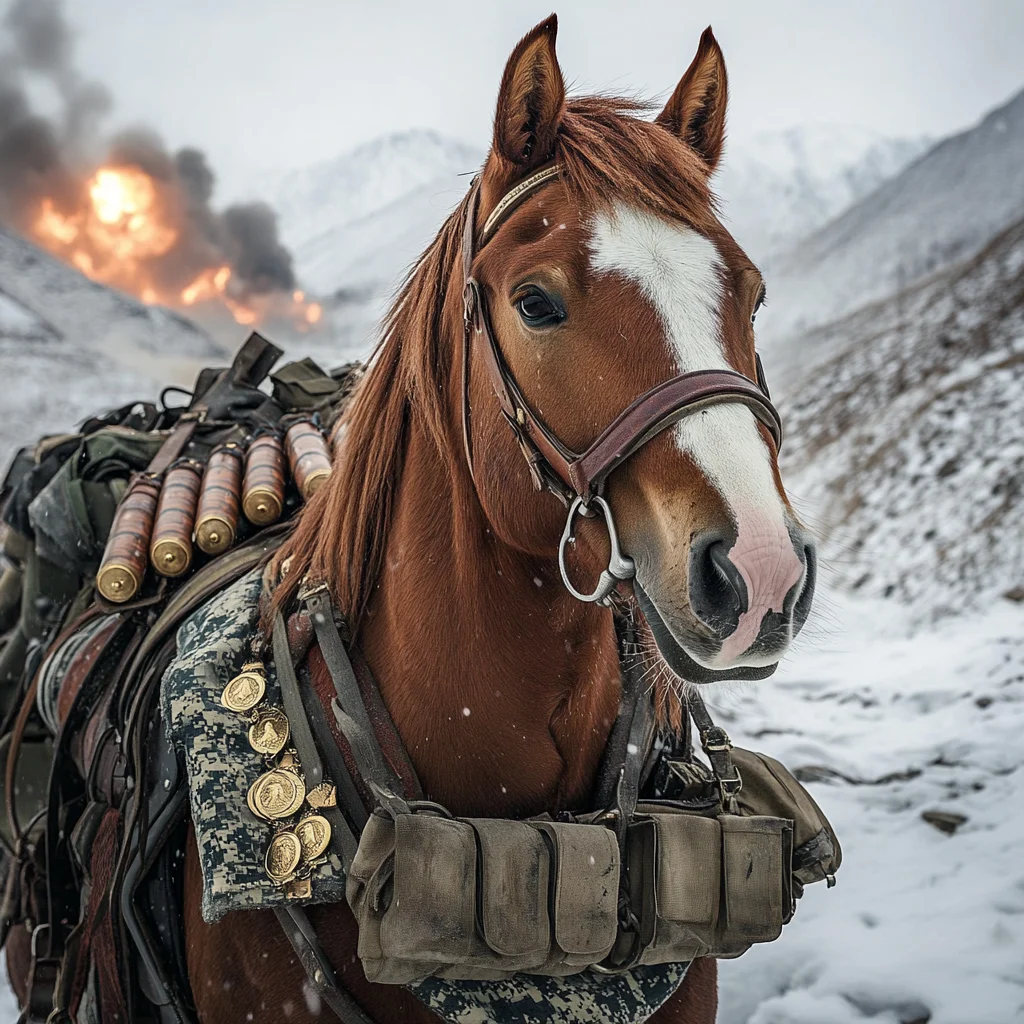
What made Reckless special wasn’t just her physical capabilities but her remarkable intelligence. Within just a few days, she learned to make the journey from the supply point to the firing positions entirely on her own. Marines would load her with up to eight 24-pound shells, send her on her way, and she’d navigate to the front lines independently, knowing exactly where to deliver her precious cargo.

Her learning extended beyond just carrying ammunition. Reckless quickly understood how to:
- Take cover when under fire by lying flat or seeking shelter in bunkers
- Navigate by following communication lines when visibility was poor
- Recognize the sound of incoming enemy fire and react appropriately
- Return with wounded soldiers when necessary
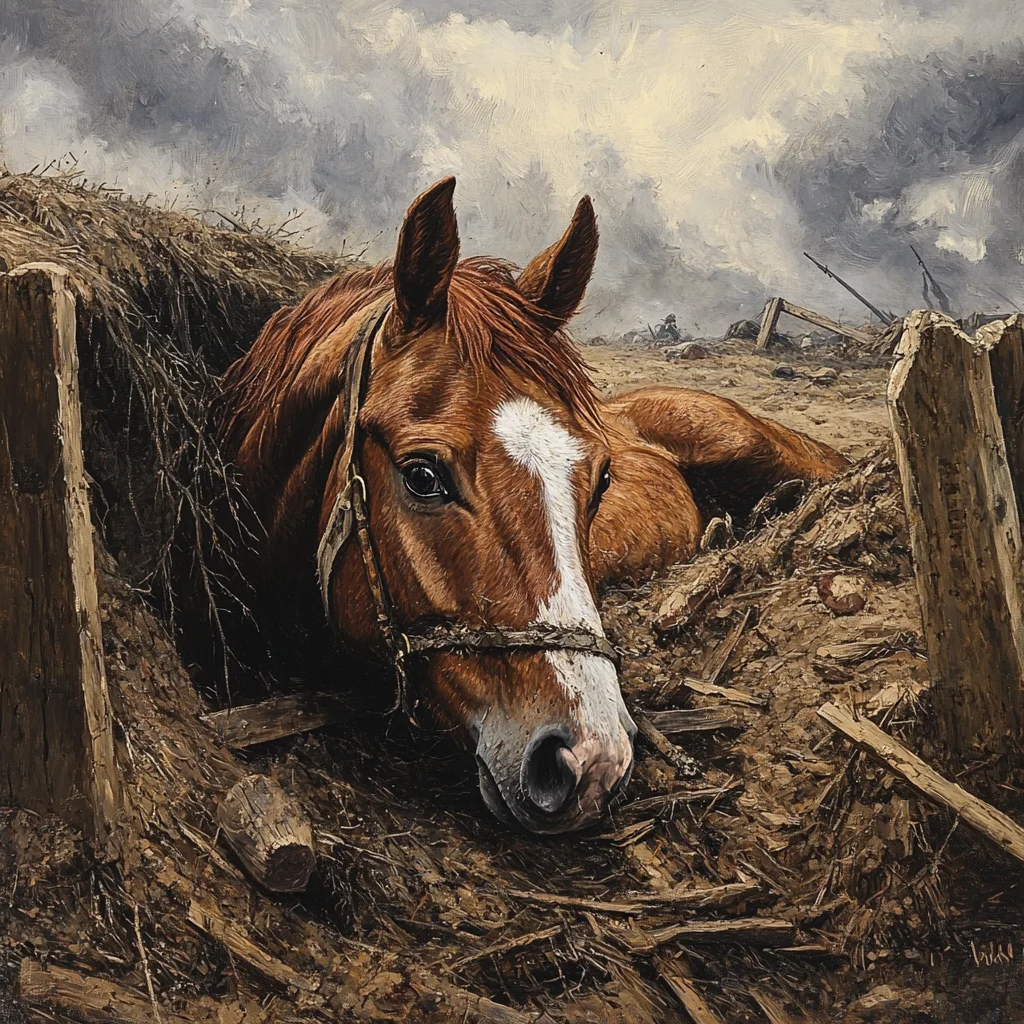
Perhaps most impressively, she needed to be shown a route only a couple of times before memorizing it completely, even in darkness or harsh weather conditions.
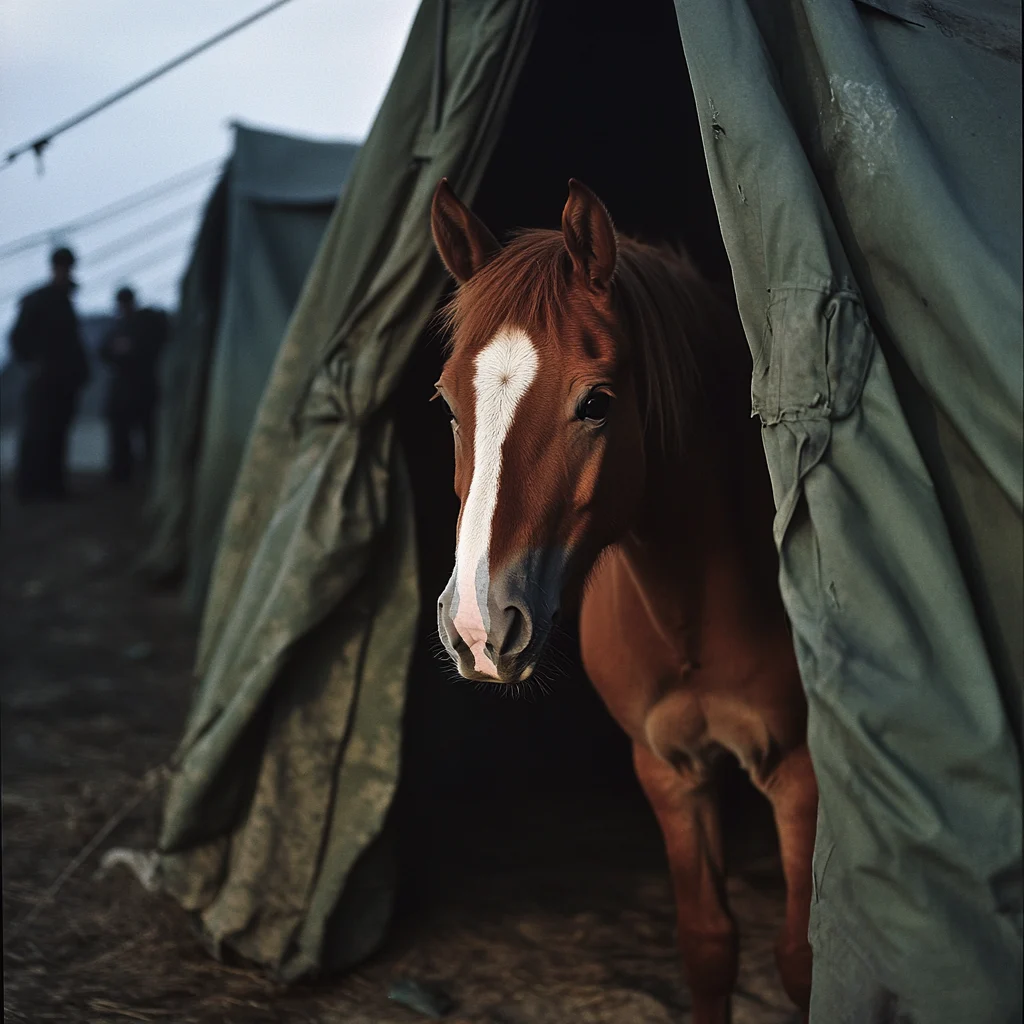
Beyond her military skills, Reckless developed a distinct personality that endeared her to the Marines. She was known for her hearty appetite, happily eating almost anything offered to her – scrambled eggs, beer, Coca-Cola, chocolate, and even poker chips. She was allowed to roam freely around camp and developed the habit of entering the Marines’ tents, especially on cold nights, to sleep near the stoves. Many Marines recalled waking up to find Reckless standing over them inside their tent.
This combination of intelligence, adaptability, and personality transformed Reckless from a simple work animal into a true member of the unit. The Marines didn’t see her as a pet or a tool – they considered her a fellow Marine who shared their hardships and had earned her place among them through demonstrated courage and capability.
Heroic Service During the Korean War
Reckless’s defining moment came during the Battle of Outpost Vegas in March 1953, one of the Korean War’s fiercest engagements. What she accomplished during those five days of intense fighting would cement her legacy as a true war hero.
As Chinese forces launched a massive assault on the strategic outpost, the Marines desperately needed to keep their recoilless rifles supplied with ammunition. The journey to the firing positions was approximately a mile long, over steep, rugged terrain that was fully exposed to enemy fire. This is where Reckless truly proved her worth.
Over the course of a single day, March 27, 1953, Reckless made 51 trips from the ammunition supply point to the front lines – entirely on her own, without guidance. The statistics of her achievement are staggering:
- She carried a total of 386 rounds of ammunition (over 9,000 pounds) in a single day
- Each trip included steep climbs up to the ridge lines where Marines were fighting
- She traveled more than 35 miles through open rice paddies and up steep mountains
- All of this occurred while under constant enemy fire
Marine Sergeant Major James E. Bobbitt would later recall: “It’s difficult to describe the elation and the boost in morale that little white-faced mare gave Marines as she outfoxed the enemy bringing vitally needed ammunition up the mountain.”
What makes her service even more remarkable is that Reckless was wounded twice during this battle. Shrapnel struck her in the flank and above her eye, yet she continued her critical missions without slowing down.
Beyond carrying ammunition forward, Reckless also evacuated wounded Marines, carrying them down from the ridge lines to safety. In these moments, she seemed to understand the urgency of her task, moving carefully but quickly with her human cargo.
Through the worst of the battle, with artillery shells exploding around her and small arms fire everywhere, Reckless never faltered. Her unfailing courage and determination under the most extreme conditions imaginable saved countless Marine lives and helped hold a critical position.
Life After Combat
After her heroic service in Korea, Reckless’s life took a remarkable turn. In 1954, she received a promotion to Staff Sergeant—a real rank that came with real privileges. The Marines who had served with her were determined she wouldn’t be left behind when they returned to America.
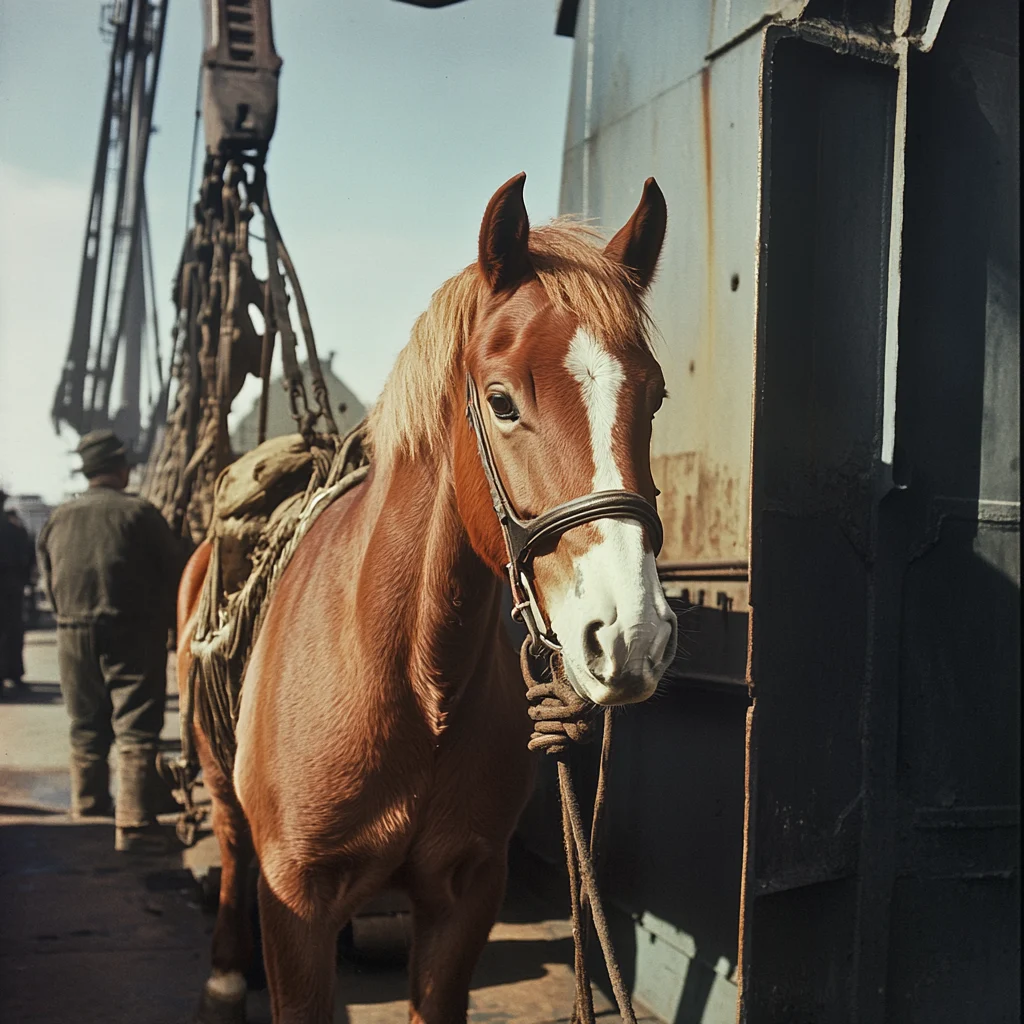
The process to bring Reckless to the United States wasn’t simple. It required special arrangements, fundraising by her Marine friends, and navigation through quarantine regulations. But their efforts paid off when she arrived in San Francisco in November 1954, aboard the SS Pacific Transport. Her arrival made national news, with headlines celebrating the “Korean War Horse Hero.”
Reckless found her final home at Camp Pendleton, California. There, she enjoyed special status unlike any other animal on base:
- She had her own pasture and stable with a sign reading “Sgt Reckless”
- She could roam freely around the base and enter any building
- She received full military privileges, including free medical care
- The Marines ensured she had the right to graze in any field she chose
Life at Camp Pendleton brought new adventures for Reckless. She produced four foals: Fearless, Dauntless, Chesty, and a final unnamed foal that died shortly after birth. Each pregnancy meant special care and attention from the Marines who looked after her.
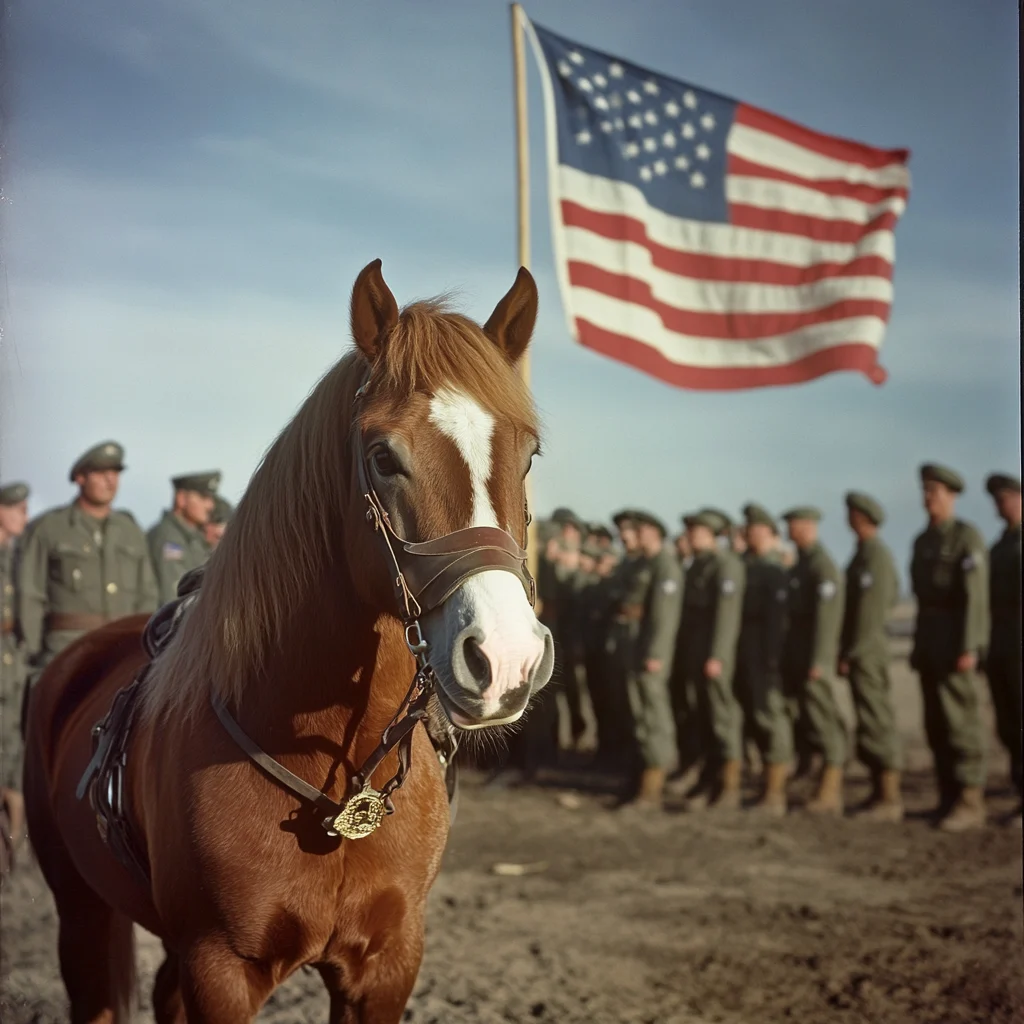
As a Staff Sergeant, Reckless even had a military uniform specially made for formal occasions. It included a red and gold blanket, the Marine emblem, and her combat decorations. When she appeared at ceremonial events, she was treated with the full respect due to her rank and service record.
Reckless lived out her days among the Marines who loved her, enjoying a well-deserved retirement filled with attention, care, and the occasional treat of beer or chocolate—her favorite snacks from her days in combat. She died in May 1968 at around 20 years of age and was buried with full military honors at Camp Pendleton.
Legacy and Recognition
Sergeant Reckless left behind a legacy that continues to inspire military personnel and civilians alike. Her contributions have been recognized through numerous honors that ensure her story won’t be forgotten.
Her decorations during and after her service are impressive by any standard:
- Two Purple Hearts for wounds received in action
- A Marine Corps Good Conduct Medal
- A Presidential Unit Citation with bronze star
- The National Defense Service Medal
- A Korean Service Medal with three bronze stars
- The United Nations Korea Medal
- A Republic of Korea Presidential Unit Citation
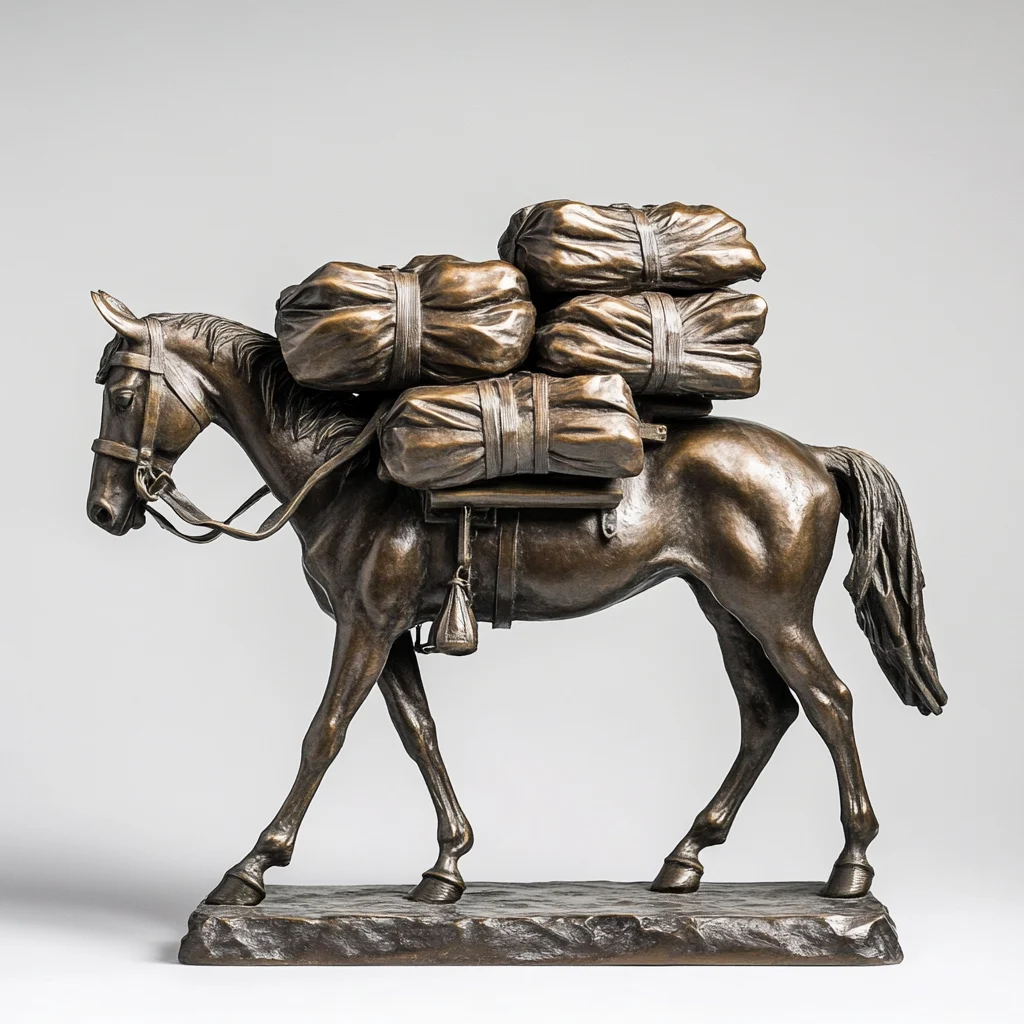
In 2013, more than 60 years after her service, a life-sized bronze statue of Reckless was unveiled at the National Museum of the Marine Corps in Quantico, Virginia. Additional statues now stand at Camp Pendleton and the Kentucky Horse Park, ensuring her physical legacy remains visible.
Several books have chronicled her remarkable story, including “Reckless: Pride of the Marines” by Andrew Geer and “Sgt. Reckless: America’s War Horse” by Robin Hutton. These works have introduced her story to new generations who never knew of the small horse who became a Marine Corps legend.
What makes Reckless’s legacy special is how it transcends typical military recognition. She’s remembered not just as a useful military animal but as a true comrade who shared dangers alongside human Marines. Her story represents the special bond that can form between humans and animals, especially under the extreme conditions of war.
In 2016, Reckless was posthumously awarded the Dickin Medal, often described as the “animal Victoria Cross,” by the People’s Dispensary for Sick Animals (PDSA). This prestigious award further cemented her place among the most decorated war animals in history.
Conclusion
The story of Sergeant Reckless reminds us of the remarkable bonds that can form between humans and animals, especially in the most challenging circumstances. This small Mongolian mare didn’t just carry ammunition – she carried hope and courage up those steep Korean hills.
What makes Reckless’s story so powerful is how she transcended the typical role of a military animal. She wasn’t just a tool or resource – she became a genuine member of the Marine unit, sharing their dangers, their hardships, and their triumphs. The Marines didn’t see her as separate from themselves, but as one of their own.
Her legacy offers us valuable lessons today. Reckless demonstrated incredible courage without the ability to understand the politics or purpose of war. She acted out of loyalty, intelligence, and trust in the humans who cared for her. In many ways, her simple, unquestioning bravery represents the purest form of service.
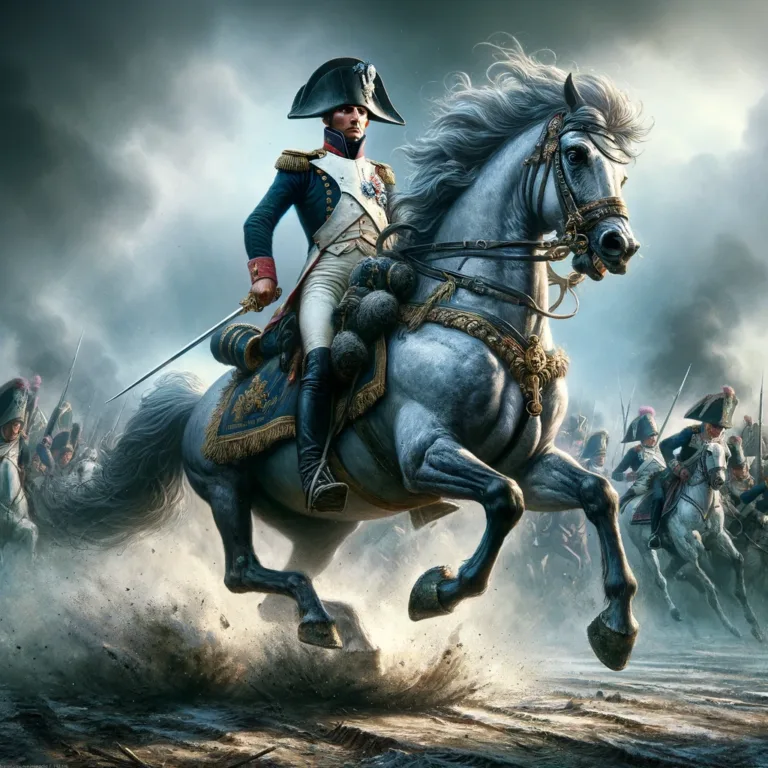
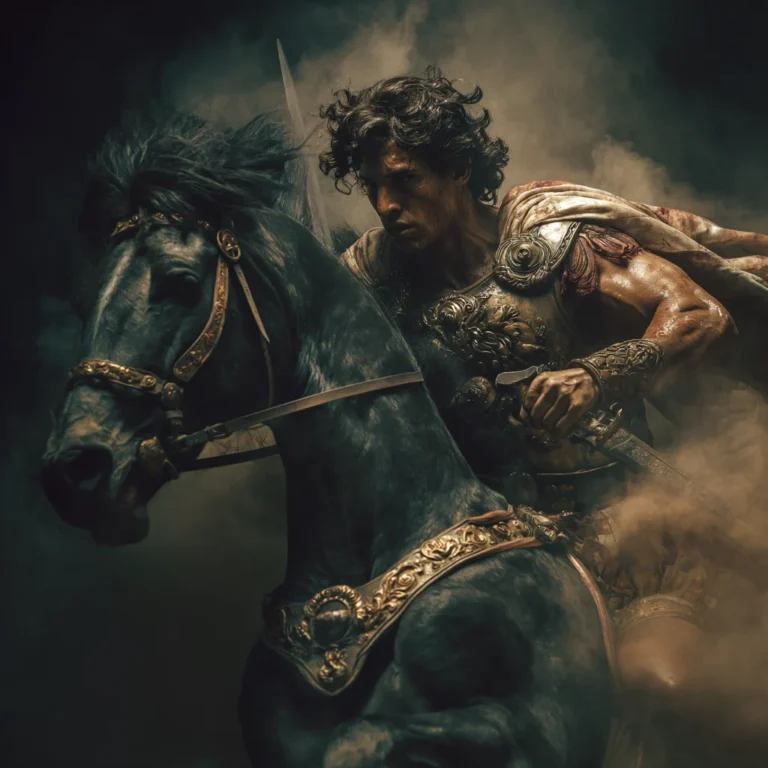
As we reflect on military history, stories like Reckless’s help us remember the many forms that courage can take. Sometimes, it arrives on four legs, with a taste for chocolate and beer, carrying ammunition up a hill without anyone asking twice. Read about more legendary war horses in Alexander the Great’s Bucephalus or Marengo, Napolean Bonapartes war horse
Call to Action
Do you know about other animal heroes from history? Share their stories in the comments below. These tales of courage deserve to be remembered and celebrated.
For those interested in learning more about Sergeant Reckless, I recommend Robin Hutton’s book “Sgt. Reckless: America’s War Horse” or visiting one of the memorial statues at the National Museum of the Marine Corps, Camp Pendleton, or the Kentucky Horse Park.
Here are some excellent resources you can reference in your blog post about Sergeant Reckless:
Books
- “Sgt. Reckless: America’s War Horse” by Robin Hutton (2014) – The most comprehensive biography
- “Reckless: Pride of the Marines” by Andrew Geer (1955) – Written by someone who served with her
- “Devoted: 38 Extraordinary Tales of Love, Loyalty, and Life With Dogs” by Rebecca Ascher-Walsh (includes a chapter on Reckless)
Online Resources
- Sgt. Reckless Official Website – Maintained by Robin Hutton with photos, videos, and news
- U.S. Marine Corps Museum – Information about her statue and legacy
- American Battlefield Trust – Article with historical context
- Smithsonian Magazine – “Sergeant Reckless: The Hero Horse of the Korean War”
- PDSA Dickin Medal – Information about her posthumous medal
Videos
- “Sgt. Reckless: Korean War Horse Hero” on YouTube – Documentary short
- “War Horse: The Reckless Marine” – Military History channel documentary segment
- C-SPAN coverage of her statue dedication ceremony at the National Museum of the Marine Corps
Historical Archives
- National Archives and Records Administration – Contains official military records and photographs
- Marine Corps History Division – Holds historical documentation of her service
Memorial Locations
- National Museum of the Marine Corps, Triangle, Virginia
- Camp Pendleton, California
- Kentucky Horse Park, Lexington, Kentucky
These resources provide a good mix of historical documentation, personal accounts, and places where people can learn more about this remarkable war horse. Including these in your blog post will give readers multiple ways to explore her story further!



Leave a Reply