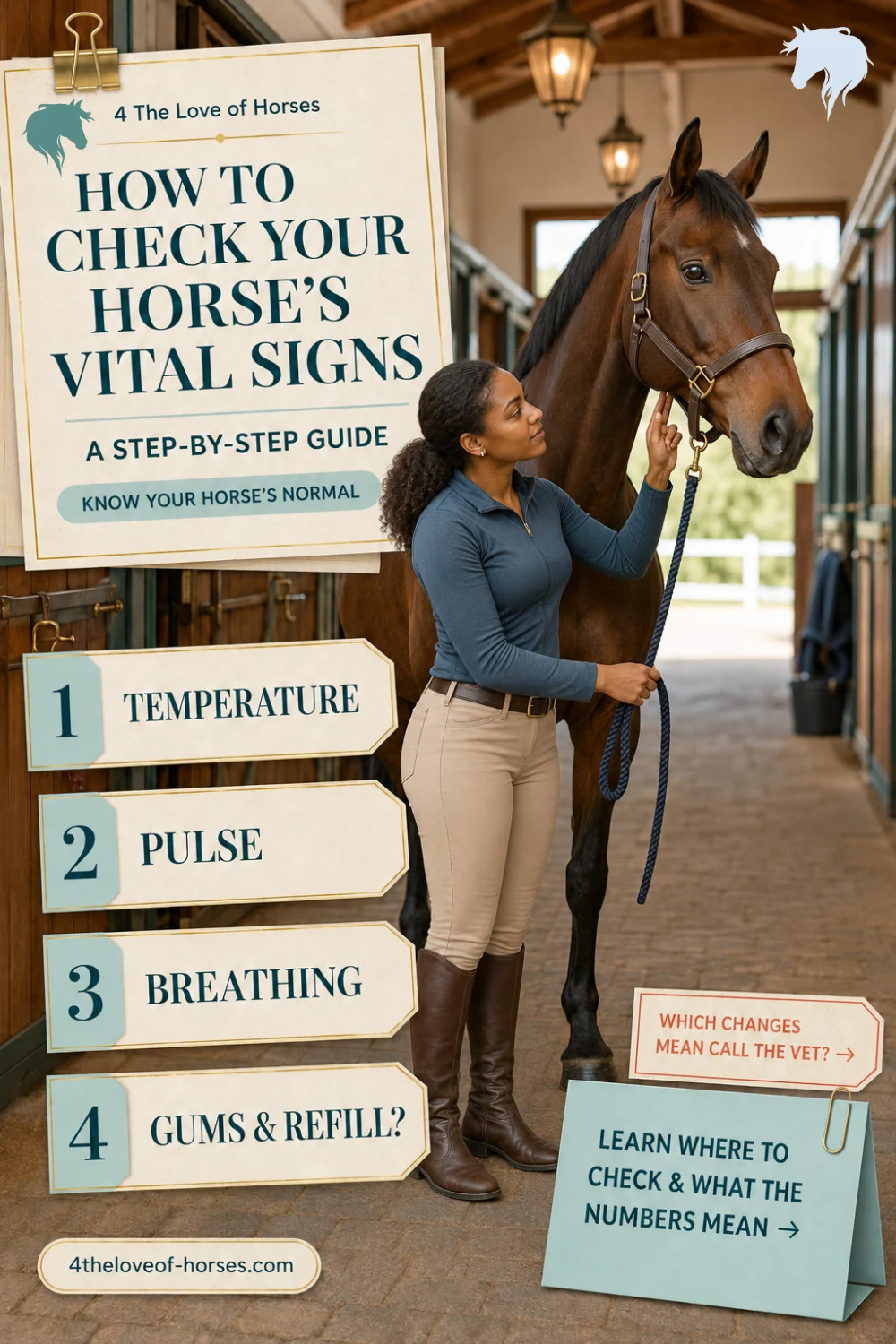
How to Check Your Horse’s Vital Signs — Step-by-Step Guide

Knowing your horse’s normal baseline could save their life. Here’s exactly what to check, how to do it, and what the numbers mean.
The call comes at an inconvenient time — it always does. Your horse is off, something isn’t right, and your brain immediately starts doing things it shouldn’t: catastrophising, second-guessing, and forgetting everything you think you know. In those moments, what saves horses is not knowledge stored in your head. It’s a system you’ve practised when everything was fine.
Checking your horse’s vital signs takes less than five minutes once you know what you’re doing. It gives you objective information at a moment when your emotions are running high. It tells you whether you need to call the vet immediately or watch and wait. And it gives your vet the numbers they need to make good decisions before they even arrive.
In 45 years with horses I have made this check hundreds of times — on horses in crisis and on perfectly healthy horses on an ordinary Tuesday. The horses I checked on ordinary Tuesdays are the reason I could recognise a problem immediately when something changed. Know your horse’s normal. Do this now, before you need it.
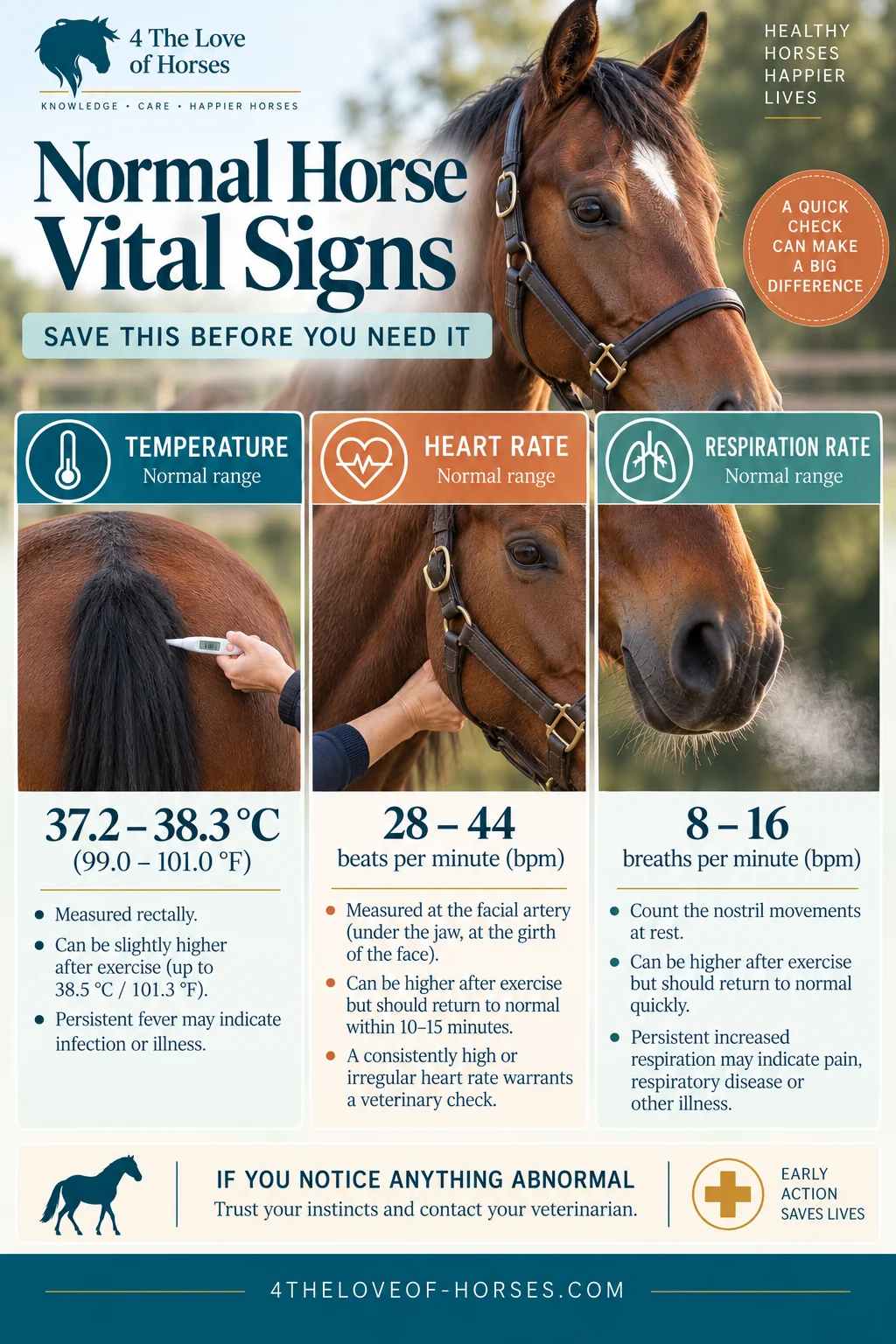
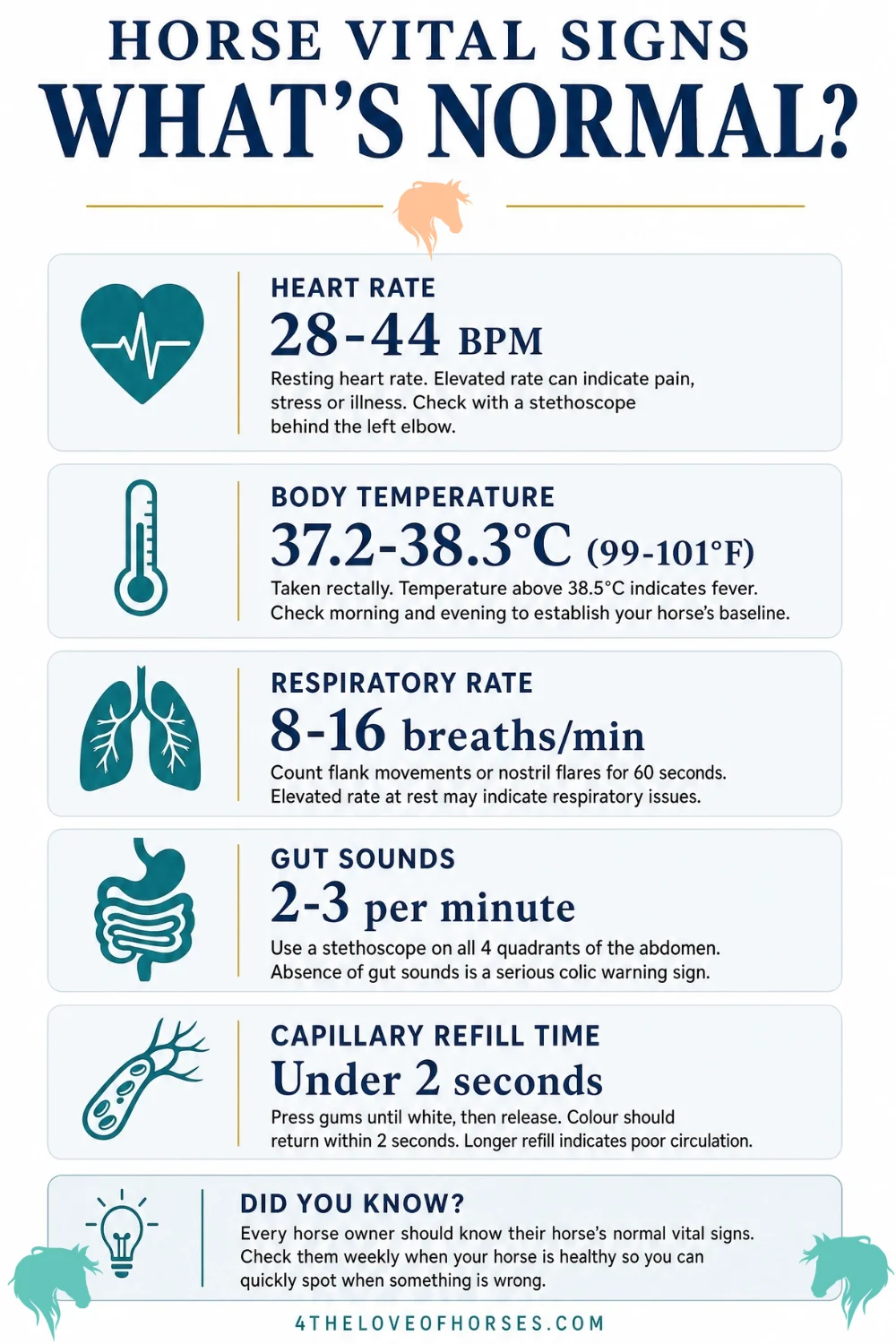
Normal Vital Sign Ranges at a Glance
These are the accepted normal ranges for a healthy adult horse at rest. Write your own horse’s individual numbers on the reference card at the end of this post — every horse sits slightly differently within these ranges, and knowing their normal is what tells you when something has changed.
These ranges are guidelines, not absolute rules. Fit horses in regular work often have resting heart rates at the lower end. Young horses and horses in warmer climates may breathe slightly faster. Temperature rises after exercise and in hot weather. Always compare your horse’s reading to their own established baseline — not just the textbook range.
What You Need Before You Start
Keep these items together in your first aid kit or a dedicated spot in your tack room. Do not keep them scattered — in an emergency you need to find them immediately.
A stethoscope is not essential for all checks but makes heart rate and gut sounds significantly more accurate and easier to assess. A basic veterinary stethoscope costs very little and is one of the most useful things in any horse owner’s kit.
The Five Checks — Step by Step
1. Heart Rate (Pulse)
The heart rate tells you more than almost any other single measurement. A heart rate above 60 in a resting horse is a significant concern. Above 80 is a serious emergency. This is one number you must be able to take quickly and accurately.
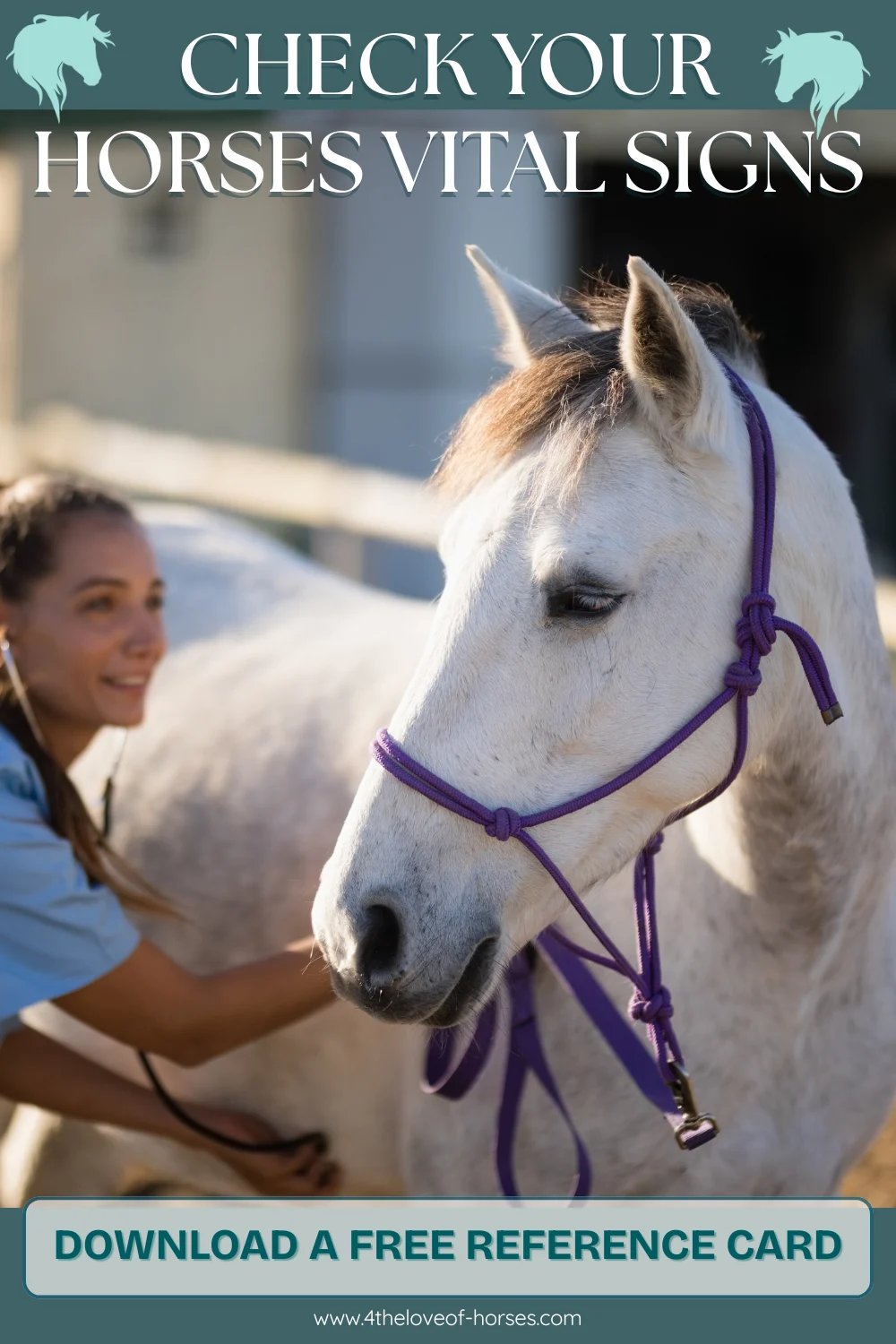
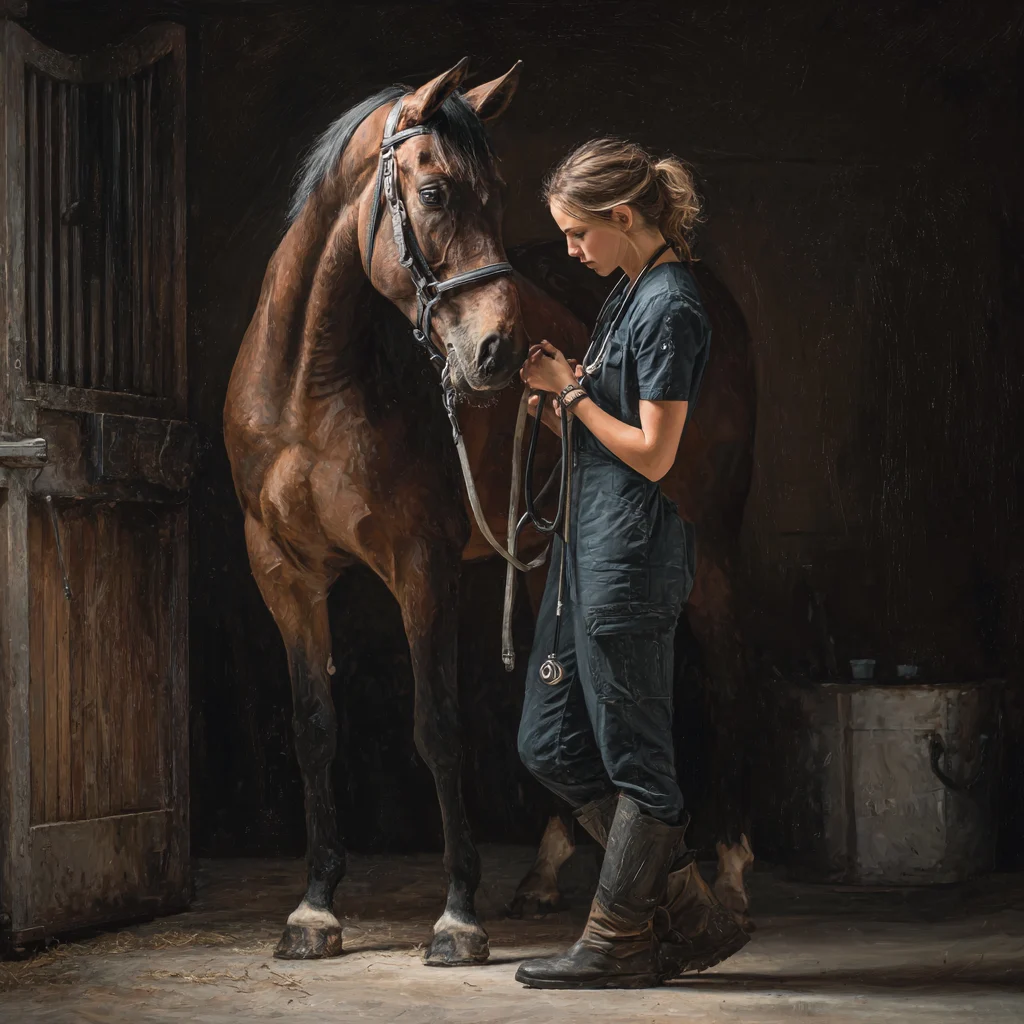
With a stethoscope: Place the stethoscope on the left side of your horse’s chest, just behind the elbow. You will hear a double sound — lub-dub — which counts as one beat. Count beats for 15 seconds and multiply by four, or count for a full 60 seconds for maximum accuracy.
Without a stethoscope: Press two fingers firmly against the submandibular artery under the jaw, or against the facial artery where it crosses the cheekbone. You should feel a distinct pulse. Count for 30 seconds and multiply by two.
2. Respiratory Rate
Watch your horse’s flanks or nostrils from a short distance — do not stand directly in front of them. Each rise and fall of the flank counts as one breath. Count for 30 seconds and multiply by two, or for a full minute if you have time.
In warm weather or after light movement, a slightly elevated respiratory rate is normal and settles quickly. A rate that remains elevated when the horse is at rest, or breathing that appears laboured, shallow or irregular, warrants attention. Flared nostrils and visible abdominal effort are signs to take seriously immediately.
3. Temperature
Always use a rectal thermometer. Lubricate the tip with petroleum jelly, lift the tail, and gently insert the thermometer at a slight angle to the side of the rectum — not straight in. Hold it in place for the full reading time indicated on your thermometer, and always hold the end so you cannot lose it.
Temperature is affected by exercise, weather, stress and time of day — it is naturally slightly higher in the afternoon than the morning. A temperature above 38.5°C (101.3°F) in a resting horse suggests fever and infection. A temperature below normal can indicate shock and is equally serious.
4. Gum Colour & Capillary Refill Time
This check surprises most new horse owners because they have never been taught to look at a horse’s gums — but it is one of the fastest ways to assess circulation and overall condition in an emergency.
Gum colour: Lift your horse’s upper lip and look at the gums above the front teeth. In a healthy horse they should be a moist, salmon-pink colour. Pale or white gums indicate shock or significant blood loss. Bright red or purple gums indicate toxaemia or severe circulatory compromise. Dry, tacky gums indicate dehydration.
Capillary refill time: Press your thumb firmly against the gum for two seconds, then release. The white mark left by the pressure should return to pink within two seconds. Longer than two seconds indicates poor circulation and is a serious concern.
5. Gut Sounds
A horse’s digestive system should be continuously active, producing a symphony of gurgles, rumbles and whooshing sounds throughout the day. Silence — or a significant reduction in gut sounds — is one of the key early indicators of colic and should never be ignored.
With a stethoscope: Place it flat against the horse’s flank on both sides, in four quadrants — upper and lower left, upper and lower right. Listen for 30–60 seconds per quadrant. You should hear regular sounds in all areas.
Without a stethoscope: Press your ear directly against the flank. You should hear movement. Complete silence in any quadrant is abnormal.
Gut sounds that are hyperactive — very loud, frequent gurgling — can also indicate intestinal disturbance, particularly in the early stages of certain types of colic.
Free Download: Horse Emergency Reference Card
Print this card and put it on your feed room wall today — before you need it. Normal vital signs, 10 emergency warning signs, what to do while you wait for the vet, and a space to fill in your own horse’s baseline numbers.
Download Free →When to Call the Vet — Quick Reference
Use this table as your decision guide. If you are ever in doubt, call. Your vet would always rather take a reassurance call than be called too late.
| Vital Sign | Normal Range | Call Your Vet |
|---|---|---|
| Heart Rate | 28–44 bpm at rest | Above 60 at rest; above 80 immediately |
| Respiratory Rate | 8–16 breaths/min | Above 20 at rest or laboured breathing |
| Temperature | 37–38.5°C | Above 38.5°C or below 37°C |
| Gum Colour | Moist salmon-pink | Pale, white, red, purple or very dry |
| Capillary Refill | Under 2 seconds | 2 seconds or longer |
| Gut Sounds | Active all quadrants | Silence in any quadrant with other signs |
The 5-Minute Routine
Once you have practised this a few times, the full check takes well under five minutes. Here is the sequence that flows most efficiently:
Start with temperature (1 minute)
Insert the thermometer first — it needs time to give an accurate reading while you complete the other checks. This is the one that takes the most clock time, so start it immediately.
Respiratory rate while thermometer reads (30 seconds)
Step back and observe the flanks. Count breaths for 30 seconds while the thermometer is working. Two tasks at once.
Gum colour and capillary refill (30 seconds)
Lift the upper lip. Check colour. Press and count. Two seconds is your benchmark. Note texture — moist or tacky.
Heart rate (1 minute)
Stethoscope behind the elbow or fingers under the jaw. Count for a full 60 seconds if the horse is unwell — accuracy matters more than speed here.
Gut sounds (1 minute)
All four quadrants. Take your time — rushing this one leads to missed findings. Remove and read the thermometer while you finish listening.
Record everything immediately
Write down every number before you do anything else. Your brain will not retain accurate figures when you are stressed. The numbers on paper are what you give your vet when you call.
Do this check on your healthy horse regularly — not just when something is wrong. A check takes five minutes and costs nothing. But the value of knowing your individual horse’s baseline is incalculable. The reading that saves a horse’s life is not the one you take in a crisis. It’s the one you took on an ordinary Tuesday that tells you today’s reading is wrong.
What to Tell Your Vet When You Call
When you call your vet with a concern, have this information ready before you dial. It allows them to assess urgency and give you appropriate first instructions while they travel:
- Heart rate — exact number
- Respiratory rate — exact number and whether breathing appears normal or laboured
- Temperature — exact reading
- Gum colour and capillary refill time
- Gut sounds — present, reduced or absent, and in which quadrants
- When you last saw the horse eating and drinking normally
- When you last saw normal droppings
- Any recent changes — feed, turnout, environment, exercise
- How long the horse has been showing signs and whether they are improving or worsening
Colic deserves its own urgency flag. If your horse is showing signs of abdominal discomfort — pawing, looking at flanks, refusing feed, getting up and down — do not wait to see if it passes before taking vitals. Take them immediately, note the time, and watch for deterioration. Mild colic can escalate to surgical emergency within hours. Your vital signs readings at the outset are critical information for your vet’s assessment.
Free Download: Horse Emergency Reference Card
Print this card and put it on your feed room wall today — before you need it. Normal vital signs, 10 emergency warning signs, what to do while you wait for the vet, and a space to fill in your own horse’s baseline numbers.
Download Free →