5 signs your horse’s gut health is off

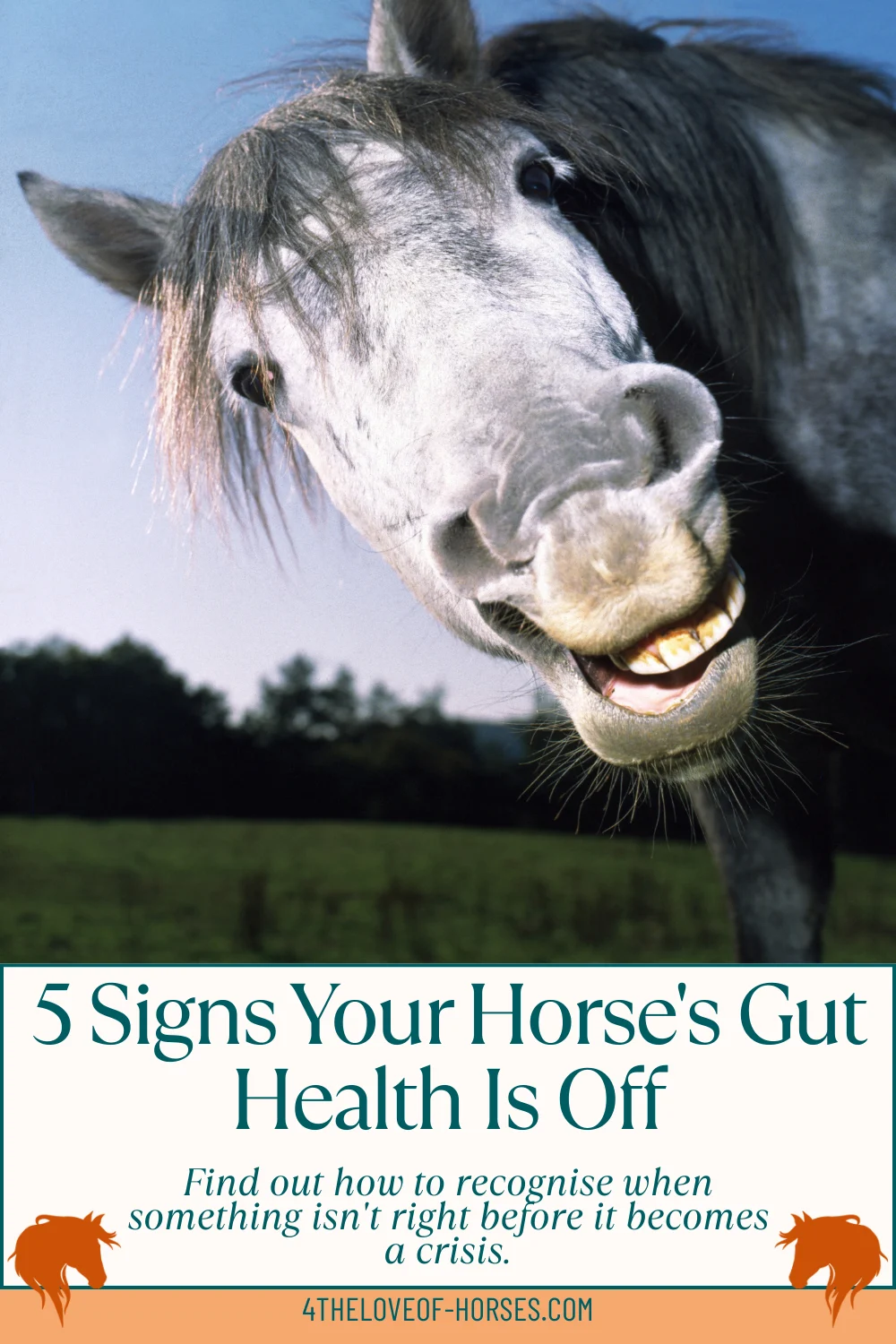
5 Signs Your Horse’s Gut Health Is Off
The horse’s digestive system is extraordinary — and extraordinarily fragile. Here’s how to recognise when something isn’t right before it becomes a crisis.
Horses are not designed to live the way most of us keep them. They are designed to move continuously across large areas, grazing for up to 18 hours a day, with a digestive system built for a near-constant slow trickle of fibrous forage. When we stable them, restrict their grazing, feed them large concentrate meals twice a day and ask them to perform at high levels, we create the conditions for gut problems almost by default.
The challenge is that horses are stoic animals. By the time a gut problem makes itself obvious, it has usually been developing quietly for some time. Learning to recognise the early, subtle signs — before they escalate into colic, ulcers or serious hindgut dysfunction — is one of the most valuable skills a horse owner can develop.
Here are the five signs I watch for most closely, drawn from 45 years of keeping horses and learning — often the hard way — what they are trying to tell us.
Understanding Why the Horse’s Gut Is So Vulnerable
Before we look at the signs, it helps to understand why gut problems are so common in horses. The horse’s digestive system is a remarkable piece of engineering — but it has almost no tolerance for disruption.
Stomach & Small Intestine
The horse’s stomach is small relative to body size — designed for small, continuous meals, not large infrequent ones. It produces acid continuously regardless of whether food is present. Without constant forage to buffer it, the unprotected upper lining is exposed to acid damage. This is the primary site of gastric ulcers.
Caecum & Large Colon
The hindgut is where fibre fermentation happens — a complex, delicately balanced microbial ecosystem. Sudden changes in diet, stress, antibiotics, or insufficient forage can disrupt this balance rapidly, leading to dysbiosis, loose droppings, gas accumulation, and in serious cases, colitis or large colon displacement.
5 Signs Your Horse’s Gut Health Is Off
Changes in Droppings — Consistency, Frequency or Smell
A healthy horse produces 8–12 piles of droppings per day. They should be well-formed, slightly moist, and break apart easily when they hit the ground. Any significant change in this pattern is worth paying attention to.
Loose or cow-pat droppings that persist beyond a day or two suggest hindgut disruption — often linked to a sudden change in feed, excessive grass intake, stress, or the early stages of hindgut dysbiosis. A single loose dropping after a stressful journey is less concerning than persistent looseness over several days.
Very dry, small or infrequent droppings can indicate dehydration, reduced gut motility, or insufficient forage intake — all of which increase the risk of impaction colic.
An unusually strong or unpleasant smell from the droppings can indicate fermentation imbalance in the hindgut and warrants monitoring.
Weight Loss or Poor Condition Despite Adequate Feeding
If your horse is eating reasonable amounts but losing weight, topline or overall condition, the gut is one of the first places to investigate. Gut dysfunction compromises the absorption of nutrients — so a horse can be consuming enough calories and protein on paper while failing to actually absorb and utilise them properly.
Gastric ulcers are a particularly common cause of this pattern. The discomfort associated with eating — acid production spikes when feed arrives in an empty stomach — can cause a horse to eat less enthusiastically, or to eat hay readily but leave concentrates, which further reduces caloric intake.
Hindgut issues can also impair nutrient absorption, particularly of fat-soluble vitamins and minerals. A dull, staring coat often accompanies this, and is frequently an early indicator before weight loss becomes obvious.
Recurring Mild Colic or Vague Abdominal Discomfort
Not dramatic, rolling-on-the-ground colic — but the recurring low-grade kind that passes quickly and seems too minor to call the vet. Your horse stares at his flank after meals. Paws occasionally. Seems vaguely unsettled and won’t stand still. Gets up and down more than usual in the stable at night.
Individual mild colic episodes can have simple explanations — a change in weather, a stressful day, a temporary reduction in water intake. But when they keep coming back, they are telling you something about the underlying state of the gut. Recurring mild colic is one of the most consistent early indicators of both gastric ulcers and developing hindgut issues.
The danger of the mild-and-passing variety is that owners stop taking them seriously. Every mild colic episode that resolves without intervention is a missed opportunity to investigate the cause before it escalates.
Behavioural Changes — Especially Around Feeding and Work
The gut and behaviour are more closely connected in horses than many owners realise. A horse in chronic gut discomfort will often show it through behaviour long before physical symptoms become obvious — and these behavioural signs are frequently misread as attitude problems, training issues, or just “being difficult.”
Girthiness — pinning ears, biting, fidgeting or swinging the head when the girth is tightened — is one of the most commonly reported signs of gastric ulcers. The girth sits directly over the stomach region and pressure in that area causes genuine discomfort.
Reluctance to work, resistance at transitions, a horse that feels flat or behind the leg for no obvious physical reason, or performance that varies dramatically from day to day — all of these can be gut-related rather than training-related.
Changed behaviour around food — eating more slowly than usual, leaving feed, eating hay but refusing concentrates, or displaying anxiety or aggression at feed time — are worth investigating rather than managing behaviourally.
Reduced or Absent Gut Sounds
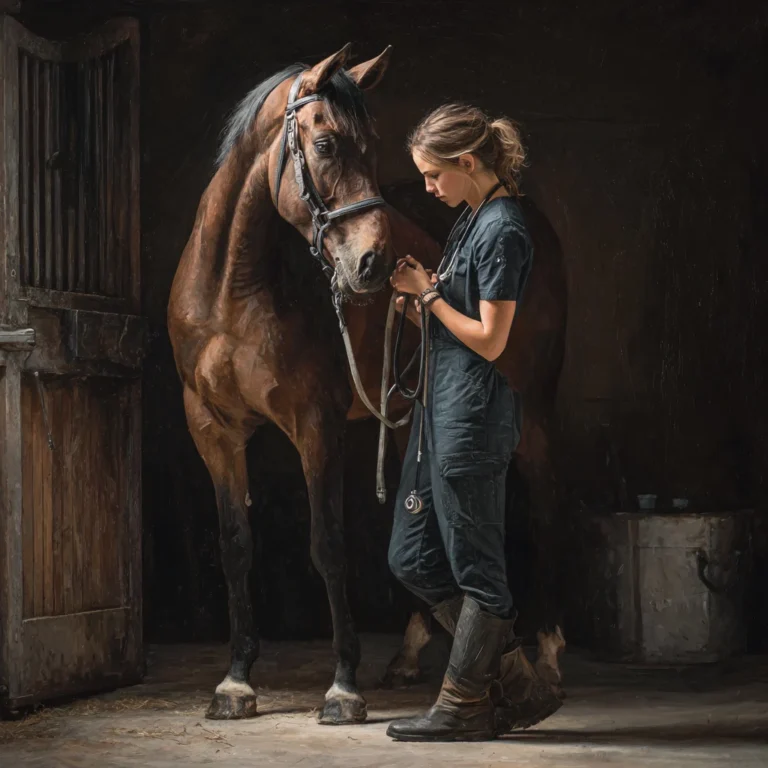
A healthy horse’s digestive system is never quiet. Press your ear to their flank — or use a stethoscope — and you should hear a continuous symphony of gurgles, rumbles and whooshing sounds. This is normal and reassuring. Silence, or a significant reduction in gut sounds, is not.
Gut sounds should be assessed in all four quadrants — upper and lower left flank, upper and lower right flank — for at least 30 seconds each. Some variation between quadrants is normal, but any quadrant that is consistently quiet over multiple checks warrants attention.
Reduced gut sounds without other symptoms can indicate slowing gut motility — which increases colic risk and can be related to dehydration, insufficient forage, or the early stages of an impaction. Combined with any sign of discomfort, absent gut sounds are a reason to call the vet rather than wait and see.
It is also worth knowing that hyperactive, very loud gut sounds can indicate gut disturbance — particularly in the early stages of spasmodic colic or when a horse has eaten something that has triggered rapid fermentation.
None of these signs on their own is necessarily a crisis. But none of them should be ignored or explained away without investigation. Horses that show two or more of these signs together, or any single sign that persists or worsens over several days, should be assessed by your vet. The most common outcome of investigating early is a manageable problem. The most common outcome of waiting is a more serious one.
What to Do If You Notice These Signs
If your horse is showing one or more of these signs, the most useful thing you can do before calling your vet is to gather information. The more specifically you can describe what you have observed — and for how long — the better placed your vet is to advise you.
Record what you are seeing and when it started
Write it down. When did you first notice the change? Has it been consistent or intermittent? Is it getting worse, better or staying the same? Are there patterns — worse after feeding, worse on work days, worse in certain weather? This information shapes your vet’s assessment significantly.
Review recent management changes
Think back over the past two to four weeks. Has anything changed — feed type or quantity, hay source, grazing access, turnout time, stabling, routine, travel, competition? Gut problems rarely appear out of nowhere. There is usually a trigger, even if it seems minor.
Check your horse’s hydration
Pinch the skin on the neck and release. In a well-hydrated horse it should snap back immediately. A slow return indicates dehydration, which compounds gut problems significantly. Also check water intake — a horse that is drinking less than usual is at increased risk of impaction.
Ensure forage is available at all times
Whatever else is happening, make sure your horse has access to good quality hay around the clock. This is the single most important management intervention for gut health — it keeps acid buffered, hindgut microbiome stable, and gut motility active. If your horse is on restricted forage for weight management reasons, discuss the balance with your vet in the context of their gut health.
Call your vet — don’t guess and supplement
The temptation when gut issues are suspected is to reach for a gut supplement, a probiotic, or an omeprazole trial. Resist this without a proper diagnosis. Supplementing for the wrong condition wastes time and money and can mask symptoms that your vet needs to assess. If ulcers are suspected, a gastroscope is the only way to confirm and correctly characterise them. If hindgut issues are suspected, your vet can guide you on appropriate investigation and management.
Supporting Good Gut Health Long-Term
The foundations of good gut health in horses are straightforward — but they require genuine commitment to management principles that run against the grain of how many yards operate.
- Keep forage available as continuously as possible — slow feeder nets help extend eating time and reduce gaps between meals
- Feed small, frequent concentrate meals rather than large ones — and always feed forage before concentrates
- Maximise turnout — movement promotes gut motility and grazing keeps the stomach buffered
- Keep management as consistent as possible — changes in routine are a significant gut health stressor
- Ensure constant access to fresh, clean water — dehydration and gut problems are closely linked
- Make any feed changes gradually over a minimum of two weeks
- Be thoughtful with antibiotic and NSAID use — both can significantly disrupt gut microbiome balance
- Know your horse’s normal — check gut sounds regularly on a healthy horse so you can recognise change immediately
The horses I have seen struggle most with gut problems over the years have almost always been kept in ways that worked against their basic biology — high concentrate diets, limited turnout, restricted forage, stressful competition schedules, and inconsistent management. The horses that stay consistently well are almost always the ones whose owners have made peace with the horse’s fundamental need to move and eat and be a horse. It doesn’t always fit neatly into a modern yard routine. But it is what they need.
Free Download: Horse Emergency Reference Card
Keep your horse’s vital sign normals, gut sound assessment guide, and emergency contacts all in one place — printed and ready in your tack room before you need them.
Download Free →