
Reading Your Horse’s Body Language — The Complete Guide
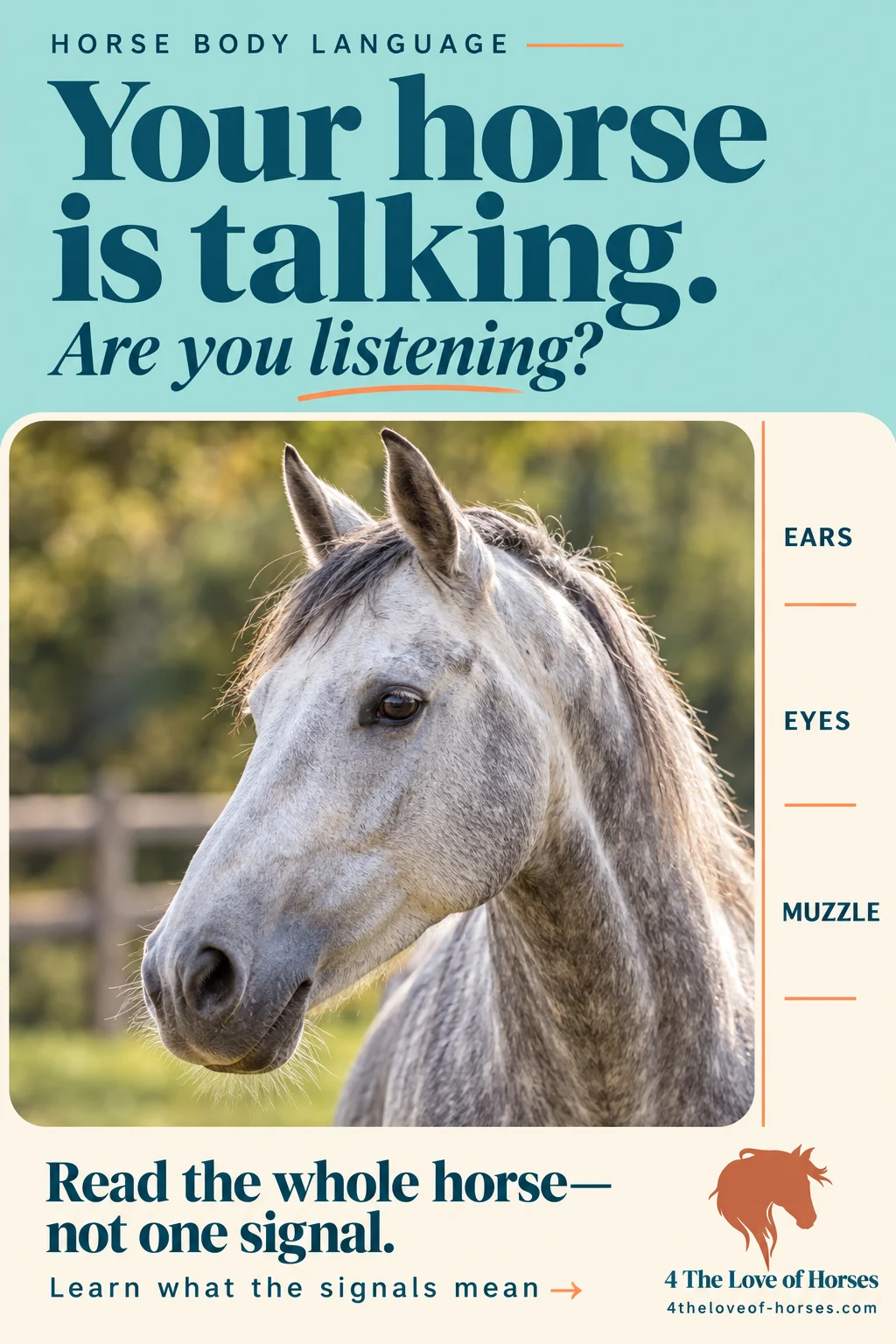
Your horse is telling you how he feels all day long, through his ears, eyes, mouth, tail and the way he stands. Once you learn to read it, you’ll never look at him the same way again.
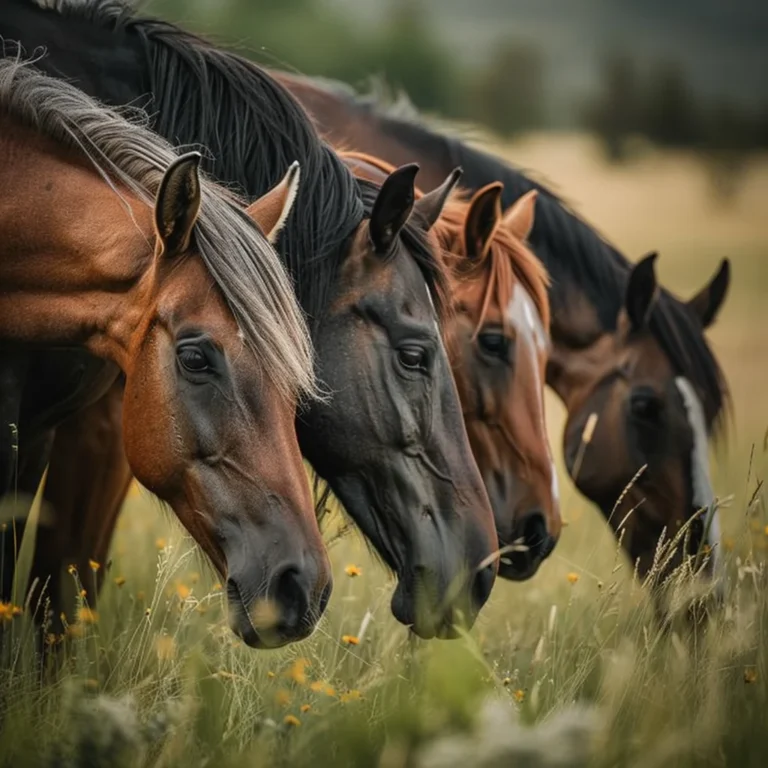
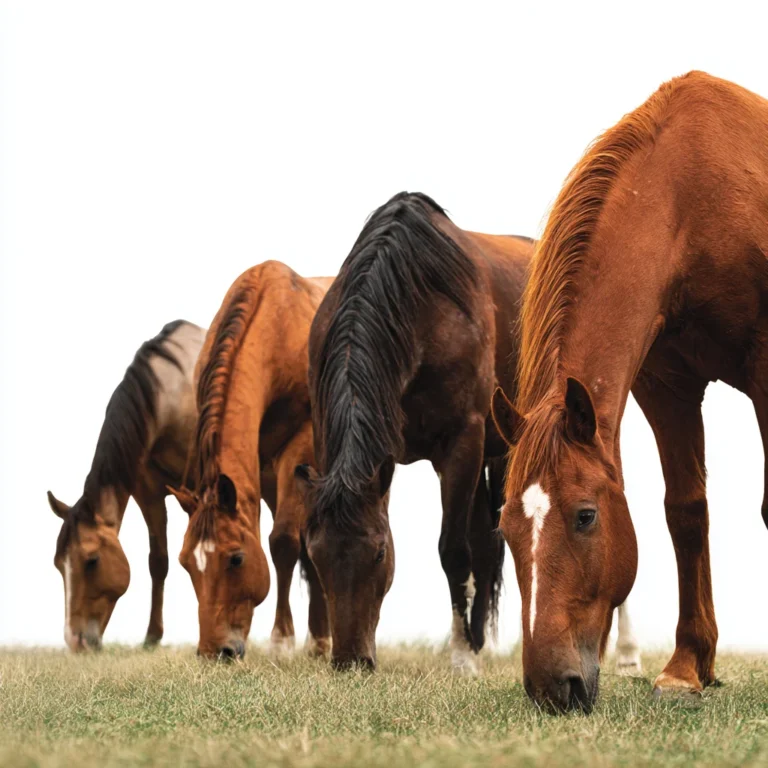
One of my favourite times with my horses is sitting in the stable listening to the gentle munching of hay. Their eyes are soft, their ears relaxed, the tail swings lazily and one hind leg is resting. All is well with the world, and they’ve told me so without making a sound.
After 45 years with horses, I can usually tell how a horse is feeling before I’ve reached the gate. It isn’t a gift. It’s just a lot of watching. This guide is everything I look for.
— Jenni
Test Your Body Language Skills
Take the free horse body language quiz and see how much you can really read from ears, eyes and posture.
Take the Free Quiz →Why It Matters
Horses are prey animals. They survive by communicating quickly and quietly, and they use their whole body to do it. When you can read those signals you can:
- Stay safe. Most kicks, bites and spooks are announced first. People just miss the warning.
- Spot pain early. A change in expression or posture is often the first sign something hurts, long before obvious lameness.
- Train better. A horse that feels understood is far more willing to try.
- Build trust. Responding to what he’s telling you, rather than what you expect, is how a real partnership is built.
The Four Places to Look
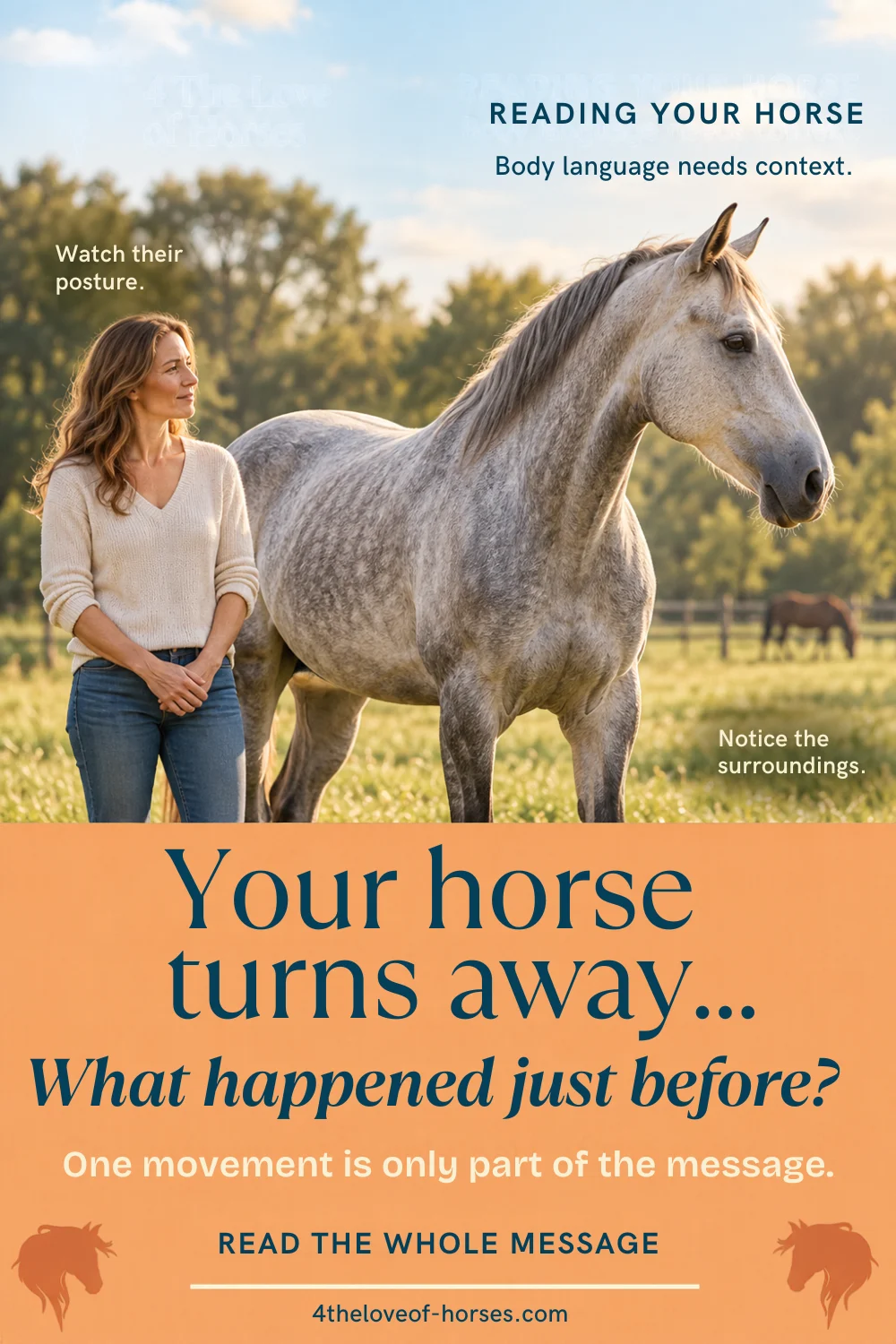
No single signal tells the whole story. Read these four together, and always compare them with what’s normal for your horse.
Ears: Where His Attention Is
| What you see | What it usually means |
|---|---|
| Both ears pricked forward | Interest or curiosity. Something in front has caught his attention. |
| One ear forward, one back | Listening to two things at once. Under saddle, the ear turned back is often on you, which is exactly what you want. |
| Ears soft and slightly out to the side | Relaxed, resting or dozing. |
| Ears swivelling constantly | Scanning his surroundings. A little is normal in a new place; rapid flicking with a high head means rising tension. |
| Ears pinned flat back | A clear warning: irritation, threat, or pain. Give space and look for the cause. |
Check Pain First
A horse who pins his ears every time the girth goes on, or when you touch one particular spot, isn’t being grumpy. He’s telling you something hurts. Check saddle fit, back and teeth before treating it as bad manners.
Eyes: Calm, Worried or Frightened
- Soft, half-closed eye: relaxed and comfortable, often dozing.
- Bright, open, blinking normally: alert and engaged.
- White showing around the eye: fear or alarm, especially with a high head. (Some horses, such as Appaloosas, show white naturally, so know your horse.)
- Wrinkles or “worry lines” above the eye: tension, worry or pain. The muscle above the eye tightens and the skin forms a triangle shape.
- Hard, fixed stare: focus on something worrying. Be ready for a spook.
Mouth and Nostrils: Where Tension Shows First
- Soft, droopy lower lip: deeply relaxed, often dozing.
- Tight, pinched lips or a clenched jaw: tension, worry or discomfort, including from the bit or noseband.
- Licking and chewing: often seen as tension drains away after something stressful. A good moment to pause and let him think.
- Flared nostrils: alertness, excitement or fear at rest; normal after exercise.
- Top lip curled up (flehmen): investigating an interesting smell. Not aggression.
- Teeth showing, head snaking: a serious threat. Move away.
Tail and Posture: The Bigger Picture
The tail
- Relaxed and swinging gently with movement: content.
- Carried high: excited or alarmed (though Arabians and some other breeds naturally carry their tails high).
- Clamped down tight: fear, cold or discomfort.
- Hard, sharp swishing when there are no flies: irritation or discomfort. Constant swishing under saddle is one of the most common signs of a horse in pain.
How he stands
- Resting a hind leg: completely normal. He’s relaxed.
- Resting a front leg, or shifting weight between the front feet: not normal. This is often a sign of pain in a foot or leg.
- Front feet stretched forward, weight rocked back: a classic laminitis stance and an emergency. See why this stance is a warning sign.
- Head low, body loose: relaxed and at ease.
- Head high, body tight, frozen: on high alert. A spook or bolt may follow.
- Pawing: impatience or frustration, but repeated pawing with looking at the belly can be colic.
How Well Do You Read Your Horse?
Put this guide to the test with the free body language quiz.
Take the Free Quiz →Relaxed or Stressed? Reading the Whole Horse
The real skill is putting the signals together. Here’s what each state usually looks like from nose to tail:
| Relaxed | Alert | Stressed or afraid | |
|---|---|---|---|
| Head | Low or level | Raised | High, tight neck |
| Ears | Soft, to the side | Pricked towards the focus | Flicking rapidly or pinned |
| Eyes | Soft, half-closed | Bright, open | White showing, worry lines |
| Mouth | Lip loose | Closed, mobile | Tight lips, clenched jaw |
| Nostrils | Soft, slow breaths | Slightly wider | Flared, fast breathing |
| Tail | Relaxed, swinging | Slightly raised | Clamped or lashing |
| Body | Hind leg resting | Still, weight balanced | Tense, frozen or moving away |
Is It Behaviour or Is It Pain?
This is the most important question in this whole guide. A lot of “naughty” horses are horses in pain who have run out of quieter ways to say so.
Suspect Pain When
The behaviour is new, it doesn’t change with the situation, it happens at the same point every time (tacking up, a particular movement, one rein), or you see worry lines above the eyes, tight lips and pinned ears together. Vets use these facial changes, known as the Horse Grimace Scale, to assess pain. If in doubt, rule out pain with your vet before you change your training.
Stress usually eases when the cause goes away: the scary tractor leaves and he settles. Pain doesn’t. It follows the horse wherever he is. For more on reading stress specifically, see HorseSpeak: cracking the code of stress in horses.
How to Respond
When he’s worried or frightened
- Stay calm and breathe out slowly. Horses read your energy.
- Give him space and time to look. Don’t force him up to the scary thing.
- Reward the moment he softens, however small.
When he’s irritated or resisting
- Check for discomfort first: tack, teeth, back, feet.
- Make the question easier and break it into smaller steps.
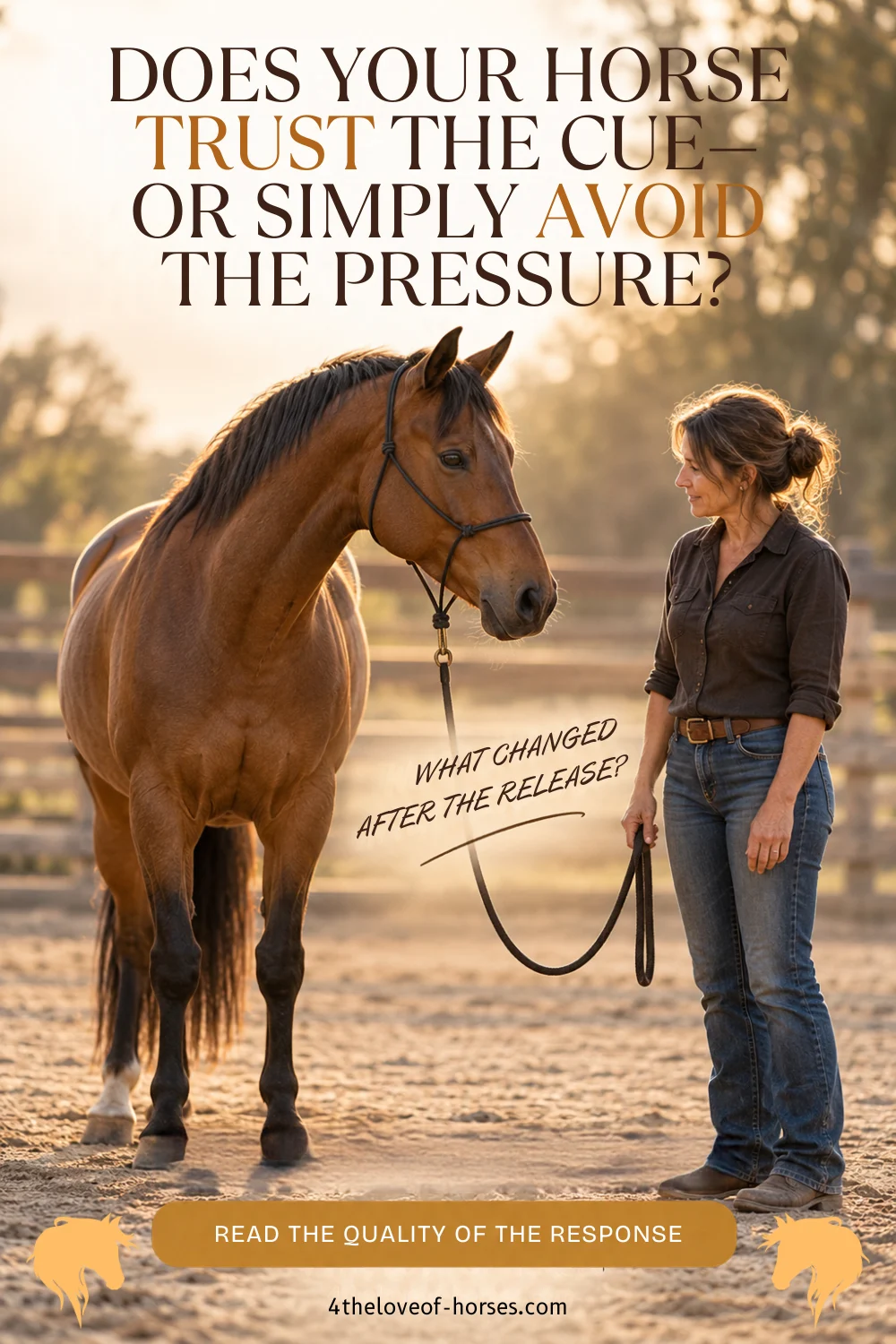
- Never punish a warning. If you punish pinned ears, the horse learns to skip the warning, not to stop the bite.
When he’s relaxed
- Enjoy it. Stand quietly with him, scratch his favourite spot, let him be.
- Notice exactly what relaxed looks like on your horse. That’s your baseline for spotting when something changes.
Common Mistakes Horse Owners Make
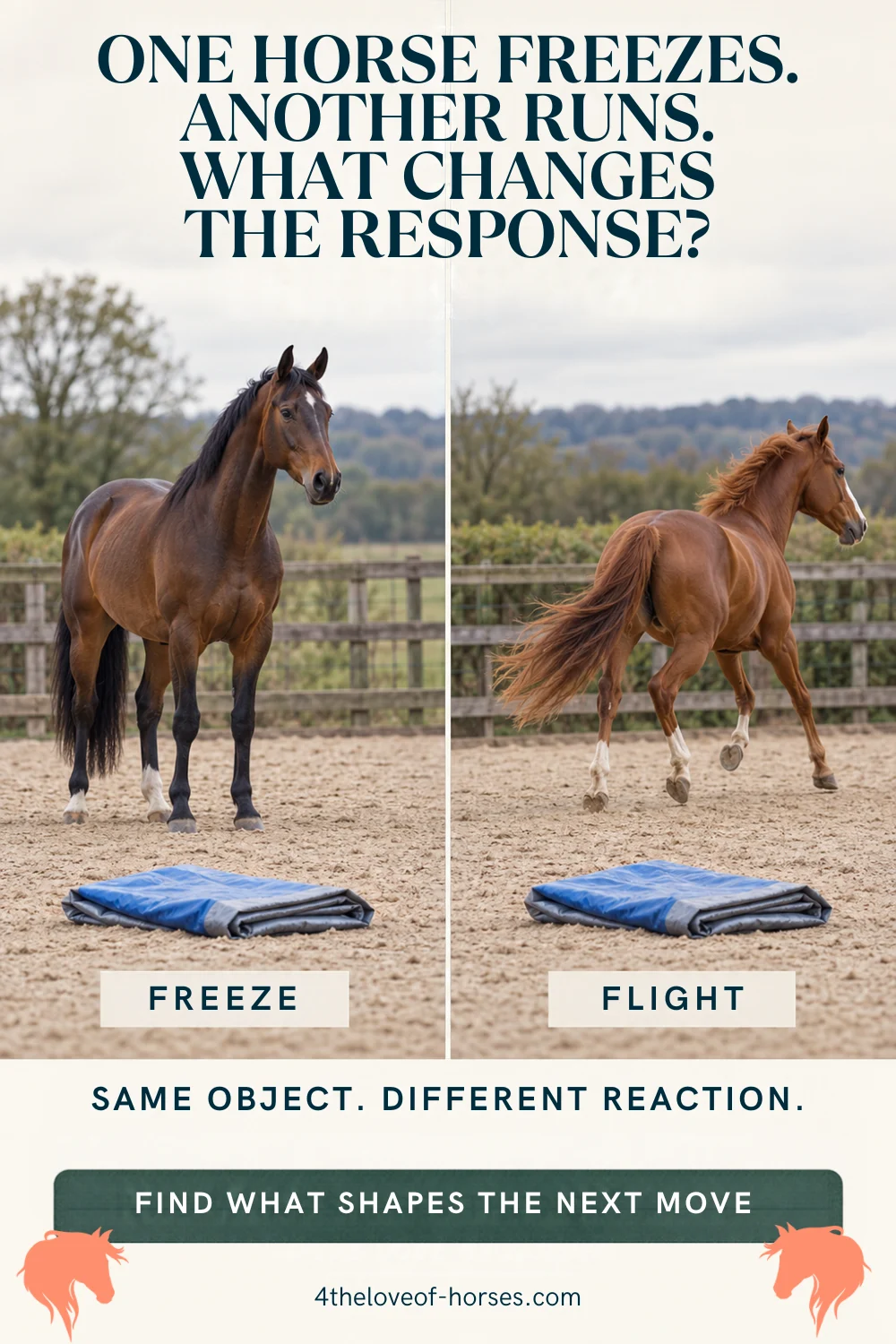
- Reading one signal on its own. Pricked ears with a soft eye is curiosity; pricked ears with a high head and white eye is fear.
- Calling pain “attitude”. Grumpiness at the girth, bucking into canter or a sudden refusal to go forward deserve a vet check first.
- Punishing warnings. It removes the warning, not the problem, and makes a horse more dangerous.
- Not knowing their horse’s normal. You can’t spot a change if you don’t know the baseline.
- Missing the small signs. By the time a horse kicks or bolts, he has usually been telling you for a while.
- Assuming a resting front leg is like a resting hind leg. It isn’t. Check the feet.
Frequently Asked Questions
What does it mean when a horse pins its ears?
Pinned ears are a warning: irritation, a threat to another horse or person, or pain. If it happens at the same moment every time, such as tacking up, look for a physical cause first.
Why does my horse lick and chew?
It’s often seen as tension releases after something stressful or when a horse is processing what just happened. It’s a good moment to pause and let him think.
Why does my horse yawn so much?
Occasional yawning is normal, but frequent yawning can be linked to stress or discomfort, including gut pain. Read more in why does my horse yawn so much?
Can horses read our body language too?
Yes, remarkably well. They respond to your posture, breathing and tension, which is why staying calm matters so much. See can horses recognise human emotions?
The more time you spend just watching your horse, the more fluent you become. He’s been talking to you all along.
Free Horse Body Language Quiz
See how much you’ve picked up: ears, eyes, mouth, tail and posture.
Take the Free Quiz →Related Behaviour Guides

Additional Resources
To further your journey in understanding and communicating with horses, I recommend a variety of resources that offer deeper insights and practical guidance. These books, courses, and videos are invaluable for anyone looking to expand their knowledge and deepen their connection with these majestic creatures.
Suggested Readings
- “The Horse Behavior Problem Solver” by Jessica Jahiel
- “Equine Behaviour: Principles and Practice” by Daniel Mills and Kathryn Nankervis
- “Understanding Horse Behavior” by Lesley Skipper
- “Horse Speak: An Equine-Human Translation Guide” by Sharon Wilsie and Gretchen Vogel
Online Courses
- “Equine Behavior and Safety” offered by the University of Guelph on Coursera
- “Understanding Equine Body Language” offered by E-Training for Horses
- “Horse Behavior and Welfare” by the University of Edinburgh on Coursera
Videos and Documentaries
- “The Path of the Horse” – Documentary exploring horse-human relationships
- “Understanding Horse Behavior” – YouTube series by EquitopiaCenter
- “Horse Psychology 101” – Educational series available on Horse & Country TV
Websites and Online Forums
- The Horse Forum – www.horseforum.com – A community of horse enthusiasts where you can discuss equine behavior and care.
- EquiSearch – www.equisearch.com – Offers articles and advice on horse behavior and training.
- The Equine Behaviour Forum – www.equinebehaviourforum.org – A platform for sharing knowledge and research on equine behavior.
These resources provide a wealth of information for both novice and experienced horse enthusiasts. By engaging with these materials, you can gain a deeper understanding of the complexities of equine behavior and further develop your skills in interpreting and responding to the silent whispers of horses.
Please leave a comment of your experience with learning how to understand your horses body language….



Leave a Reply